Modern Art Perception Analyzer
Step 1: Select an artwork below that sparks a reaction (curiosity, confusion, or skepticism).
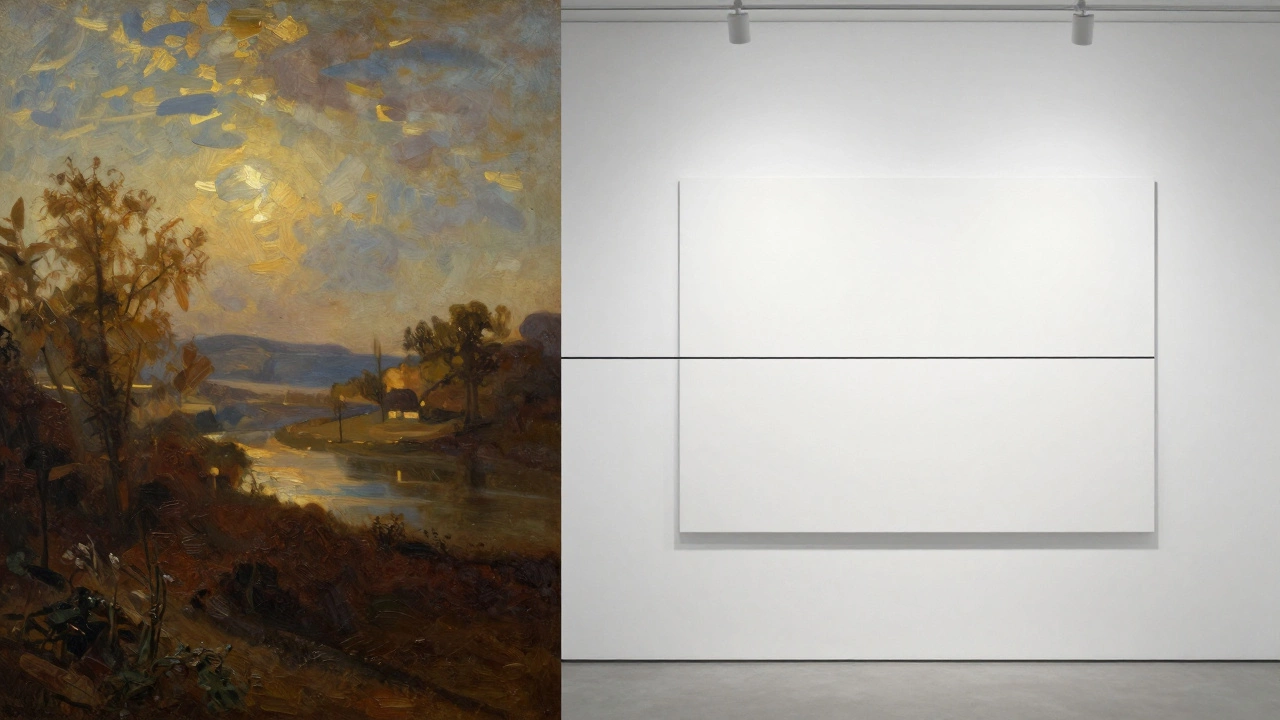
The Blue Square
A canvas painted entirely one flat color.
Minimalism AbstractThe Ready-Made
An everyday object placed on a pedestal.
Dadaism ConceptualThe Drip Painting
Splattered paint covering the entire surface.
Exp. Expressionism ActionHave you ever stood in front of a blank canvas with a single line drawn across it, or stared at a pile of trash labeled as a masterpiece, and thought, "I could have done that"? You are not alone. This reaction is the most common response to modern art, which refers to art produced during the period approximately between the 1860s and the 1970s, characterized by a rejection of traditional techniques and an emphasis on new forms of expression. The question isn't just about taste; it’s about how we define creativity itself. When technical skill becomes less visible, where does the value lie?
The confusion often stems from a mismatch between expectations and reality. We expect art to be a mirror reflecting the world accurately, like a photograph. But modern artists didn’t want to copy the world; they wanted to interpret it, challenge it, or even break it apart to see how it worked. To understand if this counts as "art," we have to look past the surface and examine the intent, the context, and the intellectual framework behind the work.
The Shift From Representation to Concept
For centuries, the primary goal of Western art was representation. If you commissioned a portrait, you wanted to recognize your face. If you bought a landscape, you wanted to see the mountains clearly. This changed dramatically with the invention of photography in the mid-19th century. Suddenly, machines could capture reality faster and more accurately than any painter. Artists had to ask: what can I do that a camera cannot?
This led to the rise of Impressionism, a movement that focused on capturing the fleeting effects of light and color rather than detailed outlines. Instead of painting a solid tree, they painted the way the light hit the leaves. It looked blurry, unfinished, even messy to critics of the time. But it was a deliberate choice to prioritize perception over precision. This was the first crack in the dam of traditional realism.
As the 20th century progressed, this shift accelerated. Cubism, pioneered by Pablo Picasso and Georges Braque, took this further by breaking objects into geometric shapes. A face wasn’t shown from one angle but from multiple angles simultaneously. It wasn’t about looking real; it was about showing the complexity of seeing. By the time we reached Abstract Expressionism, a post-WWII movement characterized by spontaneous, automatic, or subconscious creation, the subject matter disappeared entirely. The paint itself became the subject. Jackson Pollock’s drip paintings weren’t accidents; they were records of physical action and emotional release.
If you judge these works by the standard of "does it look like a thing?" they fail. But if you judge them by "does it communicate an idea or emotion?" they succeed. Modern art moved the focus from the eye to the mind.
The Role of Intent and Context
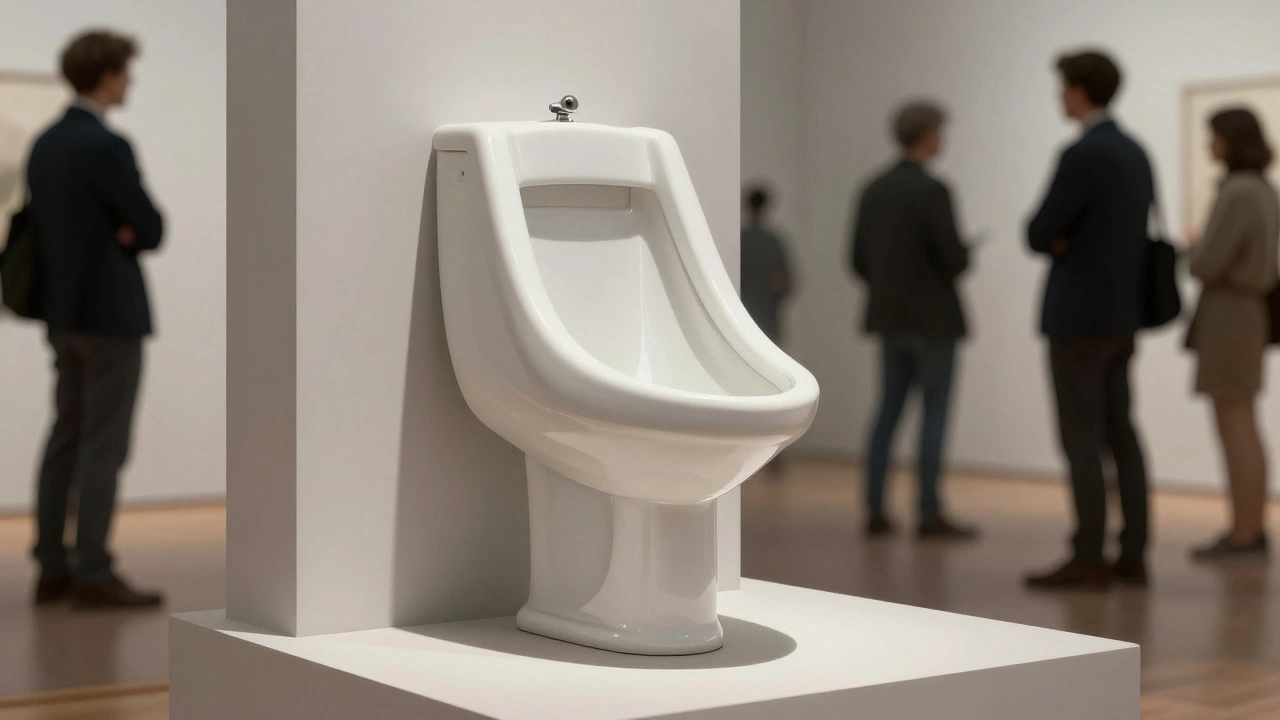
One of the biggest hurdles for viewers is understanding that modern art is often about the idea, not the object. This is known as Conceptual Art, a genre where the concept or idea behind the work is more important than the finished art object. The most famous example is Marcel Duchamp’s Fountain (1917), a standard urinal he signed and submitted to an exhibition. Was it art? Technically, no. It was manufactured. But by placing it in a gallery and giving it a title, Duchamp forced us to ask: What makes something art? Is it the craftsmanship? Or is it the decision and the context?
This might seem like a trick, but it’s a profound philosophical question. Duchamp challenged the elitist notion that art required special talent. He argued that art is defined by the artist’s choice and the viewer’s engagement. When you look at Fountain, you aren’t admiring a urinal; you’re engaging with a critique of the art world itself. The value isn’t in the porcelain; it’s in the conversation it started.
Consider Andy Warhol’s Campbell’s Soup Cans, a series of paintings depicting commercial soup cans that blurred the lines between fine art and popular culture. Anyone could buy those cans. Warhol didn’t paint them realistically; he used silkscreen printing, a commercial technique. Critics called it lazy. But Warhol was commenting on consumerism, mass production, and the nature of celebrity. The repetition made the ordinary extraordinary. Without knowing his intent, it’s just a picture of soup. With the context, it’s a cultural mirror.
Context is the key. Modern art rarely exists in a vacuum. It responds to history, politics, and social changes. Dadaism, an avant-garde movement born out of the disillusionment of World War I, that rejected logic and reason in favor of nonsense and irrationality, used absurdity to protest the war. Their "bad" art was a direct reflection of a broken world. To dismiss it as nonsensical is to miss the point entirely.
Why Technical Skill Isn't the Only Metric
We tend to equate art with difficulty. If it takes years to learn how to draw a hand perfectly, then a drawing of a hand is valuable. But this ignores other forms of intelligence. Writing a poem requires no physical dexterity, yet we value poetry highly. Why? Because of language, metaphor, and emotional resonance. Modern art applies similar principles to visual media.
Let’s look at Minimalism, a style that reduces art to its essential qualities, using simple geometric forms and industrial materials. Donald Judd’s stacks of aluminum boxes might look like factory parts. But Judd spent years calculating the exact proportions, spacing, and lighting to create a specific spatial experience. The simplicity is hard-won. It requires rigorous discipline to strip away everything unnecessary. The skill here isn’t in adding detail; it’s in knowing exactly what to remove.
Furthermore, innovation is a form of skill. Being the first to do something is difficult. When Yves Klein created his International Klein Blue paintings, he wasn’t just painting blue. He patented the color and sought to capture the infinite depth of the sky and sea. The value lies in the uniqueness of the hue and the ambition of the gesture. We don’t dismiss the first person who walked on the moon because walking is easy. We celebrate the achievement. Similarly, we should appreciate the pioneers of new artistic languages.
The Viewer's Responsibility
Modern art demands more from the viewer. Traditional art can be consumed passively; you look, you admire, you move on. Modern art often requires active participation. You have to bring your own knowledge, emotions, and questions to the piece. This can be frustrating. It feels like homework. But it’s also empowering. It means you are part of the creative process.
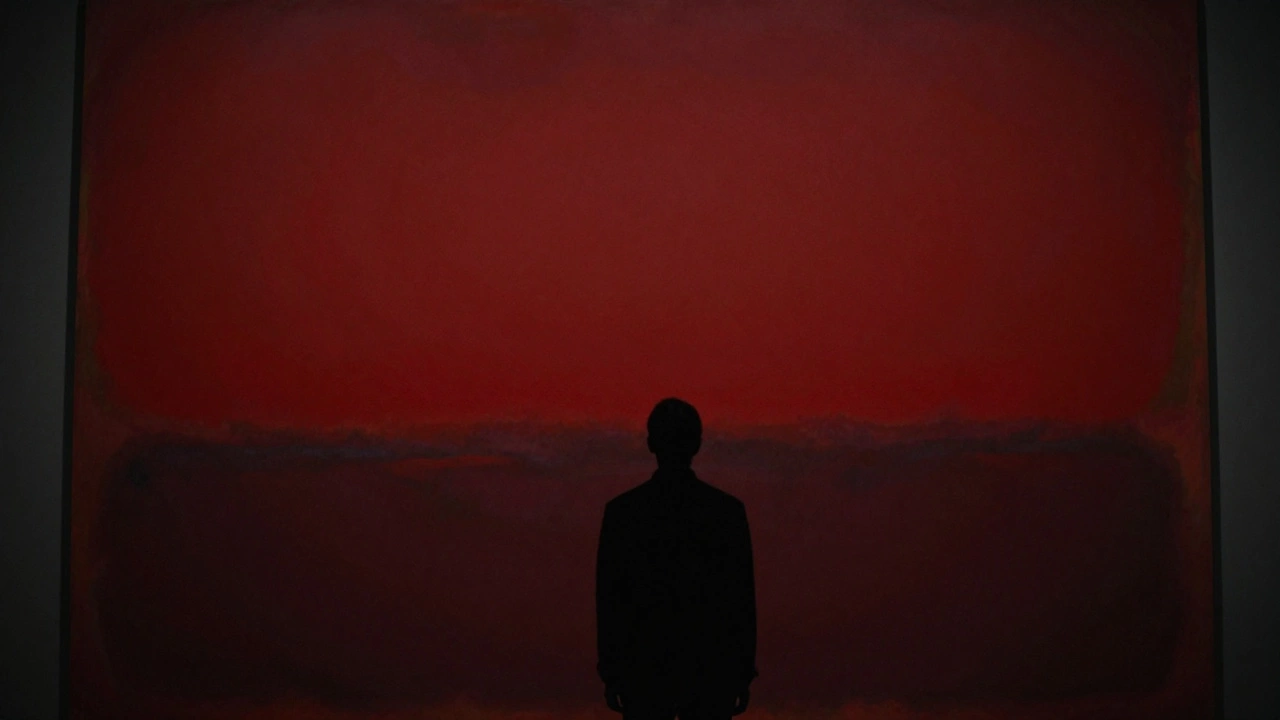
Think about Mark Rothko’s Color Field paintings, large canvases filled with blocks of color that evoke deep emotional responses through scale and atmosphere. At first glance, they are just rectangles of red and black. But if you stand close enough, the edges blur. The colors seem to breathe. Rothko wanted viewers to have a spiritual experience, to feel tragedy, ecstasy, and doom. If you stand back and say, "It’s just a rectangle," you miss the effect. If you lean in and let the color wash over you, you engage with the art. The quality of the experience depends on your willingness to participate.
This doesn’t mean you have to like every piece. Taste is subjective. But dismissing modern art as "not art" closes off a huge range of human expression. It’s like refusing to listen to jazz because it doesn’t follow classical music rules. Both are valid, but they speak different languages.
| Aspect | Traditional Art | Modern Art |
|---|---|---|
| Primary Goal | Representation and beauty | Expression and concept |
| Viewer Role | Passive observer | Active participant |
| Value Source | Technical skill and realism | Innovation, context, and idea |
| Technique | d>Academic training and masteryExperimentation and breaking rules | |
| Subject Matter | Religious, historical, daily life | Abstract, psychological, societal |
How to Approach Modern Art
If you find yourself confused or annoyed by modern art, try changing your approach. Don’t ask, "What is it?" Ask, "What is it doing?" Here are some practical steps:
- Look at the materials. Is the artist using unusual substances? Why? Does it change how you perceive the object?
- Consider the scale. How does the size affect your body? Does it feel imposing or intimate?
- Read the label. Context matters. Knowing the date and the artist’s background can unlock the meaning.
- Trust your gut. Do you feel calm, angry, curious? Your emotional reaction is data. Art is meant to provoke feeling.
- Don’t force it. If a piece doesn’t resonate, that’s okay. Move on. Art is vast; you don’t need to love it all.
Remember, the art world is not a monolith. There is no single authority deciding what is good. Museums, critics, and collectors play roles, but ultimately, art survives because people connect with it. If a piece moves you, challenges you, or makes you think, it has succeeded as art, regardless of whether it looks like a traditional painting.
Why is modern art so expensive?
The price of modern art is driven by scarcity, provenance, and market demand. Famous artists produce limited works, and their reputation adds value. Additionally, art serves as an investment asset for wealthy collectors, inflating prices beyond the cost of materials or labor.
Can anyone make modern art?
Anyone can create art, but not everyone creates significant art. Significance comes from originality, context, and the ability to communicate complex ideas. While the barrier to entry is lower, achieving recognition requires a unique voice and contribution to the cultural conversation.
What is the difference between modern and contemporary art?
Modern art generally refers to the period from the 1860s to the 1970s. Contemporary art refers to art created from the late 20th century to the present day. Contemporary art often engages with current issues like globalization, digital technology, and identity politics.
Is abstract art just random?
No, abstract art is rarely random. Artists carefully choose colors, shapes, and compositions to evoke specific emotions or ideas. Even seemingly chaotic works like Jackson Pollock’s drips involve controlled physical movements and deliberate decisions about balance and rhythm.
Why do museums display things that aren't beautiful?
Museums aim to document the full range of human creativity and history, not just beauty. They display challenging or ugly works to show how artists responded to trauma, social change, and philosophical questions. These pieces help us understand the complexities of the human experience.