Digital Art Value Estimator
Digital art value is determined by factors similar to traditional art: artist reputation, uniqueness, demand, cultural impact, and technical skill. The rise of NFTs has created new valuation methods, but the fundamentals remain.
Did you know? Beeple's NFT artwork "Everydays: The First 5000 Days" sold for $69 million in 2021, while traditional art by unknown painters might sell for far less. Value depends on the same factors: demand, originality, and cultural impact.
Estimated Value Range
This estimate is based on factors like artist reputation, uniqueness, technical skill, cultural impact, and current demand. Actual market value may vary based on auction conditions, collector interest, and other market factors.
Remember: Digital art value can be influenced by NFTs and blockchain verification. An NFT provides proof of ownership for digital files, similar to how a certificate of authenticity verifies traditional art.
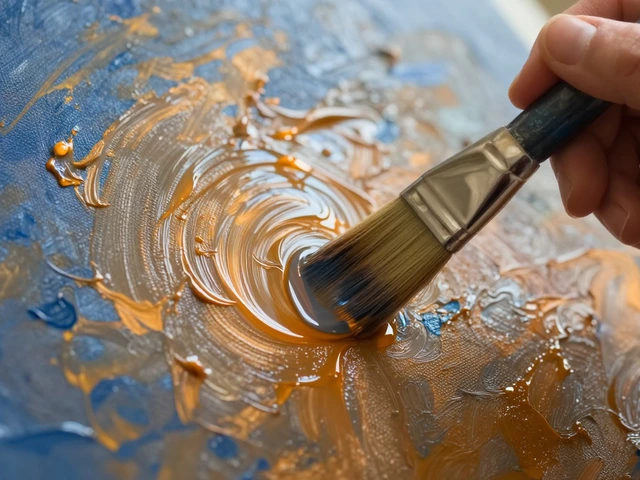
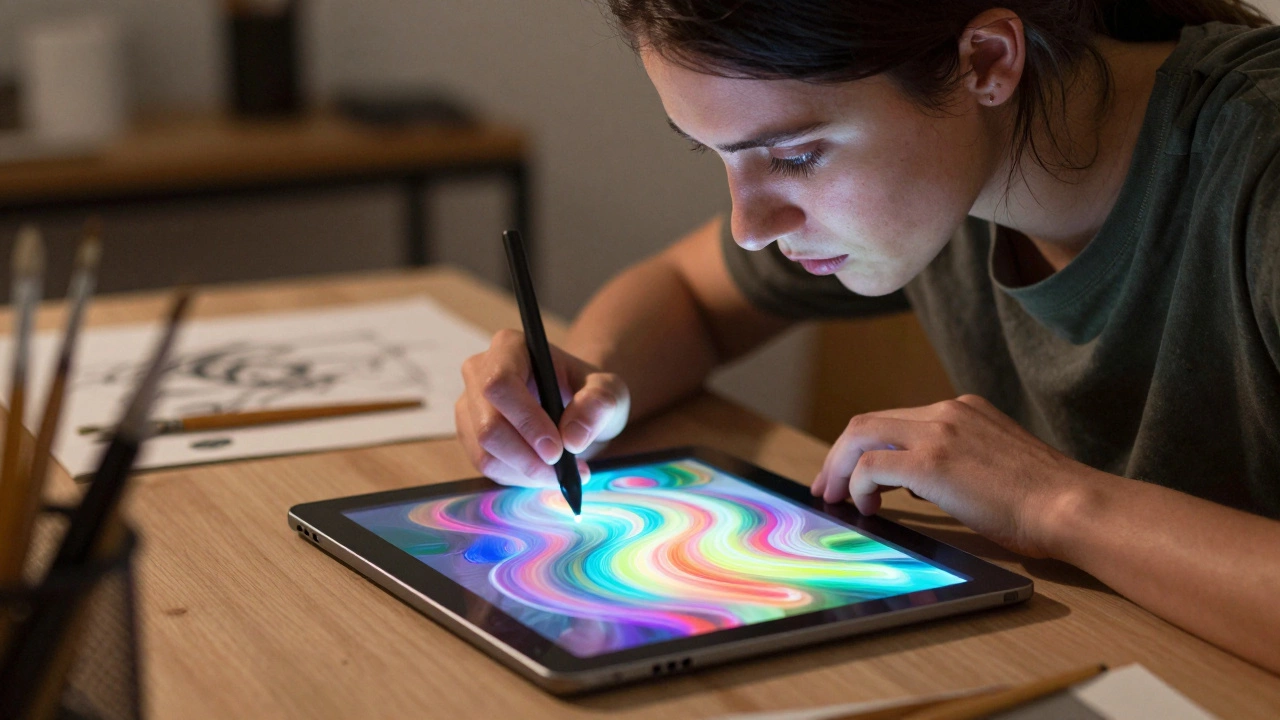
When a painter brushes pigment onto canvas, people nod. When an artist uses a stylus on a tablet to create the same image, some people shrug and say, "But is it really art?" This question isn’t new-it’s been asked since photography was invented, since oil paint replaced tempera, since the first charcoal sketch was made on cave walls. But today, with digital tools becoming as common as pencils, the pushback feels louder. Why?
Art has always been about the idea, not the tool
Think about the first cave paintings 40,000 years ago. They weren’t made with brushes or tubes of paint. They were made with crushed minerals blown through hollow bones. The tool was primitive. The intention? Deeply human. The same applies now. A digital artist doesn’t just click buttons-they make choices. Every stroke, every color blend, every layer adjustment is a decision. They spend hours learning how pressure sensitivity affects line weight. They study lighting, composition, and anatomy just like traditional artists. The only difference is the medium.
Some argue that digital art lacks "soul" because it can be undone. But that’s like saying a sculptor who chisels too deep loses soul because they can start over. Or that a writer who edits their draft ten times isn’t truly creative. Art isn’t defined by how hard it is to fix mistakes. It’s defined by the vision behind it.
History repeats itself-every new medium was once dismissed
In the 1800s, photography was called "mechanical" and not real art. Critics said machines couldn’t capture emotion. Then came Impressionists, who painted quick brushstrokes and were called "unfinished." Now, both are in museums. In the 1980s, computer-generated graphics were seen as gimmicks. Today, Pixar films win Oscars. Digital art followed the same path.
When Andy Warhol used a silkscreen machine to reproduce images, people called it "not art." He responded: "Art is what you can get away with." He was right. The art world doesn’t reject new tools-it resists them, then absorbs them. Digital art isn’t breaking the rules. It’s writing new ones.
Who decides what counts as art?
The gatekeepers have changed. Fifty years ago, it was gallery owners, critics, and academics. Today, it’s also the public. A digital artwork sold as an NFT for $69 million at Christie’s in 2021 didn’t need a curator’s approval. It got there because thousands of people saw it, shared it, and decided it mattered. That’s not a fluke. That’s a shift in power.
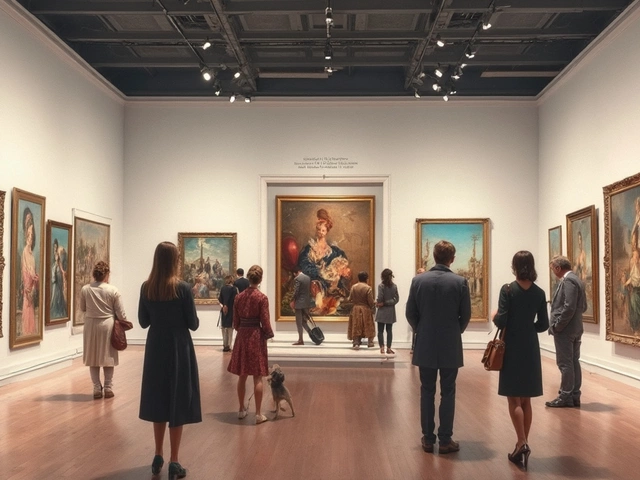
Major institutions are catching up. The Tate Modern has a dedicated digital art wing. The Smithsonian has archived digital artworks since 2018. The Museum of Modern Art in New York owns digital pieces by artists like Cory Arcangel and Refik Anadol. These aren’t side exhibits. They’re part of the permanent collection. If museums are collecting it, it’s art.
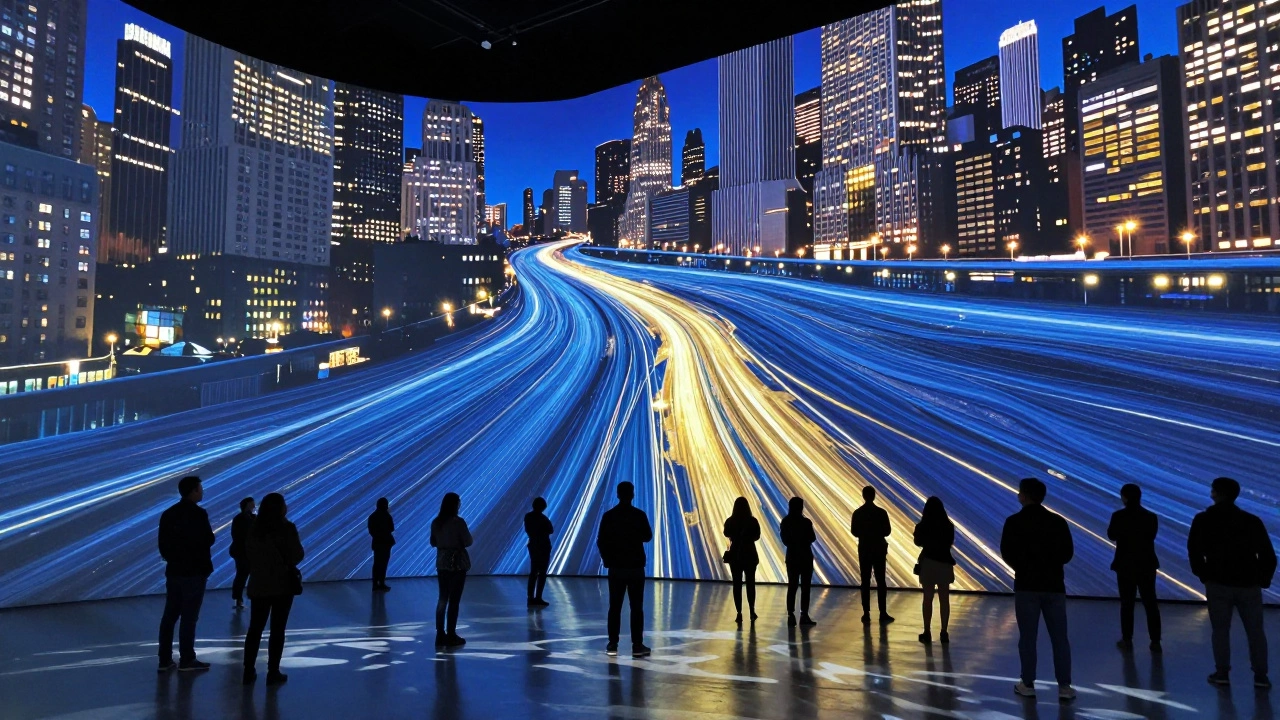
Digital art has unique strengths traditional art doesn’t
Traditional art is one-of-a-kind. Digital art can be infinite. A single file can be printed on canvas, projected on a building, turned into an animation, or embedded in a virtual reality world. An artist can create a piece that changes with the weather, responds to sound, or evolves over time. That’s not a weakness-it’s an expansion of what art can do.
Take Refik Anadol’s "Machine Hallucinations." It uses AI to process millions of images of New York City and turns them into swirling, living projections on museum walls. No brush touched that. No canvas held it. But people stand in front of it, silent, moved. That’s not technology. That’s emotion. That’s art.
Digital tools also make art more accessible. A teenager in Jakarta can learn to paint with free apps. An artist in rural Kenya can share their work globally without shipping costs. Art is no longer locked behind elite galleries or expensive materials. That’s not diluting art-it’s democratizing it.
But isn’t it just copying or using presets?
Yes, some digital art is lazy. Some artists use filters, auto-coloring tools, or stock brushes without adding their own voice. But that’s not unique to digital. There are thousands of bad oil paintings too. The difference? Digital tools make it easier to spot. A poorly drawn face in Photoshop jumps out. A poorly drawn face in acrylic? It’s just… bad art.
Real digital artists don’t rely on presets. They build their own brushes. They tweak color palettes manually. They spend weeks rendering lighting just right. One artist I know spent 117 hours on a single portrait-layer by layer, blending each tone by hand. He used a tablet, but his process was no less meticulous than a classical portrait painter.
Tools don’t make art. People do.
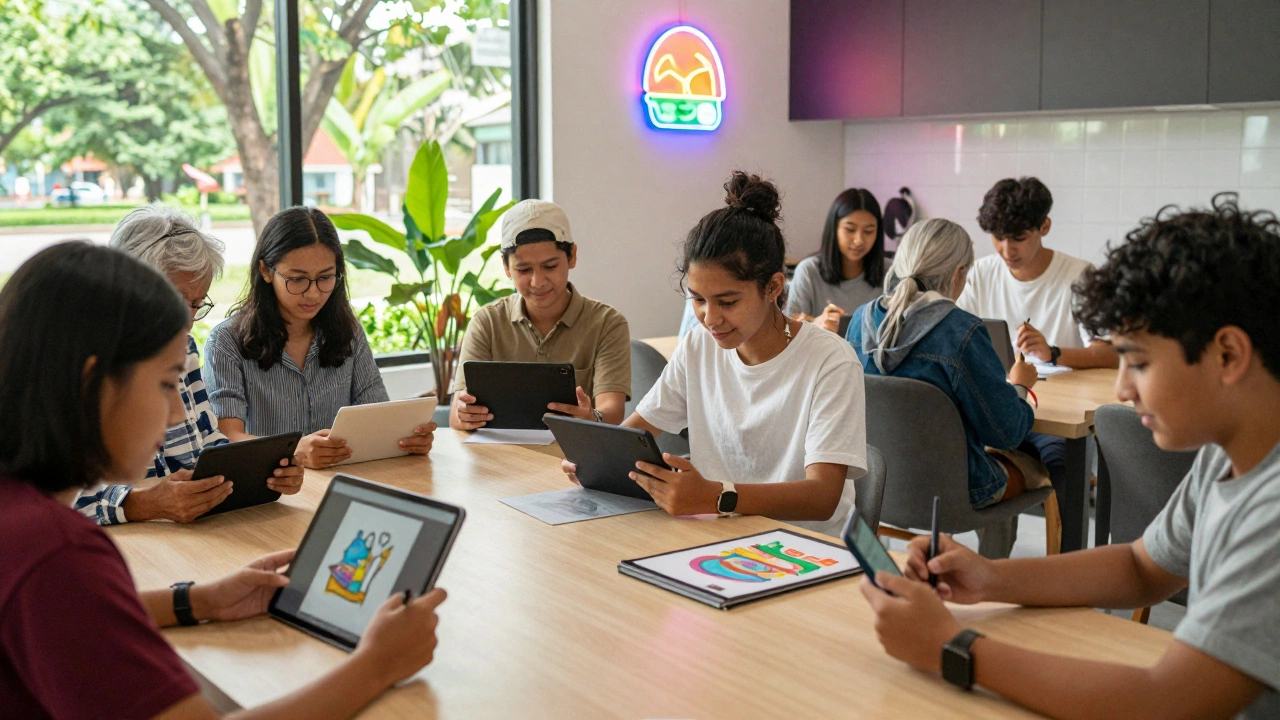
The emotional impact doesn’t change
Does a digital portrait of a loved one hurt less when they’re gone? Does a digital landscape that captures the light of a New Zealand sunset at dawn feel any less real? No. The medium doesn’t change the feeling. A child’s drawing on a tablet can be just as tender as one on notebook paper. A protest poster made in Procreate can spark a movement just like a screen-printed one from the 1960s.
Art’s job isn’t to be made a certain way. It’s to move us. To make us think. To make us feel something we didn’t know we felt. Digital art does that. Every day.
It’s not about the tool. It’s about the hand behind it.
At the end of the day, asking "Is digital art real art?" is like asking if a violin is real music because it’s made of wood and metal instead of just breath and voice. It’s not the instrument. It’s the musician.
Digital art is real because the artist is real. Their passion is real. Their struggle to get the right shade of blue, the perfect curve, the exact emotion in a character’s eyes-that’s real too. The screen doesn’t create the art. The person behind it does.
So if you’re still wondering, ask yourself this: Have you ever stood in front of a digital piece and felt something? If yes, then you already know the answer.
Is digital art as valuable as traditional art?
Yes. Value in art isn’t determined by the medium-it’s determined by demand, originality, and cultural impact. Digital artworks have sold for over $90 million at auction. The first NFT artwork ever sold, "Everydays: The First 5000 Days" by Beeple, went for $69 million. Meanwhile, traditional art prices depend on provenance, rarity, and artist reputation. A digital piece by a respected artist with a strong following can easily outvalue a traditional piece by an unknown painter.
Can digital art be owned like physical art?
Yes, but differently. You can’t own the file itself-it can be copied endlessly. What you own is a verified digital certificate of ownership, called an NFT (non-fungible token), recorded on a blockchain. This proves you’re the official owner of the original version, even if others have copies. It’s like owning the original Mona Lisa versus owning a poster of it. The poster is real, but only one person owns the original.
Do galleries and museums accept digital art?
Absolutely. Major institutions like the Tate Modern, MoMA, and the Smithsonian have acquired and exhibited digital art for years. Some galleries now specialize in it. Digital works are displayed on high-resolution screens, projectors, or interactive installations. They’re not treated as second-class art-they’re curated with the same care as paintings or sculptures.
Is digital art easier to make than traditional art?
No. While some tools offer shortcuts, mastering digital art takes years. Learning software like Photoshop, Procreate, or Blender is like learning to handle brushes, chisels, or clay. You still need to understand anatomy, perspective, color theory, and composition. Many digital artists train in traditional art first. The difference? Digital tools let you undo mistakes, but they don’t replace skill.
Why do some people still doubt digital art?
It’s often about familiarity and control. People feel comfortable with what they’ve known their whole lives-paint on canvas, clay in hands. Digital art feels invisible, intangible. It doesn’t have a physical presence in the same way. But that’s changing. As screens become part of daily life, and as younger generations grow up creating art on tablets, the skepticism fades. The doubt isn’t about the art-it’s about the fear of change.
If you’re an artist making digital work, don’t wait for permission to call it art. You already have the proof-in your hands, on your screen, in the way your pieces make others stop and look.