Abstract Art Matchmaker
Not sure who the "best" abstract artist is? It depends on what moves you. Answer these three questions to find your artistic soulmate.
1. What kind of environment makes you feel most alive?
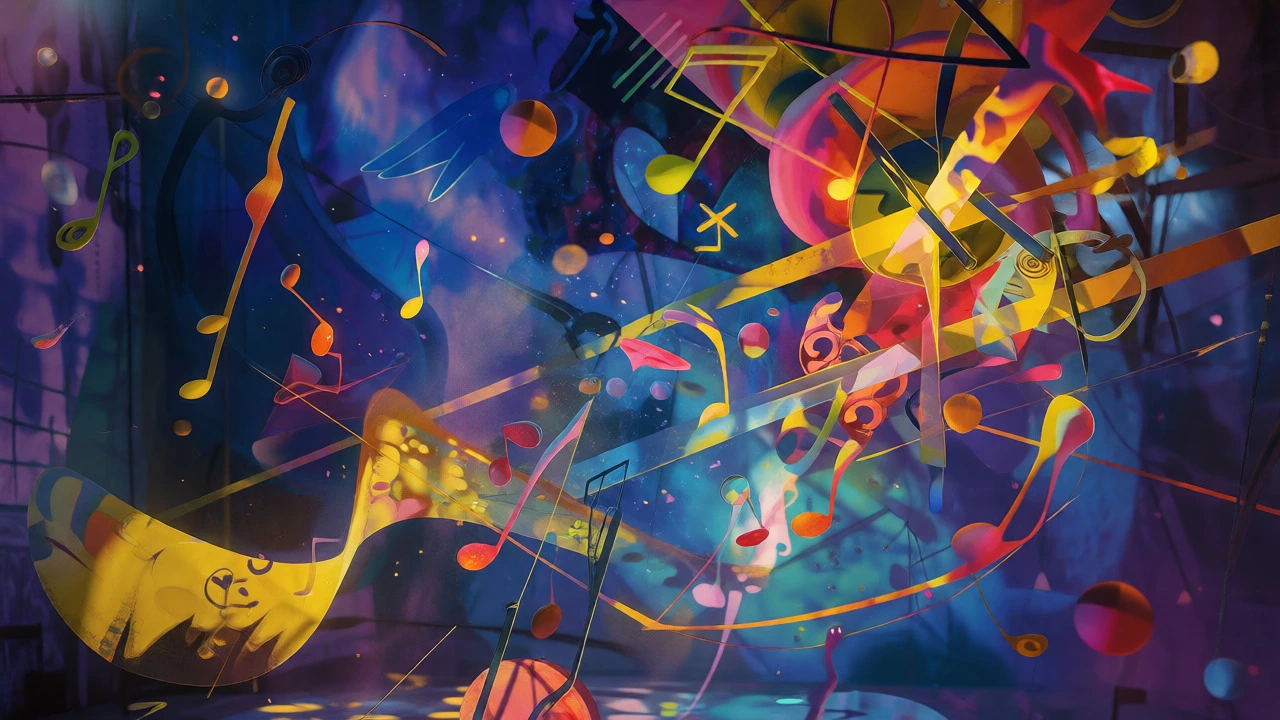
Ask ten people who invented abstract art, and you’ll get ten different answers. It’s a messy history, full of rivalries, manifestos, and stolen titles. But if you’re looking for the single name that pops up most often when people say “the father of abstract art,” it’s usually Wassily Kandinsky. He didn’t just paint shapes; he believed colors had sounds and that painting could be like music-pure emotion without a picture of a tree or a face to anchor it.
But here’s the thing: Kandinsky wasn’t alone. There were others, some earlier, some later, who pushed the boundaries even further. If you want to understand who is truly “best” associated with this movement, you have to look at the whole cast of characters. Because “best” doesn’t always mean “first.” Sometimes it means the one who made it stick in our brains.
The Russian Pioneer Who Heard Colors
Kandinsky is the go-to answer for good reason. Born in Russia, he moved to Germany and started creating non-representational paintings around 1910-1913. His theory was wild but compelling: he thought certain colors triggered specific emotional responses. Yellow was aggressive, blue was spiritual, red was lively. He wrote a book called *Concerning the Spiritual in Art* (1911) that basically became the bible for early abstract artists.
His work, like *Composition VII*, isn’t about showing you something real. It’s about chaos, order, and rhythm on canvas. When people think of abstract art as “emotional expression,” they’re thinking of Kandinsky. He gave abstract art its philosophical backbone.
The Dutch Minimalist Who Simplified Everything
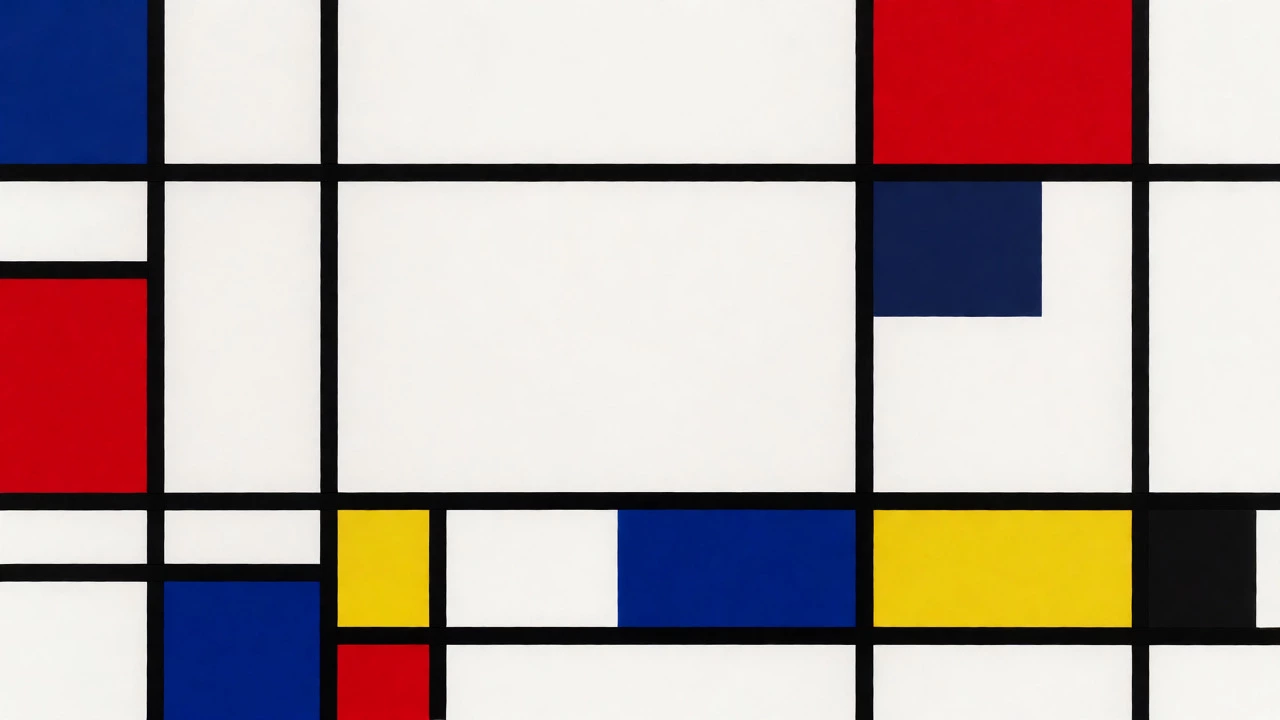
If Kandinsky was all about complex emotions, Piet Mondrian was about pure logic. He took abstraction to its absolute limit. No curves. No mess. Just black lines, white space, and primary colors (red, blue, yellow). You’ve seen his style everywhere-in IKEA furniture, in web design, in graphic posters. His famous grid paintings, like *Broadway Boogie Woogie*, aren’t just pretty; they’re an attempt to find universal harmony through simplicity.
Mondrian co-founded the De Stijl movement, which argued that art should reflect the underlying structure of reality. For many people, especially those outside the fine art world, Mondrian is abstract art. His visual language is so clean and recognizable that it has become shorthand for “modern design.” If Kandinsky is the poet of abstraction, Mondrian is the engineer.
The American Action Painters Who Made It Loud
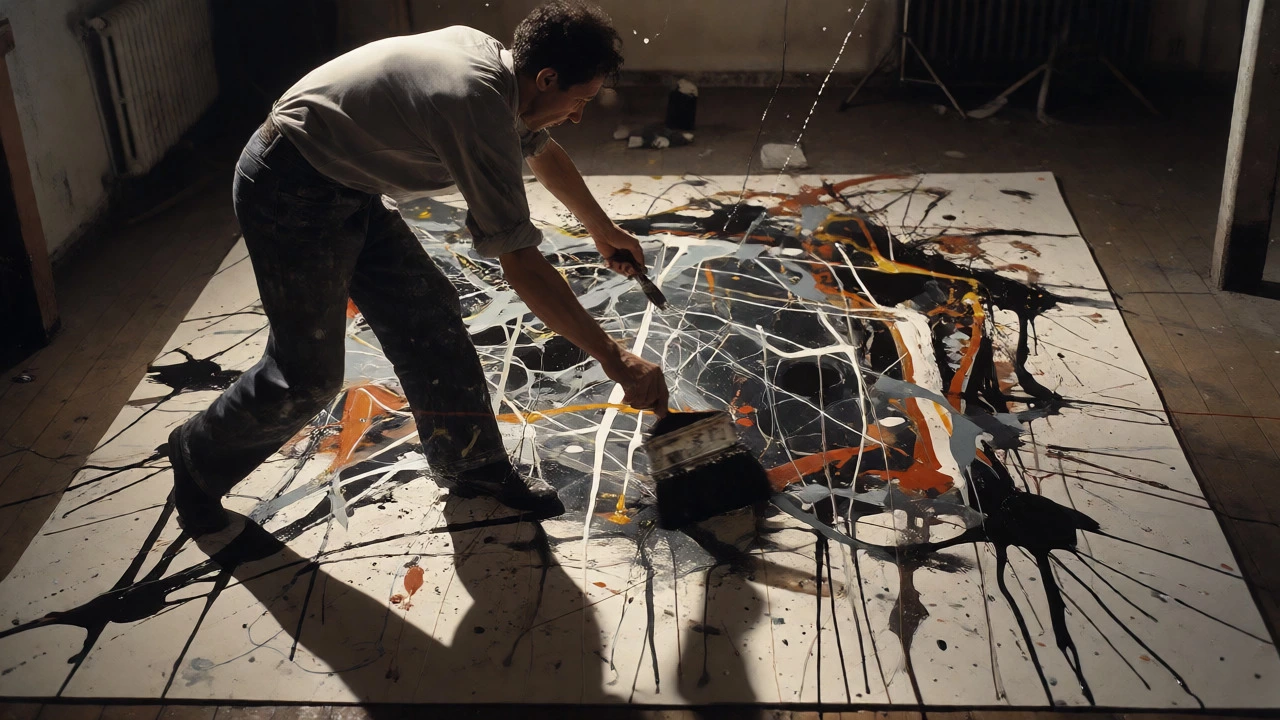
Fast forward to the 1940s and 50s. The center of the art world shifted from Paris to New York. Enter the Abstract Expressionists. These guys weren’t interested in calm grids or spiritual theories. They wanted to throw paint, drip it, splash it, and pour it. Jackson Pollock is the poster child for this era. His “drip paintings” are chaotic tangles of enamel paint on huge canvases laid on the floor.
Pollock’s method was physical. He danced around the canvas, letting gravity do the work. Critics loved it because it looked spontaneous, raw, and deeply personal. It was art as action. If Kandinsky painted what he felt, Pollock painted what he did. This shift made abstract art feel dangerous and exciting again.
The Color Field Masters Who Made It Quiet
While Pollock was making noise, another group was going in the opposite direction. Mark Rothko created massive rectangles of blurred color that seem to glow. His goal wasn’t to show you a pattern; it was to make you feel small. Standing in front of a Rothko is like standing in front of the ocean or a cathedral-it’s overwhelming.
Rothko hated being called an abstract artist. He said he was interested in basic human emotions-tragedy, ecstasy, doom. But visually, his work is pure abstraction. No objects, no lines, just color. Artists like Barnett Newman and Clyfford Still worked in similar ways, using large fields of color to create meditative experiences. For many viewers, Rothko’s work is the most accessible entry point into abstract art because it feels intuitive rather than intellectual.
So, Who Is the “Best”?
There’s no single winner. It depends on what you value in art. Here’s a quick breakdown to help you decide who resonates with you:
| Artist | Movement | Signature Style | Why They Matter |
|---|---|---|---|
| Wassily Kandinsky | Expressionism / Blaue Reiter | Vibrant, musical compositions with geometric and organic shapes | First to theorize abstract art as spiritual expression |
| Piet Mondrian | De Stijl | Grids, primary colors, black lines, no curves | Defined modern minimalist aesthetics; influenced design globally |
| Jackson Pollock | Abstract Expressionism | Drip paintings, chaotic energy, large scale | Made art creation physical and performative; broke European dominance |
| Mark Rothko | Color Field Painting | Soft-edged rectangular blocks of color | Proved abstraction could evoke deep, quiet emotional states |
If you care about the history and philosophy, Kandinsky is your guy. If you love clean design and minimalism, it’s Mondrian. If you want energy and drama, go with Pollock. And if you’re looking for meditation and depth, Rothko wins every time.
Other Names You Should Know
You can’t talk about abstract art without mentioning Hilma af Klint. She was actually painting abstract works before Kandinsky, starting in 1906! Her work was hidden for decades because she was part of a spiritualist group and didn’t exhibit publicly. Today, she’s recognized as a true pioneer, proving that women were leading the charge too.
Then there’s Kazimir Malevich, who created Suprematism-simple geometric forms like squares and circles on white backgrounds. His *Black Square* (1915) is one of the most controversial artworks ever made. Some saw it as the end of painting; others saw it as the beginning of a new era. Like Mondrian, Malevich stripped art down to its bare essentials, but his approach was more radical and political.
How to Spot Abstract Art in the Wild
Now that you know the key players, how do you identify abstract art when you see it? It’s not just “messy paint.” Look for these traits:
- No recognizable objects: If you can’t clearly name what’s depicted (a dog, a house, a person), it’s likely abstract.
- Focus on form: Pay attention to lines, shapes, colors, and textures. These are the subjects, not just tools.
- Emotional impact: Does it make you feel something without explaining why? That’s the core of abstract expressionism.
- Simplicity or complexity: It can be as simple as a single black square (Malevich) or as complex as a tangled web (Pollock). Both are valid.
Don’t worry if you don’t “get” it right away. Abstract art isn’t a puzzle with one correct answer. It’s an experience. Next time you visit a gallery, stand in front of a Rothko for five minutes. Don’t try to analyze it. Just breathe and see what happens. You might be surprised by how much it affects you.
Who is considered the first abstract artist?
This is debated, but Wassily Kandinsky is traditionally credited as the first major abstract artist for his works between 1910-1913. However, Hilma af Klint began creating purely abstract paintings in 1906, predating Kandinsky, though her work remained largely private until recently.
What is the difference between abstract and non-objective art?
Abstract art starts with a real-world subject and distorts or simplifies it (like Picasso’s cubism). Non-objective art, like Kandinsky’s or Mondrian’s, has no reference to the physical world at all. It exists purely as color, line, and shape.
Why is Jackson Pollock so famous?
Pollock revolutionized art by turning painting into a physical performance. His drip technique removed the brush from direct contact with the canvas, emphasizing chance, movement, and the subconscious. This helped shift the art world's focus from Europe to America.
Is abstract art easier to paint than realistic art?
Not necessarily. While it doesn't require technical skill in rendering perspective or anatomy, successful abstract art requires a strong sense of composition, color balance, and emotional intent. Many critics argue it's harder to make something meaningful out of nothing than to copy something that already exists.
Can I hang abstract art in a traditional home?
Absolutely. Abstract art is versatile. A soft Rothko-style piece can calm a busy room, while a bold Pollock-inspired print can add energy to a neutral space. Start with pieces that use colors already present in your decor to ensure harmony.