Art Print Pricing & Profit Calculator
Turning your creative work into a revenue stream feels like a leap of faith. You have the skills, you have the portfolio, but the path from "digital file" to "paid invoice" is often shrouded in confusion about margins, platforms, and logistics. If you are ready to monetize your visual work, this guide cuts through the noise to give you a clear, actionable roadmap.
The core of selling art prints is physical reproductions of original artwork sold to collectors and consumers. Unlike originals, which are one-of-a-kind, prints allow you to scale your income without scaling your production time indefinitely. However, success depends less on artistic talent alone and more on understanding the mechanics of pricing, distribution, and audience building.
Choosing Your Production Model
Your first major decision is how the physical product gets made. This choice dictates your upfront costs, quality control, and profit margins. There are two dominant models: Print-on-Demand (POD) and Self-Printing.
Print-on-Demand is a service where third-party providers handle printing, packaging, and shipping only after a customer places an order. Platforms like Etsy integrated with partners such as Society6 or Redbubble operate this way. The benefit is zero inventory risk. You upload a file, set a price, and the platform handles the rest. The trade-off? Lower margins. Typically, you earn 15% to 30% of the sale price, depending on the provider and product type.
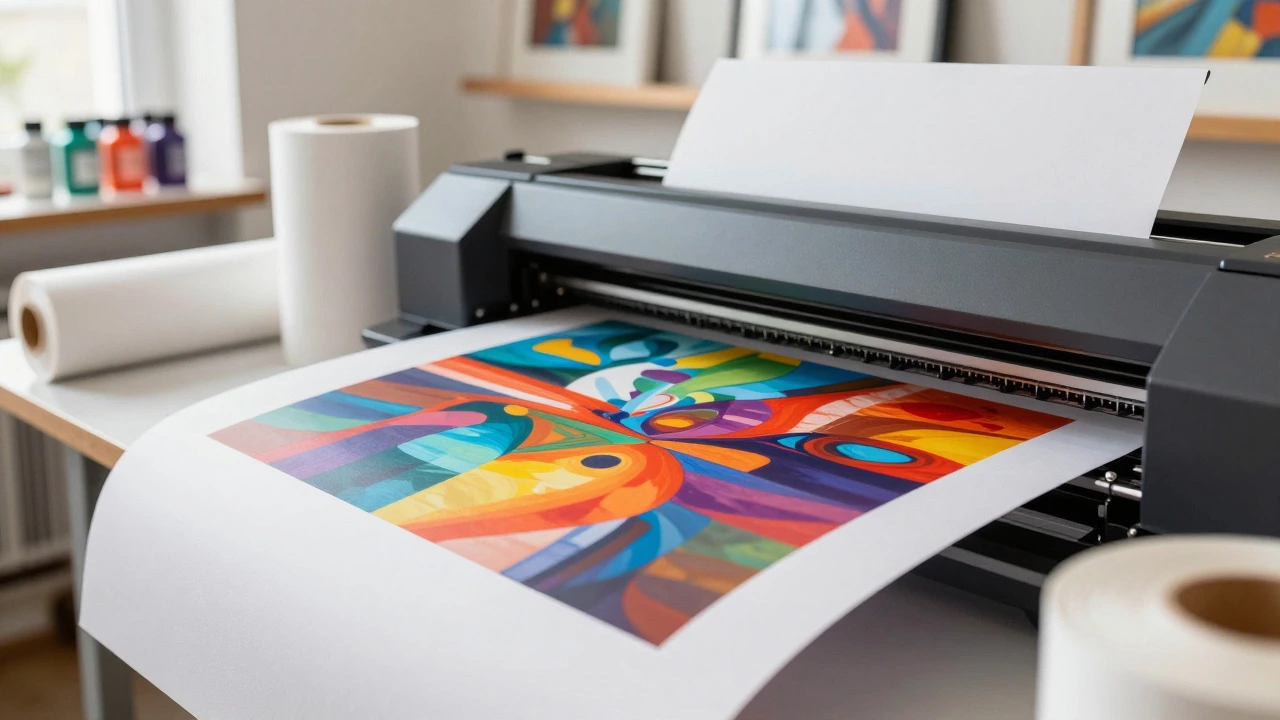
In contrast, self-printing involves buying paper, ink, and a printer yourself. This allows for higher perceived value, especially if you use archival materials. For serious artists, Giclée printing is a high-quality inkjet printing process using pigment-based inks on archival paper or canvas, known for color accuracy and longevity. While the initial setup cost is higher, your per-unit cost drops significantly at volume, boosting your net profit per sale.
Pricing Your Work Correctly
Most artists underprice their work because they forget to account for hidden costs. A simple formula helps keep you profitable. Start with your base material cost (paper, ink, frame). Add your labor time-yes, even if it’s just uploading files, it takes minutes that add up. Then, factor in platform fees. Etsy charges a listing fee plus a transaction fee (typically 6.5%) and payment processing fees. If you sell via your own website using Shopify or Squarespace, you pay monthly subscription fees but retain full control over branding.
A practical rule of thumb: Price = (Material Cost + Labor Cost + Overhead) x 2.5. This multiplier covers your profit margin and buffers against unexpected expenses like returns or damaged goods. For example, if a framed print costs $15 in materials and takes 30 minutes to prepare (valued at $10/hour), your base cost is $20. Multiply by 2.5, and your retail price should be around $50. From there, adjust based on market research. Look at similar artists on Instagram or Etsy. If everyone sells 8x10 inch prints for $40, don’t charge $80 unless your brand justifies the premium.
Building Your Digital Presence
You can’t sell what no one sees. Your online presence is your storefront. Social media isn’t just for sharing pretty pictures; it’s a funnel. Instagram remains the primary visual platform for art sales. Post consistently-not just finished pieces, but process videos, studio tours, and behind-the-scenes content. People buy from people, not faceless accounts.
Email marketing is your most reliable asset. Social algorithms change, but your email list belongs to you. Offer a free downloadable wallpaper or a discount code in exchange for emails. Send a newsletter twice a month: once to share new releases, once to tell a story about your inspiration. Keep it personal. Mention specific details about your technique or the mood behind a piece. This builds trust, which converts to sales.
Handling Logistics and Fulfillment
If you choose self-printing, logistics become your responsibility. Use sturdy packaging. Bubble wrap is essential for frames; acid-free tissue paper protects unframed prints from moisture. Include a thank-you note. It’s a small touch that increases repeat purchases and positive reviews. Ship within 2-3 business days. Delays kill momentum. If you use POD, track orders closely. Sometimes printers make mistakes. If a customer receives a faded print, replace it immediately without argument. Customer service is part of the product.

Common Pitfalls to Avoid
- Ignoring Copyright: Ensure your work is original or properly licensed. Using stock photos without permission leads to takedowns.
- Poor File Preparation: Always export files in CMYK color mode for print, not RGB. RGB colors look vibrant on screens but dull in print. Check your proofs before mass producing.
- Overcomplicating Launch: Don’t wait for the perfect website. Start with a simple Etsy shop or Instagram Shop. Iterate later.
- Neglecting SEO: Use descriptive titles and tags. Instead of "Cool Blue Painting," use "Abstract Blue Watercolor Wall Art, Modern Living Room Decor."
Frequently Asked Questions
Do I need a license to sell my own art prints?
Generally, no. As the creator, you hold the copyright. However, if you use trademarks, characters, or images from others, you may need permission. For purely original work, you can sell freely. Registering your copyright provides legal protection but is not strictly required for basic sales.
What is the best paper for art prints?
For professional results, use 100% cotton rag paper or high-quality alpha cellulose paper. These papers are acid-free and lignin-free, ensuring they won’t yellow over time. Giclée-grade papers typically range from 200gsm to 310gsm for durability and texture.
Should I frame my prints before selling?
It depends on your target market. Framed prints command higher prices and reduce buyer effort, but they increase shipping costs and damage risk. Many artists sell unframed prints in tubes or flat packs, allowing buyers to choose their own frames. Offering both options is ideal if budget permits.
How many prints should I make initially?
If self-printing, start with a limited edition of 10-20 copies. Scarcity drives urgency. Number and sign each print. Once sold out, raise the price for the next edition or release a new design. This strategy builds collector interest and prevents oversupply.
Is it worth hiring a manager or agent?
Not at the start. Agents typically take 20-30% commission and prefer artists with established galleries or consistent sales. Focus on building your direct-to-consumer channel first. Once you’re generating significant revenue, consider outsourcing tasks like shipping or social media management instead of hiring a full-time agent.