Portrait Cost Estimator
Get an estimate for a realistic portrait based on size, medium, and complexity. Prices range from $300 to $10,000+ depending on your choices.
Want a realistic portrait but not sure what to expect to pay? You’re not alone. People ask this question all the time - whether they’re planning a gift, honoring a loved one, or just want a personal piece of art that feels alive on the wall. The answer isn’t simple. A realistic portrait can cost anywhere from $300 to $10,000 or more. What you get for your money depends on who paints it, how big it is, what medium they use, and how much detail they’re expected to capture.
What Drives the Price of a Realistic Portrait?
There’s no fixed price list for portraits. Artists don’t work like mechanics with a standard labor rate. Their pricing comes down to experience, time, materials, and demand. A local art student might charge $250 for a 12x16 inch pencil drawing. A nationally recognized portrait artist with 20 years of experience could charge $8,000 for the same size in oil. The difference isn’t just skill - it’s reputation, consistency, and the kind of results people are willing to wait months for.
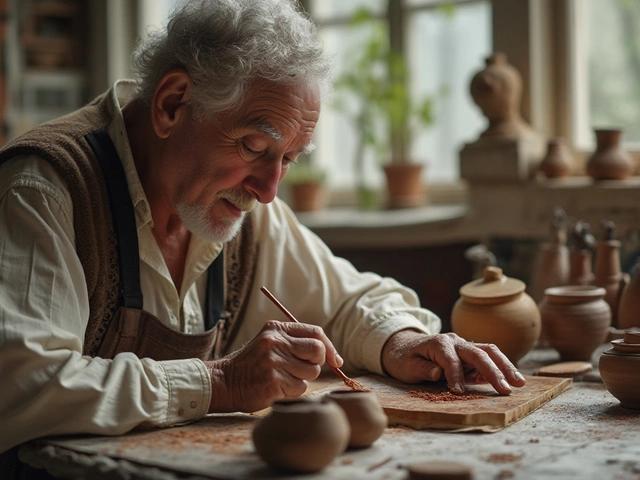
Time is the biggest hidden cost. A high-quality realistic portrait takes between 20 and 80 hours of focused work. That’s not just painting. It includes reviewing reference photos, sketching multiple drafts, adjusting lighting and expression, and refining details like the curve of a cheek or the reflection in an eye. Some artists charge by the hour. Others charge a flat fee based on the final product. Either way, you’re paying for the artist’s eye - the ability to see and recreate what most people overlook.
Medium Matters: Oil, Pastel, Pencil, or Digital?
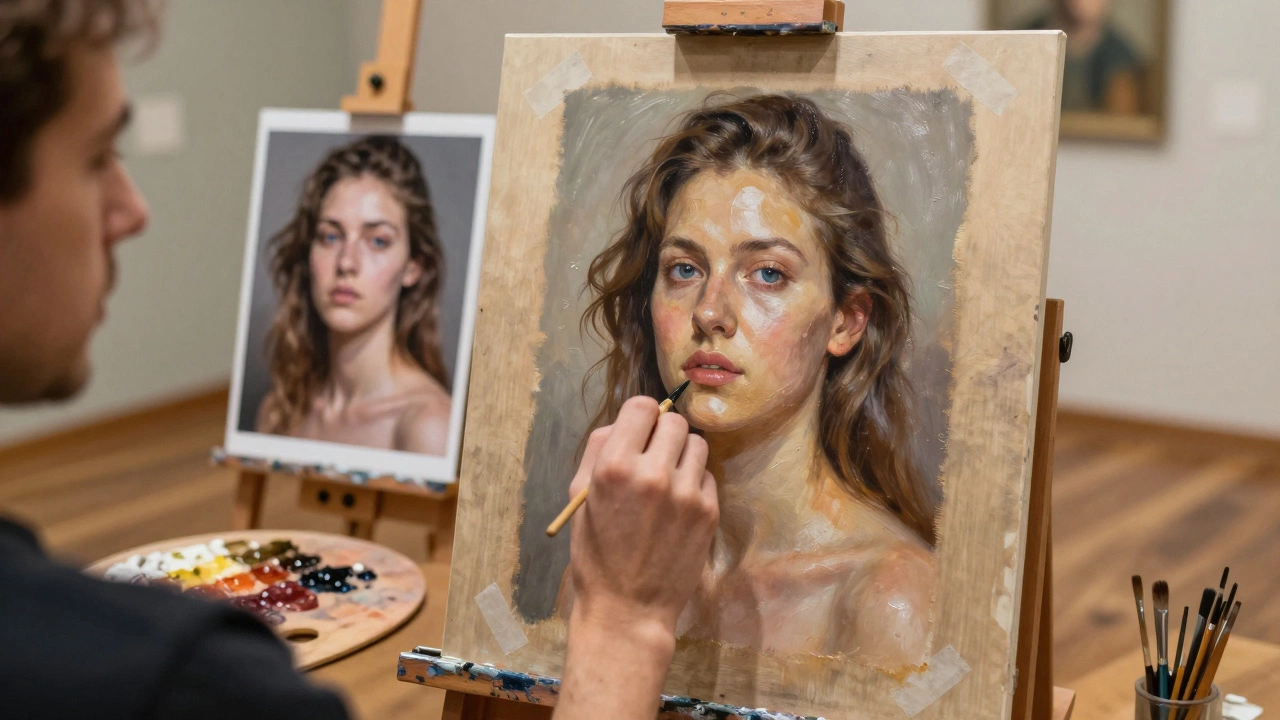
The medium you choose affects both look and price. Oil paint is the gold standard for realistic portraits. It allows for rich depth, subtle blending, and longevity. A 16x20 inch oil portrait typically starts at $1,500 and can go up to $6,000 depending on complexity. Artists using oil often need weeks to let layers dry properly, which adds to the timeline and cost.
Charcoal or graphite pencil portraits are less expensive, usually between $300 and $1,200. They’re faster to produce and require fewer materials. But they’re also more fragile - they smudge easily and need glass framing. Pastel portraits sit in the middle. They’re vibrant and expressive, with prices ranging from $800 to $3,500. They require special fixatives and framing to preserve the texture.
Digital portraits are the fastest and often cheapest option, starting around $200. But they’re not the same as a hand-painted original. A digital portrait is usually a manipulated photo, not a painted likeness. If you want something you can hang on your wall as a unique piece of art, not a print, then digital isn’t the same thing. Some artists combine digital sketching with traditional painting - that’s a hybrid approach and usually priced higher than pure digital.
Size and Complexity: Bigger Isn’t Always More Expensive - But It Often Is
Size matters, but not always how you think. A small portrait (8x10 inches) might cost $400. A larger one (24x30 inches) could be $3,000. But a portrait with three people, a detailed background, and multiple pets? That’s not just bigger - it’s exponentially harder. Each additional face adds 10 to 15 hours of work. A background with trees, furniture, or architecture? That’s another 10 to 20 hours. Artists often add a complexity surcharge for these elements.
Here’s a rough breakdown by size and subject:
| Size | Single Person | Two People | Three+ People or Pets |
|---|---|---|---|
| 8x10 inches | $300-$800 | $600-$1,200 | $900-$1,800 |
| 12x16 inches | $600-$1,500 | $1,000-$2,200 | $1,500-$3,000 |
| 16x20 inches | $1,200-$3,000 | $2,000-$4,500 | $3,000-$6,000 |
| 24x30 inches | $2,500-$6,000 | $4,000-$8,000 | $5,500-$10,000+ |
Don’t assume bigger is always better. Sometimes a smaller, tightly focused portrait captures more personality than a large one with too much clutter. The best portraits aren’t the biggest - they’re the ones where the eyes look like they’re watching you.
Artist Experience: Why a 0 Portrait Might Not Be Worth It
It’s tempting to go for the cheapest option, especially if you’re on a budget. But here’s the truth: a $500 portrait from an inexperienced artist often ends up looking like a decent photo edited in Photoshop. It might have the right colors and shapes, but it lacks life. The skin doesn’t have the warmth of real flesh. The eyes don’t catch light the way real eyes do. The expression feels frozen, not real.
Experienced portrait artists have spent years studying anatomy, lighting, and human emotion. They know how to capture a smile that doesn’t look forced. They understand how light falls on a forehead, how shadows pool under the jawline. They’ve painted dozens - sometimes hundreds - of faces. That experience shows. And it’s why their work costs more.
Look at their portfolio. Not just the final images, but the process. Do they show sketches? Multiple versions? How do they handle difficult lighting? Do they have testimonials from clients who’ve waited months for a piece? If the artist doesn’t talk about their process, that’s a red flag.
How to Avoid Getting Ripped Off
There are scams out there. Some sellers on Etsy or Fiverr promise "professional portraits" for under $200. They use AI tools to generate images, then call them "hand-painted." Others hire students overseas to copy photos, then mark them up 500%. You pay for a "custom" portrait and get a generic face with no soul.
Here’s how to protect yourself:
- Ask for a detailed quote in writing - including size, medium, number of subjects, and revision policy.
- Check if they use real reference photos. A good artist will ask for multiple angles, lighting variations, and close-ups of eyes and hands.
- Never pay 100% upfront. A 30-50% deposit is standard. The rest should be due upon approval of the final piece.
- Ask to see a work-in-progress photo halfway through. This lets you catch issues early.
- Be wary of artists who say they can finish in 3 days. Realistic portraiture takes time.
If an artist refuses to answer these questions, walk away. Your portrait is a memory. Don’t risk it on a gamble.
Where to Find the Right Artist
Start local. Look at art fairs, galleries, or community centers. Many portrait artists have websites but don’t advertise on big platforms. Search for "realistic portrait artist [your city]" - you’ll often find people who’ve been painting for decades in your area. They might not have thousands of Instagram followers, but they have a solid track record.
Instagram and Behance are good for browsing portfolios. Use hashtags like #realisticportrait, #oilportrait, or #commissionedportrait. Look for artists who post regular updates - not just final shots. You want someone who shares their process, not just their results.
Don’t overlook art schools. Recent graduates often charge less and are eager to build their portfolios. You might get a stunning portrait at half the price of a well-known artist. Just make sure they have a strong portfolio and clear communication skills.
What You’re Really Paying For
At the end of the day, you’re not paying for paint or canvas. You’re paying for an artist’s ability to turn a moment into something timeless. A portrait isn’t just a picture of someone. It’s a record of their presence - the way they held their head, the quietness in their gaze, the faint crease beside their smile. A good portrait doesn’t just look like the person. It feels like them.
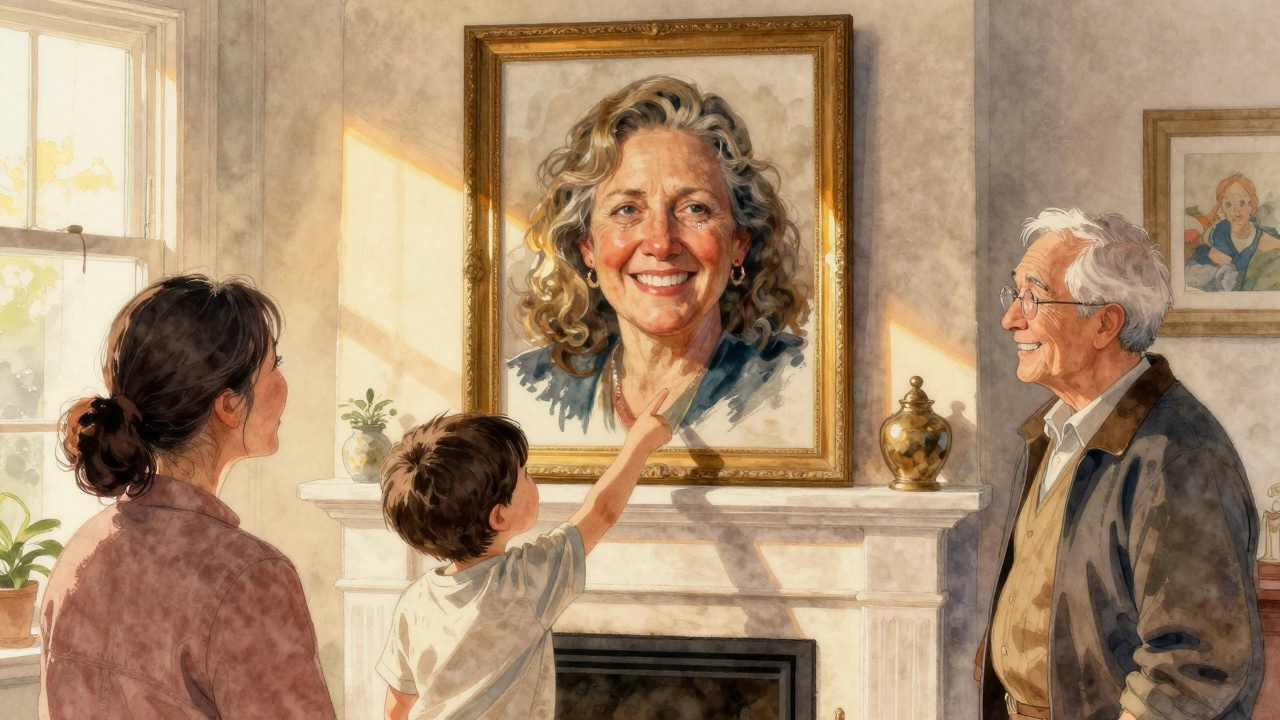
That’s why people spend thousands. Not because they’re rich. But because they understand that some things can’t be replaced. A photo fades. A video gets lost. But a hand-painted portrait? It lasts. It’s held in families for generations. It’s the thing you hang above the fireplace and point to when your grandchildren ask, "Who’s that?"
So yes - a realistic portrait can cost a lot. But if you’re investing in something that will outlive you, it’s worth every dollar.
How long does it take to paint a realistic portrait?
Most realistic portraits take between 2 to 12 weeks, depending on size, complexity, and the artist’s schedule. A small pencil portrait might take 2-3 weeks. A large oil painting with multiple subjects can take 3 to 6 months. Artists usually provide a timeline upfront and update you on progress.
Can I use a photo from Instagram for a portrait?
Yes, but the quality matters. A low-resolution, blurry, or poorly lit photo will make the artist’s job harder and may affect the final result. The best portraits come from clear, well-lit photos taken in natural light. Ask your artist what kind of reference photos they prefer - most will ask for 3-5 different angles.
Do I need to sit for the portrait?
No. Most portrait artists today work from photos, especially for realistic styles. Sitting in person is more common for traditional studio artists or those painting live subjects. If you’re working remotely, sending high-quality photos is standard. Just make sure the lighting is even and the face is clearly visible.
Are digital portraits considered real art?
It depends on how they’re made. If the artist uses a tablet to hand-draw every line and shade every tone based on your photo, then yes - it’s original art. But if the image is generated by AI or heavily edited from a template, it’s not the same. Ask the artist if they created it from scratch. If they say "I just adjusted the colors," walk away.
What’s the difference between a portrait and a photo print?
A photo print is a copy of a moment. A portrait is a reinterpretation of a person through an artist’s eye. It includes subtle choices - how light falls, how emotion is expressed, what details are emphasized. A portrait has texture, brushstrokes, and depth. A photo print has pixels. One is a reproduction. The other is a unique piece of art.