Watercolor Technique: Master the Basics and Avoid Common Mistakes
When you pick up a watercolor brush, you’re not just painting—you’re working with watercolor technique, a method of painting that uses transparent pigments dissolved in water to create luminous, layered effects. Also known as watercolor painting, it’s one of the most forgiving and frustrating mediums out there. It doesn’t lie. If your wash is muddy, you’ll see it. If your paper buckles, you can’t ignore it. But when it works? Nothing else captures light the way watercolor does.
What most beginners don’t realize is that watercolor technique isn’t about controlling every drop—it’s about learning when to let go. It’s not a medium for heavy-handedness. You don’t force color onto paper; you guide it. The key is understanding how water and pigment interact. Too much water? Your colors bleed into each other. Too little? You get harsh, chalky edges. The sweet spot? A wet brush with just enough pigment to move smoothly but not flood the surface. That’s where real control begins.
There are three core skills every watercolor artist needs: wet-on-wet, a method where paint is applied to damp paper to create soft, blended transitions, wet-on-dry, a technique where paint is applied to dry paper for sharp edges and precise details, and layering, building up color gradually with transparent glazes to achieve depth without muddiness. These aren’t just fancy terms—they’re the tools you’ll use every time you paint. Skip them, and you’ll keep hitting the same walls: muddy greens, blooming clouds, and flat, lifeless skies.
You’ll also need to pay attention to your materials. Not all paper is made equal. Cheap paper curls, bleeds, and falls apart. A good 140lb cold-pressed paper holds water without warping and lets you lift color when you need to. And your brushes? You don’t need a whole set. One good round brush, size 8 or 10, and a small detail brush are enough to start. The rest is just noise.
And let’s talk about mistakes. Everyone messes up. A common one? Painting the whole scene at once. Watercolor doesn’t work like oil or acrylic. You don’t paint the sky, then the trees, then the grass. You plan your layers. Light to dark. Washes first, details last. Another mistake? Overworking. Once a wash dries, don’t go back and scrub it. You’ll ruin the texture. Instead, wait. Let it dry. Then add another layer. Patience isn’t optional—it’s the secret ingredient.
What you’ll find in these posts isn’t theory. It’s what works. From how to mix vibrant greens without turning them brown, to why your skies look flat (and how to fix it), to how to paint reflections that don’t look like plastic. You’ll see real examples, real mistakes, and real fixes—no fluff, no jargon, no pretending you need a degree to get good. These are the techniques artists use day after day, not the ones they show off in galleries.
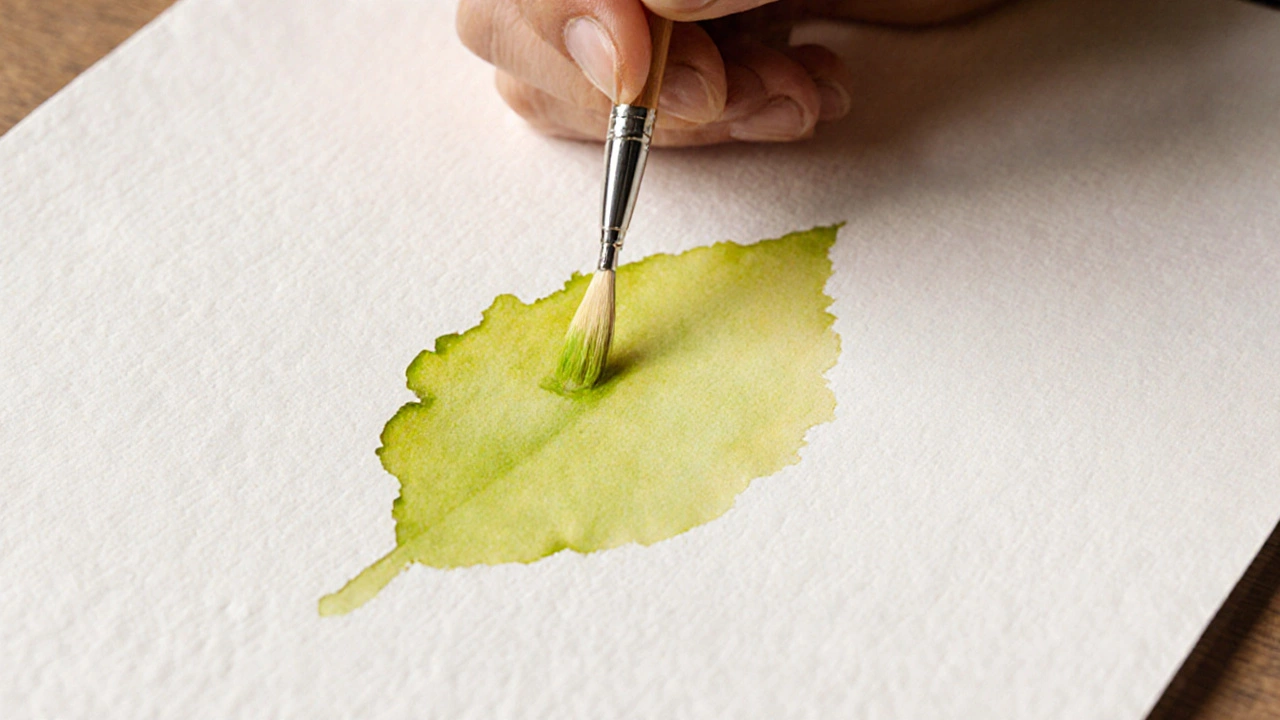
Are You Supposed to Layer Watercolor? The Real Guide to Building Depth Without Muddying Your Paint
Learn how to layer watercolor properly to create depth, avoid muddy colors, and unlock the true potential of this transparent medium. No fluff-just practical tips for better paintings.
Continue ReadingCategories
Most popular
-

-
 How Much Does a Realistic Portrait Cost in 2025? Dec 18 2025
 -
-
 Is It Legal to Print Art for Personal Use? Feb 9 2025
 -