Professional Paint Stripping Advisor
Select your scenario below to receive a professional recommendation for solvents, tools, and safety precautions.
You’ve spent hours blending glazes on a canvas, only to realize the varnish layer has yellowed or you made a mistake that needs undoing. Or maybe you’re an artist trying to reclaim a palette knife caked with decades of dried linseed oil. The question isn’t just "how do I remove paint?" but "what do professionals actually use to strip paint without destroying the artwork underneath?"
It’s a common misconception that there is one magic liquid that wipes everything away. In reality, professional conservators and experienced painters rely on a careful selection of solvents, mechanical tools, and specific chemical interactions. Using the wrong method can dissolve your pigment, warp your canvas, or leave behind residues that crack years later. Here is exactly what pros reach for, why they choose it, and how they apply it.
The Chemistry of Removal: Why Water Isn’t Enough
Before grabbing a rag, you need to understand what you are dealing with. Oil paint is not water-soluble once cured. It is a network of polymerized fatty acids (from oils like linseed or walnut) trapped in a matrix of pigment particles. Water might clean wet paint, but it does nothing to hardened oil layers. This is where solvents come in.
A solvent is a substance that dissolves another substance (the solute) to form a solution. In painting, we categorize them by their polarity and evaporation rate. Professionals don’t guess; they test. They use a concept called the "Solubility Parameter," which measures how likely two substances are to mix. If the parameter of your solvent matches the parameter of the binder (oil), the paint will lift. If it doesn’t, you’ll just be wiping around dirty water.
Most beginners make the mistake of using household cleaners. Ammonia-based glass cleaners can emulsify some acrylics but often leave surfactants that attract dirt. For oil paintings, professionals stick to hydrocarbon-based or alcohol-based solvents, depending on the age and condition of the piece.
Solvent Selection: The Professional’s Arsenal
There is no single "best" solvent. There is only the right solvent for the job. Conservators typically maintain a hierarchy of aggressiveness, starting with the mildest option before moving to stronger chemicals.
| Solvent Name | Primary Use Case | Aggressiveness Level | Drying Speed |
|---|---|---|---|
| Mineral Spirits | Cleaning brushes, removing fresh oil paint | Moderate | Slow |
| Turpentine | Traditional thinning, older varnish removal | Moderate-High | Medium |
| Acetone | Stripping synthetic resins, fast-drying varnishes | High | Very Fast |
| Isopropyl Alcohol | Cleaning acrylic surfaces, mild varnish softening | Low-Moderate | Fast |
| Gels (e.g., Citrisolv) | Controlled stripping of thick layers | Variable (controlled) | Slow |
Mineral spirits (also known as white spirit) are the workhorse of the studio. They are petroleum distillates that effectively break down the lipid chains in drying oils. However, they are slow-evaporating, which means they sit on the surface longer, allowing for deeper penetration. This is great for cleaning palettes but risky for lifting paint off a delicate canvas if left too long.
Turpentine is controversial. While traditionalists love it for its ability to dissolve natural resin varnishes (like dammar or mastic), it has a strong odor and can cause allergic reactions. More importantly, modern "odorless mineral spirits" have largely replaced turpentine for general cleaning because they lack the aromatic compounds that trigger headaches. But when a conservator needs to cut through a century-old varnish, turpentine’s unique chemical structure sometimes outperforms modern alternatives.
Acetone is a double-edged sword. It evaporates almost instantly, making it excellent for spot-cleaning small areas without soaking the substrate. However, it is aggressive enough to dissolve many synthetic varnishes and even some acrylic paints. Pros use it sparingly, usually on non-porous surfaces or for stripping specific synthetic coatings, never as a first resort for original oil layers.
Gel Strippers: The Controlled Alternative
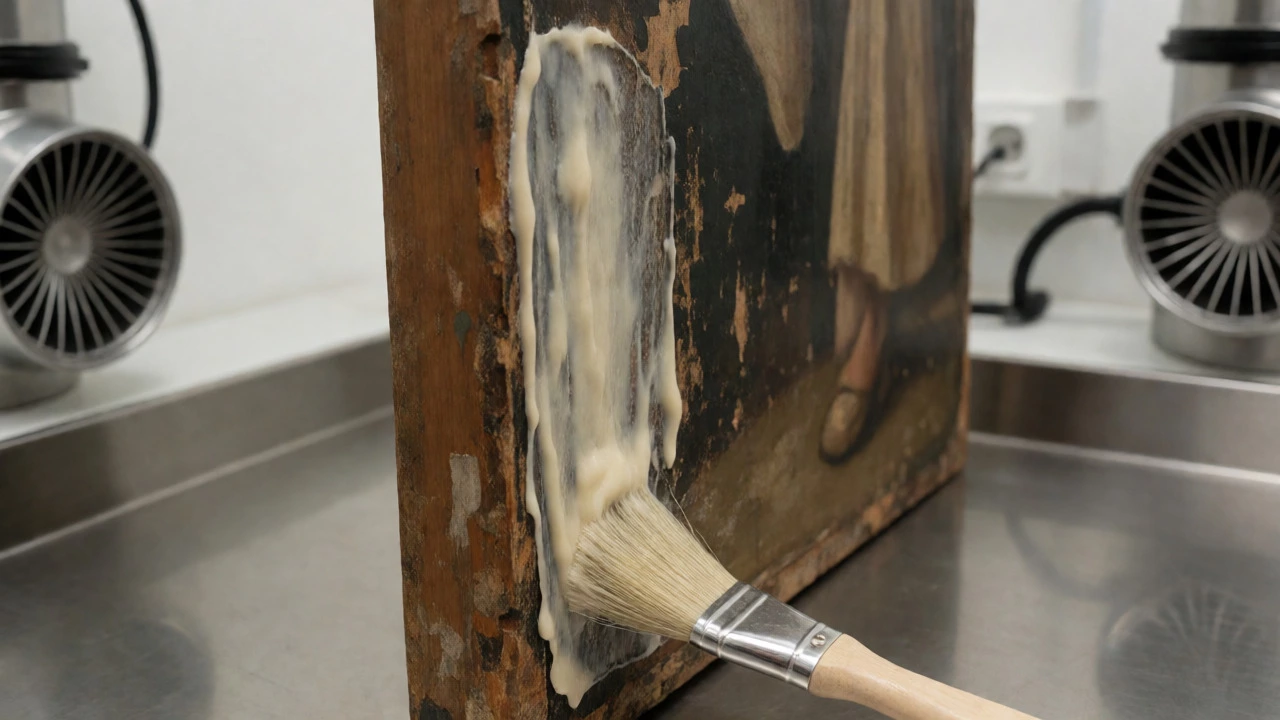
If you have ever tried to strip paint with a liquid solvent, you know the frustration of it running into cracks or dripping onto unpainted areas. Enter gel strippers. These are essentially solvents suspended in a thickening agent, creating a viscous paste.
Why do professionals prefer gels for heavy-duty jobs? Because they stay put. You can apply a thick coat of gel stripper to a vertical canvas edge or a complex textured area, and it won’t drip. This allows for a longer dwell time-the period the chemical sits on the paint-without the risk of uneven coverage.
Popular brands like Citrisolv or specialized conservation gels use citrus terpenes or proprietary blends. The key advantage here is control. When you peel or scrape off the gel, it takes the softened paint with it, rather than smearing it across the surface. This mechanical action combined with chemical softening is far safer than scrubbing with a rag.
Mechanical Methods: Knives, Scalpels, and Abrasives
Chemistry alone isn’t always enough. Sometimes, physical force is required. This is where the skill of the professional really shines. Using a tool incorrectly can gouge the ground layer (gesso) or tear the canvas fibers.
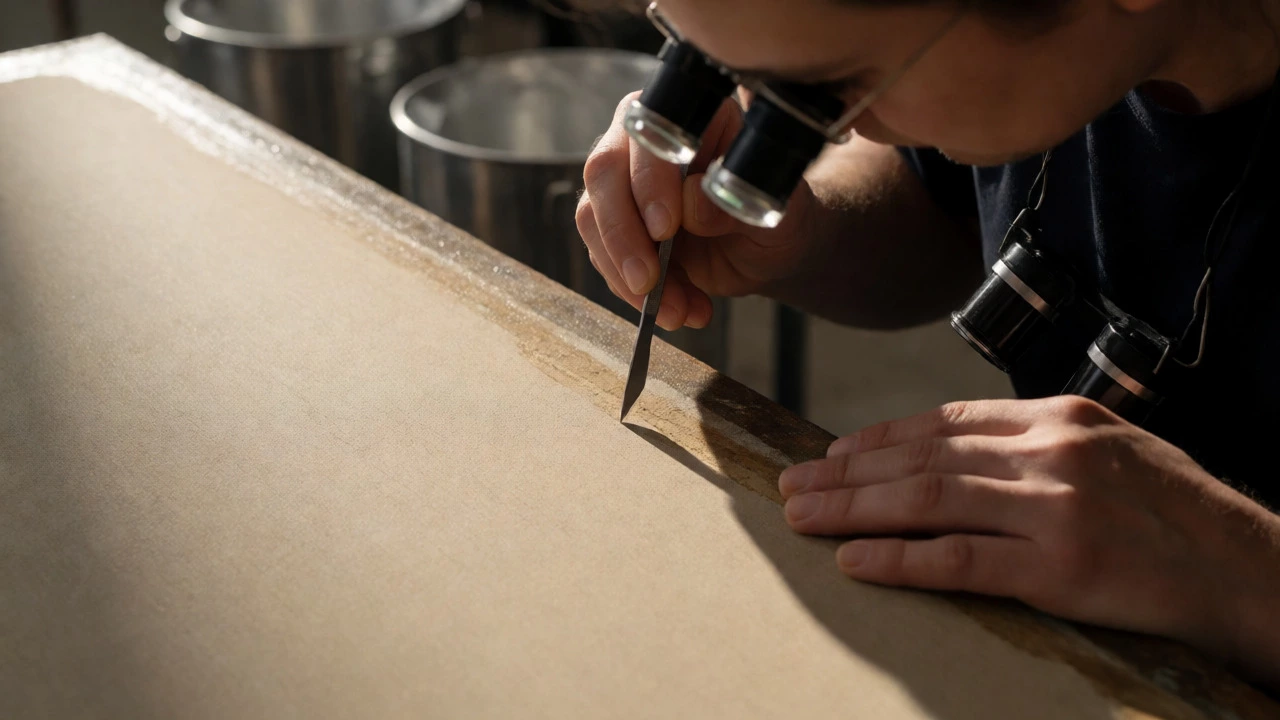
The most common mechanical tool is the scalpel. Conservators use #10 or #11 blades to carefully shave off flaking paint or overpaint. This requires a steady hand and magnification. It’s not about cutting deep; it’s about slicing parallel to the surface to separate the unwanted layer from the original.
For larger flat areas, such as wooden panels or furniture, professionals might use a putty knife or a specialized scraper. On wood, a heat gun can soften old lead-based paints, making them easier to scrape. However, heat must be used cautiously; excessive heat can dry out the wood, causing it to crack, or blister the paint instead of loosening it.
Abrasives like sandpaper are generally avoided on canvas because they create dust that embeds into the weave and ruins the texture. On wood or metal supports, however, fine-grit sandpaper (220-400 grit) is acceptable after solvent treatment to smooth out residual roughness. Always sand with the grain on wood to avoid visible scratches.
The Process: How Pros Execute a Strip
Knowing the tools is half the battle. Knowing the sequence is what saves the artwork. Here is the standard workflow a professional follows:
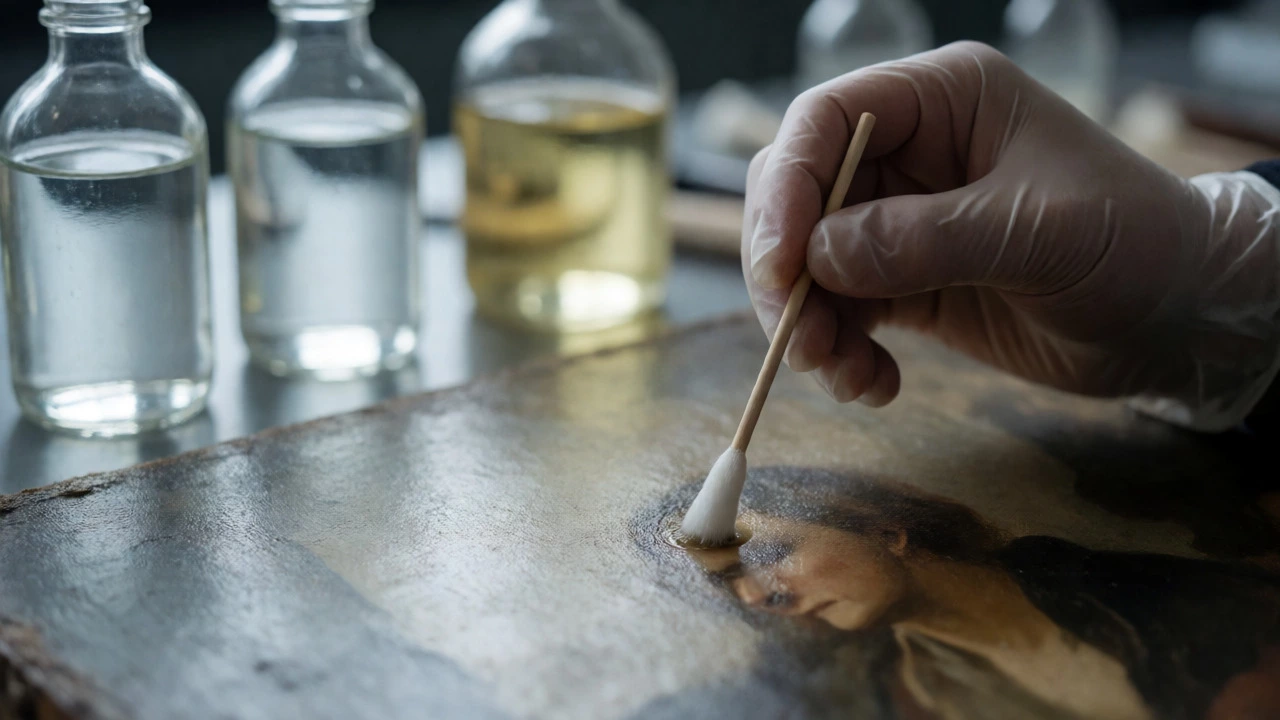
- Test Spot: Never start on the main subject. Choose a discreet corner or the back edge of the canvas. Apply the chosen solvent with a cotton swab and wait 30 seconds. Check if the paint lifts or if the color changes.
- Application: Apply the solvent or gel evenly. For liquids, use lint-free cloths or cotton pads. For gels, use a brush to ensure uniform thickness.
- Dwell Time: Let the chemical work. Do not rush this step. If the paint hasn’t softened, reapply. Adding more solvent to dry paint can spread the mess.
- Removal: Gently wipe or scrape away the residue. Change your cloth frequently. A dirty cloth just spreads dissolved paint back onto the surface.
- Neutralization: Some solvents leave oily residues. Wipe the area with a damp cloth (water for water-soluble residues) or a mild soap solution to remove any leftover chemicals.
- Drying: Allow the surface to air dry completely before applying new paint or varnish. Trapped moisture or solvent can cause adhesion issues later.
This process sounds simple, but the nuance lies in pressure and timing. Pressing too hard with a scalpel cuts into the ground. Leaving acetone too long dissolves the paint you wanted to keep. Professionals develop an intuition for these variables through years of practice.
Safety First: What Happens in Your Lungs Matters
We cannot talk about professional stripping without addressing safety. Many solvents release Volatile Organic Compounds (VOCs). Acetone, turpentine, and mineral spirits all contribute to poor indoor air quality if not ventilated properly.
In a professional studio or conservation lab, extraction fans are mandatory. You should also wear nitrile gloves. Latex gloves degrade quickly when exposed to organic solvents, leaving your skin bare to chemical absorption. Isopropyl alcohol can dry out your skin, while stronger solvents can cause dermatitis over time.
Disposal is another critical factor. You cannot pour solvent-soaked rags into the regular trash. They can spontaneously combust. Professionals store used rags in sealed metal containers filled with water until they can be disposed of according to local hazardous waste regulations. Ignoring this can lead to studio fires-a terrifying but preventable accident.
Special Considerations: Acrylics vs. Oils
The rules change slightly depending on whether you are dealing with oil or acrylic paint. Acrylics are thermoplastic, meaning they soften with heat and dissolve with specific alcohols or ammonia solutions. They do not respond well to mineral spirits.
To strip acrylics, professionals often use isopropyl alcohol or commercial acrylic removers containing ammonia. Heat guns are also effective for acrylics because the plastic polymer softens, allowing it to be peeled off in sheets. Oils, being chemically cross-linked, require solvent breakdown. Mixing up these methods leads to failure. Trying to strip oil with alcohol barely scratches the surface; trying to strip acrylic with turpentine does almost nothing.
Frequently Asked Questions
Can I use nail polish remover to strip paint?
Yes, if it contains acetone. Nail polish remover is essentially diluted acetone. It works well for small spots and synthetic varnishes but evaporates very quickly. Be cautious, as it can damage certain plastic frames or synthetic grounds if left on too long.
What is the safest solvent for beginners?
Odorless Mineral Spirits (OMS) are generally considered the safest starting point for oil paintings. They are less toxic than turpentine and slower-evaporating than acetone, giving you more time to react if something goes wrong. Always test in an inconspicuous area first.
Does stripping paint damage the canvas?
It can. Aggressive solvents can weaken the sizing (glue layer) between the canvas and the paint, leading to delamination. Mechanical scraping can tear the fabric. Proper technique involves minimal pressure and short exposure times to preserve the structural integrity of the support.
How do I remove old varnish without removing the paint?
You need a solvent that dissolves the varnish but not the oil paint. Natural resin varnishes (dammar/mastic) dissolve in turpentine or mineral spirits. Synthetic varnishes may require ethanol or acetone. The key is testing to find the concentration that affects only the top layer.
Can vinegar strip oil paint?
Generally, no. Vinegar is acidic and can help with cleaning grime or removing lime scale, but it lacks the chemical power to break down polymerized oil binders. It is ineffective for stripping cured oil paint.