Art Print Authenticity & Value Estimator
Are you looking at a valuable collectible or just a decorative poster? Use this tool to analyze the key features of an art print.
Inspect Your Print
Select options and click Analyze to see your result.
Reference Guide: Signature Types
| Type | Location | Meaning | Value Impact |
|---|---|---|---|
| Hand-Signed | Bonafide (Paper Margin) | Artist personally approved this specific copy. | High |
| Facsimile | In the Image Area | Reproduced part of the original design; not individual approval. | Low/Med |
| Blind Stamp | Embossed into Paper | Marked by publisher/studio; common in older editions. | Medium |
| Unsigned | N/A | Often open edition or artist preference. | Variable |
Test Your Knowledge
You’re standing in a gallery, eyeing a stunning landscape. It’s not the original oil painting-that costs five figures-but this art print is a reproduction of an original artwork made in multiples. The price tag says $400. You reach for your credit card, then pause. There’s no signature on the front. Is it fake? Did you just get ripped off?
This confusion is everywhere. New collectors assume that if there’s no ink scrawl in the bottom corner, it’s just a poster from a gift shop. But the reality of printmaking is way more nuanced than "signed equals real." Sometimes the best prints aren’t signed at all. Sometimes they are. And sometimes, that signature tells you almost nothing about value.
The Short Answer: It Depends on the Print Type
Not every art print needs a signature to be legitimate. Whether a print has one depends entirely on how it was made and what the artist intended. Think of signatures as a certificate of approval, not a mandatory ID badge.
Here’s the basic rule of thumb: If it’s a limited edition fine art print, it usually should have a signature. If it’s an open edition digital download or a mass-produced giclée sold online, often it won’t. But let’s break down why, because "usually" isn’t good enough when you’re spending hundreds of dollars.
Why Artists Sign Their Prints (And Why They Don’t)
When an artist signs a print, they are doing two things. First, they’re verifying that this specific sheet passed their quality control. In traditional methods like etching or lithography, each pull from the plate can vary slightly. The artist checks the ink density, the registration, and the paper quality. If it looks right, they sign it. That signature means: "I approve this copy."
Second, the signature ties the work to the artist’s brand. It signals scarcity. An unsigned print feels infinite; a signed one feels finite. This psychological cue drives collector demand.
So why skip the pen? Some artists prefer a clean aesthetic. A bold black signature might clash with a delicate pastel watercolor reproduction. Others want to keep prices lower by skipping the labor-intensive signing process for large runs. And some contemporary digital artists simply don’t see the point of mimicking old-world traditions on modern technology.
The Hierarchy of Signed vs. Unsigned Prints
Not all signatures carry the same weight. In fact, where the signature is located matters more than whether it exists. Let’s look at the common types you’ll encounter.
| Signature Type | Location | Meaning | Collector Value |
|---|---|---|---|
| Hand-Signed | Bonafide (on the paper) | Artist personally approved this copy. | High |
| Facsimile | In the image area | Reproduced part of the original design. | Low/Medium |
| Blind Stamp | Embossed into paper | Marked by the publisher or studio. | Medium |
| Unsigned | N/A | Open edition or artist preference. | Variable |
A bonafide signature is the gold standard. It’s done in pencil, usually in the bottom right margin. Pencil is preferred over ink because it doesn’t fade over time and can’t be easily forged or altered without detection. If you see a glossy black ink signature on a matte paper print, ask questions. It might be printed, not handwritten.
Conversely, a facsimile signature is baked into the image itself. You see it on many vintage posters or commercial reproductions. It’s technically part of the artwork, not a separate authentication mark. These are rarely unique and hold little resale premium compared to hand-signed editions.
Decoding the Edition Numbering
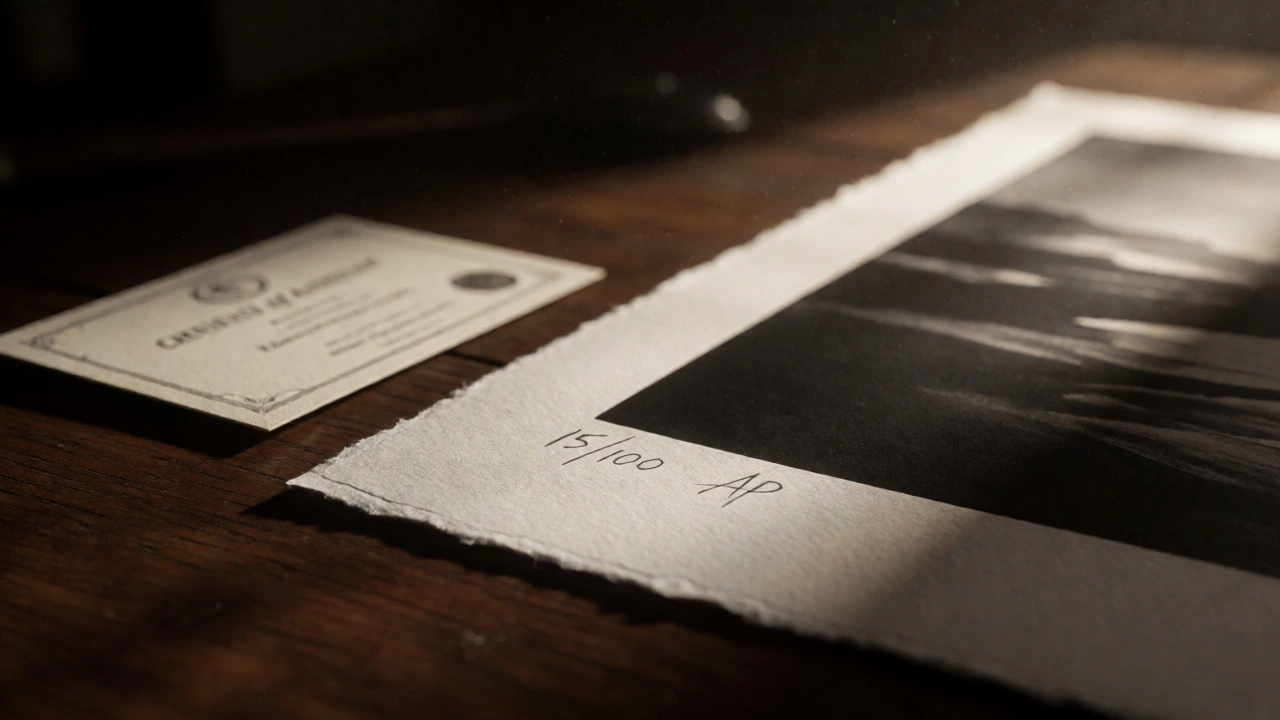
If you’re looking for a signature, you need to know where to look. Fine art prints follow a strict numbering convention in the bottom left margin. You’ll see something like "15/100." This tells you exactly where this print sits in the production run.
But watch out for the letters. If you see "AP," that stands for Artist Proof. These are pulled before the main edition to check color accuracy. Traditionally, artists kept these for themselves, but now they’re often sold. Because they’re rarer than the numbered edition (often only 10% of the total run), APs can command higher prices-even if they’re signed identically to the regular copies.
Then there’s "PP" for Printer’s Proof. These go to the master printer who helped create the work. They’re rare and often highly sought after by serious collectors who respect the craft behind the art. If you find a PP with a signature, buy it fast.
Digital Art and the Myth of the Signature
What about those sleek, high-resolution giclée prints hanging in modern apartments? Do they need signatures?
Technically, no. Many digital artists release open editions, meaning they can print as many as they want forever. Since there’s no scarcity, there’s no need for individual authentication via signature. However, savvy artists know that adding a signature increases perceived value. So, even in digital art, you’ll often see hand-signed limited editions (e.g., 50 copies) versus unsigned unlimited runs.
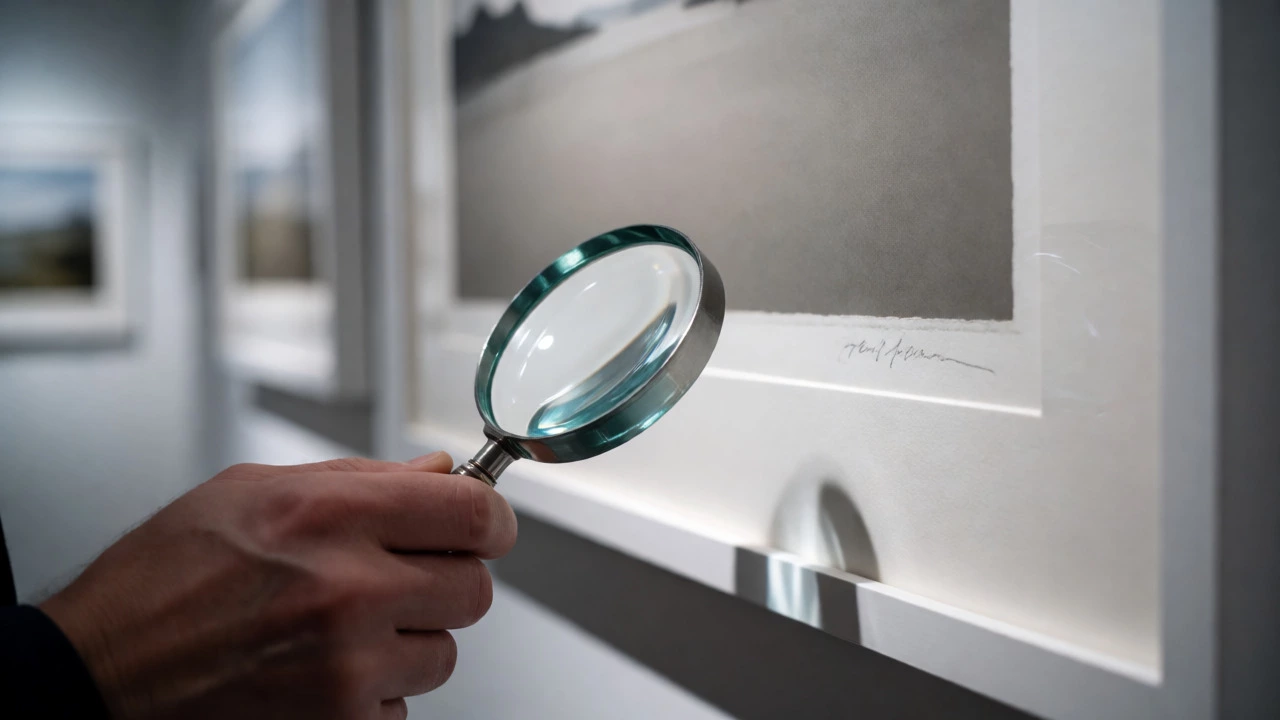
Be careful here. Some sellers claim a print is "signed" when they mean the artist’s name is printed in the corner digitally. Always zoom in. If the texture of the signature matches the rest of the inkjet spray pattern, it’s printed. If it sits on top of the paper fibers with slight indentation or graphite sheen, it’s hand-done.
How to Spot a Fake Signature
Forgery isn’t just for Picassos. Popular contemporary artists get faked too. Here’s how to protect yourself:
- Check the medium: As mentioned, pencil is king. Ink fades and smudges. Ballpoint pens leave grooves that can catch dirt.
- Look for hesitation marks: Genuine signatures flow naturally. Forged ones often show stops, starts, or shaky lines as the forger tries to mimic the style.
- Cross-reference the number: Does the edition number match the artist’s official records? If an artist claims they only ever made 50 prints of a certain series, and you find #75, something is wrong.
- Ask for a Certificate of Authenticity (COA): While not legally required, reputable galleries provide them. A COA should detail the title, medium, dimensions, edition size, and date of creation.
Does a Signature Actually Increase Resale Value?
This is the million-dollar question-literally. Yes, generally speaking, a hand-signed limited edition print will retain value better than an unsigned open edition. Collectors pay for exclusivity. When you sell that print later, buyers want to know it’s part of a closed set.
However, context matters. If the artist becomes incredibly famous, even their early unsigned works might spike in value. But for most emerging artists, the signature acts as a floor for pricing. Without it, your print competes with cheap decor. With it, it competes with other collectible artworks.
One exception: conceptual art. Some artists deliberately reject the cult of the signature. Banksy, for example, famously issues certificates rather than relying solely on signatures, though his prints are still authenticated through complex verification processes. Don’t judge a book by its cover-or a print by its corner.
Buying Tips: What to Ask Before You Purchase
Next time you’re shopping for art, don’t just look at the image. Inspect the margins. Here’s your checklist:
- Is it hand-signed or printed? Use a magnifying glass if possible.
- Is it a limited edition? Look for numbers like "12/100." Avoid prints with no numbers unless you’re okay with open editions.
- Who signed it? Ensure it’s the artist, not the framer or the publisher (unless it’s a blind stamp).
- Is the condition pristine? A signature can be ruined by foxing (brown spots) or creases. Check the white space around the text.
Remember, art is subjective. If you love the piece and the price fits your budget, the lack of a signature shouldn’t stop you. But if you’re buying as an investment, prioritize hand-signed, numbered limited editions. It’s the safest bet in a volatile market.
Why do artists use pencil instead of pen for signatures?
Pencil graphite is chemically stable and does not fade or discolor over time like many inks. Additionally, pencil signatures sit on the surface of the paper rather than soaking in, making them easier to examine for authenticity and harder to alter without leaving visible traces.
Are unsigned art prints worthless?
No, they are not worthless. Unsigned prints are often open editions or mass-produced reproductions. While they may have lower resale value compared to signed limited editions, they still hold decorative and personal value. Many contemporary artists choose not to sign their work for aesthetic reasons.
What does 'AP' mean on an art print?
'AP' stands for Artist Proof. These are impressions pulled during the printing process to check color and quality. Historically, artists kept these, but they are now commonly sold. Because they are produced in smaller quantities than the main edition, they are often considered more valuable by collectors.
Can I trust a signature printed on the image?
A signature printed directly onto the image is called a facsimile signature. It indicates that the signature was part of the original artwork design, not added individually to each print. Facsimile signatures do not certify that the artist inspected that specific copy, so they carry less weight for authentication purposes.
Do all limited edition prints come with a certificate of authenticity?
Most reputable galleries and publishers provide a Certificate of Authenticity (COA) for limited edition prints. However, it is not legally mandated in all jurisdictions. Always request a COA when buying expensive prints, and verify that the details on the certificate match the markings on the print itself.