Claude Lorrain's Composition Simulator
Composition Controls
1. The Foreground
Darker, sharper colors that anchor the viewer and create a starting point for the visual journey.
2. The Midground
Transition zone where colors begin to soften and details blend into the atmosphere.
3. The Horizon
Hazy, blue-toned distance utilizing "Aerial Perspective" to trick the eye into seeing vast space.
The Shift from Background to Main Character
Before the 1600s, if you saw a tree in a painting, it was probably there to symbolize a biblical story or frame a king. Nature was a tool, not a subject. Claude changed the game by introducing the Classical Landscape. This wasn't just a random snapshot of the countryside; it was an idealized version of nature. He didn't just go outside and paint what he saw-that's more of a Plein Air approach that wouldn't truly peak until the Impressionists. Instead, Claude studied the light outdoors and then spent months in his studio meticulously assembling a composition. He used a specific technique of layering glazes to make his skies glow, creating a sense of atmospheric depth that felt almost three-dimensional. Why does this matter? Because he taught us how to "read" a landscape. He guided the viewer's eye from a dark foreground, through a middle ground, and toward a shimmering, distant horizon.The Secret Weapon: The Camera Obscura
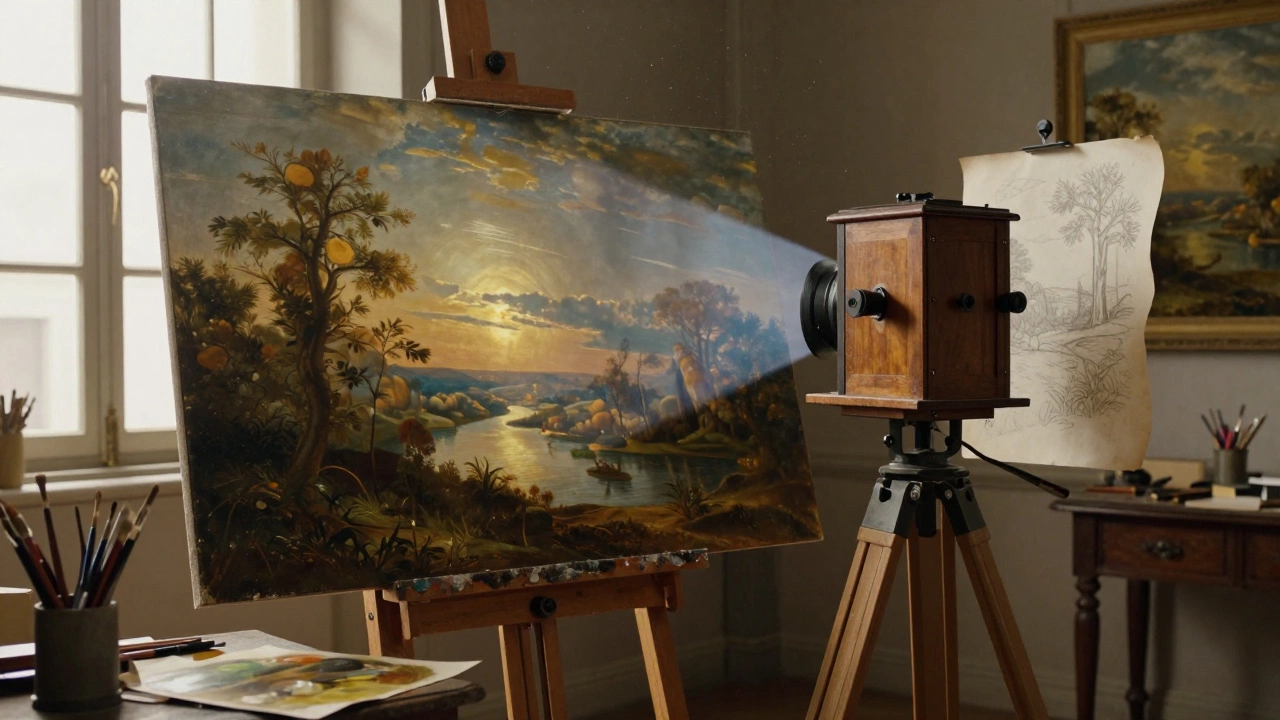
How did Claude get his lighting so perfect? He wasn't just guessing. There's a strong belief among art historians that Claude used a Camera Obscura-a primitive precursor to the modern camera. This device projected a real-world image onto a surface, allowing him to map out the exact proportions and the way light bled across the horizon. By using this tool, he could capture the "golden hour" with scientific precision. He understood that the air itself has a color and a density. This is what we call Aerial Perspective. By making the distant mountains a pale, hazy blue and the foreground elements sharp and dark, he tricked the human eye into perceiving vast distances on a flat canvas. It was a technical breakthrough that every landscape painter from the 18th century onward basically copied.| Feature | Traditional Approach (Pre-17th C) | Claude Lorrain's Innovation |
|---|---|---|
| Role of Nature | Background/Setting | The Primary Subject |
| Lighting | Uniform or Symbolic | Atmospheric and Naturalistic |
| Composition | Centered on Figures | Layered (Foreground to Horizon) |
| Purpose | Narrative/Storytelling | Emotional/Aesthetic Experience |
The Baroque Influence and the Idealized World
Claude worked during the Baroque period, but he avoided the typical Baroque chaos. While his contemporaries were painting swirling clouds and dramatic, twisting bodies, Claude sought peace. His work is the definition of "pastoral." He often included small figures-shepherds, travelers, or mythological characters-but they were tiny compared to the environment. This was a deliberate choice. He wanted you to feel the insignificance of man compared to the timelessness of nature. By stripping away the clutter and focusing on the rhythm of the trees and the flow of the river, he created a visual language for tranquility. This approach paved the way for the Romanticism movement later on, where artists like J.M.W. Turner would take Claude's light and push it into a storm of emotion.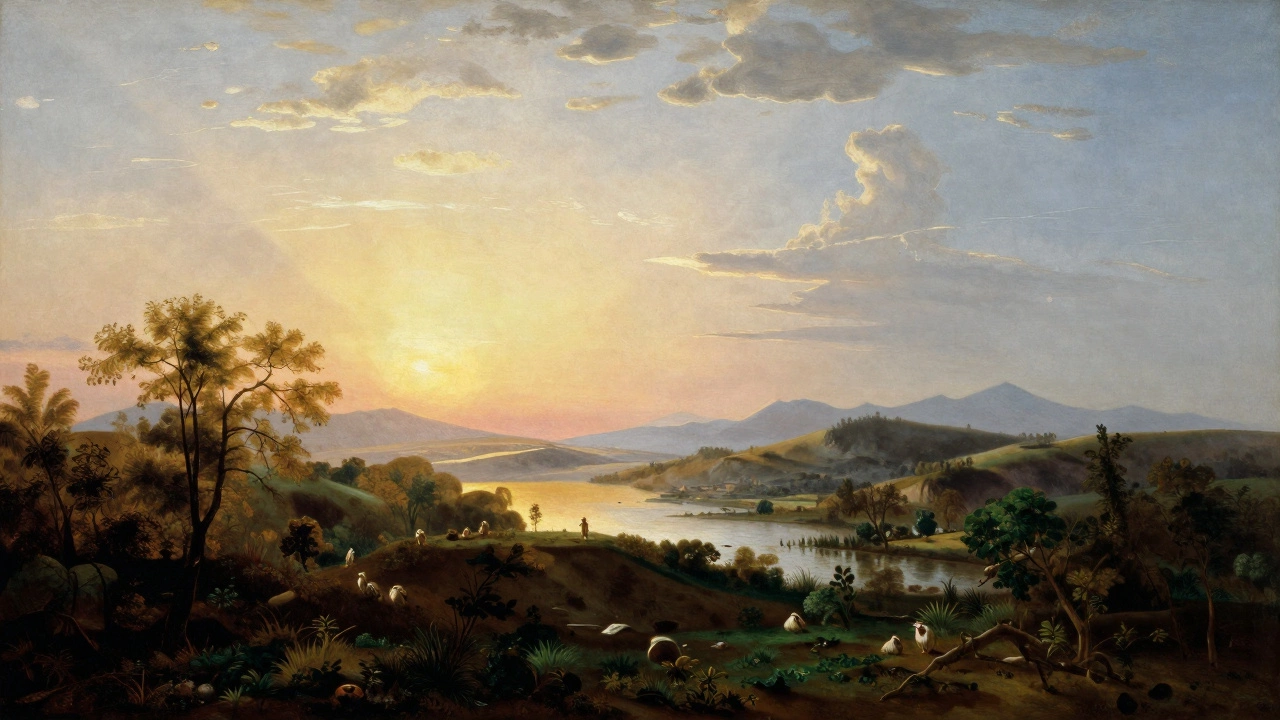
How His Influence Shaped Art History
If you look at English landscape painting in the 18th and 19th centuries, you're basically looking at a Claude fan club. The British nobility became obsessed with his work, and they started redesigning their actual gardens to look like his paintings. They literally moved clumps of trees and dug artificial lakes just to mirror the compositions Claude had invented on canvas. His influence extended into the Dutch Golden Age as well. While Dutch painters like Jacob van Ruisdael were more interested in the moody, gray skies of the Netherlands, the structure of their work-the way they balanced a heavy sky with a detailed landmass-owes a great debt to the structural logic Claude established in Rome. He provided the blueprint for how to organize a view so that it feels "right" to the human eye.Avoiding the Common Misconceptions
Many people assume that because he is the "father of modern landscape," he was the first person to ever paint a tree. That's not true. Nature had been painted for millennia. The "modern" part of his title comes from the landscape painting shift toward autonomy. He proved that a picture of a river valley was just as intellectually and emotionally valid as a painting of a saint or a battle. Another mistake is thinking he was a realist. Claude didn't paint "the truth"; he painted an "ideal." He would combine the best parts of three different forests and the most beautiful sunset he'd seen in a decade to create a single, perfect image. It was about the essence of nature, not a map of a specific location. This distinction is crucial because it moved art toward the idea of personal expression and atmospheric mood.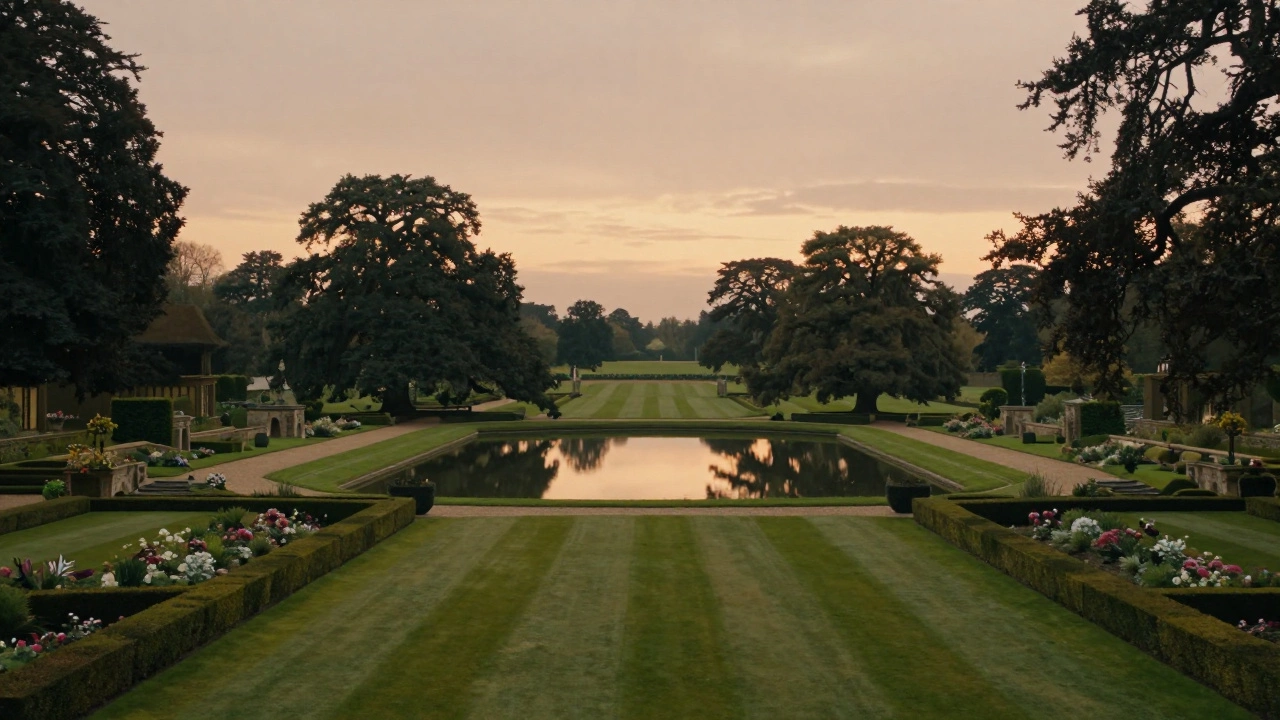
Practical Tips for Analyzing a Claude Painting
When you're standing in front of one of his works at the Louvre or the National Gallery, don't just look at the whole thing. Try these steps to see how he manipulated the scene:- Track the Light: Look for the brightest point on the horizon. Notice how every other object in the painting is lit relative to that one source. It creates a vacuum that pulls you into the painting.
- Check the "Coulisses": This is a fancy term for the "curtains" of trees on the left and right edges. Claude used these to frame the scene, preventing your eye from wandering off the canvas.
- Observe the Color Fade: Look at the greens in the foreground versus the greens in the distance. The distant ones will be cooler and more blue-gray. That's the aerial perspective in action.
- Find the Human Scale: Locate the people. Notice how small they are. This is his way of telling you that the landscape is the true protagonist of the story.
The Legacy of Light and Space
Claude's obsession with light didn't end with him. Every time a modern photographer talks about "golden hour," or a cinematographer uses a haze machine to create depth in a shot, they are using techniques that Claude perfected in the 1600s. He taught us that light is not just something that allows us to see objects; light is the object. By elevating the status of the natural world, he changed the trajectory of Western art. He moved us away from the rigid requirements of storytelling and toward the appreciation of beauty for beauty's sake. Whether you're a fan of classical art or prefer a digital render of a mountain range, the rules of depth, light, and composition you're seeing were largely written by a Frenchman in Rome who just really loved the way the sun hit the water.Why is Claude Lorrain considered the father of modern landscape painting?
He is given this title because he was one of the first artists to treat the landscape as a primary subject rather than a background for figures. He developed a sophisticated system of composition and atmospheric perspective that defined the genre for centuries.
Did Claude Lorrain paint outdoors?
Not in the way we think of "plein air" painting today. He studied nature and light outdoors and likely used a Camera Obscura to capture details, but he completed his final large-scale works in his studio, synthesizing various views into one idealized composition.
What is "Aerial Perspective" in Claude's work?
Aerial perspective is the technique of simulating distance by making objects further away appear lighter, less detailed, and more blue or gray. Claude mastered this to create an incredible sense of depth and scale in his vistas.
How did the Camera Obscura help Claude?
The Camera Obscura projected a real-life image onto a surface, which allowed Claude to accurately map the geometry of the landscape and the exact behavior of light and shadow before he began painting.
What is the difference between a Classical Landscape and a Realistic Landscape?
A realistic landscape aims to capture a specific place exactly as it looks. A classical landscape, like those by Claude, is an idealized version of nature-a "perfected" scene that combines the best elements of various locations to evoke a specific mood or feeling.