Modern Art Context Explorer
How Context Changes Your Experience
The article explains: "Without knowing that history, the painting just looks like splattered paint. But with it? You see a man screaming without sound."
Initial Impression
Your Feelings
What does this make you feel? (Select all that apply)
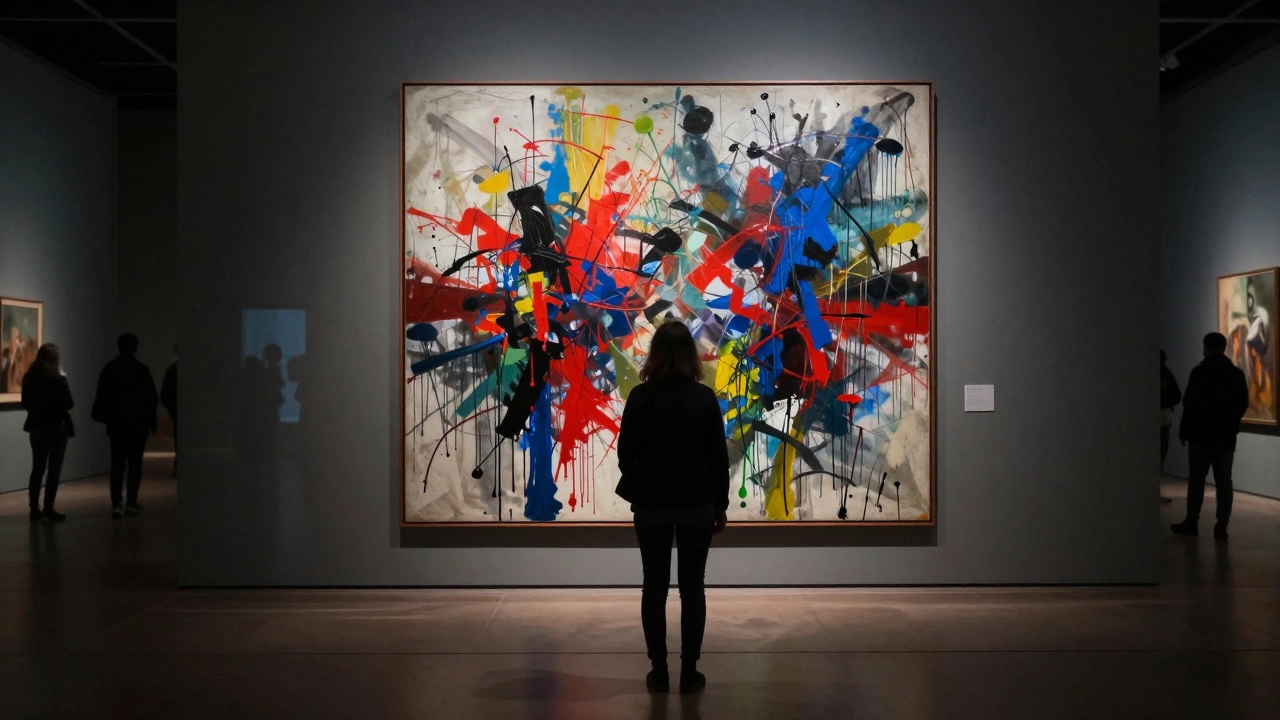
Look at a painting that looks like a toddler spilled paint on canvas. Or a sculpture made of broken chairs and rusted metal. You stand there, confused. Everyone else seems to get it-maybe they’re nodding, whispering, or taking photos like they’ve just seen the future. But you? You’re left wondering: why is modern art so hard to understand?
It’s not supposed to be easy
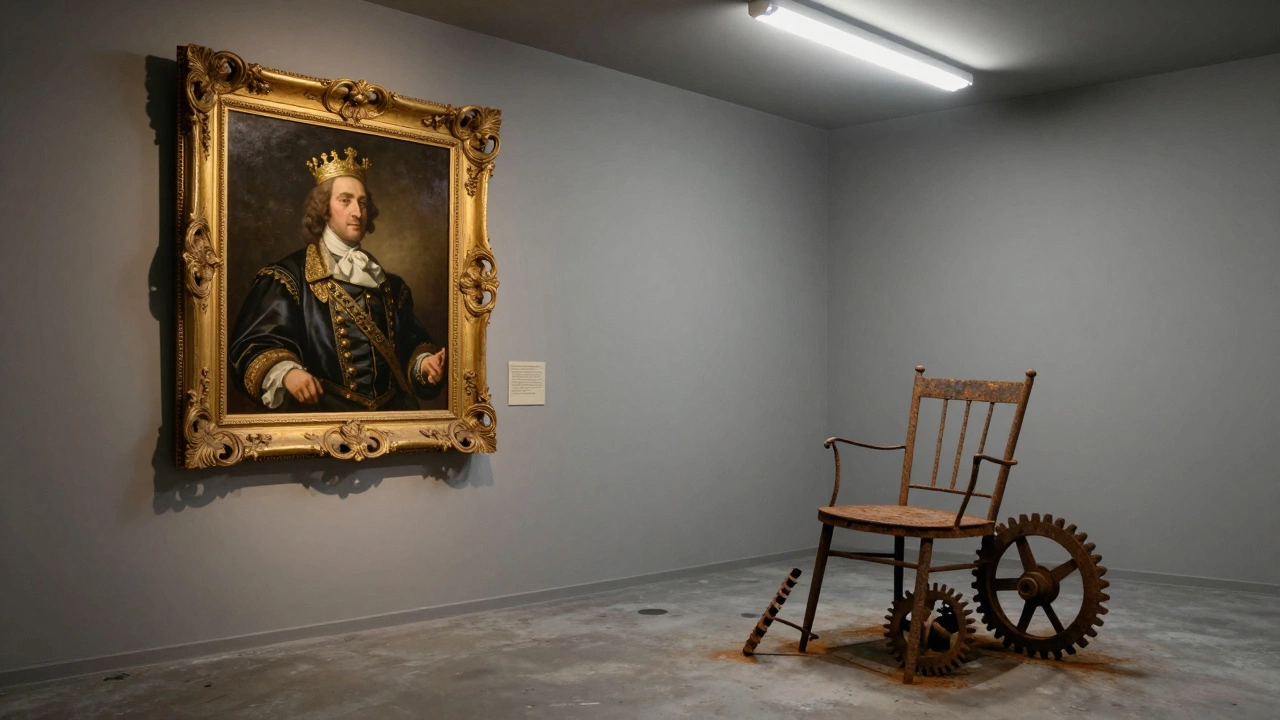
Modern art doesn’t want you to recognize a tree, a face, or a sunset. It’s not trying to be pretty. It’s not trying to tell a story you can summarize in three sentences. That’s the first thing to accept: modern art isn’t broken. It’s doing something else entirely.Before the 20th century, art mostly served three purposes: to glorify religion, to show off wealth, or to record history. A portrait of a king, a biblical scene, a battle-these were clear. You knew what you were looking at. But around 1900, everything changed. Cameras took over recording reality. Artists didn’t need to paint what they saw anymore. So they started painting what they felt.
Think of it like music. If you grew up listening only to folk songs with clear lyrics and melodies, then you hear free jazz for the first time. No chorus. No predictable rhythm. Just noise, screams, and sudden silences. You don’t understand it-not because you’re dumb, but because you’re listening for the wrong thing.
Art stopped being a mirror. It became a question.
Pablo Picasso didn’t paint a woman to show how beautiful she looked. He painted her broken into angles to show how we see people from different perspectives at once. That’s not confusion-that’s insight. Marcel Duchamp took a urinal, signed it "R. Mutt," and called it art. Was he joking? Maybe. But he also forced everyone to ask: What even is art?Modern art isn’t about the object. It’s about the idea behind it. The painting you don’t "get" might be about capitalism, gender, trauma, or the meaninglessness of life. If you’re waiting for a clear message like "this is a cat," you’ll always be disappointed. But if you’re open to feeling something-unease, curiosity, anger, awe-you’re already halfway there.
Language fails us
We’re trained to describe things with words. "This is red." "That’s a dog." But modern art often lives in spaces words can’t reach. A Mark Rothko painting isn’t three rectangles of color. It’s silence. It’s grief. It’s the feeling you get when you’re alone in a big room at 3 a.m.Art critics try to explain it with terms like "chromatic resonance" or "gestural abstraction." That doesn’t help. It just makes you feel worse. You don’t need to know the jargon. You need to sit with it. Look at it for five minutes. Don’t think. Just feel. What does it do to your chest? Does it make you want to cry? Or laugh? Or walk away?
There’s no right answer. That’s the point. Modern art rejects the idea that meaning has to be handed to you. It asks you to build it yourself.
Context is everything
You wouldn’t walk into a metal concert and complain that the guitarist isn’t playing "Twinkle Twinkle Little Star." You’d expect noise, distortion, intensity. Modern art works the same way. You need context.Take Jackson Pollock’s drip paintings. To someone in 1948, they looked like chaos. But post-WWII America was shattered. People were anxious, disconnected. Pollock didn’t paint what he saw-he painted what he felt inside. His canvases were maps of his nervous system.
Without knowing that history, the painting just looks like splattered paint. But with it? You see a man screaming without sound. You see a culture trying to hold itself together.
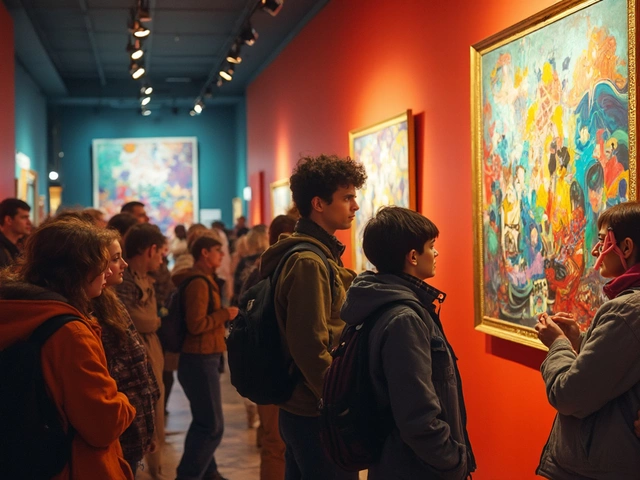
That’s why museums matter. The plaque next to the artwork? It’s not there to confuse you. It’s there to give you the key. Read it. Not to "solve" the art, but to understand the world that made it.
It’s okay to not like it
You don’t have to love modern art. You don’t have to pretend you get it. But you also don’t have to dismiss it as "my kid could do that."Yes, a child could smear paint on paper. But a child doesn’t do it in a gallery in New York with a crowd of people staring in silence. The child doesn’t have a 50-year legacy of philosophy, war, psychology, and rebellion behind them. The difference isn’t skill-it’s intention.
Some modern art is pretentious. Some of it is lazy. That’s true. But dismissing all of it because of a few bad examples is like saying all music is bad because you heard one bad pop song.
There are masterpieces in modern art. There are also duds. The trick is learning how to tell the difference-not by what it looks like, but by what it makes you think about.
How to start understanding it
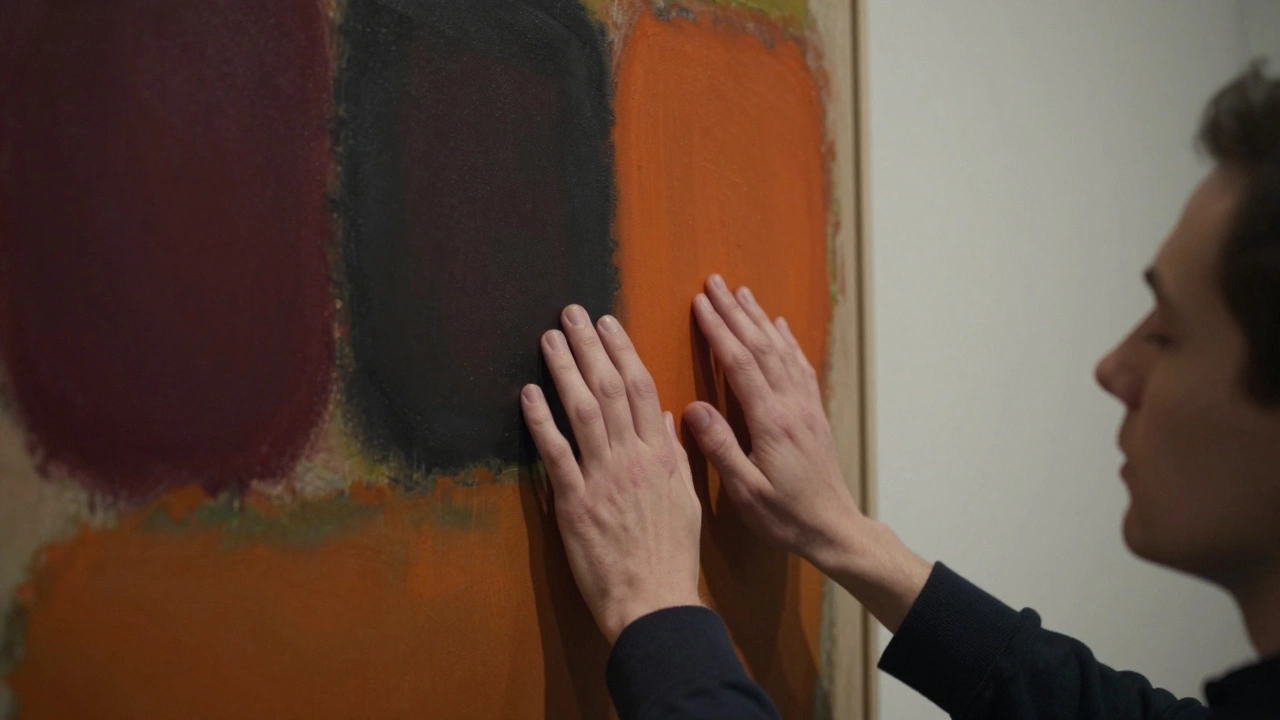
You don’t need a degree. You don’t need to read a hundred books. Here’s how to begin:- Go to a museum. Pick one piece that makes you uncomfortable. Don’t move on until you’ve stared at it for three minutes.
- Ask yourself: What do I feel? Not what does it mean-what does it do to me?
- Read the label. What year was it made? What was happening in the world then?
- Look at the next piece. Compare them. What’s different? What’s the same?
- Don’t look for answers. Look for questions.
That’s it. You don’t need to "get" it. You just need to be curious.
What modern art really asks of you
Modern art isn’t about proving you’re smart. It’s about proving you’re alive.It asks you to sit with uncertainty. To feel without knowing why. To accept that beauty doesn’t always look like flowers or sunsets. Sometimes, it looks like a pile of bricks. Sometimes, it looks like silence.
The reason modern art feels so hard to understand isn’t because it’s complicated. It’s because it asks you to be vulnerable. To admit you don’t know. To let go of the need for control.
That’s harder than any math problem. Harder than learning a language. Harder than staring at a blank canvas and trying to paint something meaningful.
But if you’re willing to try? You might find something you didn’t know you were missing.
Modern art doesn’t explain itself. It invites you to participate.
You’re not a spectator. You’re part of the work.Every time you look at a piece and feel confused, you’re doing the job the artist intended. Every time you argue about it with a friend, you’re continuing the conversation. Every time you walk away without understanding, but come back next week-you’re already winning.
Modern art doesn’t want you to understand it. It wants you to feel it. And sometimes, feeling is the only kind of understanding that lasts.