Watercolor Style Identifier
Select the characteristics you see in a watercolor painting to discover its likely artistic tradition.
Likely Origin
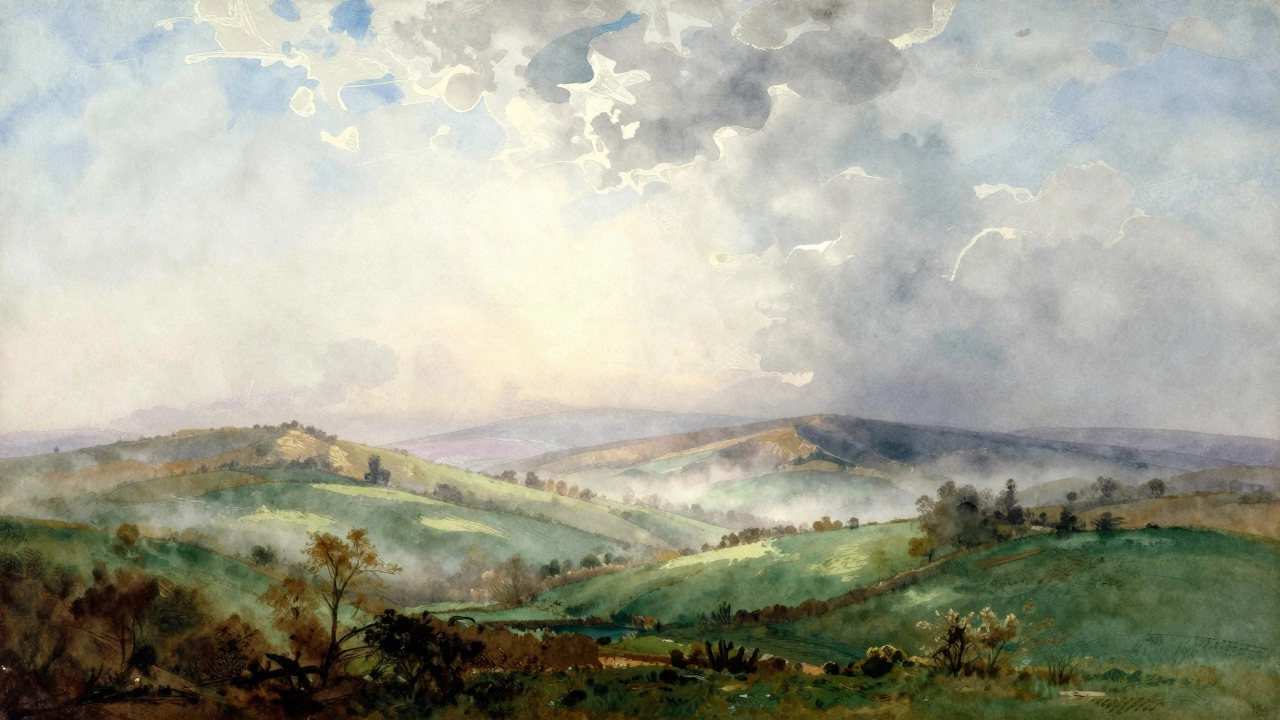
When you think of watercolor, what comes to mind? Is it the misty, moody landscapes of the English countryside? Or perhaps the bold, transparent washes of modern abstract art? It is a common misconception that watercolor belongs to just one nation. In reality, this medium has deep roots in several cultures, each contributing a unique style and philosophy.
If you are looking for a single answer, the United Kingdom is historically the most famous country for watercolor painting in the Western world. However, China holds the title for the oldest continuous tradition of water-based pigment art. To truly understand which country is "famous" for watercolor, we need to look at how different nations shaped the medium into what it is today.
The British Legacy: Elevating Watercolor to High Art
This organization played a crucial role in legitimizing the medium. Artists like Thomas Gainsborough had already used watercolor for portraits, but it was the Romantic era that truly exploded its potential. J.M.W. Turner became the giant of this movement. He didn't just paint landscapes; he painted light itself. His use of wet-on-wet techniques created atmospheric effects that were revolutionary at the time.
- Key Innovation: The British developed specific paper weights and pigments suited for heavy washes.
- Cultural Impact: Watercolor became the standard for travel illustration during the Victorian Empire.
- Famous Figures: John Constable, Samuel Palmer, and later, Paul Nash.
The British approach emphasizes transparency and the white of the paper showing through. This "light from within" effect is distinct from the opaque mixing often seen in other traditions. If you visit any major museum in the UK, such as the Tate Britain, you will find dedicated galleries solely for watercolor works, proving its status as a national treasure.
China: The Ancient Roots of Water-Based Pigment
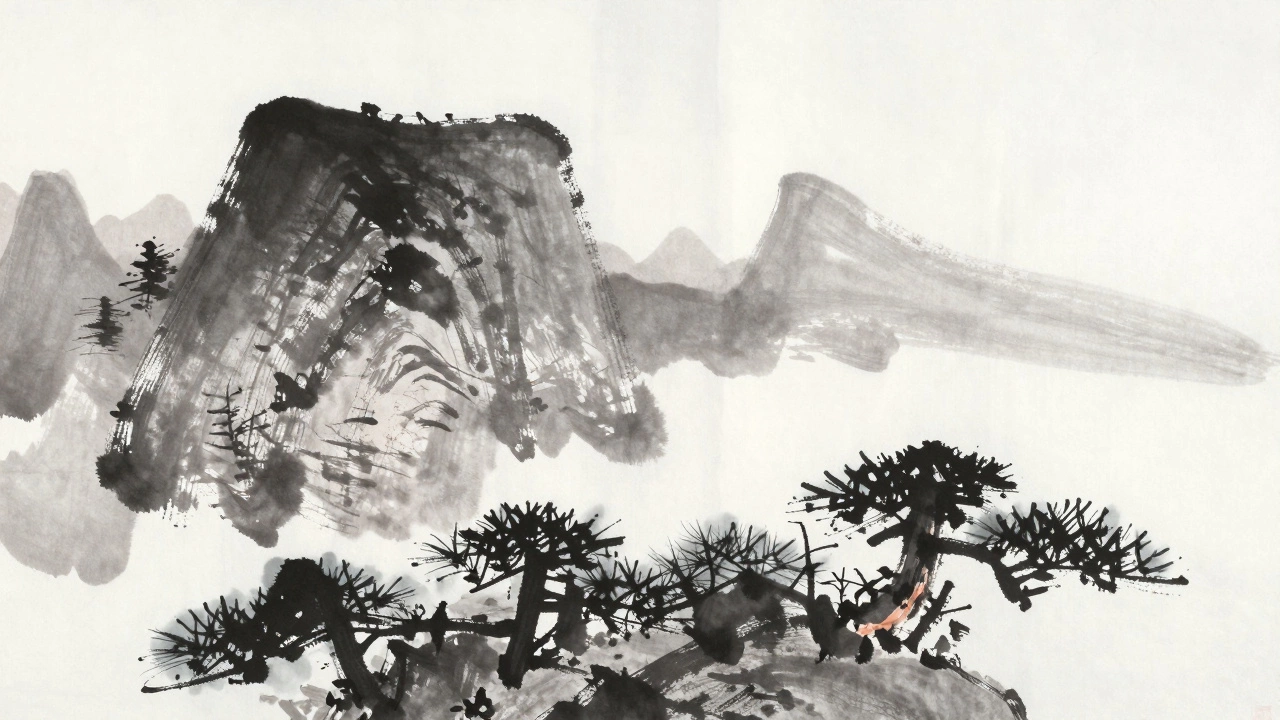
While the West was still experimenting with gum arabic binders, China had been perfecting water-based painting for millennia. Although technically known as Ink Wash Painting (Shuǐmòhuà), the principles are identical to watercolor: using water to control the density and flow of pigment on absorbent paper.
In Chinese culture, the brush is an extension of the artist's spirit. There is no room for correction. Once the ink touches the rice paper, it is permanent. This requires immense discipline and confidence. Unlike the British focus on realistic landscape representation, traditional Chinese water-based art focuses on capturing the essence or "qi" of the subject.
| Feature | British Watercolor | Chinese Ink Wash |
|---|---|---|
| Primary Medium | Pigment + Gum Arabic | Soot Ink + Rice Paper |
| Goal | Realism & Light Effects | Spirit & Essence |
| Correction | Lifting possible | No correction allowed |
| Historical Peak | 19th Century | Song Dynasty onwards |
Artists like Wang Wei and Mi Fu established rules for composition that are still taught today. When people ask about the origins of watercolor, China is the correct historical answer. The medium traveled along the Silk Road, influencing Persian miniatures and eventually reaching Europe.
America: Boldness and Modernity
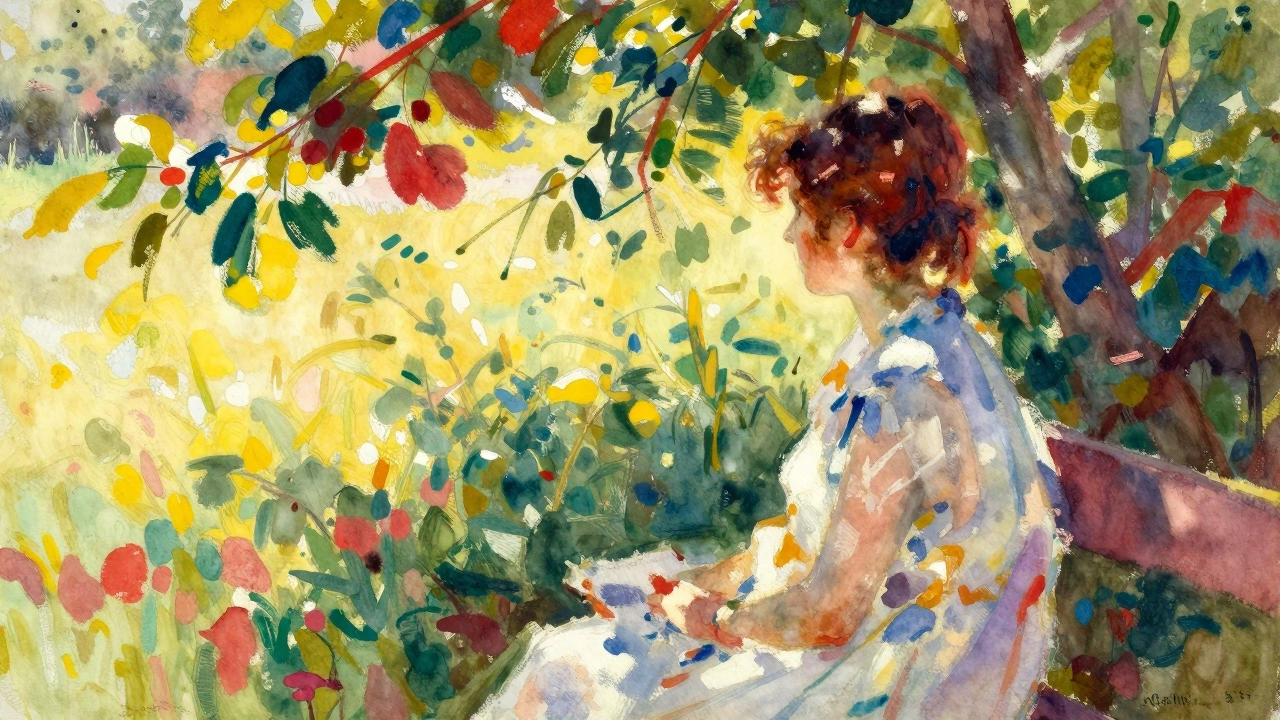
In the late 19th and early 20th centuries, the United States took watercolor in a new direction. While European artists focused on delicate detail, American painters embraced boldness. The American Impressionist movement brought loose brushwork and vibrant colors to the forefront.
One key figure here is John Singer Sargent. Though British-born, he spent much of his career in America and France. His watercolors are famous for their speed and energy. He would often paint en plein air (outdoors), capturing fleeting moments of light and shadow. This approach influenced a generation of American artists who saw watercolor not as a preparatory sketch, but as a finished statement.
Later, in the mid-20th century, the Abstract Expressionists in New York began experimenting with large-scale watercolors. They treated the medium more like ink or dye, allowing gravity and fluid dynamics to dictate the final image. This broke away from the traditional "pretty picture" stereotype associated with the medium.
Other Notable Contributors
It would be incomplete to ignore other regions that have made significant contributions. In India, the Pahari and Rajput schools produced exquisite miniature paintings using water-based pigments on paper. These works are characterized by intense color saturation and intricate details, often depicting mythological scenes.
In Japan, Sumi-e painting shares similarities with Chinese ink wash but has its own distinct aesthetic, emphasizing simplicity and spontaneity. Meanwhile, in Mexico, artists like Diego Rivera occasionally used watercolor for murals' preliminary studies, showcasing its versatility even in political art.
Why Does Nationality Matter Today?
In our globalized art world, borders are less relevant than they once were. An artist in Tokyo might use British papers and American techniques. However, understanding these national traditions helps us appreciate the diversity of the medium. It shows that watercolor is not a monolith but a flexible language that adapts to cultural values.
For collectors and students, knowing these histories provides context. A British landscape tells a story of industrialization and nature's retreat. A Chinese scroll speaks of philosophical harmony. An American abstract piece reflects individual freedom. Each carries the imprint of its origin.
How to Identify Style by Origin
If you are trying to determine the likely origin of a watercolor based on style, look for these cues:
- Transparency vs. Opacity: Traditional British works are highly transparent. Indian miniatures may use more opaque layers.
- Subject Matter: Landscapes dominate British and American traditions. Calligraphy and nature spirits are central to East Asian works.
- Brushwork: Look for fine, detailed lines in European academic styles versus broad, expressive strokes in modern American pieces.
- Paper Texture: Cold-pressed cotton paper is typical for Western art. Rice paper is exclusive to East Asian traditions.
Understanding these differences enriches your viewing experience. It transforms a simple image into a window into a specific cultural mindset.
The Future of Watercolor
Today, digital tools allow artists to simulate watercolor effects, but the physical medium remains popular. Its unpredictability offers a human touch that algorithms cannot replicate. As environmental concerns grow, the non-toxic nature of many watercolor pigments makes it an attractive choice for eco-conscious artists.
We are also seeing a resurgence of interest in traditional techniques. Workshops in the UK and China teach classical methods alongside contemporary applications. This blend of old and new ensures that watercolor will continue to evolve while honoring its rich heritage.
Is watercolor originally from England or China?
Water-based painting originated in China thousands of years ago with ink wash painting. However, modern watercolor as a distinct artistic medium with specific pigments and techniques was formalized in England during the 18th and 19th centuries.
Who is the most famous watercolor painter in history?
J.M.W. Turner is widely considered the most influential watercolorist in Western art history. His innovative use of light and atmosphere revolutionized the medium. Other notable names include John Singer Sargent and Winslow Homer.
What makes British watercolor different from other styles?
British watercolor is known for its emphasis on transparency, luminosity, and realistic landscape depiction. Artists often leave the white of the paper visible to create highlights, rather than mixing white paint. This creates a glowing effect unique to the tradition.
Can I learn watercolor without studying art history?
Yes, you can certainly learn the technical skills without studying history. However, understanding the traditions of different countries can inspire your own style and help you make informed choices about materials and techniques.
Are watercolor paintings valuable?
Works by master artists like Turner or Sargent can sell for millions of dollars. For contemporary artists, value depends on reputation, technique, and market demand. Properly archived watercolors on acid-free paper retain their quality over time.