
Etsy Art Print Profit Calculator
8x10 Inches
Entry Level / Impulse Buy
Low Shipping Cost11x14 Inches
Sweet Spot / Statement
Medium Shipping16x20 Inches
Large Format / Gallery
High ShippingProfit Analysis
You spend hours perfecting a digital illustration or curating your favorite photography. You upload it to Etsy is a global e-commerce platform focused on handmade and vintage items., set your prices, and wait for the sales to roll in. But if you’ve been staring at an empty shop dashboard, the problem might not be your art-it’s likely your sizing strategy. Choosing the right dimensions for your art prints are reproductions of original artworks sold as physical goods. is one of the most critical decisions you can make. It affects shipping costs, customer perception, and ultimately, whether that "Add to Cart" button gets clicked.
The short answer? There isn't one single magic size. However, data from top-performing shops reveals clear patterns. Certain sizes dominate because they solve specific problems for buyers: easy framing, affordable shipping, and visual impact. If you want to move inventory without breaking the bank on logistics, you need to understand these market standards.
Why Size Matters More Than You Think
When a buyer clicks on your listing, they aren't just looking at pixels. They are imagining how that piece fits into their living room, office, or bedroom. A print that looks stunning on a phone screen might feel overwhelming or insignificant when placed next to a standard sofa or desk. This psychological gap is where many sellers lose potential customers.
Consider the friction involved in buying art online. The buyer has to guess the scale. If you offer obscure dimensions like 13x19 inches, the customer has to do mental math or pull out a tape measure. If you offer standard sizes like 8x10 or 11x14, the decision process is instant. Familiarity breeds trust. When a customer recognizes a size, they know exactly which frames they already own or can easily find at local retailers like Target, IKEA, or Michaels.
Furthermore, size directly impacts your profit margins through shipping. In 2026, with rising postal rates and competitive expectations for free shipping, every ounce counts. A larger format doesn't automatically mean higher profit if the shipping cost eats up your margin. You need to balance perceived value with logistical efficiency.
The Top-Selling Sizes: What the Data Shows
While trends shift slightly year over year, three size categories consistently dominate the Etsy marketplace is the ecosystem of buyers and sellers on the Etsy platform.. These sizes work because they align with standard frame availability and typical home decor spaces.
- 8x10 inches: This is the undisputed king of entry-level art prints. It’s small enough to be an impulse buy (under $30 including shipping) but large enough to display on a desk, shelf, or in a cluster gallery wall. It fits perfectly into widely available budget frames.
- 11x14 inches: Often considered the "sweet spot" for statement pieces. It’s large enough to hang above a couch or bed but still manageable for flat-mail shipping in many regions. This size commands a higher price point, allowing for better margins.
- A4 (8.27x11.69 inches): Popular globally, especially outside the US. Since A4 paper is standard in offices worldwide, buyers intuitively understand its size. It bridges the gap between 8x10 and 11x14.
If you are just starting out, focusing on these three sizes will cover about 70% of your potential demand. They reduce cognitive load for the buyer and simplify your fulfillment process.
The Shipping Factor: Flat Mail vs. Packages
One of the biggest advantages of selling art prints is the ability to use First-Class Mail or equivalent international services for smaller items. In the United States, packages under 13 ounces often qualify for cheaper rates than Priority Mail. This threshold dictates your maximum size for cost-effective shipping.
An 11x14 print on standard 200gsm paper weighs roughly 5-6 ounces. Add a lightweight mailer, and you’re still under the limit. Jump to 16x20 inches, and you often cross into package territory, requiring heavier packaging and significantly higher postage. Many new sellers underestimate this jump. A $5 increase in shipping can kill conversion rates, especially if competitors offer similar art for less.
To mitigate this, consider offering multiple sizes in your listings. Use an app like Printful or Gelato for print-on-demand, or manage inventory yourself by keeping stock of key sizes. Always calculate your break-even point per size before listing. If the shipping cost exceeds 20% of your total price, you might need to adjust your pricing or switch to a lighter paper weight.
Understanding Paper Weight and Quality Expectations
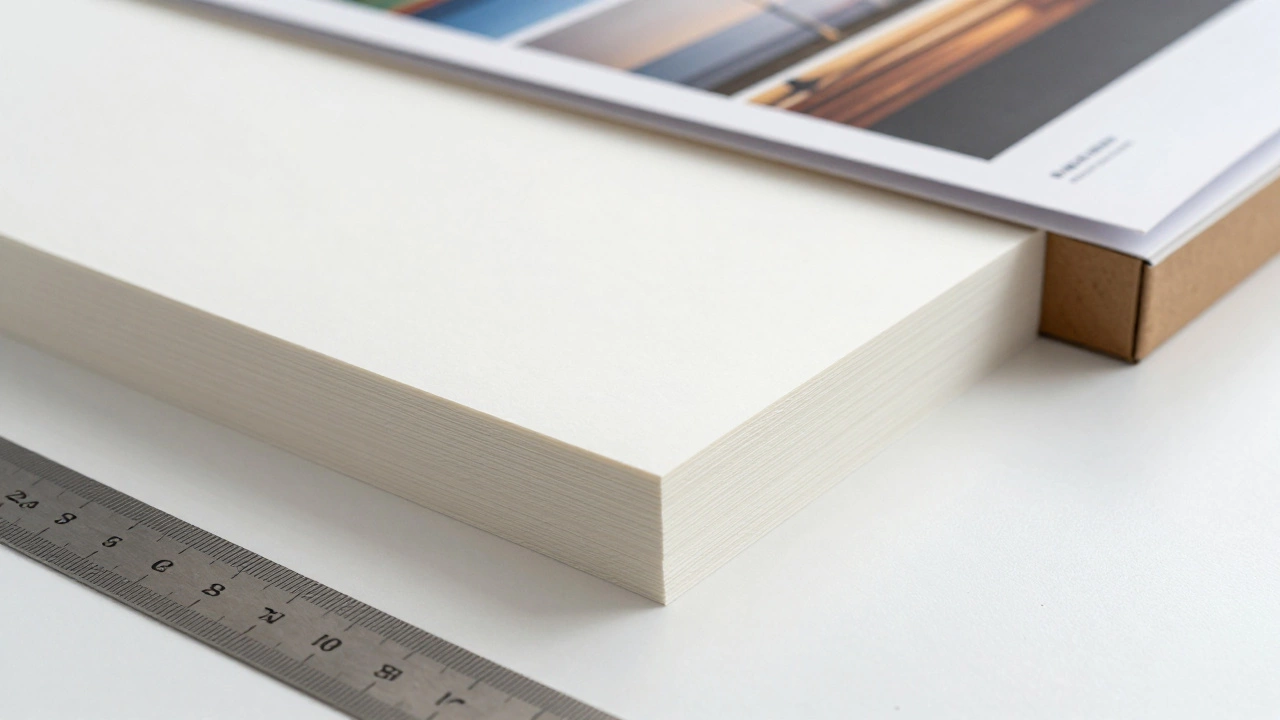
Size alone doesn’t sell; quality does. Buyers expect a certain heft and finish depending on the price point. Standard printer paper (20-24 lb) feels cheap and flimsy, leading to negative reviews. For professional results, aim for 100-200 gsm (grams per square meter) paper. This range provides durability during shipping while maintaining a premium feel.
For larger formats like 18x24 or 24x36, buyers expect archival quality. These are investment pieces. Using matte or semi-gloss finishes helps reduce glare in photos and adds a tactile element that buyers appreciate. Mentioning the paper type in your description-such as "heavyweight cotton rag" or "acid-free matte"-builds trust and justifies higher prices.
| Size | Best For | Shipping Cost Tier | Frame Availability | Price Range (USD) |
|---|---|---|---|---|
| 8x10 inches | Impulse buys, desk decor, gifts | Low (First-Class) | Very High | $12 - $25 |
| 11x14 inches | Statement walls, bedrooms | Medium (Priority) | High | $25 - $45 |
| 16x20 inches | Living rooms, galleries | High (Package) | Moderate | $40 - $70 |
| 24x36 inches | Commercial spaces, bold statements | Very High (Heavy Package) | Low (Custom frames) | $70+ |
Visualizing Scale: Helping Buyers Decide
The number one reason for returns or negative reviews regarding art prints is mismatched expectations about size. To combat this, you must provide context in your images. Don’t just show the print floating in white space. Include lifestyle shots that show the print hanging next to common objects: a coffee mug, a laptop, a person holding it, or a standard door handle.
Using mockups from tools like Canva or Placeit can help, but ensure they are realistic. A print that looks tiny in a photo might disappoint the buyer upon arrival. Conversely, showing a 16x20 print next to a small throw pillow emphasizes its grandeur. Clear communication reduces anxiety and increases conversion.
Niche Considerations: Abstract vs. Photographic
Your art style influences the ideal size. Abstract art and typography often perform well in smaller, clustered formats. Buyers love creating gallery walls with sets of 3-5 small prints. Offering a "Gallery Pack" of four 8x10 prints can increase average order value significantly.
Photography, especially landscape or portrait work, benefits from larger sizes. The detail and emotional impact require more surface area. A stunning mountain vista loses power at 8x10 but commands attention at 18x24. Tailor your size offerings to the nature of your artwork. Don’t force a detailed macro photograph into a tiny frame where the nuance is lost.
Optimizing Your Listings for Search
Buyers search by size. Including dimensions in your title and tags is crucial for Etsy SEO is the practice of optimizing listings to rank higher in Etsy search results.. Use phrases like "8x10 Printable Art," "Large Wall Decor 16x20," or "A4 Poster." Be specific. Vague terms like "small print" don’t help the algorithm match you with intent-driven shoppers.
Also, consider offering digital downloads alongside physical prints. Many buyers want the flexibility to choose their own size and printer. Offering both options captures two different markets: those who want convenience and those who want control. Clearly label which is which to avoid confusion.
Common Mistakes to Avoid
New sellers often fall into the trap of offering too many custom sizes. While customization sounds appealing, it complicates production, increases error rates, and makes inventory management a nightmare. Stick to 3-5 core sizes. If a customer requests a non-standard size, politely direct them to your digital download option or explain that custom sizes incur additional fees.
Another pitfall is ignoring bleed areas. If you plan to offer framed prints or have third-party printers add borders, ensure your design accounts for safe zones. Cropped edges due to poor file preparation lead to refunds. Always test print your designs before listing them commercially.
What is the most profitable size to sell on Etsy?
The 11x14 inch size is often the most profitable. It allows for a higher price point ($25-$45) compared to smaller prints, while still remaining relatively inexpensive to ship via standard priority mail. It balances volume with margin effectively.
Should I offer digital downloads with my physical prints?
Yes, offering both is highly recommended. Digital downloads eliminate shipping costs entirely, providing 100% profit margin. They also appeal to tech-savvy buyers who prefer printing locally. Just ensure your listings clearly distinguish between physical and digital products to prevent disputes.
How do I prevent art prints from curling during shipping?
Use rigid backing boards or heavy-duty cardstock sleeves. Avoid soft poly mailers for larger prints. For extra protection, sandwich the print between two pieces of cardboard before placing it in the mailer. This adds minimal weight but significantly reduces damage claims.
Is A4 or 8x10 better for international sales?
A4 is generally better for international sales, particularly in Europe, Asia, and Australia, where metric paper sizes are standard. 8x10 is preferred in the US and Canada. Offering both ensures you capture global audiences without confusing buyers about frame compatibility.
Can I sell oversized prints without high shipping costs?
It’s challenging. Oversized prints (24x36+) require tubes or heavy boxes, increasing shipping fees. To offset this, raise your base price or partner with regional print-on-demand providers like Gelato or Printful, which print closer to the customer, reducing international shipping distances and costs.