Abstract Art Composition Evaluator
Create a simple abstract composition below. Your goal is to achieve Dynamic Equilibrium: balance without symmetry. Use the controls to adjust visual weight (size/color intensity) and placement.
Composition Analysis
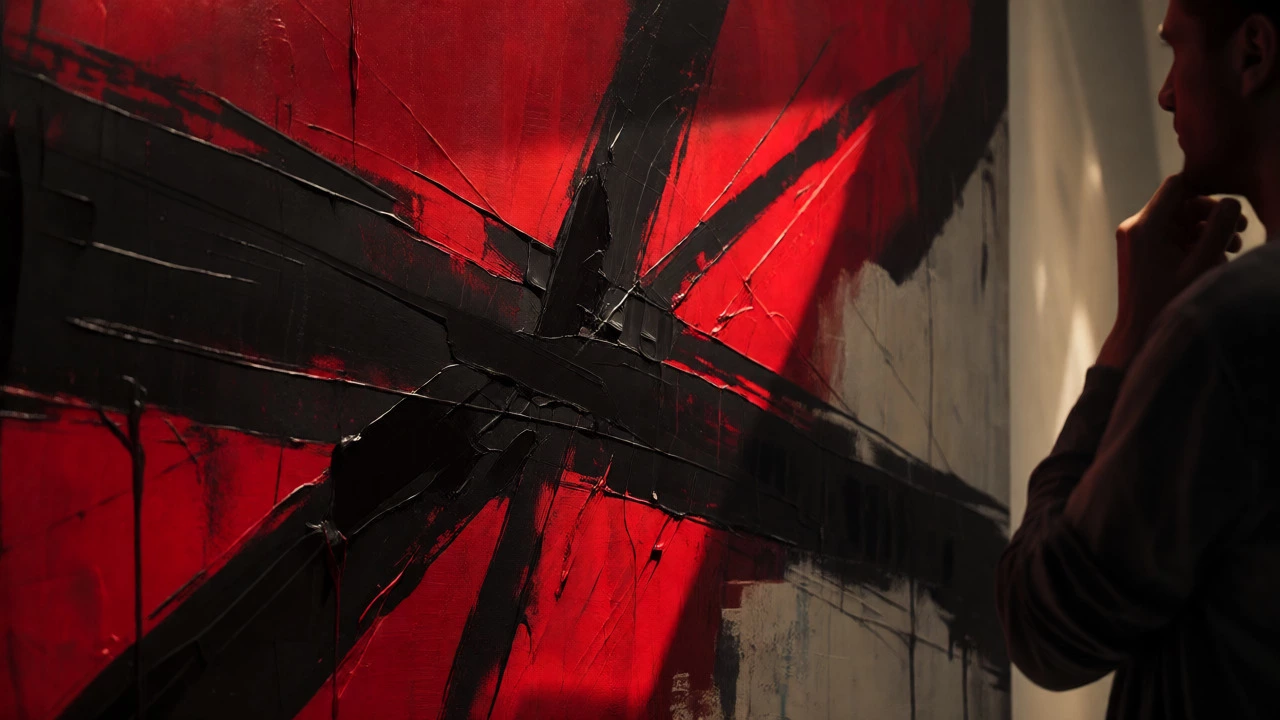
You stare at a canvas splashed with chaotic reds and jagged black lines. Your friend shrugs and says, "My kid could do that." But you feel something-a tension, a rhythm, an emotion you can't quite name. Why does one abstract painting stop you in your tracks while another slides off your brain like water? It isn't just about throwing paint around. The difference between a hobbyist's doodle and a masterpiece by Wassily Kandinsky or Mark Rothko lies in specific, tangible skills. A good abstract artist isn't defined by what they remove from reality, but by what they add to the viewer's experience.
Many people think abstraction is easy because it lacks recognizable objects. That’s a trap. If anything, removing the safety net of realism makes the job harder. You have no tree shape to hide behind if your color balance is off. So, what actually separates the pros from the pretenders? Let’s break down the anatomy of a skilled abstract creator.
The Mastery of Visual Language
Think of abstract art as a language without words. Instead of nouns and verbs, you use line, shape, color, texture, and space. A good abstract artist speaks this language fluently. They don't just pick colors because they look nice together; they choose them for their psychological weight and spatial effect.
Consider how Josef Albers, a Bauhaus master, taught color interaction. He proved that a single color changes appearance depending on its neighbors. A mediocre artist sees blue as blue. A skilled abstract artist sees blue as a variable that shifts based on whether it sits next to orange or green. This understanding of Color Theory allows them to create depth without perspective lines. They make a flat surface vibrate with energy simply by adjusting hue saturation and value relationships.
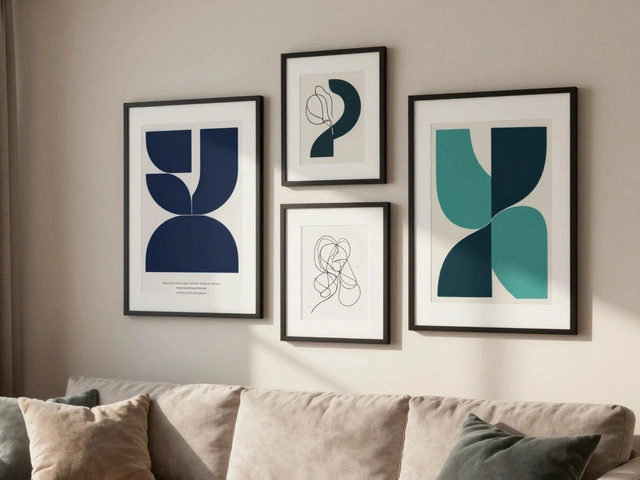
It’s not just color, either. Composition in abstraction is about balance without symmetry. If you center everything, it feels static. If you scatter elements randomly, it feels messy. The pro finds the "dynamic equilibrium"-a point where the eye moves naturally across the canvas without getting stuck or falling off the edge. This requires an intuitive grasp of visual weight. Does that heavy black triangle on the left need a lighter yellow circle on the right to counterbalance it? Yes. That decision is made in seconds, backed by years of practice.
Emotional Resonance Over Intellectual Puzzle
Here is a hard truth: most bad abstract art fails because it tries too hard to be smart. Artists often get caught up in philosophical concepts or self-referential inside jokes. But viewers don't read the artist's manifesto before looking at the wall. They react viscerally.
A great abstract artist prioritizes emotional resonance. Look at Cy Twombly. His scribbles aren't just random marks; they carry the frantic energy of a whispered secret or the calm of a lingering memory. When you stand before his work, you feel the physical gesture of the hand that made it. This is called Gestural Abstraction, and it relies on the artist’s ability to translate internal states into external forms.
If your work requires a three-page explanation to feel anything, it might be failing as abstract art. The best pieces act like music. You don't need to know the theory of harmony to feel sad during a minor chord progression. Similarly, you shouldn't need an art history degree to feel the tension in a sharp diagonal line cutting through soft pastel fields. The goal is direct transmission of feeling, bypassing the analytical brain.
Material Honesty and Technical Control
There is a misconception that abstract artists are lazy or untrained. In reality, many of the greatest abstract masters were classically trained realists first. Piet Mondrian started by painting realistic trees and churches. He didn't abandon skill; he distilled it. He understood structure so well that he could reduce a tree to its essential branching patterns.
This leads to material honesty. A good artist respects the medium. If you are working with oil paint, you understand its drying times, its viscosity, and its luminosity. If you use acrylics, you know they dry fast and can crack if applied too thinly over flexible surfaces. Bad abstract art often looks like the artist fought against the materials. Good abstract art looks like a collaboration between the artist and the substance.
- Texture: Is the impasto thick enough to cast shadows? Does the smooth glaze reflect light differently than the rough underpainting?
- Edges: Are the edges crisp and deliberate, or muddy from indecision? Sharp edges create focus; soft edges create mystery.
- Surface: Did the artist prime the canvas correctly? Poor preparation leads to dull colors and eventual decay.
Technical control doesn't mean perfectionism. It means intentionality. Every drip, every smudge, every scraped-away layer should serve the composition. If a mark is there because you couldn't figure out what to do next, the viewer will sense that hesitation.

Conceptual Clarity Without Literalism
Abstract art still needs a concept. It just doesn't need a literal subject. The central entity here is Intent. What is the artist trying to explore? Is it the chaos of urban life? The silence of snow? The geometry of sound?
Take Jackson Pollock. His "drip paintings" weren't just accidents. They were controlled chaos. He used enamel paints because they flowed better than oils. He laid canvases on the floor to move around them. The concept was capturing the energy of movement itself. The execution matched the idea perfectly.
In contrast, poor abstract art often suffers from "style mimicry." An artist copies the look of a famous style without understanding the underlying intent. They splatter paint because Pollock did, but they lack his rhythmic control. Or they use geometric shapes because Malevich did, but miss his spiritual pursuit of the "suprematist" ideal. Authenticity comes from developing a personal vocabulary that serves your own ideas, not someone else's legacy.
Consistency and Evolution
A single lucky hit doesn't make a good abstract artist. Consistency does. Can the artist produce work that maintains a high level of quality across multiple pieces? Do their series evolve logically, or do they jump wildly from one style to another without reason?
Evolution is crucial. Art stagnates when artists repeat themselves endlessly. However, evolution shouldn't be random. It should be driven by curiosity. Maybe the artist starts exploring transparency after years of opaque layers. Maybe they shift from warm palettes to cool ones to explore mood. This progression shows a living, thinking mind at work.
| Feature | Amateur Approach | Professional Approach |
|---|---|---|
| Composition | Random placement; relies on luck. | Deliberate balance; uses negative space actively. |
| Color Use | Picks favorite colors; ignores context. | Selects palette for emotional impact and harmony. |
| Technique | Hides mistakes with more paint. | Uses mistakes as part of the process; cleans up decisively. |
| Intent | "I don't know what it is, it just feels weird." | Clear conceptual goal; communicates specific feeling or idea. |
| Critique Response | Defensive; claims only they understand it. | Open to feedback; tests if work communicates effectively. |

The Role of Risk-Taking
Finally, a good abstract artist must be willing to fail. Because abstraction removes the reference to reality, there is no "correct" way to depict a chair. There are infinite possibilities. This freedom is terrifying. Many artists freeze up, producing safe, boring beige squares.
Risk-taking involves pushing boundaries. It means ruining a painting to save it. It means using unconventional tools-rags, squeegees, hands, even fire-to create textures brushes can't achieve. Gerhard Richter famously dragged a squeegee across wet paint, creating blurred, accidental beauty. He embraced the loss of control. This willingness to let go, to trust the process, is a hallmark of mature abstract work.
But risk isn't just about technique. It's about vulnerability. Exposing raw emotion on a canvas is scary. It’s easier to paint a pretty landscape than to confront your own anxiety and turn it into jagged, aggressive strokes. The best abstract artists have the courage to show us their inner world, unpolished and honest.
Practical Steps to Evaluate Abstract Art
If you're an aspiring artist or a collector, how do you judge quality? Here is a quick checklist:
- Check the Entry Point: Does your eye enter the painting easily? Or does it bounce around chaotically? Good composition guides the viewer.
- Look for Coherence: Do the elements feel related? Even in chaotic works, there should be a unifying thread-color, shape, or texture-that ties it together.
- Assess Emotional Impact: How do you feel standing near it? Excited? Calm? Unsettled? If you feel nothing, the work may lack intent.
- Examine the Details: Zoom in. Are the marks confident? Is the paint application consistent with the intended effect? Sloppy execution often betrays a lack of skill.
- Ask About Intent: If possible, ask the artist what they were exploring. Does the work match the explanation? Mismatch suggests confusion or post-rationalization.
Remember, taste is subjective. You might hate the style but recognize the skill. That’s okay. Recognizing skill helps you appreciate the craft, even if the aesthetic doesn't appeal to you personally. Conversely, loving a piece doesn't automatically mean it's technically proficient. Separating these two judgments makes you a sharper observer.
Do I need to know art history to enjoy abstract art?
No, you don't. While knowing history adds context, abstract art is designed to communicate directly through senses. Trust your gut reaction. If a piece moves you, that connection is valid regardless of academic knowledge. Context enhances appreciation but isn't required for enjoyment.
Is abstract art easier than realistic art?
Not necessarily. Realistic art has clear benchmarks (does it look like the object?). Abstract art has no such benchmark, which makes it harder to evaluate. You must master composition, color, and emotion without relying on recognizable subjects. Many abstract artists spend decades refining their visual language.
Why do some abstract paintings cost millions?
Value comes from scarcity, historical significance, and provenance. Works by pioneers like Picasso or Pollock changed how we see art. Their influence is massive, and few originals exist. Additionally, the market values consistency and critical acclaim. An artist who consistently produces high-quality, influential work commands higher prices.
Can anyone become a good abstract artist?
Yes, with practice. Natural talent helps, but skill is built. Studying design principles, experimenting with materials, and critiquing your own work are essential steps. Developing a unique voice takes time, but anyone can learn to communicate visually through abstraction.
What is the biggest mistake beginners make in abstract art?
Overworking the piece. Beginners often add more and more elements because they fear empty space. They confuse complexity with quality. Learning when to stop is a critical skill. Often, removing elements strengthens the composition more than adding them.