Contemporary Art Decoder
Analysis Result
Tip: Remember, in contemporary art, your reaction is data. If this makes you question reality, the artist has succeeded.
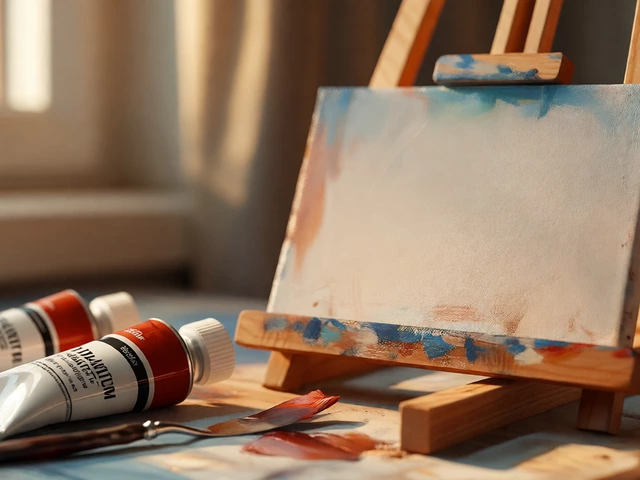
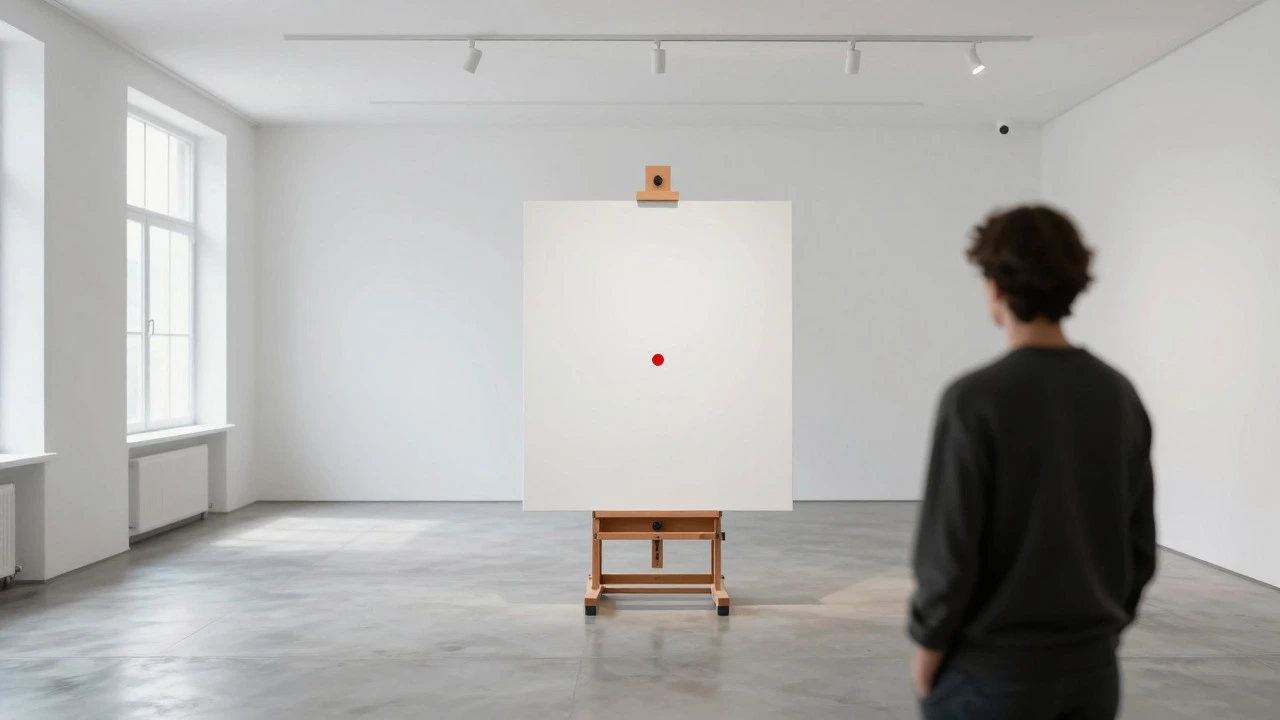
Have you ever stood in front of a blank canvas with a single red dot and thought, "My kid could do that"? You are not alone. This reaction is actually part of the experience. The main point of contemporary art is art produced in the present time, focusing on ideas, concepts, and social commentary rather than just technical skill or beauty. It is less about how well something looks and more about what it makes you think, feel, or question.
If traditional art was about mastering a craft to depict reality or mythology, contemporary art is about using any medium-video, trash, performance, code-to challenge your assumptions. It shifts the focus from the eye to the brain. When you look at a piece today, you aren't just admiring a brushstroke; you are engaging in a conversation with the artist about politics, identity, technology, or the nature of art itself.
The Shift From Object to Idea
To understand why contemporary art can seem confusing, you have to look at where it came from. In the 19th century, photography changed everything. Once a camera could capture a perfect likeness faster and cheaper than a painter, the need for realistic portraiture vanished. Artists had to find a new purpose. They moved toward abstraction, expression, and eventually, concept.
This evolution led to the rise of Conceptual Art is an art movement where the idea or concept behind the work is more important than the finished object. Think of Marcel Duchamp’s Fountain, a urinal he signed and submitted to a gallery in 1917. Was it beautiful? No. Was it technically skilled craftsmanship? Not really. But it asked a vital question: What defines art? Is it the object, or is it the context and the decision of the artist?
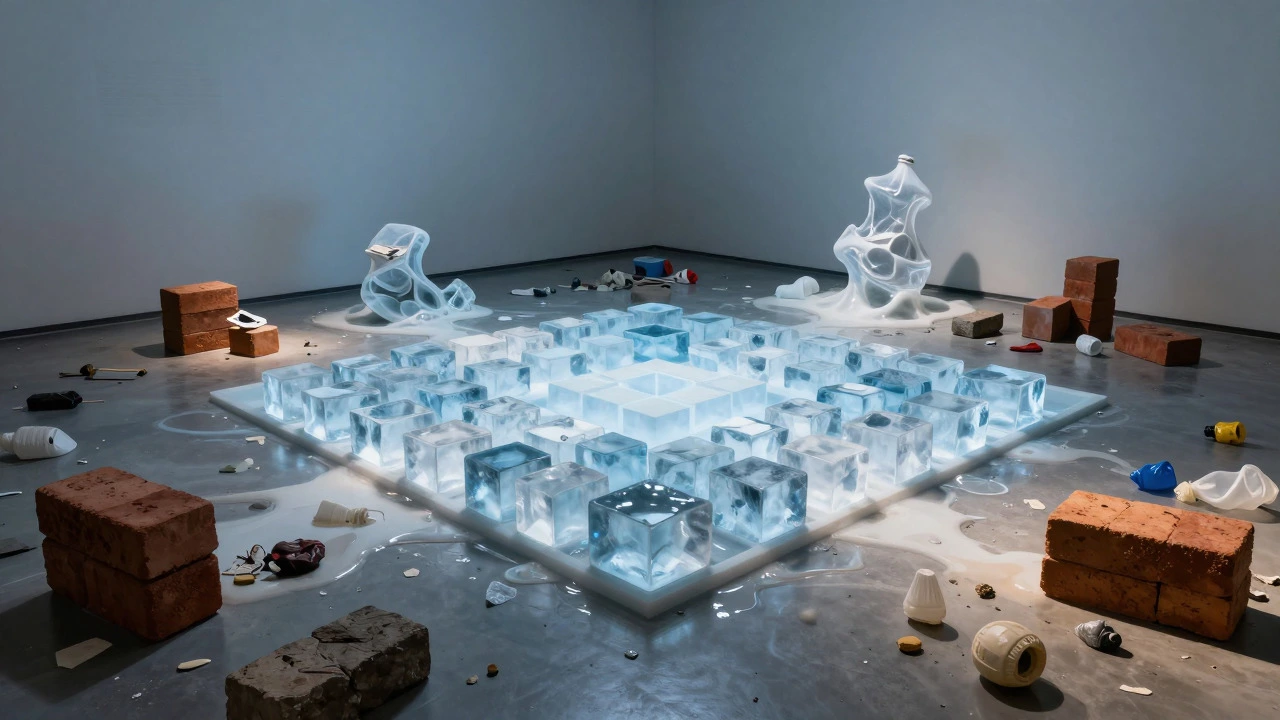
Today, this legacy continues. If an artist installs a room full of melting ice cubes, they might be talking about climate change. If they project a video of someone sleeping for eight hours, they might be exploring boredom or surveillance. The physical object is often just a vessel for the idea. The "main point" is the intellectual or emotional spark, not the aesthetic pleasure.
Why Does It Look Like That? (Or Why Doesn't It?)
One of the biggest hurdles for new viewers is the lack of recognizable technique. We are conditioned to value skill: shading, perspective, color theory. Contemporary art often deliberately ignores these rules. Here is why:
- Democratization of Creation: By lowering the barrier to entry, artists suggest that anyone can make art. This challenges the elitism of the past.
- Focus on Materiality: Using everyday objects (found objects) forces us to see the mundane in a new light. A pile of bricks isn't just construction material; it can represent labor, weight, or urban decay.
- Anti-Aesthetic Stance: Some artists believe beauty distracts from hard truths. Ugly, jarring, or plain works demand attention through shock or curiosity rather than charm.
Consider the work of Yayoi Kusama is a Japanese contemporary artist known for her polka dots and infinity mirror rooms. Her installations are visually stunning, but they also stem from her personal struggle with hallucinations. The art is a way to externalize internal chaos. The "point" is empathy and shared human experience, not just a pretty pattern.
Key Themes in Contemporary Practice
While styles vary wildly, most contemporary art circles around a few core themes. Recognizing these can help you decode what you are seeing.
| Theme | What It Explores | Example Mediums |
|---|---|---|
| Identity & Politics | Race, gender, power structures, colonialism | Photography, Installation, Text |
| Environment | Climate change, waste, human impact on nature | Recycled materials, Land art, Bio-art |
| Technology & Digital Life | AI, social media, surveillance, virtual reality | Video, Code, NFTs, Interactive screens |
| The Body | Vulnerability, aging, pain, pleasure | Performance art, Sculpture, Video |
When you see a sculpture made of plastic waste, you are likely looking at an environmental critique. When you see a video of a person repeating a simple action for hours, you might be witnessing a commentary on labor or routine. The theme provides the lens through which to view the form.
How to Look at Contemporary Art Without Feeling Lost
You don't need an art degree to appreciate contemporary work. You just need to change your approach. Instead of asking, "Is this good?" ask, "What is this doing?"
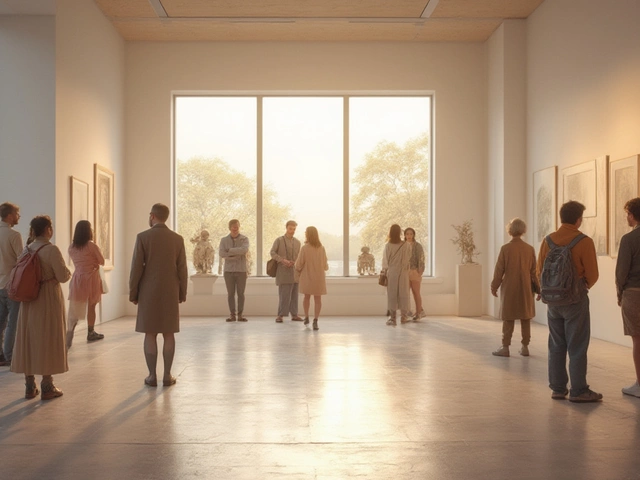
- Read the Wall Text: In museums, the label next to the work is your cheat sheet. It tells you the title, date, medium, and often the artist's intent. Don't skip it. It bridges the gap between your perception and their intention.
- Look for Context: Who is the artist? What is happening in the world right now? Art doesn't exist in a vacuum. A piece about migration hits differently when read alongside current news headlines.
- Trust Your Reaction: If it makes you angry, bored, or confused, that is a valid response. The artist may have wanted to provoke exactly that feeling. Your emotion is data.
- Ask Questions: Why did they use that material? Why is it so big/small? Why is there no frame? These questions lead you deeper into the concept.
For example, if you see a chair covered in barbed wire, don't just think "scary." Think: "Safety, imprisonment, domestic violence, protection." The object becomes a symbol. That shift from literal to symbolic is the heart of contemporary engagement.
The Role of the Viewer
In classical art, the viewer is passive. You look, you admire, you leave. In contemporary art, the viewer is active. You complete the work. Without your interpretation, the concept remains dormant. This is why two people can walk out of the same gallery with completely different opinions about the same piece. Both can be right.
This participatory nature extends to digital spaces too. Social media has turned everyone into a curator. When you share an image online, you are adding to its meaning. The art lives in the discourse, not just the museum wall.
Contemporary vs. Modern: Clearing the Confusion
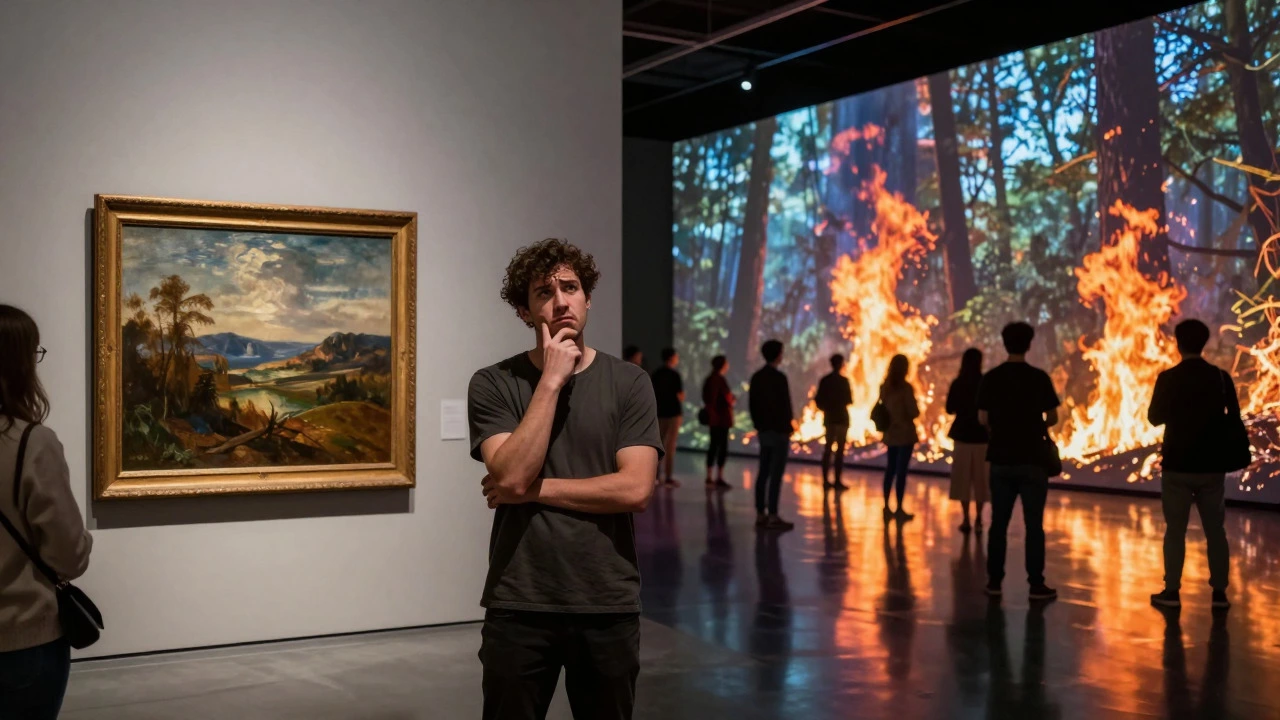
People often use "modern" and "contemporary" interchangeably, but they mean different things. Modern Art refers to art produced roughly between the 1860s and the 1970s, characterized by a break from tradition and experimentation with form. Think Picasso, Van Gogh, or Frida Kahlo. They were breaking rules, but they were still largely focused on painting and sculpture.
Contemporary Art is art made from the late 20th century to today, embracing diverse mediums, global perspectives, and conceptual depth. It is fluid, global, and technologically integrated. While modern art asked, "How can we paint differently?" contemporary art asks, "What is art for?"
Why It Matters Now
In a world saturated with images, advertising, and algorithms, contemporary art offers a space for critical thinking. It slows you down. It forces you to confront uncomfortable truths about society, yourself, and the planet. It is not always easy, and it is rarely just decorative. But that is its strength. It keeps culture alive by challenging the status quo.
The main point of contemporary art is connection. It connects the artist's mind to yours, across time and space, using whatever tools are available. Whether it is a giant balloon dog or a silent video of a forest burning, the goal is the same: to make you see the world differently, even if just for a moment.
Is contemporary art just a scam?
Not inherently. While the art market can be speculative and expensive, the art itself is about ideas. High prices often reflect rarity, historical significance, or brand value, not necessarily intrinsic quality. Many impactful contemporary artists work outside the commercial gallery system entirely. Judge the work by its ability to provoke thought, not its price tag.
Do I need to be educated to understand contemporary art?
No. Education helps provide context, but your own experiences and emotions are enough to engage with the work. Artists create for a general audience, not just academics. If a piece resonates with you personally, you have understood it.
What is the difference between modern and contemporary art?
Modern art generally refers to the period from the 1860s to the 1970s, focusing on breaking away from traditional techniques. Contemporary art refers to art made from the late 20th century to the present day, focusing on concepts, global issues, and diverse mediums like video and installation.
Why is some contemporary art so ugly?
Beauty is not the primary goal of all contemporary art. Some artists use ugliness, discomfort, or shock to highlight difficult topics like war, disease, or inequality. The dissonance is intentional to make the viewer pay attention and reflect on the subject matter.
Can anything be considered contemporary art?
Technically, yes, if an artist presents it within an artistic context. However, for it to be recognized as such, it usually needs to contribute to a dialogue about art, society, or culture. Simply putting a random object in a gallery isn't enough; there must be intent and conceptual framework behind it.