Modern Art Movement Explorer & Quiz
Explore the Movements
Click on any movement card to learn more about its key characteristics.
Impressionism
Capturing fleeting moments of light and movement
Key Idea: Quick, visible brushstrokes to capture changing sunlight effects
Famous Artist: Claude Monet
Revolutionary Aspect: First major break from academic realism; painting outdoors (en plein air)
Cubism
Breaking objects into geometric shapes for multiple viewpoints
Key Idea: Shattered perspective showing front, side, and top simultaneously
Famous Artist: Pablo Picasso
Revolutionary Aspect: Fundamentally changed how we think about space and form in art
Surrealism
Exploring dreams, the unconscious mind, and irrational imagery
Key Idea: Visualizing the human subconscious through dreamscapes
Famous Artist: Salvador Dalí
Revolutionary Aspect: Tapped into Freud's psychological theories; defied logic
Abstract Expressionism
Emphasizing spontaneous, automatic, or subconscious creation
Key Idea: Painting the act of painting itself; energy and movement over narrative
Famous Artist: Jackson Pollock
Revolutionary Aspect: Reflected post-WWII turmoil; no clear subject matter required
Quick Facts
- Period 1860s – 1970s
- Core Shift From realism to subjectivity
- Trigger Invention of photography
- Goal Interpret, not copy reality
Test Your Knowledge
Score: 0/5Quiz Complete!
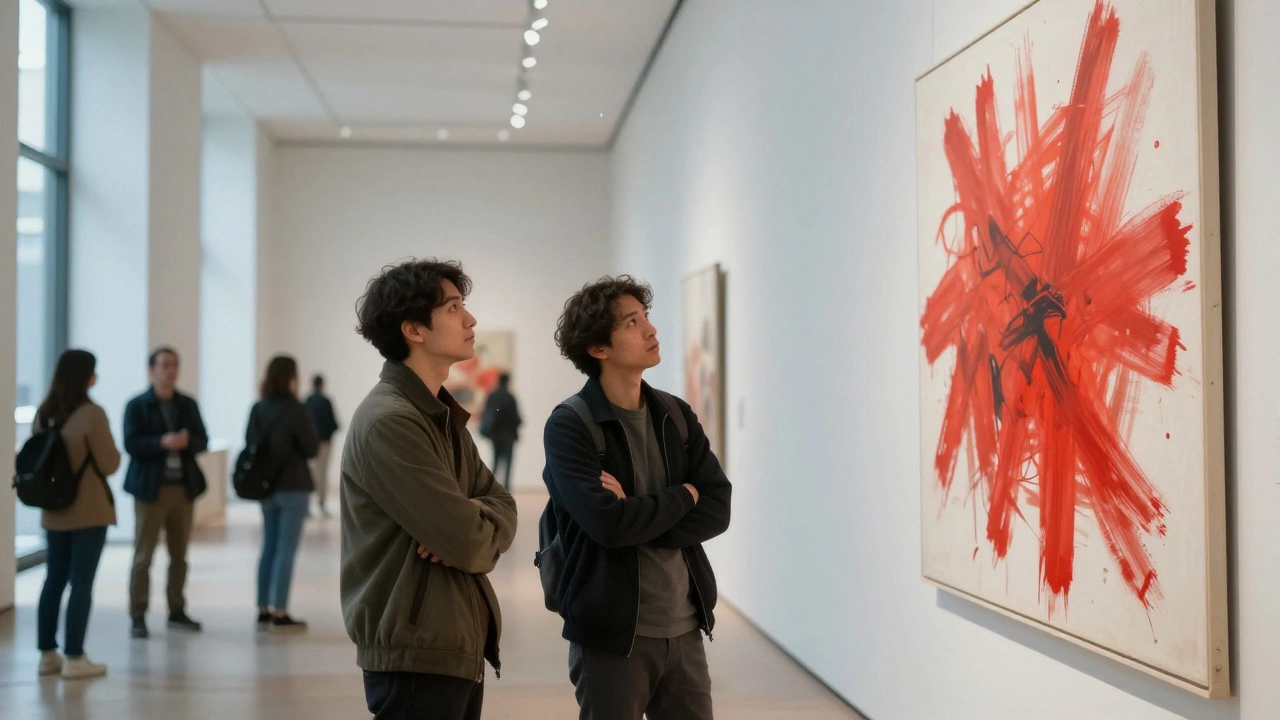
Walk into any major museum today, and you might find yourself staring at a canvas that looks like it was painted by a toddler with a tube of red paint. You squint. You look around to see if everyone else is laughing. They aren’t. They’re nodding. This reaction-confusion followed by curiosity-is the universal experience of encountering modern art, which is an artistic period spanning roughly from the 1860s to the 1970s that broke away from traditional realism to explore new forms, colors, and concepts.
If you’ve ever asked, “My kid could do that,” you are not alone. But understanding modern art isn’t about judging technical skill; it’s about understanding a radical shift in how humans saw the world. This era didn’t just change painting; it changed philosophy, politics, and daily life. Let’s break down what actually happened, why it matters, and how to look at these works without feeling lost.
The Core Idea: Breaking the Rules
To get modern art, you first have to understand what it rebelled against. For centuries, Western art was dominated by Academic Art, which was a style of painting and sculpture taught in European academies that emphasized historical subjects, mythological themes, and precise realistic technique. If you wanted to be a successful artist in Paris or London in the 1850s, you had to paint kings, gods, or battles with perfect perspective and smooth brushstrokes. The goal was to mirror reality as accurately as possible.
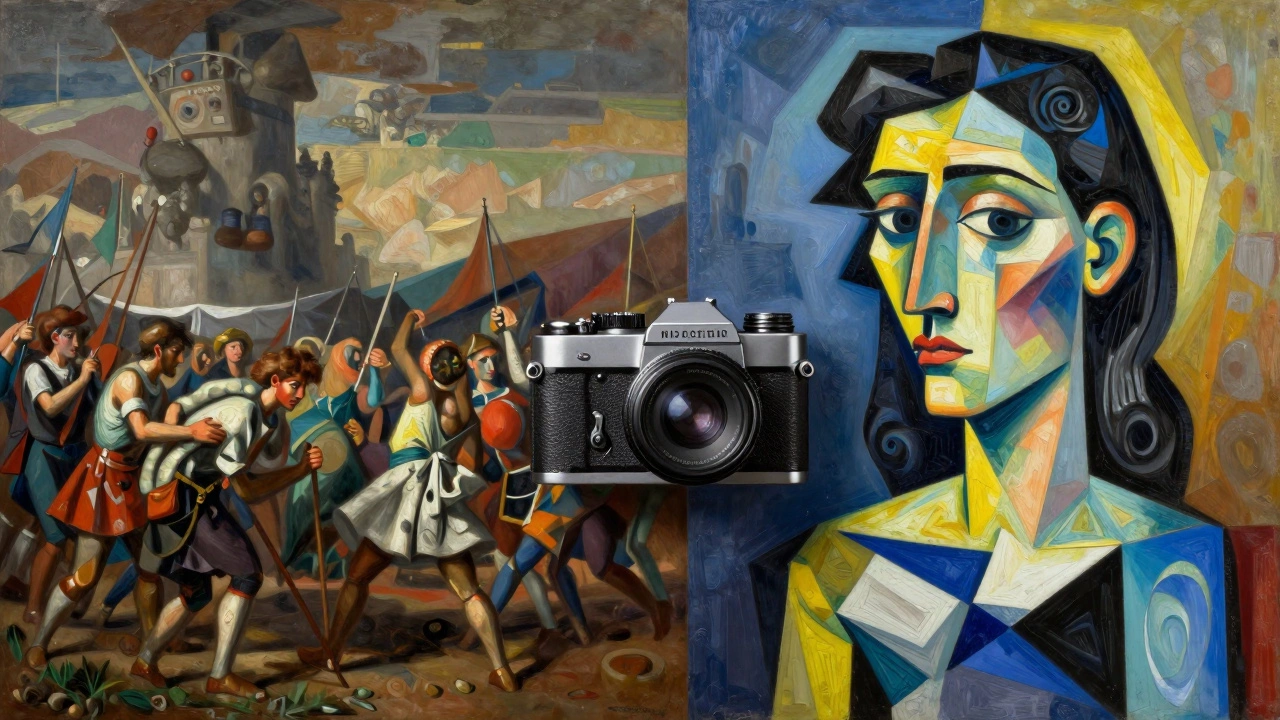
Then came the camera. Invented in the early 19th century and widely adopted by the mid-1800s, photography made the idea of “perfect realism” obsolete for many artists. Why spend three months painting a street scene when a photographer could capture it in seconds? Artists realized their job wasn’t to copy the world anymore. Their job was to interpret it.
This shift created the defining characteristic of modern art: subjectivity. Instead of asking, “Does this look real?” artists started asking, “How does this feel?” or “What does this represent?” This opened the door to abstraction, bold colors, and distorted shapes. It turned art from a window into the world into a mirror of the artist’s mind.
Key Movements That Shaped the Era
Modern art wasn’t one single style. It was a rapid-fire succession of movements, each reacting to the last. Here are the big ones you need to know to make sense of the timeline.
| Movement | Time Period | Key Idea | Famous Artist |
|---|---|---|---|
| Impressionism | 1860s-1880s | Capturing fleeting moments of light and movement | Claude Monet |
| Cubism | 1907-1914 | Breaking objects into geometric shapes to show multiple viewpoints | Pablo Picasso |
| Surrealism | 1920s-1940s | Exploring dreams, the unconscious mind, and irrational imagery | Salvador Dalí |
| Abstract Expressionism | 1940s-1950s | Emphasizing spontaneous, automatic, or subconscious creation | Jackson Pollock |
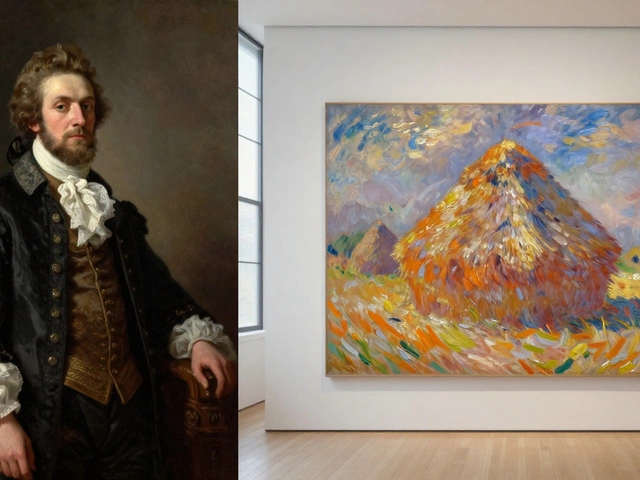
Impressionism kicked off the revolution. Artists like Claude Monet and Edgar Degas left the studio and painted outdoors (en plein air). They used quick, visible brushstrokes to capture the changing effects of sunlight. To critics at the time, Monet’s Impression, Sunrise looked unfinished and messy. Today, we see it as the birth of modern perception.
Next came Cubism, pioneered by Pablo Picasso and Georges Braque. Inspired by African masks and the flatness of photography, they shattered perspective. Instead of showing a face from one angle, they showed the front, side, and top all at once. It was confusing then, but it fundamentally changed how we think about space and form in art.
Later, Surrealism tapped into the psychological theories of Sigmund Freud. Artists like Salvador Dalí and René Magritte painted dreamscapes that defied logic. Melting clocks and floating bowlers weren’t just weird; they were attempts to visualize the human subconscious.
Why Does Modern Art Feel So Different?
You might notice that modern art often lacks a clear subject. There’s no king, no battle, no pretty landscape. This is because modern artists were interested in form and emotion over narrative.
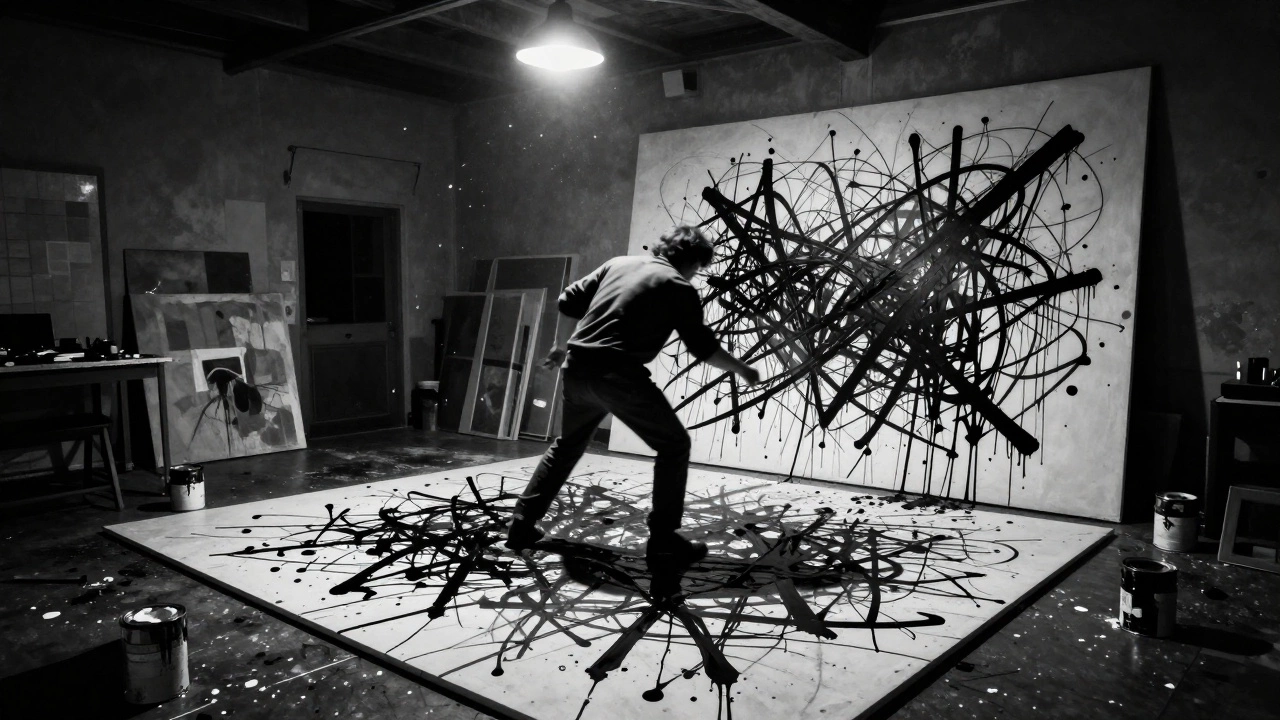
Take Abstract Expressionism, which emerged after World War II. Artists like Jackson Pollock didn’t paint pictures of things; they painted the act of painting itself. Pollock would drip and splash paint onto canvases laid on the floor. The result wasn’t a picture of a tree or a person; it was a record of energy, movement, and chaos. For viewers, this required a new way of looking. You weren’t supposed to decode a symbol; you were supposed to feel the rhythm of the lines.
This shift also reflected the turmoil of the 20th century. Two world wars, the rise of industrialization, and the threat of nuclear annihilation made traditional beauty seem irrelevant. Art became darker, more fragmented, and more personal. It mirrored a world that felt broken and uncertain.
Common Misconceptions About Modern Art
There are plenty of myths surrounding this era. Let’s clear up the most common ones.
- “It’s just random.” While some works may look chaotic, they are usually the result of intense study and deliberate choice. Even Pollock’s drips were controlled gestures based on composition and balance.
- “Anyone can do it.” Technically, yes, anyone can splatter paint. But creating a work that resonates emotionally or conceptually requires deep knowledge of art history, color theory, and material handling. Context matters.
- “It’s only about money.” While the modern art market is huge, most modern artists struggled financially during their lifetimes. Van Gogh sold only one painting while alive. The high prices today reflect rarity and historical significance, not just hype.
How to Look at Modern Art (Without Feeling Lost)
If you want to enjoy modern art, stop trying to “solve” it. Instead, try this approach:
- Ask questions, not demands. Don’t ask, “What is it?” Ask, “What does it make me feel?” or “Why did the artist choose these colors?”
- Consider the context. When was it made? What was happening in the world? A painting from 1914 feels different than one from 1945 because the global mood shifted dramatically.
- Look at the materials. Notice the texture. Is the paint thick? Are there cracks? Did the artist use unusual materials like sand or newspaper? These choices add layers of meaning.
- Give it time. Don’t glance and move on. Stand in front of a piece for two minutes. Your brain will start to pick up patterns and details you missed at first.
Modern Art vs. Contemporary Art: What’s the Difference?
This is where most people get confused. Contemporary art is art being made right now. Modern art refers specifically to the historical period from the late 19th to mid-20th century.
Think of it like music. Classical music has specific periods (Baroque, Romantic). Modern art is like the Jazz Age-it has a defined start and end. Contemporary art is the playlist you’re listening to today. It includes digital art, installation art, and performance art, which rely heavily on technology and social commentary in ways that modern artists couldn’t have imagined.
Understanding this distinction helps you navigate museums and galleries. If you see a painting by Picasso, that’s modern. If you see a video installation by an artist working in 2025, that’s contemporary. Both are valuable, but they come from different worlds.
Why Modern Art Still Matters
Modern art didn’t just change how we paint; it changed how we think. It taught us that there is no single “correct” way to see the world. It validated individual perspective and emotional truth. Every time you scroll through social media and see a filtered photo, you’re engaging with a modernist idea: that reality can be edited, stylized, and interpreted.
Whether you love it or hate it, modern art challenged the status quo. It forced us to question authority, tradition, and our own perceptions. And in a world that still struggles with those issues, that challenge remains relevant.
When did modern art start and end?
Modern art is generally considered to have begun in the 1860s with the Impressionists and ended in the late 1960s or early 1970s. After this period, art entered the "contemporary" phase, which continues today.
Who is the most famous modern artist?
Pablo Picasso is often cited as the most influential modern artist due to his role in founding Cubism and his prolific output across various styles. Other key figures include Vincent van Gogh, Claude Monet, and Jackson Pollock.
Is modern art the same as abstract art?
No. Abstract art is a style within modern art, but not all modern art is abstract. For example, Impressionism and Surrealism are modern movements that often depict recognizable subjects, even if they distort them.
Why is modern art so expensive?
High prices are driven by scarcity, historical significance, and market demand. Works by pivotal artists who defined movements are rare and highly sought after by collectors and institutions, driving up auction values.
Can I buy original modern art?
Original works by major modern masters are extremely rare and costly. However, you can find affordable works by lesser-known modern artists or later-period modernists through galleries, auctions, and online art platforms.