Modern vs. Contemporary Art Identifier
Confused by the difference between "Modern" and "Contemporary"? Use this checker to analyze a hypothetical artwork description and determine which era it likely belongs to.
Fill out the form to see if the artwork is Modern or Contemporary.
Key Differences Reference
| Feature | Modern | Contemporary |
|---|---|---|
| Time Period | c. 1860 – 1970 | Late 1960s – Present |
| Focus | Aesthetics & Form | Ideas & Context |
| Materials | Traditional (mostly) | Anything (Digital, Bio, etc.) |
| Viewer Role | Passive Observer | Active Participant |
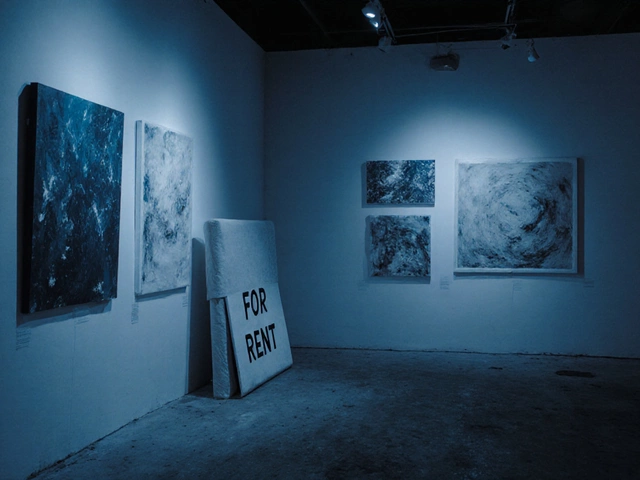
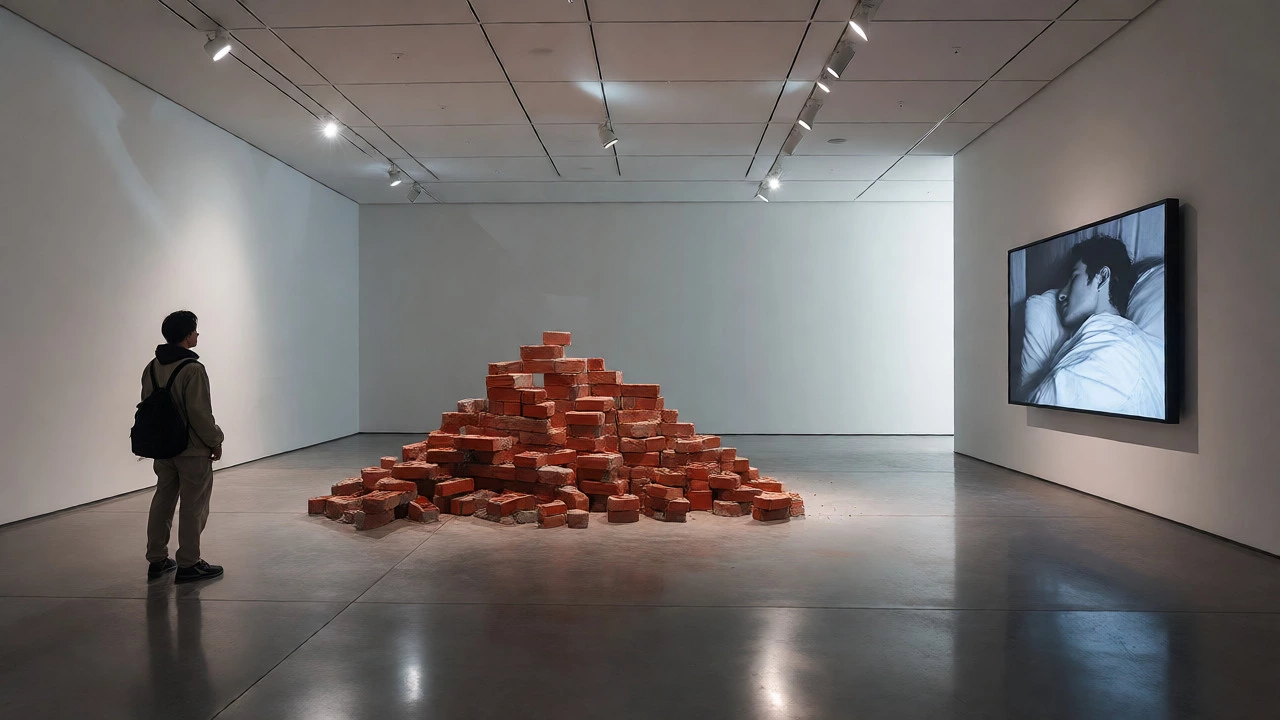
You walk into a gallery. The walls are white. The lighting is harsh. You see a pile of bricks in the corner and a video of someone sleeping for eight hours on a screen. You ask yourself: "Is this actually art?" This confusion is normal. It happens because the term "contemporary" is often misused. People mix it up with "modern." They think if it looks weird or new, it's contemporary. But that is not quite right.
Contemporary style refers to the art, design, and cultural movements created from the mid-20th century to the present day. Unlike historical styles like Baroque or Renaissance, which had strict rules and specific techniques, contemporary style is defined by its freedom. It rejects the idea that there is only one way to make something beautiful or meaningful. Instead, it focuses on ideas, context, and the viewer's experience. If you want to understand what makes something truly contemporary, you need to look past the surface and examine the intent behind the work.
The Timeline Trap: Modern vs. Contemporary
Let’s clear up the biggest mistake people make. They use "modern" and "contemporary" as synonyms. In art history, they are two different things. Think of them as two different chapters in a book.
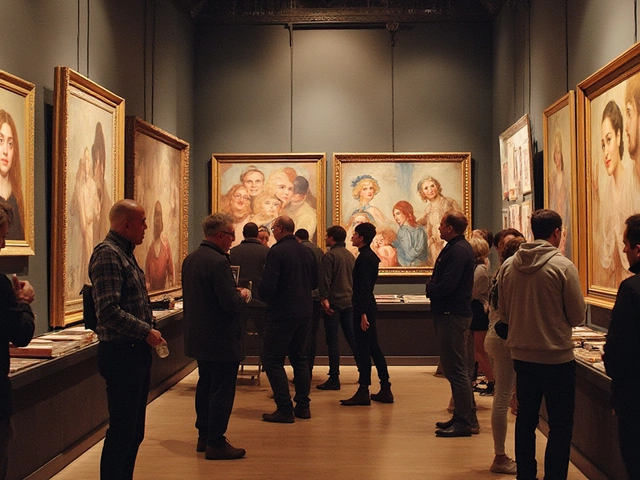
Modern Art is a historical period spanning roughly from the 1860s to the 1970s. It includes famous movements like Impressionism, Cubism, Surrealism, and Abstract Expressionism. Artists like Picasso, Dalí, and Pollock worked during this time. Their goal was often to break away from traditional realism. They wanted to show how the world looked through their eyes, using bold colors and distorted shapes.
Contemporary Art, on the other hand, is the art of today, produced from the late 1960s or early 1970s onward. There is no end date. As long as we are alive, contemporary art is being made. The shift happened when artists stopped trying to just paint pretty pictures or sculpt perfect forms. They started asking questions about society, politics, identity, and technology. The boundary between art and life began to blur.
| Feature | Modern Art (c. 1860-1970) | Contemporary Art (c. 1970-Present) |
|---|---|---|
| Primary Focus | Aesthetic innovation and formal experimentation | Ideas, social commentary, and global issues |
| Materials | Traditional media (oil, canvas, marble) plus some industrial materials | Any material (digital, found objects, performance, bio-art) |
| Viewer Role | Passive observer appreciating skill or beauty | Active participant interpreting meaning and context |
| Global Scope | Centered largely on Europe and North America | Truly global, including Asia, Africa, Latin America, and Oceania |
It’s Not About How It Looks, But What It Says
Here is the hard truth: Contemporary style has no single visual signature. You cannot spot it by looking at the color palette alone. One piece might be a hyper-realistic oil painting. Another might be a neon light sign. Both can be contemporary. Why? Because the defining feature is the concept.
In the past, skill was the main metric. Could you draw hands correctly? Could you mix paints so they looked like skin? In contemporary practice, technical skill is still valued, but it is not the point. The point is the message. Does the work challenge your assumptions? Does it reflect the current moment?
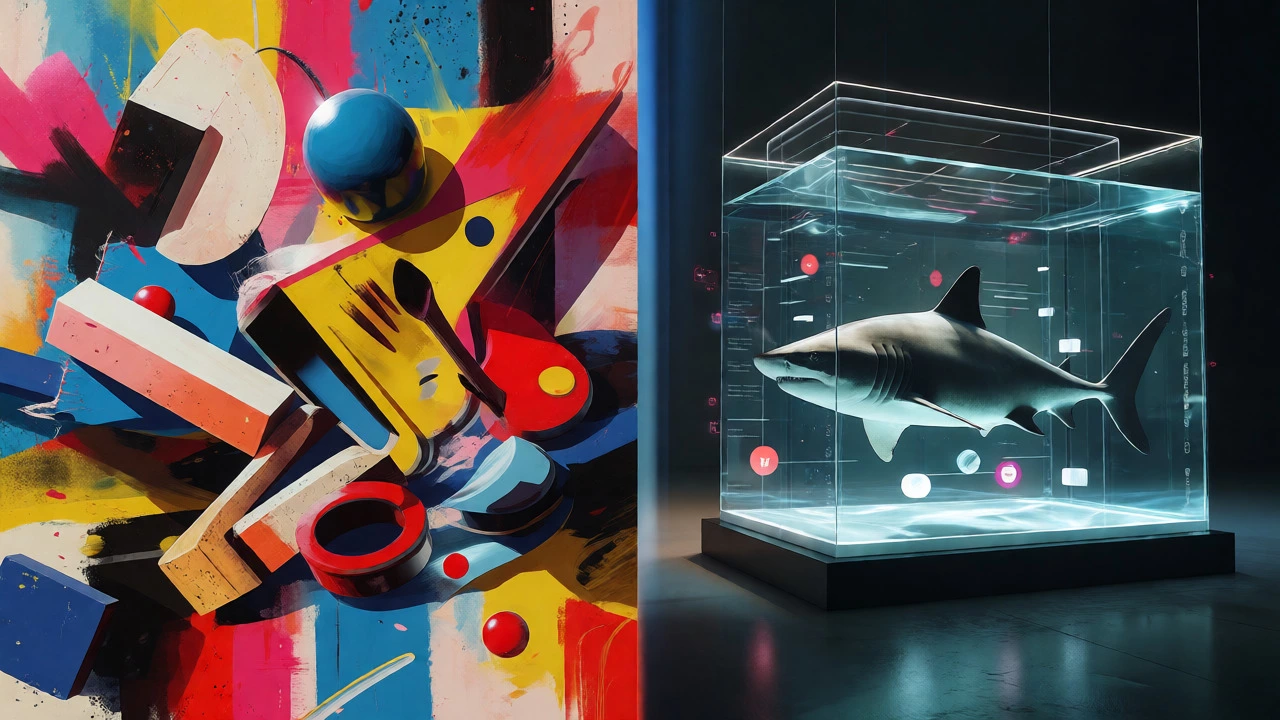
Consider Damien Hirst's shark in formaldehyde. Visually, it is just a dead animal in a tank. It requires little traditional "craft" to assemble. But conceptually, it forces you to confront death, preservation, and the value we place on nature versus money. That conceptual weight is what makes it contemporary. If you saw the same shark in a natural history museum, it would be science. In a gallery, framed by the artist's intent, it becomes art.
Key Characteristics of Contemporary Style
If you want to identify contemporary works, look for these recurring traits. They don't appear in every piece, but they form the backbone of the movement.
- Use of Mixed Media: Contemporary artists rarely stick to one tool. They combine photography, sound, text, and physical objects. A sculpture might include live plants, LED screens, and recycled plastic. This reflects our mixed-media lives, where we switch between digital and physical realities constantly.
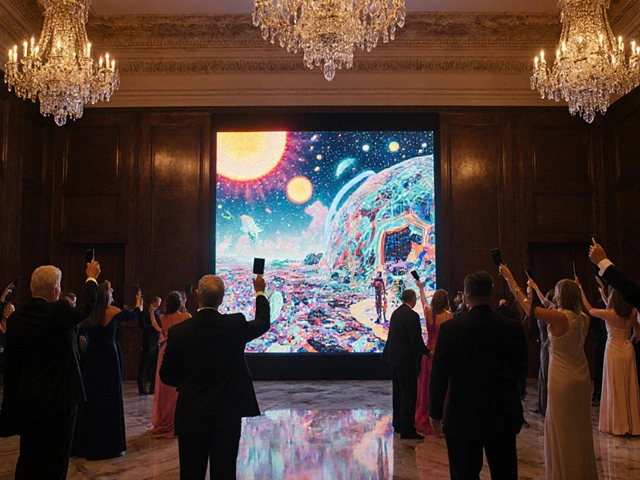
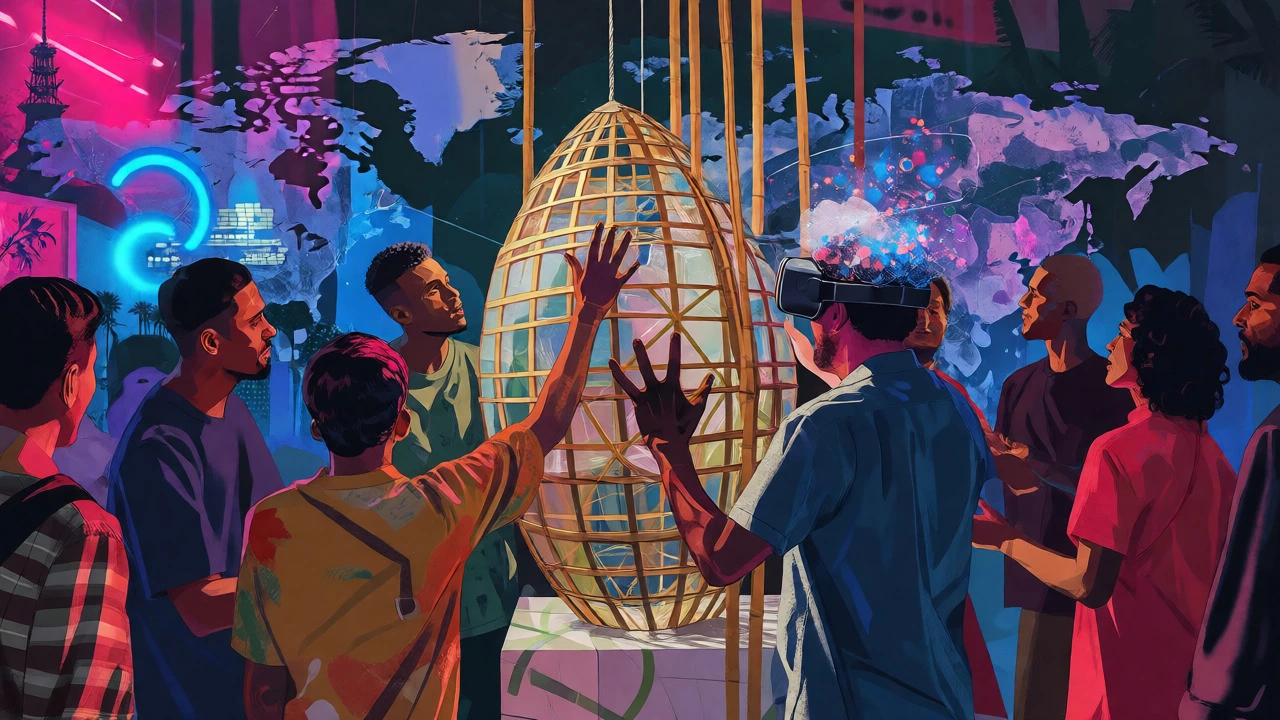
- Interactivity: Many contemporary pieces require you to do something. You might walk inside an installation, press a button to change a sound, or even provide input via a smartphone app. The artwork is incomplete without your participation. This breaks the "do not touch" rule of older museums.
- Social and Political Engagement: Contemporary style is often urgent. It addresses climate change, gender identity, migration, and inequality. Artists act as activists. For example, Ai Weiwei uses his platform to critique political power structures. The art is a vehicle for dialogue, not just decoration.
- Ephemerality: Some contemporary works are designed to disappear. Performance art, ice sculptures, or digital files that self-delete after viewing. This challenges the market's obsession with permanent, collectible objects. It suggests that experiences matter more than possessions.
The Global Shift: Beyond Western Centers
For centuries, "high art" meant European or American art. Contemporary style shattered this hierarchy. Today, the definition of contemporary includes voices from Lagos, Beijing, São Paulo, and Wellington. This geographic expansion changed what we consider valid artistic expression.
Artists from non-Western backgrounds bring different traditions and histories into the conversation. They might blend indigenous patterns with digital glitch aesthetics. Or they might use local materials, like bamboo or clay, to discuss global capitalism. This diversity means contemporary style is fluid. It adapts to local contexts while remaining part of a global network. When you look at a contemporary exhibition, you are seeing a snapshot of the entire world's creative output, not just one region's.
Common Misconceptions About Contemporary Art
Because contemporary style is abstract and conceptual, it attracts criticism. Let's address the three most common complaints.
Misconception 1: "My kid could do that."
This phrase usually appears when adults see simple drawings or minimal installations. The issue isn't the technical difficulty; it's the lack of understanding of the context. Yes, a child can draw a blue square. But did the child intend to critique the commodification of color fields? Probably not. Contemporary art is about intention and theory. The value lies in the idea, not the manual labor.
Misconception 2: "It's all a scam."
Critics argue that anything can be called art, making the word meaningless. While it's true that the bar for entry has lowered regarding technique, the bar for critical thinking has raised. Institutions vet contemporary artists carefully. The market values rarity and provenance. Just because a banana taped to a wall costs $120,000 doesn't mean every taped banana is worth that much. Context, artist reputation, and institutional validation play huge roles.
Misconception 3: "Contemporary is just trendy."
Trends fade. Contemporary art documents the human condition in real-time. Works from the 1990s discussing the rise of the internet are now historical records of that era. They remain relevant because they capture a specific moment in cultural evolution. Contemporary art is not just fashion; it is a living archive.
How to Engage With Contemporary Style
So, how do you appreciate contemporary art if you don't have an art degree? You don't need to memorize dates. You need to change your approach.
- Read the Wall Text First: In traditional galleries, you might ignore the placard. In contemporary spaces, read it before looking closely. Knowing the artist's background or the title's reference can unlock the meaning. It provides the key to the puzzle.
- Ask "Why Now?": Look at the work and ask why the artist chose this medium or subject at this specific time. Is it reacting to a news event? A technological shift? This helps you connect the piece to the broader world.
- Accept Discomfort: Contemporary art often aims to provoke. If you feel confused, annoyed, or bored, that is a valid response. The artist might be trying to disrupt your comfort zone. Sit with that feeling. Ask yourself what triggered it.
- Look for Connections: Try to link the work to other disciplines. Does this sculpture remind you of architecture? Does this video relate to a movie scene? Contemporary art thrives on cross-pollination between fields.
Final Thoughts: Living in the Now
Contemporary style is not a static category. It moves as fast as we do. It absorbs new technologies, new social norms, and new anxieties. It is messy, diverse, and sometimes frustrating. But it is also the most honest reflection of our current reality. It doesn't pretend to offer perfect answers. It offers questions. And in a complex world, questions are often more valuable than answers.
Next time you stand in front of a pile of rocks or a blank white canvas, pause. Don't dismiss it immediately. Look for the idea beneath the object. You might find that the art isn't just on the wall-it's in the space between you and the work.
What is the difference between contemporary and modern art?
Modern art refers to a specific historical period from the 1860s to the 1970s, focusing on aesthetic innovation and breaking from tradition. Contemporary art refers to art created from the late 1970s to the present, focusing on concepts, social issues, and global perspectives. Modern art is closed; contemporary art is ongoing.
Does contemporary art have to be difficult to understand?
No. While some contemporary works rely on heavy theoretical frameworks, many are accessible and emotional. The difficulty often stems from unfamiliarity with the context rather than the work itself. Reading brief descriptions or artist statements can significantly improve comprehension and enjoyment.
Can any object be considered contemporary art?
In principle, yes, due to the legacy of Duchamp's readymades. However, in practice, an object becomes contemporary art through institutional validation (galleries, museums), artist intent, and critical discourse. A random rock on the street is not art until an artist frames it within a conceptual context.
Why is contemporary art often criticized as "not real art"?
Criticism usually arises because viewers expect traditional craftsmanship and representational beauty. Contemporary art prioritizes ideas over technical skill. When viewers judge conceptual work by aesthetic standards, they perceive a lack of effort, leading to skepticism about its legitimacy.
Is digital art considered contemporary?
Yes, digital art is a major subset of contemporary style. Since contemporary art covers the present day, and digital tools are central to modern life, digital mediums like NFTs, AI-generated images, and virtual reality installations are fully recognized as contemporary practices.