Abstract Art Terminology Quiz
You walk into a gallery. A canvas hangs on the wall. It has no trees, no faces, no recognizable objects. Just splashes of red, jagged lines of black, and a swirl of blue. You ask the docent, "What is this called?" They say, "It's abstract art." But then you hear another critic call it "non-objective," while a historian refers to it as "informel." Suddenly, you wonder: are these different things? Or is abstract art just wearing many hats?
The short answer is that there isn't one single synonym. The name changes depending on how the artist broke away from reality. Did they simplify a real object until it became unrecognizable? Or did they invent shapes from thin air? Did they use strict geometry or wild emotion? Each approach has its own label. Understanding these names helps you talk about art with confidence, whether you're buying a print or discussing a masterpiece.
Non-Objective Art: When Nothing Exists in Reality
If you want the most precise alternative name for pure abstract art, it is Non-Objective Art. This term was popularized by Wassily Kandinsky, a pioneer who believed art should stand alone, like music. Music doesn't need to sound like a bird chirping to be beautiful; it just needs to move you emotionally. Similarly, non-objective art contains no reference to the visible world at all.
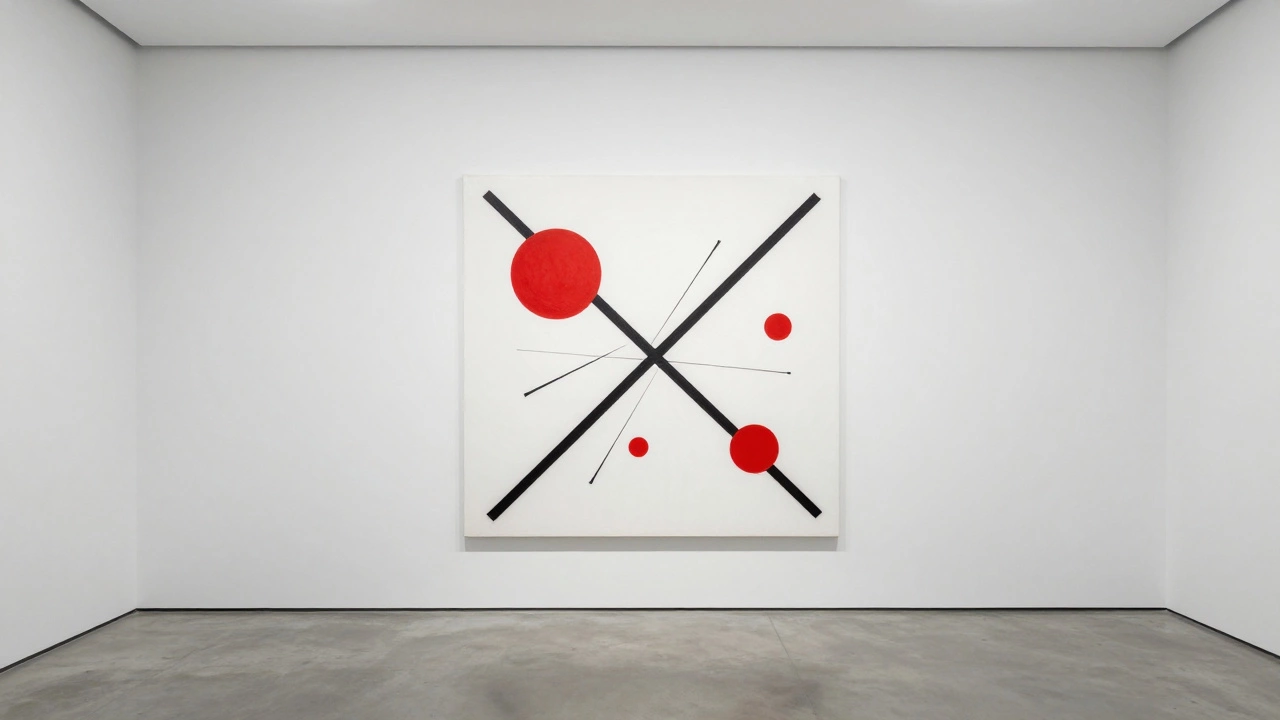
Think about the difference between a painting of an apple and a painting of a red circle. If the red circle is meant to represent an apple, even loosely, it is still "abstract" because it simplifies reality. But if the red circle is just a red circle-chosen for its color and shape, not because it looks like anything else-it is non-objective. There is no subject. Hence, "non-objective."
This distinction matters because "abstract" can sometimes imply a departure from a concrete source. "Non-objective" implies a creation from nothing but imagination, mathematics, or spiritual intuition. When you see works by artists like Kazimir Malevich or Piet Mondrian, where squares and lines float in white space, you are looking at non-objective art. It rejects the physical world entirely.
Geometric Abstraction: The Orderly Side of Chaos
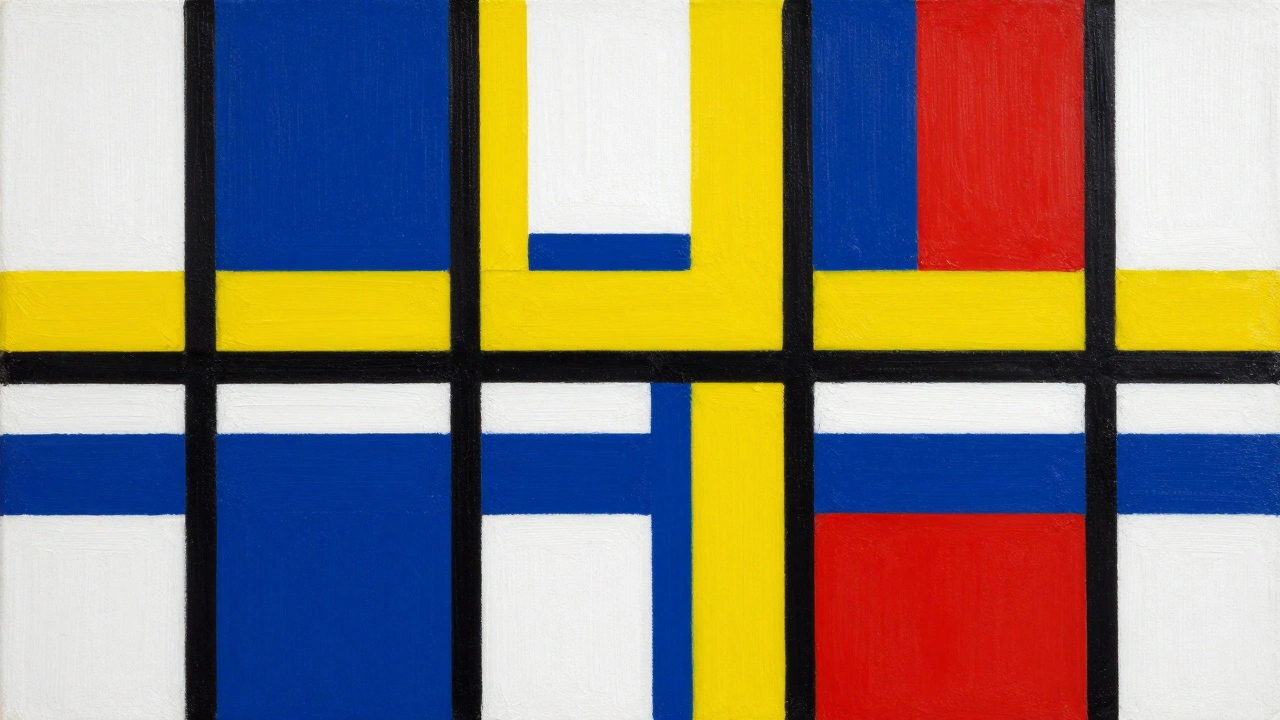
Not all abstract art is messy. Some of it is incredibly precise. If you see art made of clean lines, perfect circles, triangles, and grids, you are likely looking at Geometric Abstraction. This style emerged strongly in the early 20th century, particularly through movements like De Stijl and Suprematism.
Artists in this camp believe that beauty lies in structure and balance. They strip away the chaos of nature to reveal underlying order. Take Piet Mondrian’s famous grid paintings. He started by painting trees and cityscapes. Over time, he simplified them more and more until only vertical and horizontal black lines remained, filled with primary colors. He didn’t paint a tree anymore; he painted the essence of structure.
Geometric abstraction is often associated with logic, rationality, and universal harmony. It feels calm and controlled. If you prefer art that feels organized and mathematical, this is the branch of abstract art for you. It contrasts sharply with styles that emphasize gesture and spontaneity.
Informel and Lyrical Abstraction: Emotion Over Form
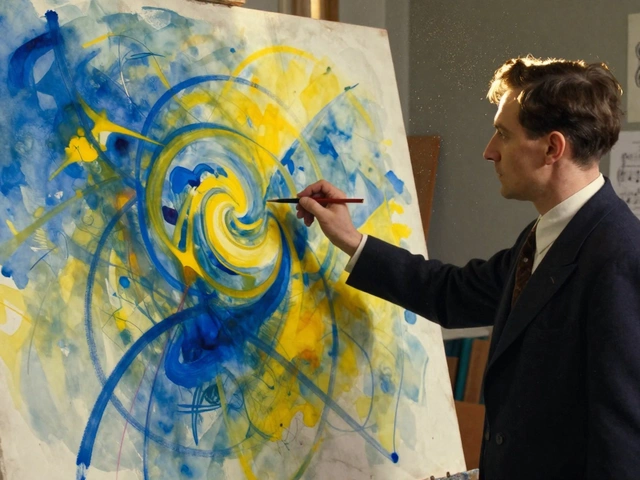
On the opposite end of the spectrum is art that feels wild, spontaneous, and deeply personal. In Europe, this style is often called Informel, which literally means "without form." In the United States, it is frequently referred to as Lyrical Abstraction or simply Abstract Expressionism.
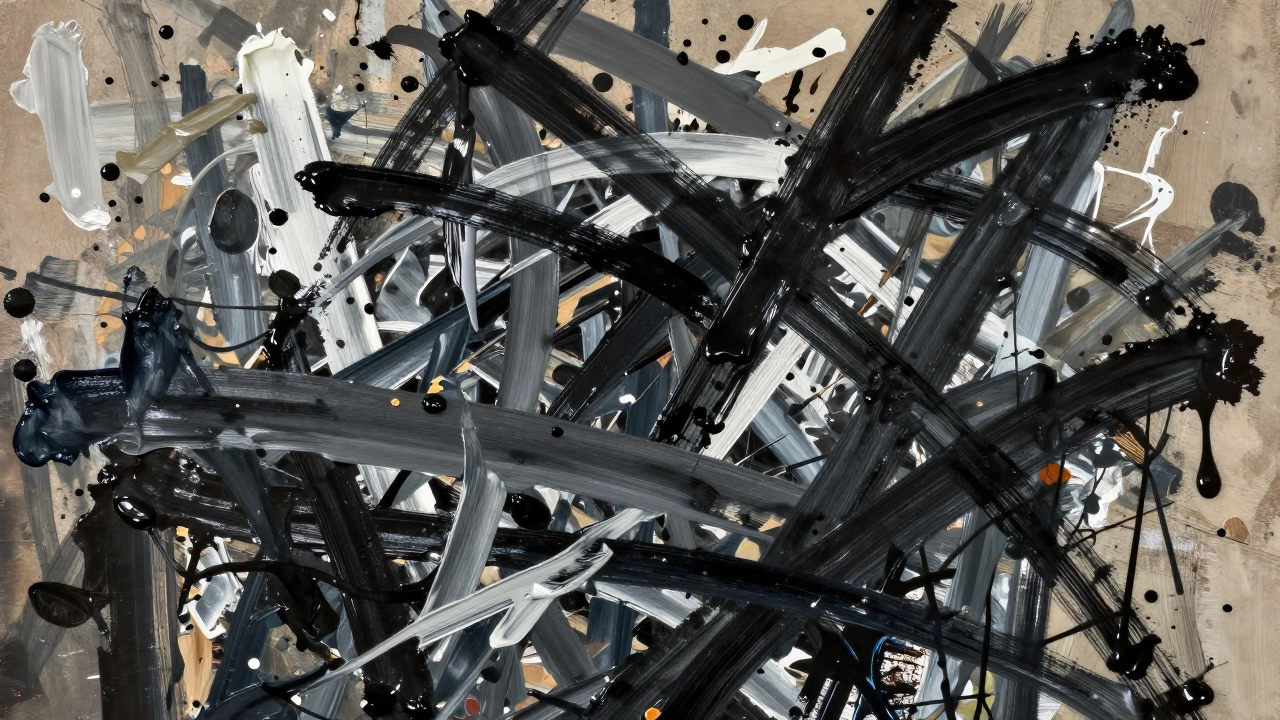
Imagine Jackson Pollock dripping paint across a canvas laid on the floor. There is no pre-planned composition. No geometric rules. The movement of his body, the flow of the paint, and the moment of creation are what matter. The result is chaotic, energetic, and raw. This is Informel. It prioritizes the artist’s inner state over external appearance.
Lyrical abstraction shares this emotional focus but might retain slightly more compositional structure than pure Action Painting. Artists like Joan Mitchell or Mark Rothko (though Rothko is often categorized separately due to his color fields) used color and texture to evoke feelings rather than depict scenes. If you feel overwhelmed, sad, or ecstatic when looking at a piece, you are likely experiencing the power of lyrical or informal abstraction.
Action Painting and Color Field: Specific Techniques
Sometimes, the "other name" for abstract art depends on the technique used. Two major sub-genres define much of modern abstract history:
- Action Painting: This focuses on the physical act of painting. The canvas becomes an arena for action. Drips, splatters, and bold brushstrokes record the artist's movement. It’s less about the final image and more about the process. Think of it as visual jazz-improvised and dynamic.
- Color Field Painting: Here, large areas of solid color dominate the canvas. The goal is to create a meditative experience. Viewers are invited to lose themselves in the hue and scale. Mark Rothko is the master of this. His paintings aren’t just rectangles of color; they are immersive environments that change how you feel the longer you look at them.
These terms are useful when you want to be specific. Saying "I like abstract art" is vague. Saying "I love the energy of action painting" tells people exactly what resonates with you.
Hard-Edge Painting: Sharp Lines and Solid Colors
Another distinct variation is Hard-Edge Painting. This style emerged in the 1950s and 60s as a reaction against the loose, gestural style of Abstract Expressionism. Hard-edge paintings feature sharp, clear boundaries between shapes. There are no blurry edges, no drips, and no visible brushstrokes. The colors are flat and uniform.
Artists like Kenneth Noland and Frank Stella perfected this look. Their work resembles graphic design or architecture. It feels modern, sleek, and deliberate. If you enjoy minimalist aesthetics, hard-edge painting is likely your preferred synonym for abstract art. It brings clarity and precision back into the conversation.
Comparing the Terms: Which One Fits?
| Term | Focus | Key Characteristic | Example Artist |
|---|---|---|---|
| Non-Objective | No real-world reference | Pure invention | Kazimir Malevich |
| Geometric Abstraction | Structure and order | Clean lines, shapes | Piet Mondrian |
| Informel / Lyrical | Emotion and gesture | Spontaneous, messy | Jackson Pollock |
| Color Field | Mood and immersion | Large blocks of color | Mark Rothko |
| Hard-Edge | Precision and clarity | Sharp boundaries | Frank Stella |
Why Do So Many Names Exist?
The proliferation of terms reflects the diversity of artistic intent. "Abstract art" is a broad umbrella. Underneath it, artists pursue very different goals. Some seek spiritual truth (Kandinsky). Others seek political revolution (Malevich). Some seek emotional release (Pollock). Others seek visual harmony (Mondrian).
Using specific names helps us understand these intentions. It also helps collectors and curators categorize works. For example, a museum might group all non-representational works under "Abstract," but separate the geometric pieces from the gestural ones in their exhibitions. Knowing the difference allows you to navigate galleries and auctions with greater insight.
Additionally, regional differences play a role. "Informel" is a European term, largely French and German. "Abstract Expressionism" is American. While they share similarities, the cultural context differs. Recognizing these nuances enriches your appreciation of global art history.
How to Identify What You Like
Next time you encounter abstract art, pause and ask yourself what draws you in. Is it the calmness of a balanced composition? Then you might lean toward geometric or hard-edge styles. Do you feel energized by chaotic splashes of color? Action painting or Informel might be your preference. Are you moved by deep, atmospheric hues? Look into Color Field painting.
There is no right or wrong answer. Abstract art is subjective by nature. Its lack of recognizable subjects invites you to project your own emotions and interpretations onto the canvas. By learning the vocabulary, you gain tools to articulate those experiences. You stop saying "I don't get it" and start saying "I connect with the energy of this piece."
Understanding these terms transforms confusion into curiosity. It turns a random splash of paint into a meaningful dialogue between artist and viewer.
Is non-objective art the same as abstract art?
Non-objective art is a subset of abstract art. All non-objective art is abstract, but not all abstract art is non-objective. Abstract art can still reference real-world objects in a simplified way, while non-objective art has no reference to the visible world at all.
What is the difference between Informel and Abstract Expressionism?
Informel is a European term describing abstract art that rejects traditional forms and structures, emphasizing spontaneity and materiality. Abstract Expressionism is primarily an American movement that includes similar gestures but also encompasses broader themes like existential angst and individual psyche. They overlap significantly but have different cultural origins.
Who invented the term non-objective art?
Wassily Kandinsky is credited with popularizing the term "non-objective" (or "gegenstandslos" in German) in the early 20th century. He argued that art should be free from the burden of representing external reality, similar to how music operates.
Can digital art be considered abstract?
Yes, digital art can absolutely be abstract. Digital artists use software to create geometric patterns, fluid simulations, and generative designs that fit perfectly into categories like geometric abstraction or algorithmic art. The medium changes, but the principles of abstraction remain the same.
Why do some people dislike abstract art?
Some viewers struggle with abstract art because they expect representation. Without recognizable subjects, they may feel disconnected or confused. However, understanding that abstract art aims to evoke emotion or explore form rather than depict reality can help bridge this gap.