Fine Artist Identification Quiz
Test Your Understanding
How well do you understand the key distinction between fine artists and other creative roles? Answer these questions based on the article concepts.
Question 1
A photographer sells prints of family portraits on Instagram. They don't have an art gallery show. Is this person a fine artist?
Question 2
A potter creates hand-built vessels designed to look like melting books, using ash glazes from burned pages. These pieces are in university collections but the artist has no website. Is this a fine artist?
Question 3
A graphic designer creates logos for companies. They occasionally make personal digital art for Instagram. Which term best describes them?
People who make fine art aren’t just hobbyists with a paintbrush. They’re creators who spend years mastering technique, vision, and expression. But what do you actually call them? The answer isn’t as simple as it sounds. You might hear someone called a painter, a sculptor, or a photographer-but those are just tools, not the full title. The right word depends on what they do, how they think, and the tradition they work within.
It’s Not Just About the Tool
A person who takes photographs with a camera isn’t automatically a fine artist. Same with someone who smears paint on canvas. The difference isn’t in the tool-it’s in the intent. A fine artist uses their medium to explore ideas, emotions, or questions about the world. They don’t just capture a moment; they shape meaning from it. That’s why you can’t call every photographer a fine artist. But if their photos are part of a series that examines identity, memory, or loss? Then yes-they’re a fine artist.
Think of it like cooking. Anyone can boil water and throw in noodles. But a chef who crafts a dish to tell a story, evoke a memory, or challenge tradition? That’s fine art in food form. The same goes for visual work. A snapshot of your cat on the couch isn’t fine art. A photograph of that same cat, lit like a Renaissance portrait, placed in a gallery with a title like Alone in the Quiet Hours? Now it’s something else entirely.
The Right Term: Fine Artist
The most accurate, widely accepted term for someone who creates fine art-whether through painting, sculpture, photography, printmaking, or installation-is fine artist. It’s not flashy. It doesn’t sound glamorous. But it’s precise. It separates the professional, concept-driven creator from the amateur or commercial worker.
Art schools, galleries, and museums use this term. If you apply to a fine arts program at Victoria University of Wellington, you’re applying to become a fine artist. If your work is shown at the City Gallery or Te Papa, the curators will list you as a fine artist. It’s the label that carries weight in the art world because it implies training, intention, and a body of work that goes beyond decoration.
Some people avoid the term because they think it sounds pretentious. But that’s not the word’s fault. It’s the attitude people attach to it. A fine artist doesn’t need to wear black turtlenecks or speak in riddles. They just need to make work that asks questions, not just answers them.
Other Terms You Might Hear-And Why They Don’t Always Fit
You’ll often hear people called “artists,” “visual artists,” or “creators.” Those aren’t wrong-but they’re not always right either.
- Artist is too broad. A graphic designer who makes logos is an artist. A tattooist is an artist. A child who draws a rainbow is an artist. The word loses meaning when it’s used for everything.
- Visual artist is better. It narrows it down to work you see, not hear or touch. But it still doesn’t specify whether the work is fine art or commercial. A storyboard artist for Netflix is a visual artist. So is someone showing abstract paintings in a biennial.
- Creator is trendy, but vague. It could mean a TikTok animator, a 3D modeler for video games, or a ceramicist making mugs. It’s a catch-all, not a label of intent.
Then there’s “fine art photographer.” That’s a specific type of fine artist. If someone works in photography and their images are exhibited in galleries, collected by museums, or published in art books, then yes-they’re a fine art photographer. But that’s a subset. Not all fine artists work with cameras. Some work with clay, ink, found objects, or light projections.
How to Know If Someone Is a Fine Artist
Look at their work. Not the medium. Not the price tag. Look at the questions it raises.
Does the piece make you pause? Does it make you wonder why it was made? Does it feel like the artist was trying to say something deeper than “this looks nice”? If yes, then you’re looking at fine art. And the person behind it? They’re a fine artist.
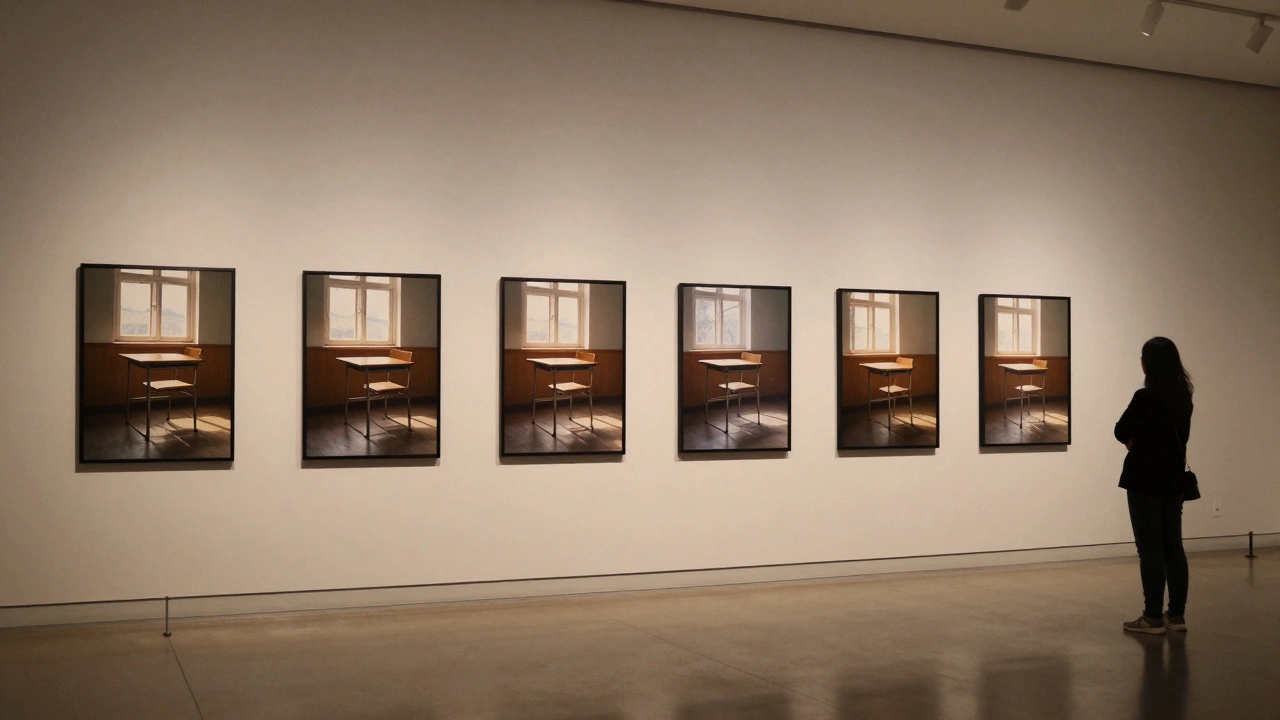
Here’s a real example: In 2023, a New Zealand photographer named Sarah Lin exhibited a series called Empty Chairs. Each photo showed a single chair in a deserted classroom, lit by late afternoon sun. No people. No text. Just silence in frame. The series was shown at the Auckland Art Gallery and later acquired by the National Museum. Was she a photographer? Yes. Was she a fine artist? Absolutely. Because her work didn’t just document spaces-it spoke to loneliness, absence, and the passage of time.
It’s Not About Fame or Sales
You don’t need to sell a piece for $10,000 to be a fine artist. You don’t need a Instagram following or a gallery deal. Many fine artists work quietly-teaching, making work in their garages, submitting to small journals. What matters is the consistency of thought, the depth of inquiry, and the refusal to settle for surface-level expression.
There’s a potter in Dunedin who makes hand-built vessels. They’re not for holding tea. They’re glazed with ash from burned books, shaped to look like they’re melting. She doesn’t post online. She doesn’t have a website. But her work is in three university collections. She’s a fine artist. Not because she’s famous. But because she turns material into meaning.

What to Call Yourself
If you make work that’s driven by ideas, not just aesthetics-if you spend months thinking about composition, symbolism, or context-you can call yourself a fine artist. You don’t need permission. You don’t need a degree. You just need to be honest about why you make what you make.
Don’t say “I’m an artist” if you’re doing it to sound cool. Say “I’m a fine artist” if your work comes from a place of curiosity, struggle, or quiet rebellion. That’s the difference.
Why This Matters
Words shape how we see the world. Calling someone a “photographer” when they’re a fine artist diminishes their intent. Calling them a “craftsman” when they’re exploring political themes? That misreads their work entirely.
Using the right term respects the effort, the thought, the years of trial and error. It tells the person: I see what you’re doing. I understand it’s not just technique. It’s voice.
And if you’re the one making the work? Own the label. Call yourself a fine artist. Not because you want to impress. But because you’ve earned it.