Sculpting Difficulty: What Makes Sculpture Harder Than Other Art Forms
When you pick up a brush, you’re working on a flat surface. When you pick up clay or wood, you’re working in sculpting, the process of creating three-dimensional art by shaping, carving, or assembling materials. Also known as 3D art, it doesn’t just ask you to see form—it demands you think in roundness, weight, and space. That’s why so many artists who love painting struggle when they try sculpting. It’s not about skill—it’s about perspective. You can’t just step back and admire the whole thing from one angle. You have to walk around it. You have to crouch. You have to touch it. You have to imagine how light hits it from every side.
That’s the first big hurdle: sculpture materials, the physical substances used to build three-dimensional artworks, from clay and stone to recycled metal and cardboard. Unlike paint, which lets you undo a mistake with a wipe, clay can crack if it dries too fast. Stone won’t bend. Metal won’t melt unless you’ve got a forge. Even the cheapest options—like dirt clay or scrap wood—require you to understand how they behave under pressure, heat, or time. And if you’re working with something that can’t be easily replaced, every cut matters. That’s why beginners often feel paralyzed. It’s not that they lack talent. It’s that they’re used to art that forgiving.
Then there’s the sculpting techniques, the methods used to shape and assemble materials in three-dimensional art, including carving, modeling, welding, and casting. You don’t just blend colors—you remove mass. You don’t just layer brushstrokes—you build volume. You’re not just creating an image. You’re building an object that exists in the same world as the viewer. That’s why so many sculptors start with simple forms: a head, a hand, a bird. They’re learning how to translate what they see into what they can hold.
And here’s the truth most people don’t tell you: sculpting isn’t harder because it’s more technical. It’s harder because it’s more physical. It’s messier. It’s louder. It takes up space. It doesn’t fit on a shelf until it’s done. You can’t doodle a sculpture in the margins of a notebook. You need a studio, a tool, and time. But once you get past that, it’s also more rewarding. There’s nothing like holding a shape you made from nothing—something real, solid, and unchangeable.
The posts below cover everything from the cheapest materials you can use to make a sculpture to why some pieces sell for millions. You’ll find out how to start with dirt and wire, how to avoid common mistakes, and what makes a sculpture valuable beyond its size or material. Whether you’re scared to try or just curious why it feels so different from painting, this collection gives you the real talk—no fluff, no theory, just what works.
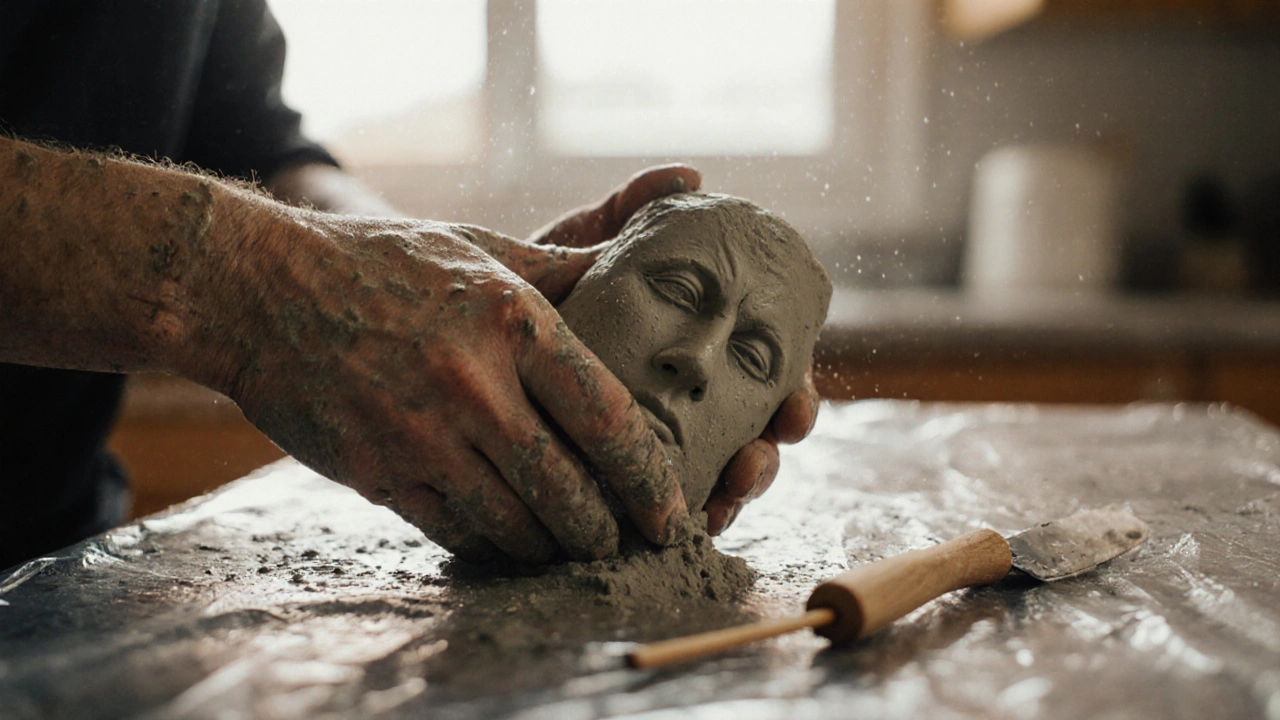
Is Sculpting Difficult? What Really Matters When You Start
Sculpting isn't about talent-it's about showing up. Learn how to start with clay, avoid common mistakes, and build real skill without formal training or expensive tools.
Continue ReadingCategories
Most popular
-

-

-
-

-
 What Is an Almost Famous Broadway Musical? Nov 24 2025