Painting Clean Edges: How to Get Sharp, Crisp Lines in Your Art
When you're trying to paint clean edges, the precise, sharp boundaries between colors or shapes in a painting. Also known as hard edges, it's not about being perfect—it's about being intentional. Many artists struggle with blurry lines not because they lack skill, but because they don’t understand how paint behaves on different surfaces and with different tools. Whether you're working with thick oils, runny watercolors, or fast-drying acrylics, getting clean edges comes down to three things: your brush, your paint consistency, and your timing.
Brush control, the ability to guide paint precisely with minimal feathering or bleeding. Also known as brush discipline, it’s the foundation of every clean edge. You don’t need expensive brushes—just the right one for the job. A flat synthetic brush holds its shape better than a round one for straight lines. For watercolor, a small, stiff-bristled liner brush gives you control without soaking up too much water. For oils, a filbert or flat brush with a clean, damp edge lets you drag paint cleanly against a dry area. The trick? Load just enough paint. Too much, and it spreads. Too little, and you get streaks. Test it on scrap paper first.
Paint consistency, how thick or thin your paint is when applied. Also known as paint body, it makes or breaks your edges. Watercolor artists know this well: if your wash is too wet, it bleeds under your brush like ink on a napkin. The solution? Let the paper dry between layers, or use a damp cloth to gently lift excess moisture before painting next to it. With acrylics, the clock is ticking. Once it starts to dry, it won’t blend anymore—so plan your edges before the paint skins over. Oils? You’ve got hours. That means you can paint a clean edge even if the adjacent color is still wet, as long as you use a clean, dry brush to define the boundary before the colors mix.
And then there’s timing—the silent partner in every clean edge. You can have the perfect brush and the perfect paint, but if you wait too long or rush too early, you’ll get a fuzzy line. The best artists don’t guess—they test. They touch the edge with a dry brush to see if it’s ready. They watch how the paint sits on the surface. They know when to stop.
There’s no magic trick. No masking fluid that works every time. No secret filter in Procreate. Just practice. And a few simple rules: keep your tools clean, know your medium, and paint with purpose. The posts below show real artists doing exactly that—whether they’re painting portraits with sharp jawlines, landscapes with crisp horizons, or abstract shapes with bold, defined borders. You’ll see how they handle tricky transitions, fix mistakes, and build confidence one clean edge at a time.
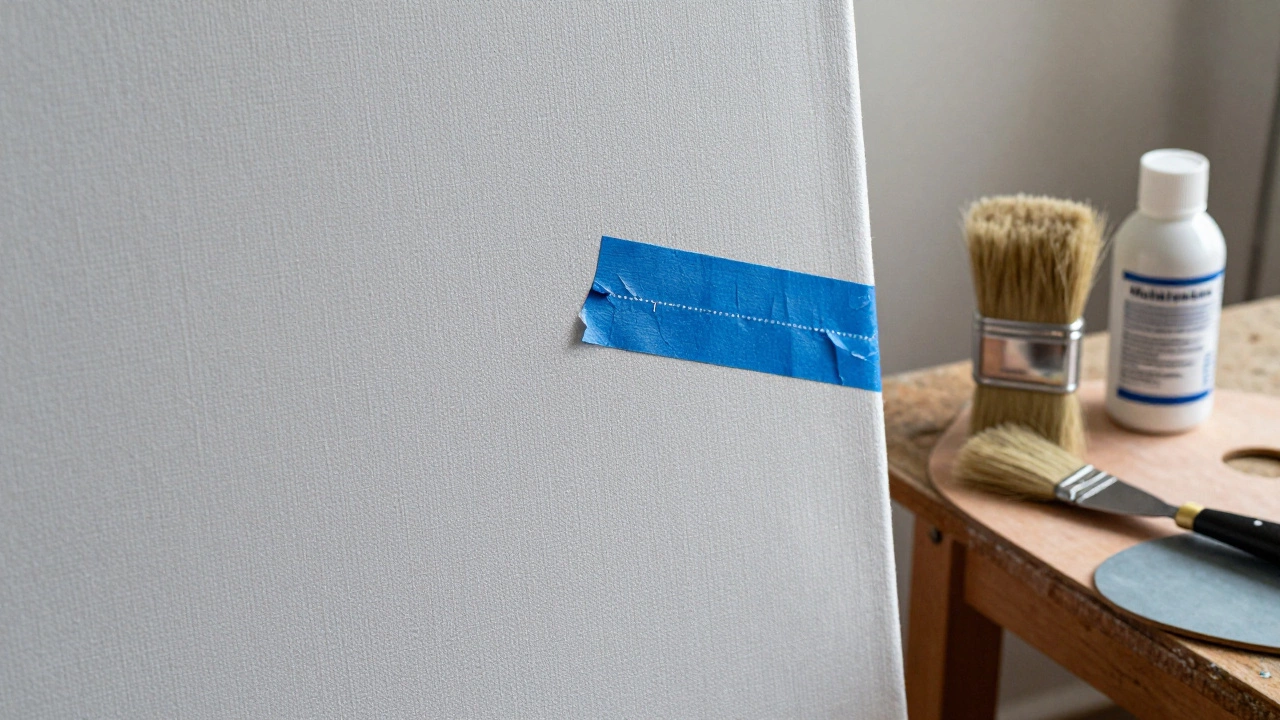
How to Paint Straight Lines in Oil Paint: Pro Techniques for Clean Edges
Learn how to paint clean, straight lines in oil paint using tape, brushes, and simple techniques. Avoid common mistakes and get professional results without advanced skills.
Continue Reading