Mona Lisa Value Calculator
Calculate how the Mona Lisa's last insurance valuation ($100 million in 1962) would compare to current values. This tool demonstrates how inflation affects historical art valuations.
The Mona Lisa isn’t for sale. Not now, not ever. But if you asked someone how much it’s worth in 2024, you’re not just asking about price-you’re asking about value, history, and the impossible math of a cultural icon.
It’s Not for Sale, So There’s No Market Price
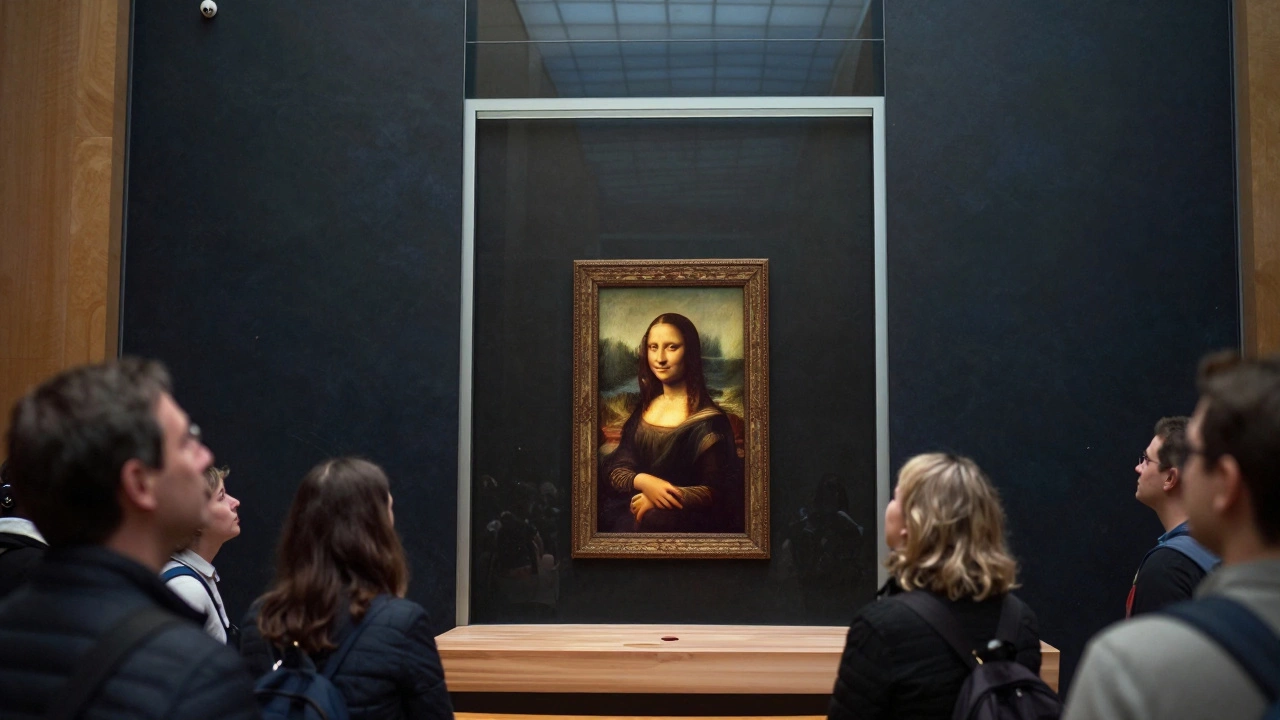
You won’t find a listing for the Mona Lisa on any auction house. No private collector owns it. No gallery is trying to sell it. It lives in the Louvre in Paris, protected by bulletproof glass, motion sensors, and a team of guards. France declared it a national treasure in 1974. That means, by law, it can’t be sold or exported. So technically, it has no market price.
But people still ask: how much would it sell for if it could?
The Last Known Valuation: $100 Million in 1962
The last official insurance valuation came in 1962, when the painting was loaned to the United States for an exhibition. The Louvre insured it for $100 million. Adjusted for inflation, that’s about $1.1 billion in 2024 dollars.
That number isn’t a price tag. It’s a risk calculation. Insurance companies don’t value art based on what someone might pay. They calculate replacement cost-the cost of recreating the cultural loss if it were destroyed. For the Mona Lisa, that loss is incalculable. No amount of money could replace it.
Why $1.1 Billion Is Still Too Low
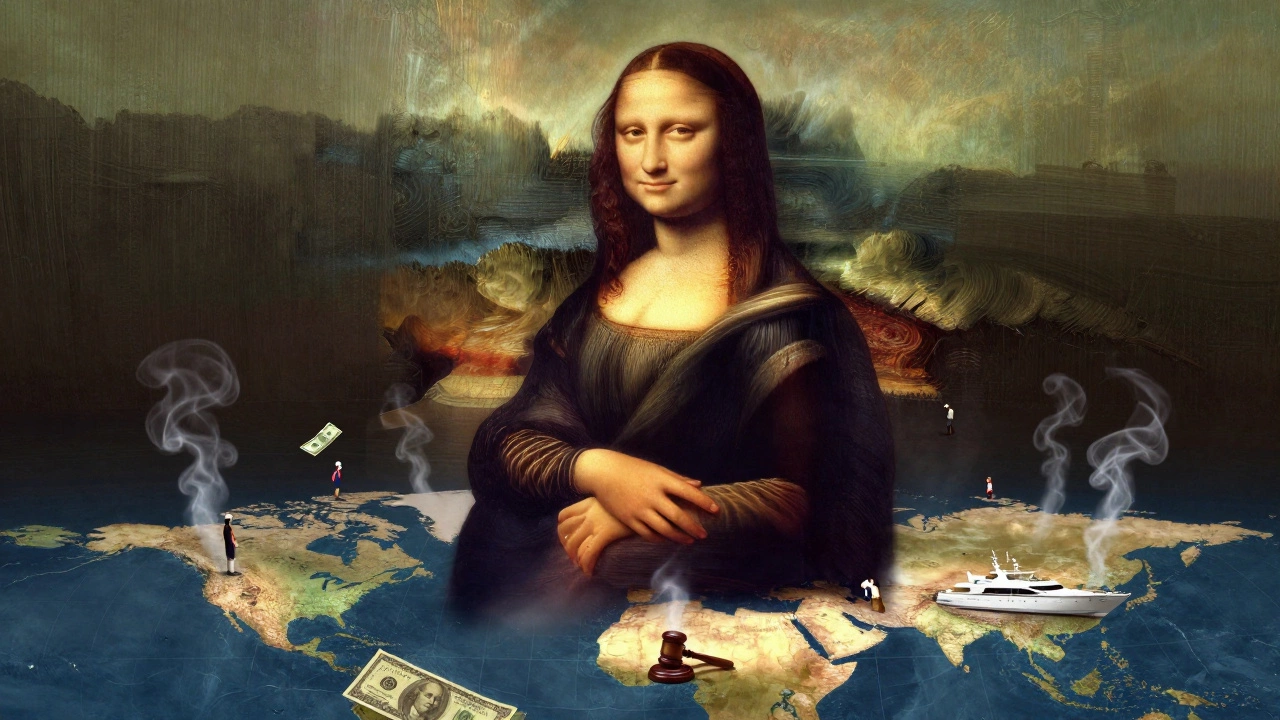
Think about what $1.1 billion buys today. You could buy a private island, a fleet of luxury yachts, or a small country’s annual arts budget. But you can’t buy the Mona Lisa. And that’s the point.
Compare it to other famous paintings. In 2017, Leonardo da Vinci’s Salvator Mundi sold for $450.3 million-the highest price ever paid for a painting. That sale sent shockwaves through the art world. But even that record-breaking price doesn’t come close to the Mona Lisa’s symbolic weight.
Salvator Mundi was one of fewer than 20 known paintings by Leonardo. The Mona Lisa is the one everyone knows. It’s been copied, parodied, and referenced in movies, memes, and advertisements for over 500 years. It’s the face of Western art. You can’t put a number on that.
What Makes the Mona Lisa So Valuable?
It’s not just the brushwork. The smile. The technique. Though those matter, they’re not the whole story.
- Historical rarity: Leonardo da Vinci painted very little. Only 15 paintings are definitively attributed to him. The Mona Lisa is the most complete and best-preserved.
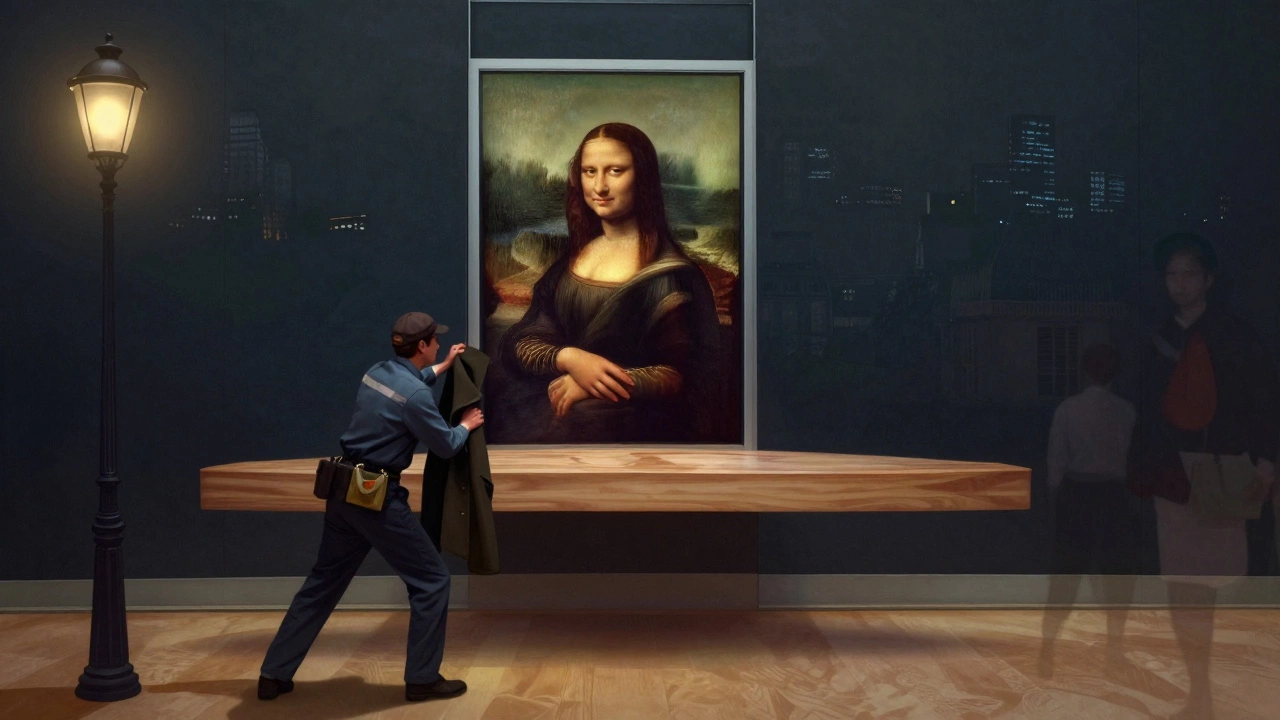
- Stolen and recovered: In 1911, it was stolen from the Louvre by a worker who hid it in his apartment for two years. The global media frenzy turned it into a household name overnight.
- Cultural saturation: Andy Warhol made 100 silk-screen prints of it. It’s on T-shirts, coffee mugs, and YouTube thumbnails. It’s been the subject of over 100 books and 20 documentaries.
- Scientific mystery: Researchers still debate the identity of the woman, the meaning of her expression, and whether she’s smiling or not. New studies using infrared and AI have revealed hidden layers beneath the paint.
These aren’t just facts-they’re reasons why no museum would ever risk selling it. The Mona Lisa isn’t an asset. It’s a public trust.
Could It Ever Be Sold? The Legal and Ethical Reality
Even if France changed its mind, selling the Mona Lisa would trigger global outrage. It’s one of the few artworks that belongs to humanity, not just one country. UNESCO recognizes it as part of the world’s cultural heritage.
Imagine a billionaire offering $2 billion. The French government could technically accept it-but they’d face protests, diplomatic pressure, and legal challenges from art historians, museums, and citizens worldwide. The Louvre wouldn’t just lose a painting. It would lose its soul.
What About Art Prints? Can You Own a Piece of It?
While you can’t own the original, you can own a print. High-quality reproductions of the Mona Lisa are sold in museums, galleries, and online shops. These aren’t fakes-they’re authorized reproductions, often printed using giclée technology on archival paper.
Prices for fine art prints range from $50 for a small poster to $1,500 for a museum-grade, limited-edition print signed by the reproducer. Some come with a certificate of authenticity. But none carry the weight of the original.
Buying a print is like owning a photograph of the Eiffel Tower. It’s beautiful. It’s meaningful. But it’s not the real thing.
Final Thought: The Mona Lisa’s Real Value
The Mona Lisa doesn’t have a price. It has a presence. It draws 10 million visitors a year to the Louvre. It’s the reason people come to Paris. It’s the reason museums exist. It’s the reason art matters.
If you’re asking how much it’s worth in 2024, the answer isn’t in dollars. It’s in the number of people who still stop, stare, and wonder.
That’s priceless.