Beginner Watercolor Brand Finder
Answer three quick questions to find the best watercolor set for your learning journey.
You’re standing in the art supply aisle, staring at a wall of colorful tubes and pans. Some cost $5, others cost $50. The salesperson isn’t helping, and your credit card is already sweating. You just want to paint a nice landscape or a portrait without wasting money on paints that turn muddy or fade after a week. This is the classic beginner’s dilemma: how do you buy good watercolor without overpaying for professional features you don’t need yet?
The truth is simpler than marketing makes it seem. You don’t need artist-grade pigments to learn how to control water-to-paint ratios. But you also shouldn’t buy the cheapest dollar-store set, because bad pigments kill motivation faster than any tutorial can fix them. The sweet spot lies in "student-grade" paints-formulas designed specifically for learning, offering vibrant colors and decent lightfastness at a fraction of the cost.
Understanding Paint Grades: Student vs. Artist
Before you spend a cent, you need to understand what you’re actually buying. Watercolor paints are categorized into two main tiers: student-grade and artist-grade. This distinction isn’t just about price; it’s about pigment load and binders.
Student-grade watercolors are paints formulated with fewer expensive pigments and more fillers or extenders to keep costs low. They often use single-pigment substitutes (like Hue versions) instead of rare earth minerals. For example, a student-grade Cobalt Blue might actually be a mix of cheaper blues dyed to look like cobalt. This is perfectly fine for beginners who are still learning color mixing and brush handling.
In contrast, Artist-grade watercolors are paints made with pure, high-load pigments and minimal additives. They offer superior transparency, granulation, and lightfastness (resistance to fading). While they feel luxurious, their intense saturation can be overwhelming for novices, making it hard to judge value and intensity correctly.
| Feature | Student Grade | Artist Grade |
|---|---|---|
| Pigment Load | Lower (uses fillers) | High (pure pigment) |
| Price per Tube/Pan | $1 - $3 | $8 - $20+ |
| Lightfastness | Moderate (check ratings) | Excellent (ASTM I or II) |
| Best For | Learning techniques, practice | Professional work, exhibitions |
Top Picks for Beginner Watercolor Sets
Once you’ve decided on student-grade, which brands should you trust? Not all student lines are created equal. Some are chalky and dull; others punch well above their weight class. Here are the three brands that consistently deliver the best value for beginners in 2026.
Winsor & Newton Cotman
If you ask ten artists what they used when starting out, half will say Winsor & Newton Cotman. It’s the gold standard for a reason. Cotman is a line of student-grade watercolors known for reliable consistency and accessible pricing. The pigments are vibrant enough to teach you proper color theory without breaking the bank.
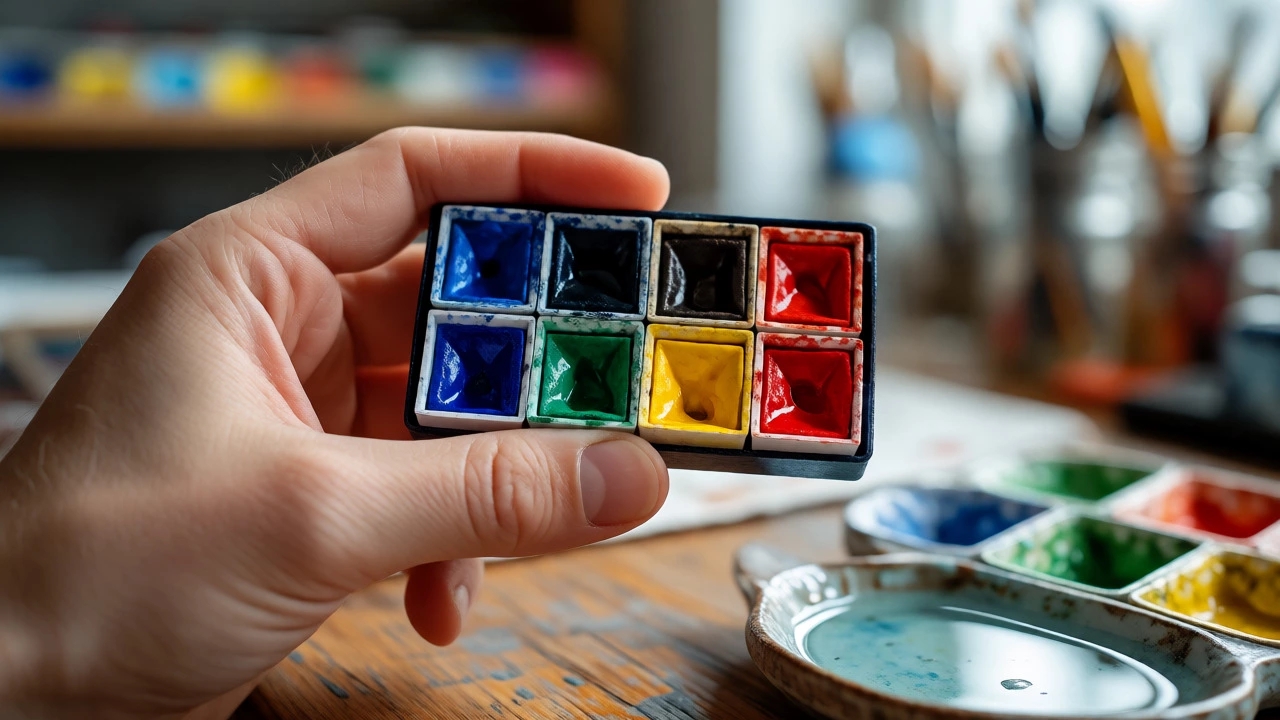
Their half-pan sets are particularly popular. Why half-pans? They fit in small palettes, dry quickly between sessions (so you don’t waste paint), and force you to learn how to re-wet paint properly-a crucial skill. However, avoid the tiny travel sets if you plan to paint indoors regularly. The pans are too small for serious mixing. Go for the 12-color half-pan set instead.
Schmincke Horadam Aqua
This is the sneaky choice. Schmincke is a German manufacturer famous for high-end artist paints. Their Aqua line is a hybrid series that uses some artist-grade formulas in student-friendly packaging. It’s slightly more expensive than Cotman but offers better transparency and less staining.
If you’re worried about making mistakes, Aqua is forgiving. The paints lift off paper cleanly, meaning you can correct errors by dabbing with a wet brush. This "liftability" is a massive psychological boost for beginners who fear ruining a painting with one wrong stroke.
Van Gogh Watercolors
Royal Talens’ Van Gogh line sits right in the middle. It’s technically student-grade but uses many pigments found in their higher-end Rembrandt line. Van Gogh is a Dutch brand recognized for its rich color range and excellent lightfastness ratings.
One standout feature is their tube format. If you hate working with dried pans, this is your brand. Squeezing fresh paint onto a palette gives you immediate control over moisture levels. Just be warned: these paints are potent. A little goes a long way, so start with a smaller amount than you think you need.
Tubes vs. Pans: Which Format Fits Your Style?
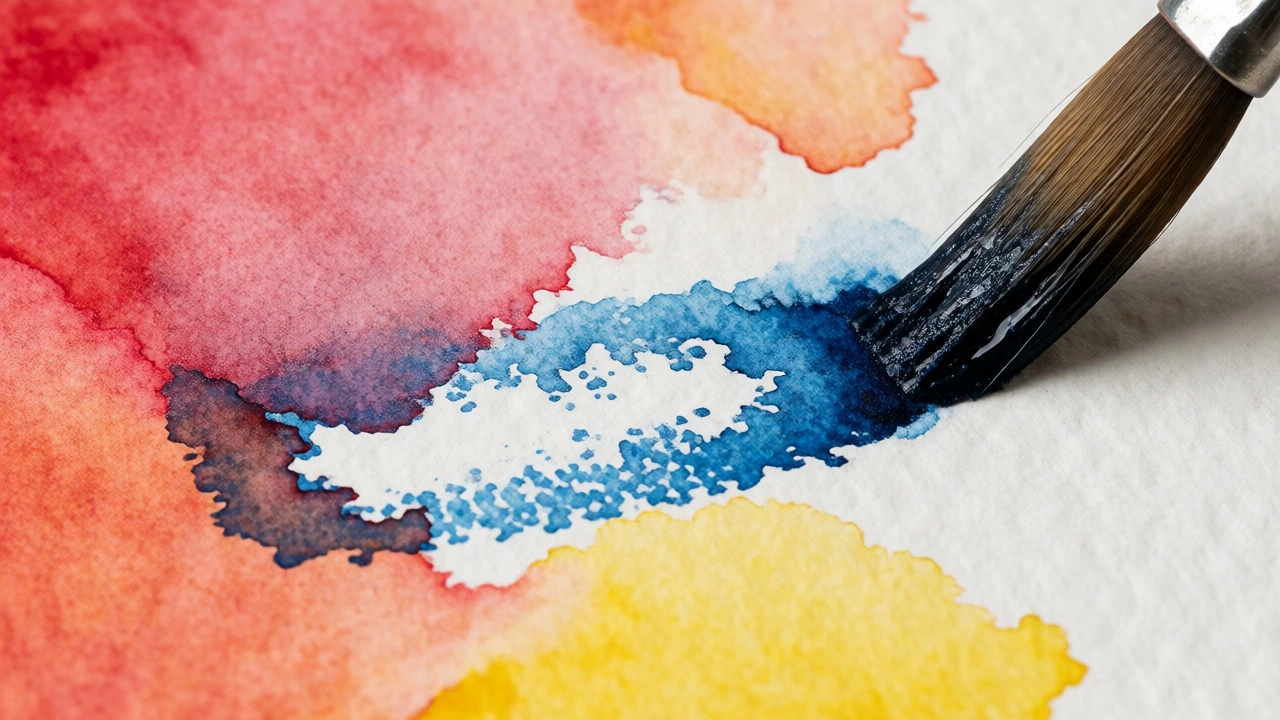
Brand choice is only half the battle. The format matters just as much for your learning curve. Should you buy tubes or pans?
- Pans: Best for portability and cleanliness. Great if you paint outdoors (plein air) or have limited space. Downside: You must wait for paint to dissolve, which slows down the workflow. Harder to mix large quantities of custom colors.
- Tubes: Best for studio work and large washes. You get instant access to liquid paint. Easier to create gradients and glazes. Downside: Messier cleanup, requires a dedicated palette, and paint dries out if left uncapped.
For absolute beginners, I recommend starting with pans. They force discipline. You learn to gauge how much water activates the pigment. Once you’re comfortable with water control, switch to tubes for larger projects.
Don’t Ignore the Paper
Here’s a hard truth: cheap paper ruins expensive paint. If you use printer paper or rough sketchbook paper, even the best watercolor brand will bleed, buckle, and look muddy. Watercolor is unique because the paper is part of the medium. The white of the paper provides the luminosity.
Look for Cold Press paper with a weight of at least 140 lb (300 gsm). This weight prevents warping when wet. Brands like Canson Heritage or Fabriano Artistico are affordable entry points. Avoid "hot press" initially-it’s too slick for beginners to grip the paint properly.
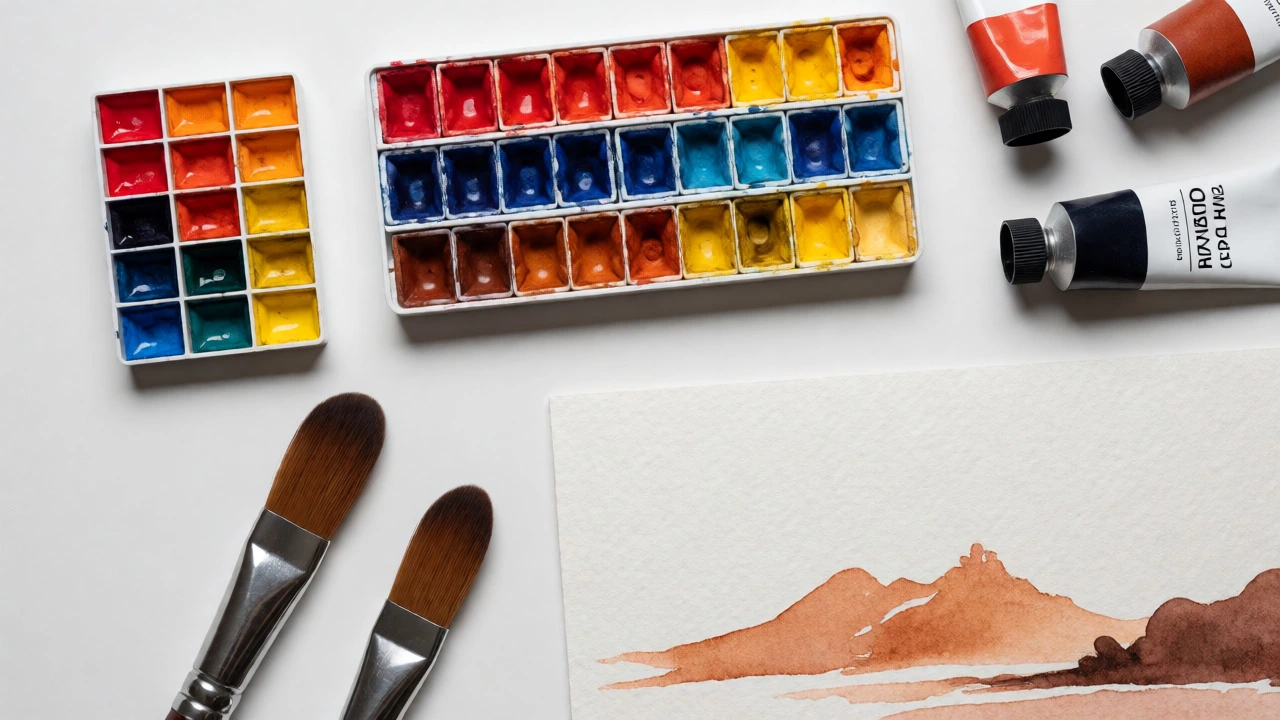
Budgeting Tips: Where to Save and Where to Splurge
You don’t need to buy every color in the spectrum. In fact, buying a 36-color set is a mistake. You’ll end up using the same six colors anyway. Start with a primary triad plus a few essentials:
- Warm Red: Cadmium Red Hue or Pyrrole Red.
- Cool Red: Alizarin Crimson or Quinacridone Rose.
- Warm Yellow: Cadmium Yellow Hue or Hansa Yellow.
- Cool Yellow: Lemon Yellow or Aureolin.
- Blue: Ultramarine Blue (warm) and Cerulean Blue (cool).
- Earth Tones: Burnt Sienna and Raw Umber.
With these eight colors, you can mix virtually anything else. This saves you money to spend on better brushes or paper. Remember, a $5 brush from a craft store will shed hairs into your painting within ten minutes. Invest in synthetic sable blends-they hold shape and release paint smoothly.
Frequently Asked Questions
Is it worth buying artist-grade watercolors as a beginner?
Generally, no. Artist-grade paints are highly concentrated, which can be difficult for beginners to control. You might accidentally apply too much pigment, resulting in muddy colors. Student-grade paints are more forgiving and allow you to focus on learning water control and composition without worrying about wasting expensive materials. Upgrade to artist-grade once you’ve mastered basic techniques.
What is the difference between pan sets and tube sets?
Pan sets contain solid blocks of dried paint that you reactivate with water. They are portable, clean, and economical but require time to wet. Tube sets contain liquid paint ready for immediate use. They offer better control for large washes and mixing but are messier and less portable. Beginners often find pans easier to manage for small studies, while tubes are better for developing technique on larger sheets.
Do I need a specific type of paper for beginner watercolors?
Yes, paper quality significantly impacts results. Use cold-press paper weighing at least 140 lb (300 gsm). Lighter papers (90 lb or below) tend to buckle and warp when wet, frustrating beginners. Cold press has a slight texture that helps hold pigment, whereas hot press is very smooth and may cause paint to pool unpredictably. Cotton content is ideal, but cellulose-based papers are acceptable for practice.
How many colors do I really need in a starter set?
A limited palette of 8-12 colors is sufficient and often preferable to a 24+ color set. Large sets encourage reliance on pre-mixed colors rather than learning color theory. Focus on having warm and cool variations of red, yellow, and blue, plus two earth tones and a black. This forces you to learn mixing, which is a core skill in watercolor painting.
Which brand offers the best lightfastness for students?
Schmincke Horadam Aqua and Van Gogh generally offer better lightfastness ratings in their student lines compared to budget options. Look for paints rated ASTM I or II for permanent lightfastness. While student grades vary, checking the label for an ASTM rating ensures your artwork won’t fade rapidly under sunlight, preserving your early works for years.