Abstract Composition Simulator
Experience the "Paradox of Choice" mentioned in the article. This simulator removes the pressure of permanent mistakes. Experiment with shapes and colors to understand how visual weight and color interaction create balance or tension.
Tools
Composition Analysis
Start painting to see real-time feedback on your composition's balance and color relationships.
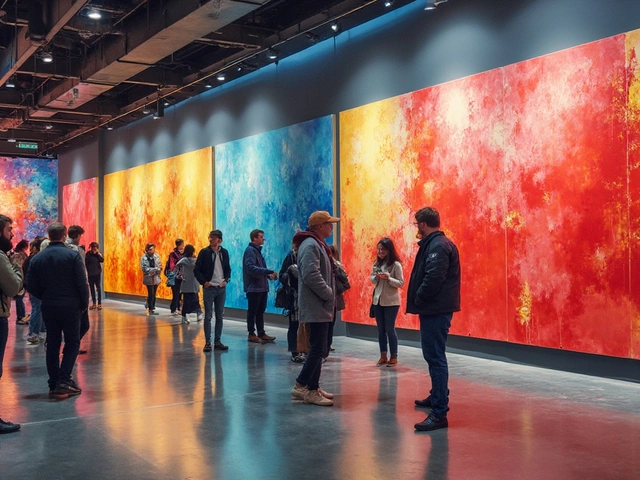
Walk into any gallery or scroll through an online art marketplace, and you’ll likely hear the same comment: "My kid could do that." It’s a reflexive reaction to abstract painting, which is a form of art that does not attempt to represent an accurate depiction of a visual reality but instead uses shapes, colors, forms, and gestural marks to achieve its effect. But if it were that easy, why do so many trained artists struggle when they try to make one themselves? Why does staring at a blank canvas filled with nothing but color feel more terrifying than painting a hyper-realistic portrait?
The truth is, abstract painting removes the safety net. When you paint a bowl of fruit, you have a reference. You know if the apple looks like an apple. In abstraction, there is no external yardstick for correctness. You are creating the rules as you go, and breaking them carries immediate visual consequences. This lack of objective validation is just one layer of the complexity. From mastering color theory to managing the psychological pressure of infinite possibility, the barriers are steep.
The Paradox of Infinite Choice
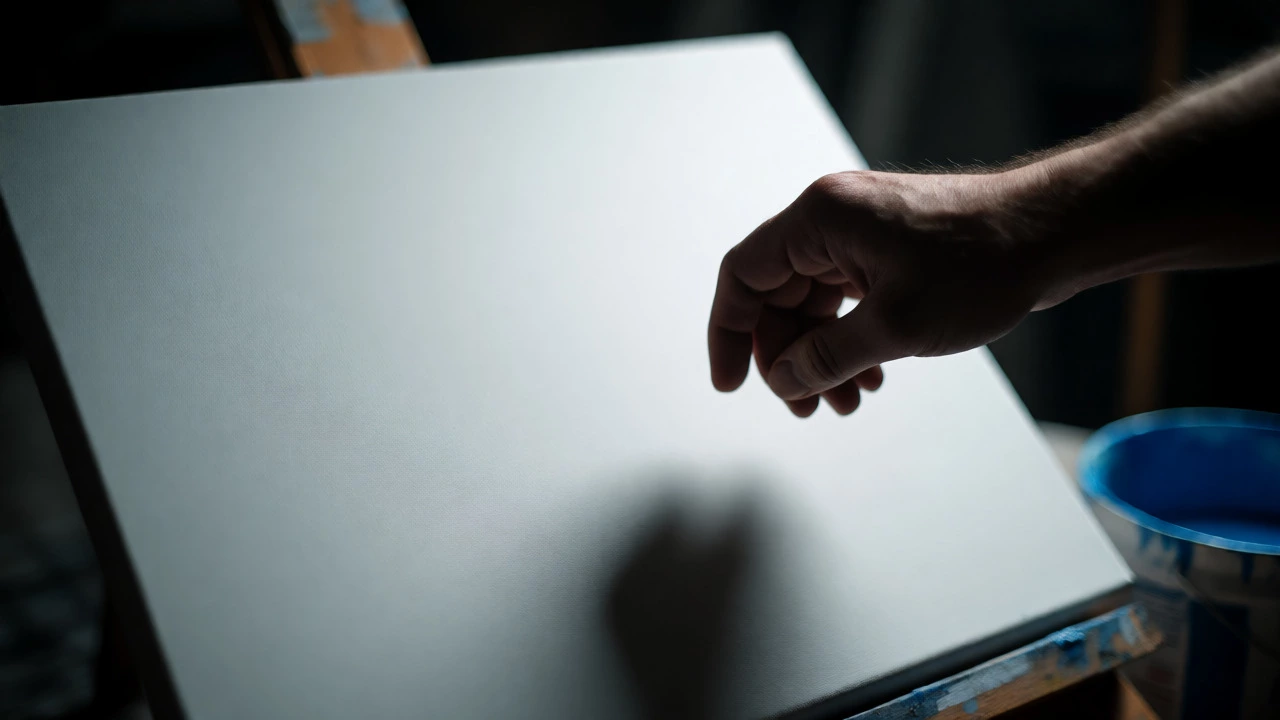
Imagine standing in front of a white wall with a bucket of blue paint. You can put the brush anywhere. You can make it thick or thin. You can add red, or leave it alone. This freedom sounds liberating, but for the human brain, it’s paralyzing. Psychologists call this the "paradox of choice," and in art, it manifests as creative block. In representational art, the subject dictates the composition. If you’re painting a mountain, the horizon line has to be somewhere specific. In abstract work, every mark is a decision made in a vacuum.
This requires a high level of internal discipline. Without a subject to guide your hand, you must rely on intuition and established principles of design. Many beginners quit because they don’t realize that abstraction isn’t about random splashing; it’s about intentional arrangement. The difficulty lies in silencing the inner critic that screams, "Does this mean anything?" while simultaneously listening to the visual rhythm of the canvas. It’s a mental tightrope walk between chaos and order.
Color Theory Becomes Non-Negotiable
In realistic painting, color serves description. Skin tones need to look like skin; grass needs to look like grass. There is wiggle room. If the lighting is off, you might still recognize the scene. In abstract painting, color is the subject. There is no object to hide behind. If your palette clashes, the entire piece fails. There is no "oops, I meant for the tree to be purple" excuse.
This forces artists to become masters of color interaction. You aren't just picking pretty hues; you are managing temperature, saturation, and value relationships across the entire surface. A small area of complementary color can vibrate against a dominant field, creating tension. A muddy mix can kill the energy of a dynamic stroke. Artists like Mark Rothko understood this better than anyone. His famous color field paintings weren’t just big blocks of red or orange; they were carefully calibrated environments where subtle shifts in hue created profound emotional responses. Getting those shifts right takes years of practice and a deep understanding of how pigments behave when layered, scraped, or blended.
Composition Without Anchors
Think about how you balance a see-saw. In traditional art, the subject matter acts as the anchor. The eye knows where to rest because it recognizes familiar forms. Abstract composition asks you to balance visual weight without these anchors. How do you make a large, light shape feel as heavy as a small, dark one? How do you create movement across a static surface?
This is where concepts from physics and geometry sneak into the studio. Artists often use tools like the Golden Ratio or the Rule of Thirds, but in abstraction, these rules are bent, broken, and reinvented. You might use diagonal lines to lead the eye out of the frame, then trap it with a bordering color field. The challenge is maintaining equilibrium. If one corner feels too heavy, the viewer’s eye gets stuck there, and the painting feels unresolved. Achieving this balance is intuitive for some, but for most, it requires rigorous experimentation and a willingness to destroy good work that doesn’t quite sing.
The Emotional Burden of Expression
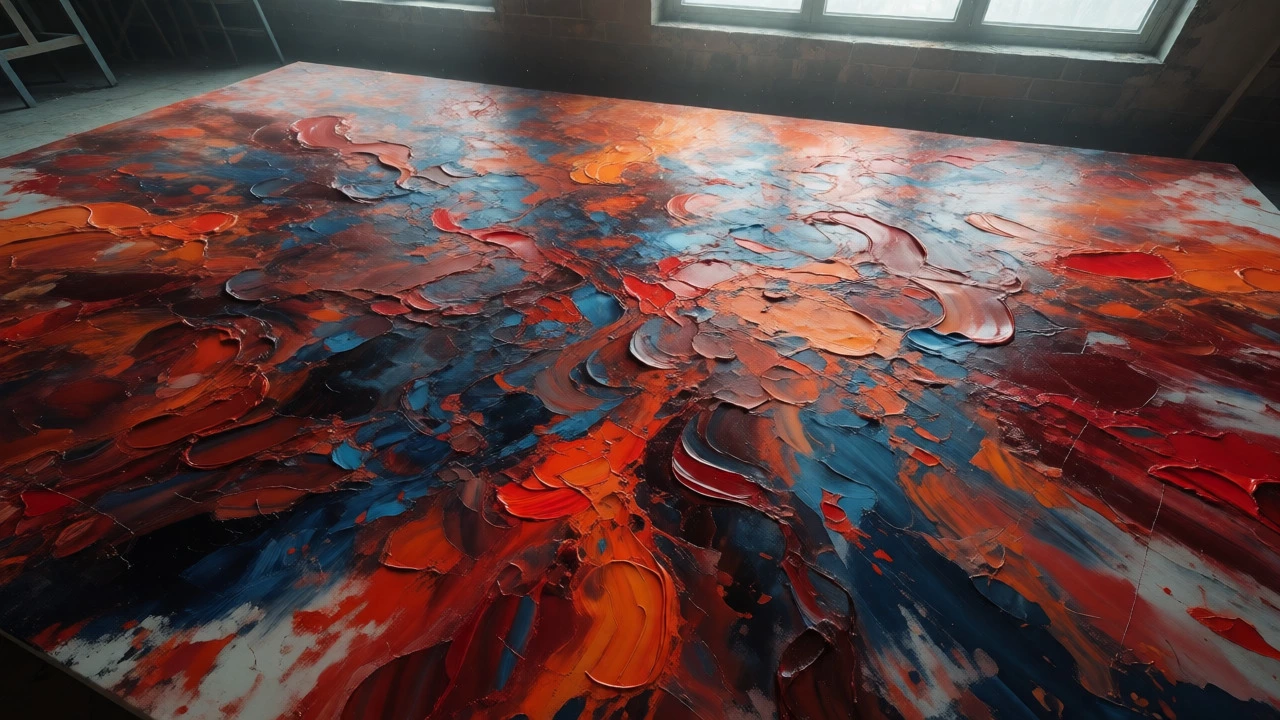
There’s a misconception that abstract art is purely intellectual-a game of shapes and colors. While technique matters, the best abstract work communicates emotion. And here’s the catch: you have to feel it first. You cannot fake sincerity in abstraction. Because there are no recognizable objects to distract the viewer, the emotional content is laid bare. If you paint angrily, the strokes will look angry. If you paint hesitantly, the marks will feel weak.
This demands a level of vulnerability that many artists find uncomfortable. Representational art allows you to focus on technical skill-did I get the perspective right? Abstract art strips away that distraction. It asks, "What are you feeling, and can you translate it into pure visual language?" For many, this is harder than drawing hands. It requires connecting with subconscious impulses and trusting that the viewer will pick up on the frequency you’re broadcasting. It’s not just about making something look good; it’s about making something resonate.
Technical Mastery Disguised as Simplicity
Have you ever tried to write a simple sentence that packs a punch? Hemingway did it effortlessly, but we know it took him days to delete ten thousand words. Abstract painting operates on the same principle. What looks effortless often hides immense technical control. Jackson Pollock’s drip paintings, for instance, look chaotic, but studies of his process reveal precise control over viscosity, gravity, and velocity. He knew exactly how much force to apply to the stick to get the desired flow.
Materials play a huge role here. Oil paints dry slowly, allowing for blending and correction. Acrylics dry fast, demanding decisive action. Watercolors are unpredictable, requiring you to work with water rather than against it. Mastering these mediums so they behave predictably-or beautifully unpredictably-is a technical hurdle. You need to know how pigment density affects opacity, how different grounds absorb paint, and how varnish alters depth. The simplicity of the final image is a result of complex material science applied with artistic intent.
Validation and Market Ambiguity
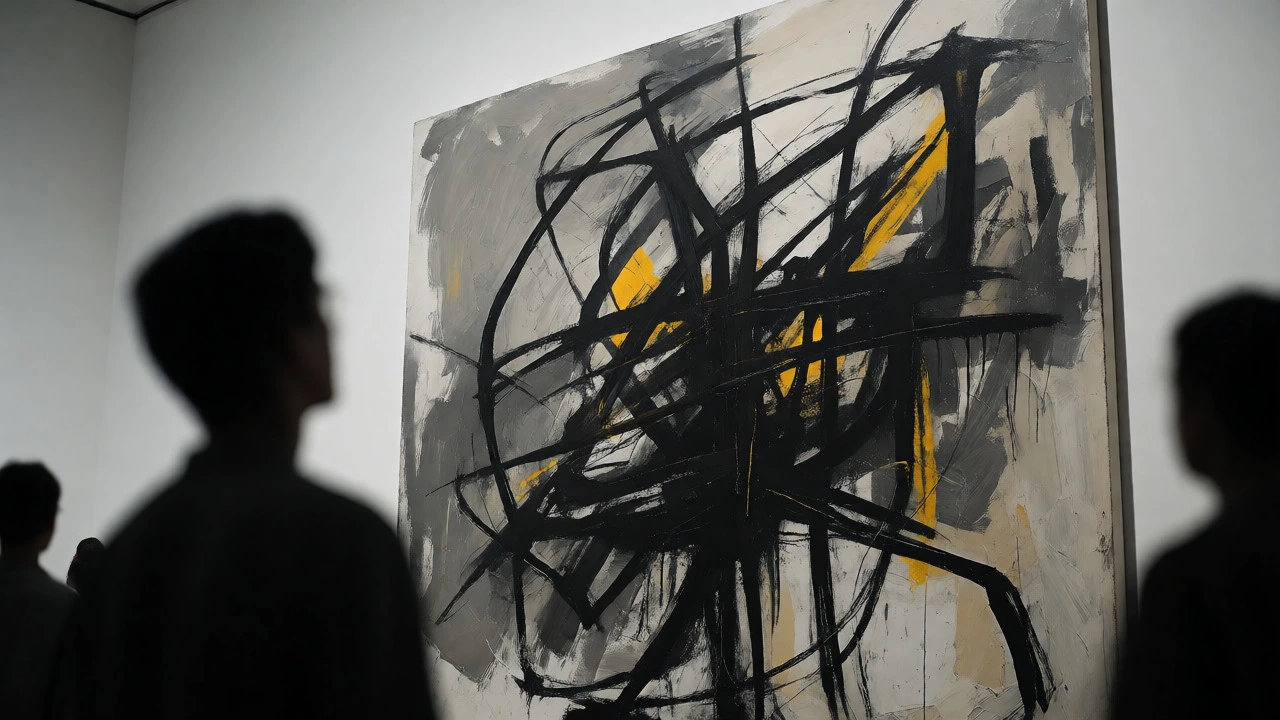
Finally, there’s the external difficulty: getting people to take it seriously. Because abstract art lacks obvious references, viewers often project their own biases onto it. Some see genius; others see laziness. This ambiguity makes marketing and selling abstract work challenging. Unlike a landscape, which appeals to universal recognition, abstract art relies on taste, context, and education.
Artists face the burden of explaining their work without over-explaining it. If you say, "This represents my childhood trauma," you box the viewer in. If you say nothing, they might dismiss it. Navigating this social and commercial landscape adds another layer of stress. You have to build confidence in your vision despite frequent skepticism. This resilience is part of the craft. It’s not just about painting well; it’s about believing in the validity of non-representational communication in a world obsessed with literalism.
| Challenge Area | Representational Painting | Abstract Painting |
|---|---|---|
| Subject Matter | External reference provides clear guidelines. | No external reference; artist creates the rules. |
| Color Usage | Colors mimic real-world appearances (e.g., sky is blue). | Colors drive emotion and structure; realism is irrelevant. |
| Composition | Balanced by recognizable forms and perspective. | Balanced by visual weight, rhythm, and negative space. |
| Error Correction | Mistakes can be covered or adjusted relative to the object. | Mistakes disrupt the entire visual harmony; hard to fix. |
| Viewer Interpretation | Universal recognition reduces ambiguity. | Highly subjective; relies on viewer’s emotional literacy. |
How to Start Overcoming These Hurdles
If you’re looking to tackle abstract painting, start small. Don’t aim for a masterpiece on day one. Try limiting your palette to three colors. This constraint reduces the paradox of choice and forces you to focus on value and contrast. Work on small canvases so mistakes feel less costly. Experiment with mixed media-add sand, glue, or paper to break the monotony of flat paint.
Study the masters, but don’t copy them. Look at Kandinsky’s use of music-inspired shapes or Mondrian’s grid structures. Ask yourself why certain combinations work. Then, break the rules. Abstraction rewards curiosity. Keep a sketchbook dedicated to abstract exercises-quick gestures, color studies, texture experiments. The goal isn’t perfection; it’s fluency in visual language.
Is abstract painting easier than realistic painting?
No, it is generally considered more difficult psychologically and conceptually. While it may require less technical precision in rendering details, it demands stronger compositional skills, a deeper understanding of color theory, and the ability to communicate emotion without recognizable objects. Realistic painting has a clear benchmark for success; abstract painting does not.
Why do some people think abstract art is lazy?
This perception stems from the lack of visible labor-intensive detail. Viewers accustomed to photorealism equate effort with time spent rendering textures and perspectives. Abstract art often conceals the extensive planning, color mixing, and compositional adjustments required, making the final result appear deceptively simple.
Do I need formal training to paint abstractly?
Not necessarily, but training helps significantly. Understanding fundamentals like color wheel relationships, balance, and proportion allows you to make informed choices rather than random guesses. Many successful abstract artists started with traditional training before breaking the rules intentionally.
How do I know if my abstract painting is finished?
This is one of the hardest decisions in abstract art. A common heuristic is to step back and view the work from a distance. If your eye wanders comfortably around the canvas without getting stuck in dead zones or overly busy areas, it may be complete. Another tip is to stop when you feel the urge to add "just one more thing"-that instinct is often the enemy of balance.
Can anyone learn to appreciate abstract art?
Yes, appreciation is a skill that can be developed. Start by focusing on how the artwork makes you feel rather than what it represents. Look for patterns, rhythms, and contrasts. Visiting museums and reading artist statements can provide context that bridges the gap between confusion and connection.