There’s no official crown for the best sculptor of all time. No vote, no jury, no museum ballot decides it. But if you walk through any major art capital-Rome, Paris, Florence-you’ll feel the weight of a few names that still dominate the conversation. These aren’t just artists who made statues. They redefined what sculpture could be: how it moved, how it breathed, how it made stone feel alive.
Michelangelo: The Titan Who Carved Souls
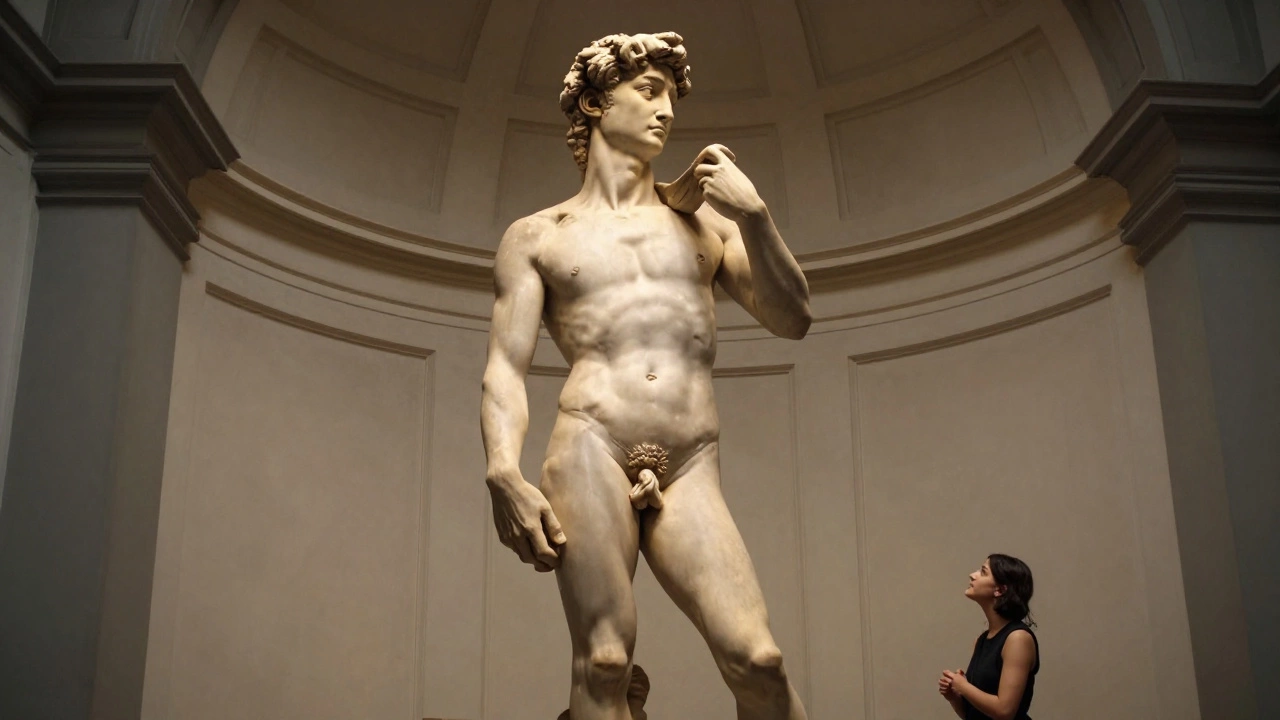
When people think of sculpture, they often think of Michelangelo. His David isn’t just a statue. It’s a moment frozen in time: the tension in the neck, the veins in the hands, the quiet fury in the eyes. He didn’t carve a hero-he carved a human on the edge of action. And he did it from a block of marble that others had abandoned as flawed. That’s the thing about Michelangelo: he believed the form was already inside the stone. His job was just to set it free.
His Pietà in St. Peter’s Basilica shows Mary holding Jesus after the crucifixion. The young Mary’s face is serene, but her hands cradle a grown man’s body with the strength of a mother who’s lost everything. The fabric of her robe flows like water. The skin of Christ’s body looks soft, almost warm. This wasn’t religious propaganda. It was raw emotion carved in marble.
He worked for over 60 years. He sculpted, painted, designed architecture, wrote poetry. But his sculptures? They still pull people in. Even today, visitors stand in front of David and whisper. Why? Because Michelangelo didn’t just make a figure. He made a presence.
Auguste Rodin: The Sculptor Who Broke the Rules
Fast forward to the 19th century. Sculpture had become polished, idealized, stiff. Then came Auguste Rodin. He didn’t smooth out the imperfections. He made them the point.
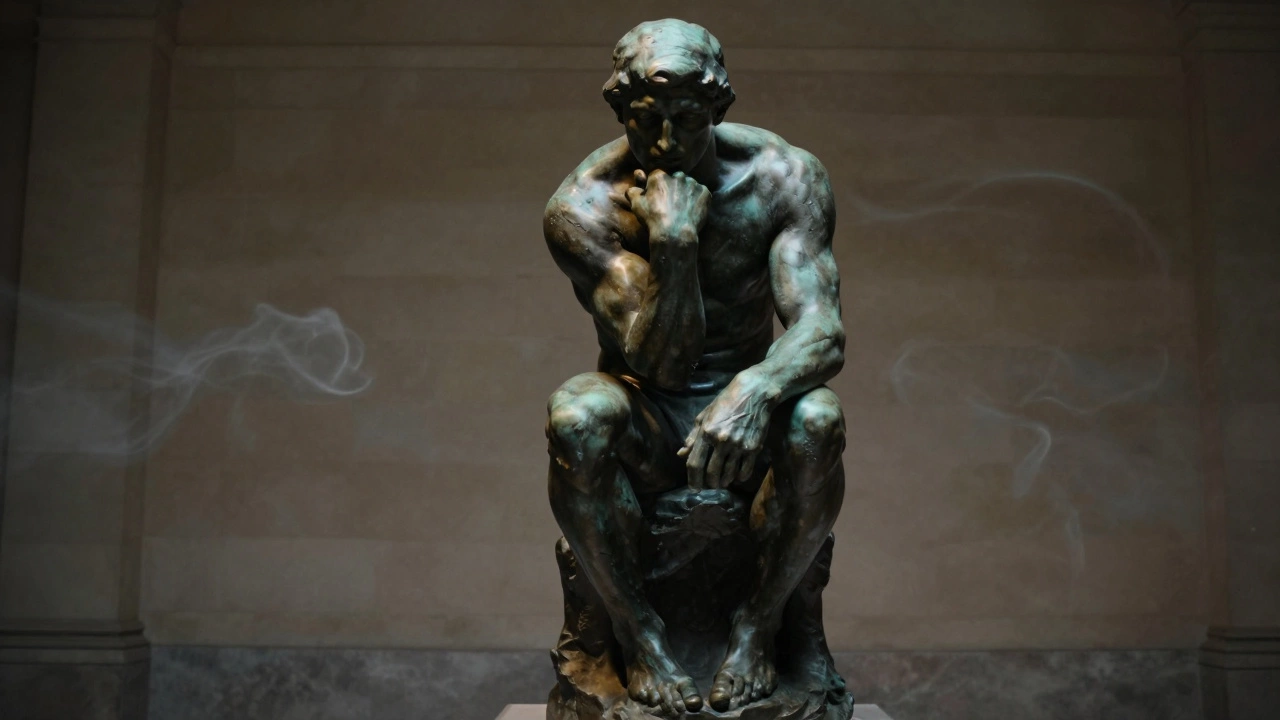
His The Thinker started as part of a larger group called The Gates of Hell. It wasn’t meant to be a symbol of philosophy. It was meant to be Dante, deep in thought, wrestling with the inferno. But the figure’s clenched fists, the knotted muscles of the back, the way the weight shifts on one leg-it became something bigger. People started calling it The Thinker. Now it’s everywhere: on postcards, in cartoons, in university logos. Rodin turned a single figure into a universal symbol.
His Balzac statue caused a scandal. The writer was depicted in a robe, head raised, as if emerging from thought. No face, no details-just a powerful silhouette. Critics called it unfinished. Rodin said, "I didn’t want to show Balzac as he looked. I wanted to show what he was." That’s the shift. He wasn’t interested in perfect anatomy. He wanted emotional truth.
He left fingerprints in the clay. He left tool marks in the bronze. He didn’t hide the process. He celebrated it. And that’s why modern sculpture owes him everything.
Donatello: The First Humanist Sculptor
Before Michelangelo, before Rodin, there was Donatello. In early 15th-century Florence, most sculptures were stiff, symbolic, made for churches. Donatello changed that. He looked at real people-workers, soldiers, thinkers-and sculpted them with dignity.
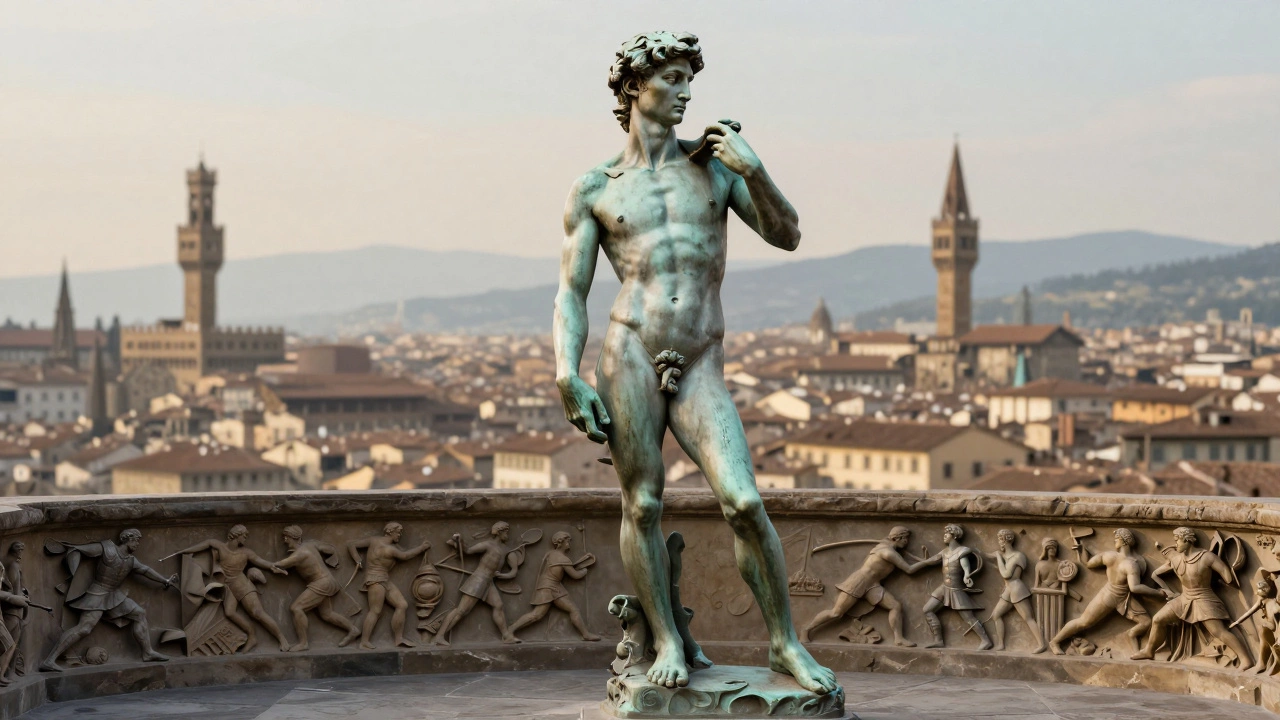
His David, made decades before Michelangelo’s, is the first freestanding nude male statue since antiquity. But this David isn’t a god. He’s a boy. Barefoot. Smirking. His sword rests casually on his shoulder. The armor lies discarded. He’s just won a battle. And he knows it. The bronze gleams with a quiet confidence. No drama. No grandeur. Just a kid who beat the giant.
He also created the first known equestrian statue since Roman times: Gattamelata. A mercenary captain, seated on a horse, looking out with calm authority. No gold. No halo. Just a man, in armor, on a horse, with real weight and real presence. Donatello didn’t glorify power. He made it feel human.
He experimented with stiacciato-a technique so shallow the carving is almost like a drawing in stone. He used it on the panels of the baptismal font in Siena. The figures barely rise from the surface, yet they move, interact, breathe. He made depth out of almost nothing.
The Others Who Shaped the Field
Of course, Michelangelo, Rodin, and Donatello aren’t the whole story.
- Gian Lorenzo Bernini turned marble into wind and fire. His Ecstasy of Saint Teresa looks like a moment caught mid-scream-robes flying, light pouring down, the saint floating on clouds of stone.
- Barbara Hepworth carved abstract forms from wood and stone that felt like natural forces: tides, wind, gravity. Her Single Form stands in the UN plaza, a silent monument to peace.
- Henry Moore made organic, hollowed shapes that invited you to walk around them. His figures look like hills, like bones, like sleeping bodies. They don’t demand attention-they invite it.
- Louise Bourgeois used sculpture to explore trauma, memory, and the body. Her giant spider, Maman, is both protective and terrifying. A mother, a predator, a shelter.
Each of these artists broke a different rule. Bernini made motion permanent. Hepworth made silence speak. Moore made space feel alive. Bourgeois turned pain into form.
Why There’s No Single "Best"
Asking who the best sculptor is is like asking who the best storyteller is. Do you pick Homer because he started the tradition? Shakespeare because he deepened it? Toni Morrison because she redefined it?
Donatello brought humanity back into stone after centuries of symbolism. Michelangelo made marble feel like muscle and soul. Rodin made the imperfect beautiful. Each one didn’t just make art. They changed what art could do.
There’s no ranking that holds up. A medieval churchgoer would’ve called Donatello a heretic. A 19th-century academic would’ve called Rodin a vandal. A child today might think Michelangelo’s David is too perfect, too distant.
What matters isn’t who’s #1. It’s who changed the game.
What Makes a Sculptor Great?
Great sculptors don’t just copy nature. They make you feel something you didn’t know you could feel through stone, bronze, or clay.
- They reveal the unseen. Michelangelo showed the tension before battle. Rodin showed thought as physical force.
- They break tradition. Donatello’s nude David was shocking. Rodin’s unfinished surfaces were scandalous.
- They make the material matter. The weight of bronze. The coolness of marble. The grain of wood. Great sculptors don’t hide their medium-they let it speak.
- They connect to the body. Even abstract sculptures like Moore’s or Bourgeois’s speak to how we move, ache, hold, and rest.
It’s not about technical perfection. It’s about emotional truth.
Who is the most famous sculptor in history?
Michelangelo is often considered the most famous sculptor in history because of the enduring global recognition of works like "David" and the "Pietà." These pieces are among the most reproduced, studied, and visited artworks in the world. His name is synonymous with Renaissance mastery and the ideal of human form in sculpture.
Is Rodin better than Michelangelo?
It’s not a question of "better." Michelangelo perfected the classical ideal of beauty and proportion. Rodin broke that ideal to express raw emotion and psychological depth. Michelangelo’s figures feel divine. Rodin’s feel human. One didn’t replace the other-they expanded what sculpture could be.
Did any woman become a great sculptor?
Yes. Barbara Hepworth and Louise Bourgeois are two of the most influential sculptors of the 20th century. Hepworth pioneered abstract organic forms in stone and wood, while Bourgeois used sculpture to explore trauma, memory, and the female body. Their work is now in major museums worldwide, including MoMA and the Tate.
What makes a sculpture timeless?
A timeless sculpture connects to something universal: grief, courage, thought, longing. It doesn’t rely on fashion or trend. It speaks across centuries because it taps into emotions we all recognize-whether it’s the quiet pride of Donatello’s David, the inner turmoil of Rodin’s Thinker, or the maternal terror in Bourgeois’s spider.
Can a modern sculptor be considered among the best?
Absolutely. Artists like Anish Kapoor, Doris Salcedo, and Ai Weiwei have reshaped sculpture with new materials and political depth. Kapoor’s reflective voids, Salcedo’s embedded furniture of trauma, and Ai’s use of everyday objects as monuments show that sculpture is still evolving. The best sculptors today don’t just make objects-they make experiences.
Where to See These Sculptures Today
- Michelangelo’s David - Accademia Gallery, Florence
- Michelangelo’s Pietà - St. Peter’s Basilica, Vatican City
- Auguste Rodin’s The Thinker - Musée Rodin, Paris (original bronze)
- Donatello’s David - Bargello Museum, Florence
- Barbara Hepworth’s Single Form - United Nations Plaza, New York
- Louise Bourgeois’s Maman - Tate Modern, London (also installed in multiple cities)
You don’t need to be an art scholar to feel the power of these works. Just stand in front of them. Let the stone, the bronze, the wood speak. That’s how you find the best sculptor-not by a list, but by a moment.