Most Expensive Paintings: Value & Comparison Tool
Salvator Mundi
Attributed to Leonardo da Vinci
Value Drivers
Context & Controversy
The record-breaking sale sparked debate regarding authorship.
Money changes everything. In the art world, it changes history. For years, we thought Leonardo da Vinci was the Renaissance polymath whose work commands the highest prices in history. Then came a splash of color that shook the market to its core. If you are looking for the single most expensive painting ever sold at public auction, the answer is not what you might expect from a traditional museum guide.
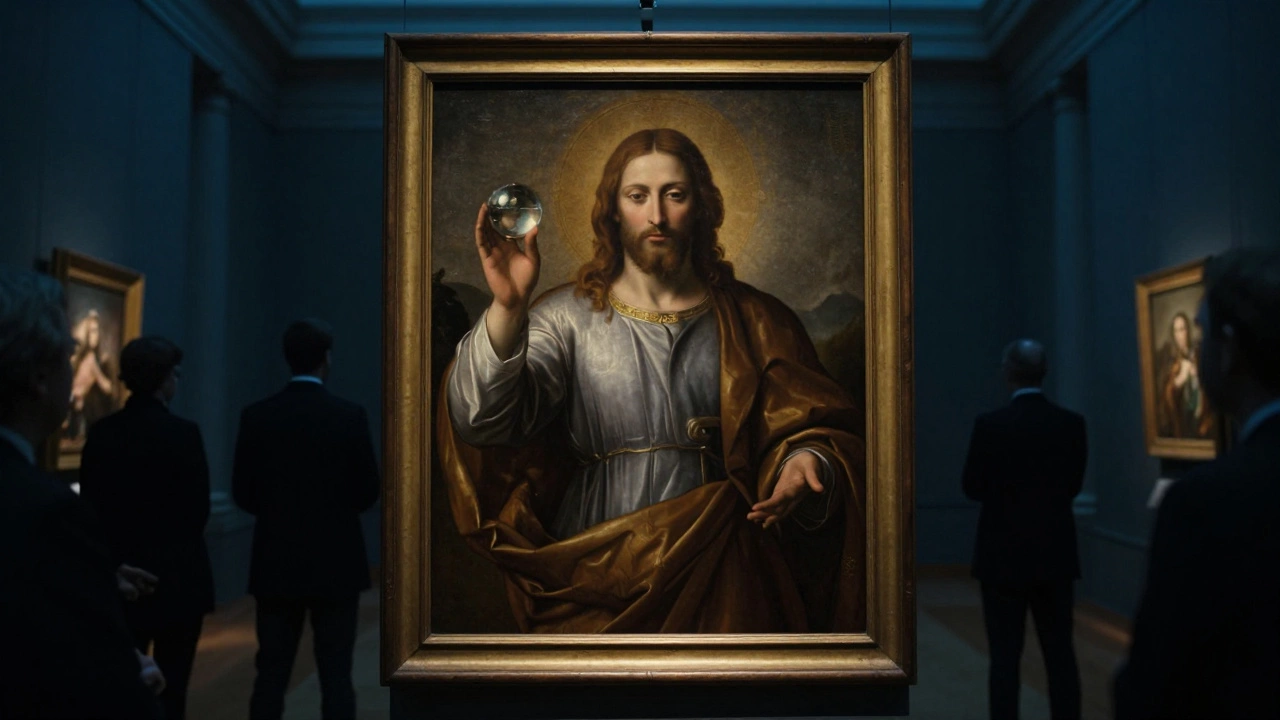
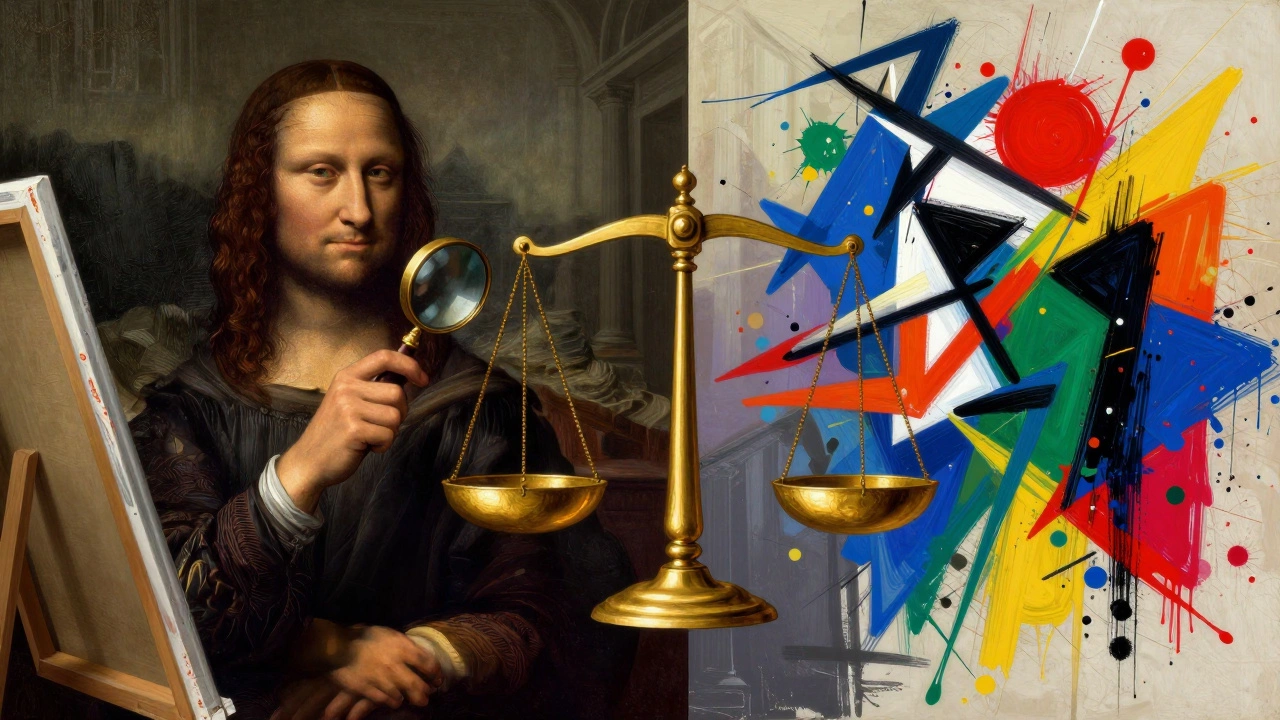
The record belongs to Salvator Mundi is a painting attributed to Leonardo da Vinci depicting Christ as Savior of the World. It sold for $450.3 million in 2017. But here is the twist: the question of "who painted" it is still debated by experts. This controversy makes it the perfect case study for understanding how value works in high-end art, especially when compared to the pure emotion of abstract art is a style that rejects realistic representation in favor of shapes, colors, and forms.
The Record Breaker: Salvator Mundi
On November 15, 2017, Christie's auction house in New York saw a bidding war that defied logic. A buyer named Bader is an alias used by the buyer of Salvator Mundi, widely believed to be an agent for Saudi Crown Prince Mohammed bin Salman paid $400 million plus fees, totaling $450.3 million. That number is staggering. To put it in perspective, that sum could buy roughly three Boeing 787 Dreamliners or fund a small hospital for decades.
The painting itself depicts Jesus Christ holding a crystal orb and raising his hand in blessing. It looks like a standard religious portrait from the 15th century. So why the price tag? The primary driver is attribution. Before 2005, this painting was considered a copy by a follower of Leonardo. After extensive cleaning and analysis, experts declared it an authentic Leonardo. In the art market, a name is worth billions. Leonardo has only about 15 surviving paintings. Scarcity drives price.
However, the story does not end there. Since the sale, doubts have resurfaced. Many scholars argue that parts of the painting were restored so heavily that Leonardo’s original hand accounts for only a fraction of the canvas. Some believe it was painted entirely by his workshop assistants. If this is true, the value proposition collapses. Yet, no one has bought it back to prove a point. It remains the most expensive painting ever sold publicly.
The Controversy: Who Really Held the Brush?
This is where it gets messy. Art authentication is not a science; it is a consensus. In 2011, a panel of top experts agreed it was by Leonardo. They included Peter Paul Rubens scholar Lorne Campbell and Leonardo specialist Martin Kemp. Their stamp of approval triggered the valuation.
But other experts disagree. Dr. Nicholas Penny, former director of the National Gallery in London, suggested the quality of execution does not match Leonardo’s known masterpieces. He pointed out that the figure’s anatomy lacks the subtle grace found in the Mona Lisa is Leonardo da Vinci's most famous portrait, currently housed in the Louvre Museum in Paris. If the Mona Lisa is priceless because it cannot be moved or sold, then Salvator Mundi is the most expensive *sold* item. The distinction matters.
The controversy highlights a key difference between representational art and abstract art. With a portrait, you can check proportions, brushwork, and historical context. With abstract art, you rely on provenance, reputation, and critical acclaim. There is no "correct" way to paint a red square. Therefore, the market relies even more heavily on who signed it and who owns it.
Abstract Art vs. Classical Masters
You mentioned abstract art in your query. It is worth noting that while Leonardo holds the top spot, abstract artists hold some of the highest positions too. Why would a canvas with no recognizable objects cost millions? Let’s look at the data.
| Rank | Painting | Artist | Price (USD) | Year |
|---|---|---|---|---|
| 1 | Salvator Mundi | Attributed to Leonardo da Vinci | $450.3 million | 2017 |
| 2 | Interchange is a large-scale oil painting by Willem de Kooning featuring abstract figures | Willem de Kooning is a Dutch-American painter associated with the Abstract Expressionist movement | $300 million | 2015 |
| 3 | The Card Players is a series of paintings by Paul Cézanne depicting men playing cards | Paul Cézanne is a French artist whose work bridged Impressionism and Cubism | $259.6 million | 2011 |
| 4 | No. 5, 1948 is a drip painting by Jackson Pollock consisting of layered enamel paint | Jackson Pollock is an American painter who pioneered the technique of dripping paint onto canvases | $140 million | 2006 |
| 5 | Les Femmes d'Alger (Version O) is a painting by Pablo Picasso depicting women in an Algerian interior | Pablo Picasso is a Spanish painter and sculptor who co-founded the Cubist movement | $179.4 million | 2015 |
Notice something interesting? Willem de Kooning's Interchange is the second most expensive painting ever sold. It is abstract. It sold for $300 million in a private sale between two collectors. No auction, no public spectacle. Just a handshake deal. This shows that abstract art can command massive values, but often through private channels rather than public auctions.
Why does abstract art sell for so much? It is not about technical skill in rendering a face. It is about cultural significance. Jackson Pollock changed how people viewed painting. He turned it into action. When you buy a Pollock, you are buying a piece of modern history. You are buying the moment when art stopped trying to look like reality and started trying to feel like emotion.
Private Sales vs. Public Auctions
The $450 million figure for Salvator Mundi is a public record. But private sales often exceed these numbers. We do not know the exact prices. In 2015, Le Rêve is a painting by Pablo Picasso originally purchased by Steve Wynn for $139 million by Picasso was damaged by Wynn himself when he accidentally elbowed it. He later sold it to Steven Cohen for $155 million. These deals happen behind closed doors.
For abstract art, private sales are common. Collectors like Steve Cohen is an American hedge fund manager and major contemporary art collector and Steven Roth is a real estate magnate and prominent art collector based in Miami build collections worth billions. They buy directly from galleries or other collectors. This opacity makes it hard to say definitively if an abstract painting has ever sold for more than Salvator Mundi. But given the privacy, it is possible.
Why Do We Pay So Much?
It is easy to laugh at the idea of paying $450 million for a few ounces of pigment on wood. But consider the factors at play:
- Scarcity: Leonardo da Vinci is dead. He will not make another painting. Supply is fixed. Demand is global.
- Status: Owning the most expensive painting is a power move. It signals wealth beyond mere money. It signals access to culture.
- Investment: Blue-chip art has historically appreciated faster than stocks or bonds. It is a store of value that does not correlate with the stock market.
- Tax Benefits: In many jurisdictions, donating art to museums reduces tax liability. Buying low and donating high can be a smart financial strategy.
For abstract art, the investment thesis is different. You are betting on the artist’s legacy. When you buy a Mark Rothko is an American painter known for his Color Field paintings featuring large blocks of solid color, you are betting that future generations will continue to find emotional resonance in those colors. And so far, they have. Rothko’s No. 6 (Violet and Green) sold for $56.9 million in 2012. Not record-breaking, but significant for a canvas with no subject matter.
The Role of Provenance
Provenance is the history of ownership. It is crucial. A painting without a clear chain of custody is suspect. Salvator Mundi had gaps in its provenance. It disappeared from records for centuries before reappearing in the 20th century. This gap fueled skepticism. However, once experts authenticated it, the gaps became irrelevant to buyers who wanted the prestige.
In abstract art, provenance is equally important. A work must be documented in the artist’s catalogue raisonné-a comprehensive list of all their works. Without this documentation, a painting is just a nice decoration. With it, it is an asset. Institutions like MoMA or the Tate Modern lend credibility. If a museum displays an abstract work, its value skyrockets.
What About Digital Art?
In 2021, Everydays: The First 5000 Days is an NFT collage by Beeple that sold for $69.3 million at Christie's by Beeple sold for $69.3 million. It is not a physical painting. It is a digital file. Does it count? Technically, no. It is not a painting in the traditional sense. But it challenges the definition of value. If attention is currency, then digital art competes with classical masters. However, as of 2026, no digital artwork has surpassed the price of a physical painting by a Old Master or Abstract Expressionist.
Conclusion: The Value is in the Story
So, who painted the most expensive painting? Officially, it is attributed to Leonardo da Vinci. Practically, it is a collaborative effort of historians, auctioneers, and billionaires. The painting itself is beautiful, but its price is driven by narrative. The same applies to abstract art. The price is not in the paint; it is in the story of the artist, the movement, and the rarity.
If you are an investor, look for scarcity and provenance. If you are a lover of beauty, look for emotional impact. The market rewards both, but rarely in the same way.
Who painted the most expensive painting in the world?
The painting is titled Salvator Mundi. It is attributed to Leonardo da Vinci. It sold for $450.3 million at Christie's auction house in 2017. However, there is ongoing debate among scholars about whether Leonardo personally painted the entire work or if it was largely executed by his workshop assistants.
Is there an abstract painting more expensive than Salvator Mundi?
No publicly recorded abstract painting has exceeded the $450.3 million price of Salvator Mundi. The most expensive abstract painting sold publicly is likely Interchange by Willem de Kooning, which sold for $300 million in a private transaction in 2015. Private sales can be higher, but details are not disclosed.
Why is Salvator Mundi so controversial?
The controversy stems from questions about authorship. While a panel of experts authenticated it as a Leonardo in 2011, other scholars argue that the quality of the brushwork and anatomy does not match Leonardo's known masterpieces. Some believe it was heavily restored or painted by his students, which would significantly lower its intrinsic artistic value despite its market price.
Who bought the most expensive painting?
The buyer was identified only as "Bader," an alias widely believed to represent an agent for Saudi Crown Prince Mohammed bin Salman. The purchase was made on behalf of the Royal Collection Trust or a related entity, though the final destination of the painting remains somewhat opaque.
What is the most expensive painting ever sold privately?
While private sale prices are confidential, Interchange by Willem de Kooning is reported to have sold for $300 million in 2015. Other works, such as Picasso's Le Rêve, have also changed hands privately for over $150 million. These transactions do not set public auction records but indicate that private valuations can rival public ones.
Does abstract art hold its value better than classical art?
Both categories can hold value well, but for different reasons. Classical art like Leonardo's benefits from extreme scarcity and historical importance. Abstract art benefits from cultural trends and institutional validation. Over the long term, blue-chip abstract artists like Pollock and Rothko have shown strong appreciation, making them stable investments comparable to classical masters.