The 4 Basic Types of Sculpture: A Visual Guide to Form and Space
Walk into any museum, from the Louvre in Paris to a small gallery in Wellington, and you will see three-dimensional art everywhere. But not all sculptures are built the same way. Some stand alone in the middle of a room, demanding you walk around them. Others cling to walls like frozen stories. Understanding these differences changes how you look at art. It stops being just "a statue" and starts being a conversation between space, material, and light.
Art historians and sculptors generally agree on four basic types of sculpture. These categories aren't about the material—whether it's marble, bronze, or plastic—but about how the work occupies space. Knowing these four types helps you decode what an artist is trying to say. Are they building a solid mass? Carving out emptiness? Or perhaps telling a story that unfolds as you move?
The Four Pillars of Sculptural Form
To understand sculpture, you have to think about volume and negative space. Every piece of sculpture falls into one of these four buckets based on its relationship with the surrounding air and architecture. Let’s break down each type, starting with the most recognizable one.
1. Freestanding Sculpture (In the Round)
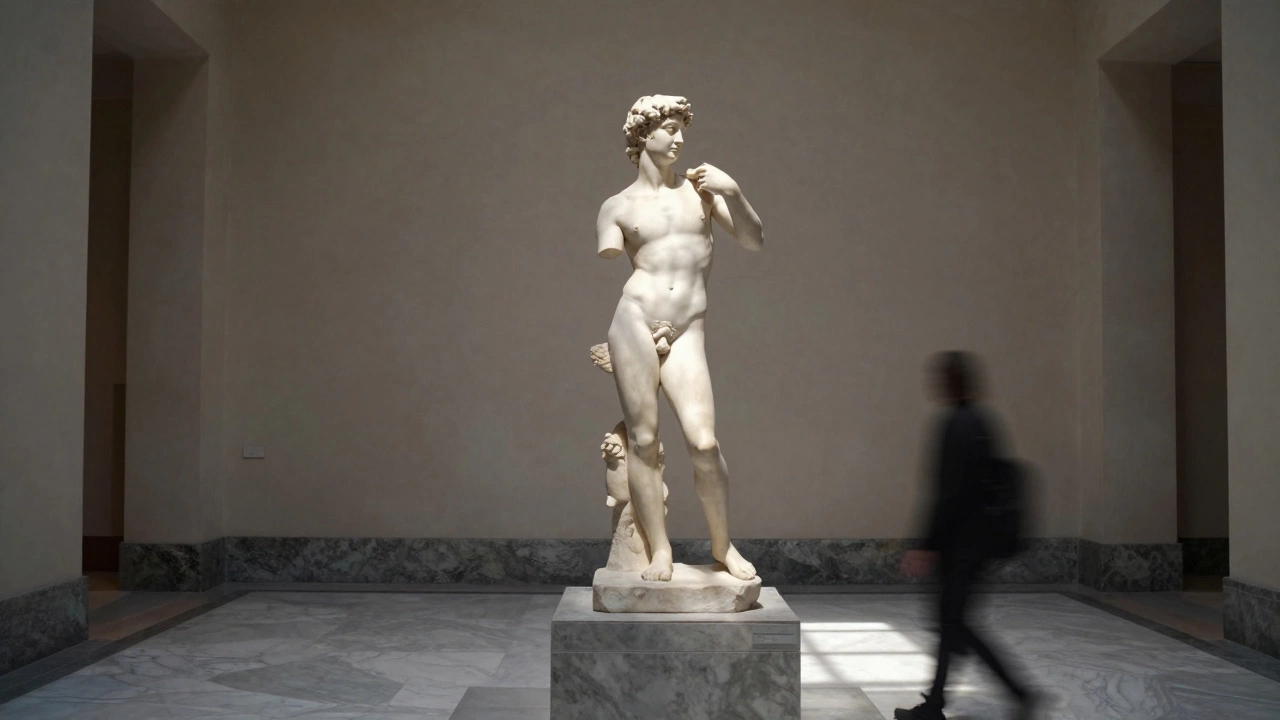
This is the classic image most people have when they hear the word "sculpture." Think of David by Michelangelo or the Statue of Liberty. Freestanding sculpture, also known as sculpture in the round, is designed to be viewed from every angle. It stands completely independent of any background or wall. The artist must consider the back view just as carefully as the front, because there is no "backstage" area hidden from the audience.
The magic here is movement. As you walk around the piece, your perspective shifts. Light hits different curves, shadows lengthen and shorten, and the form reveals new details. This type of sculpture demands physical engagement. You cannot appreciate it fully from a single spot. It requires you to orbit the object, making the viewer part of the experience. If you stop moving, the sculpture feels static; if you move, it comes alive.
2. Relief Sculpture
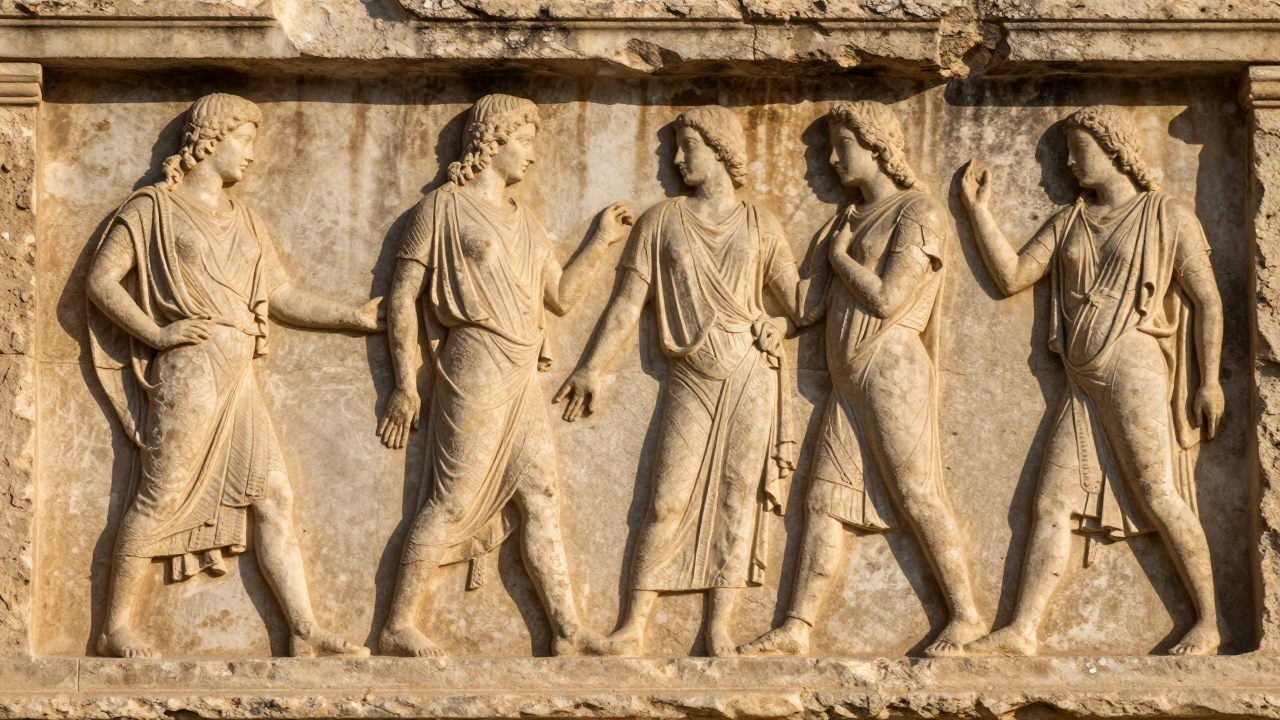
If freestanding sculpture is a standalone actor, relief sculpture is more like a movie scene projected onto a wall. Relief sculpture involves carving or modeling figures that remain attached to a background slab. The figures project outward from this flat surface. You usually view reliefs from the front, much like you would look at a painting. However, unlike a painting, a relief has actual depth. Shadows play a crucial role here, defining the shapes and creating drama.
There are three main subtypes of relief, defined by how far the figures stick out:
- Basso-relievo (Low Relief): The figures barely protrude from the background. Think of coins or medals. The details are subtle, relying on fine lines and shallow shadows.
- Mezzo-relievo (Mid Relief): The figures project about half their natural volume. This offers a good balance between the flatness of a painting and the roundness of a statue.
- Alto-relievo (High Relief): The figures project significantly, sometimes more than half their full volume. In extreme cases, limbs might even detach from the background entirely, though the torso remains connected. This creates deep, dramatic shadows and a sense of bursting energy.
A famous example is the Parthenon frieze in Athens. It tells a continuous story along the temple walls. Because it is attached to the architecture, it serves both decorative and narrative purposes, guiding the eye along the structure.
3. Open Form Sculpture
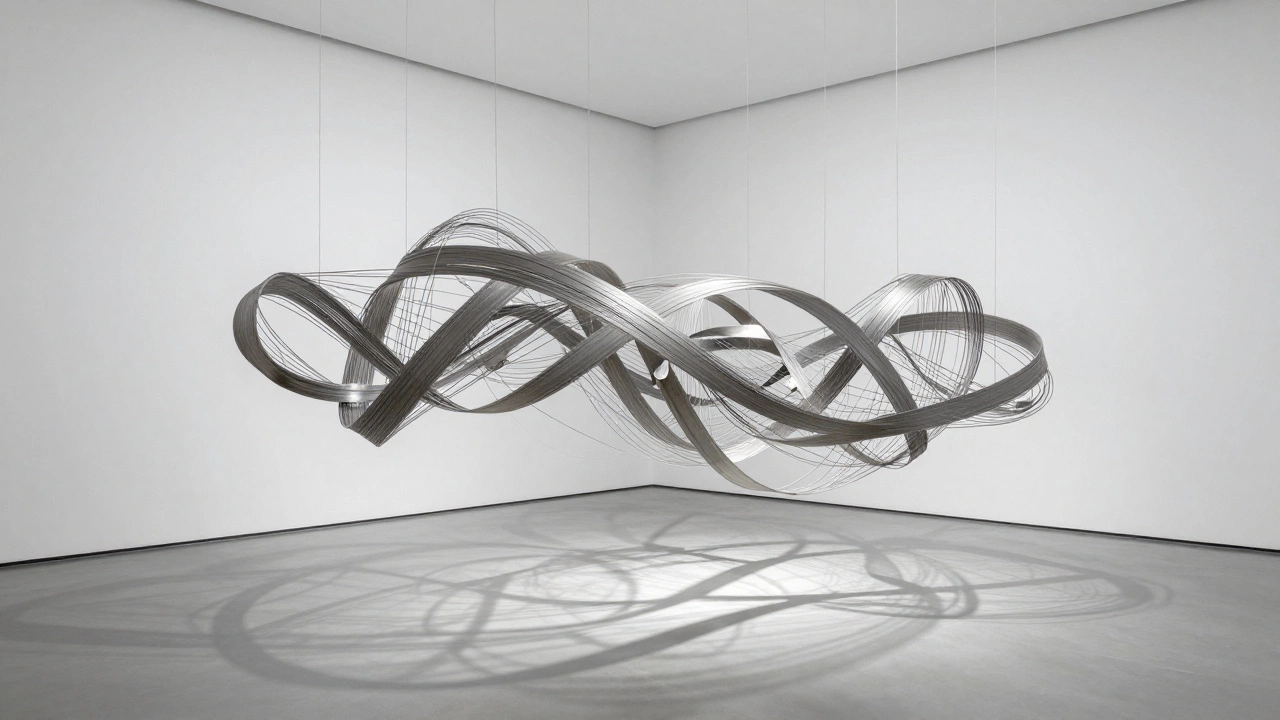
In the early 20th century, artists started breaking the rules of solidity. They realized that empty space could be just as powerful as solid matter. Open form sculpture does not enclose its volume. Instead, it allows space to flow through the work. Imagine a twisted metal ribbon or a series of suspended wires. There is no "inside" and "outside" in the traditional sense. The air passes right through the gaps.
This style emphasizes line, curve, and transparency. It often looks lighter and more dynamic than closed forms. Artists like Alexander Calder used open forms in his mobiles, where the interplay of hanging shapes and the air between them created a constantly shifting visual rhythm. When you look at an open form, you are looking at the shape itself and the negative space it defines simultaneously. It invites the eye to travel through the object rather than around it.
4. Closed Form Sculpture
Opposite to the open form is the Closed form sculpture. This type presents a self-contained, solid mass. It feels heavy, stable, and complete. Even if it is made of lightweight materials, the composition suggests density. Think of a smooth stone sphere or a classical bust where the edges are clearly defined and the interior seems impenetrable.
Closed forms often evoke feelings of permanence, strength, or mystery. Because you cannot see through them, your imagination fills in the blanks about what lies inside. They command space by occupying it fully. While modern art often favors openness, closed forms remain essential for conveying weight and presence. A simple, polished block of granite can be incredibly powerful precisely because it refuses to let you in.
How Material Influences Form
While the four types above describe spatial relationships, the material an artist chooses heavily influences which type they create. Stone, such as marble or granite, is hard and brittle. It is naturally suited for closed forms or high reliefs because it holds sharp edges and resists erosion. Bronze, cast through molds, allows for thinner, more delicate structures, making it ideal for open forms or complex freestanding figures with extended limbs.
Clay is malleable and forgiving, allowing artists to experiment with both open and closed forms before committing to a final medium. Wood grain dictates direction, often leading to organic, flowing shapes that blur the line between open and closed. Understanding these material constraints helps explain why certain eras favored specific styles. The Renaissance loved marble for its ability to render realistic, closed human forms. Modernists embraced steel and wire for their capacity to create airy, open structures.
| Type | Viewing Angle | Key Characteristic | Best For |
|---|---|---|---|
| Freestanding | 360 degrees | Independent of background | Monuments, statues, garden art |
| Relief | Primarily frontal | Attached to a background | Architectural decoration, storytelling |
| Open Form | Multiple angles | Space flows through the work | Modern abstract art, kinetic sculpture |
| Closed Form | Multiple angles | Solid, self-contained mass | Classical realism, symbolic objects |
Why Does This Matter to You?
You don’t need to be an art critic to benefit from knowing these distinctions. Next time you visit a public square, notice how the placement of a statue affects its impact. A freestanding figure in the center of a plaza becomes a landmark. A relief on a bank building adds texture and history without obstructing foot traffic. Recognizing these choices makes urban spaces feel more intentional and less random.
For creators, understanding these forms opens up creative possibilities. If you are stuck on a design, ask yourself: Is my piece too heavy? Try opening it up. Is it too chaotic? Try closing the form to give it stability. These four types are tools in your kit, not rigid rules. Many contemporary works blend them, using a freestanding base with open-form elements, or combining relief techniques with digital projections.
The beauty of sculpture lies in its tangibility. It exists in the same world as we do. By learning how it manipulates space, you learn to see the invisible architecture of our environment. Whether it’s a low-relief coin in your pocket or a towering open-form installation in a park, sculpture is always talking to you. You just need to know how to listen.
Frequently Asked Questions
Walk into any museum, from the Louvre in Paris to a small gallery in Wellington, and you will see three-dimensional art everywhere. But not all sculptures are built the same way. Some stand alone in the middle of a room, demanding you walk around them. Others cling to walls like frozen stories. Understanding these differences changes how you look at art. It stops being just "a statue" and starts being a conversation between space, material, and light.
Art historians and sculptors generally agree on four basic types of sculpture. These categories aren't about the material-whether it's marble, bronze, or plastic-but about how the work occupies space. Knowing these four types helps you decode what an artist is trying to say. Are they building a solid mass? Carving out emptiness? Or perhaps telling a story that unfolds as you move?
The Four Pillars of Sculptural Form
To understand sculpture, you have to think about volume and negative space. Every piece of sculpture falls into one of these four buckets based on its relationship with the surrounding air and architecture. Let’s break down each type, starting with the most recognizable one.
1. Freestanding Sculpture (In the Round)
This is the classic image most people have when they hear the word "sculpture." Think of David by Michelangelo or the Statue of Liberty. Freestanding sculpture, also known as sculpture in the round, is designed to be viewed from every angle. It stands completely independent of any background or wall. The artist must consider the back view just as carefully as the front, because there is no "backstage" area hidden from the audience.
The magic here is movement. As you walk around the piece, your perspective shifts. Light hits different curves, shadows lengthen and shorten, and the form reveals new details. This type of sculpture demands physical engagement. You cannot appreciate it fully from a single spot. It requires you to orbit the object, making the viewer part of the experience. If you stop moving, the sculpture feels static; if you move, it comes alive.
2. Relief Sculpture
If freestanding sculpture is a standalone actor, relief sculpture is more like a movie scene projected onto a wall. Relief sculpture involves carving or modeling figures that remain attached to a background slab. The figures project outward from this flat surface. You usually view reliefs from the front, much like you would look at a painting. However, unlike a painting, a relief has actual depth. Shadows play a crucial role here, defining the shapes and creating drama.
There are three main subtypes of relief, defined by how far the figures stick out:
- Basso-relievo (Low Relief): The figures barely protrude from the background. Think of coins or medals. The details are subtle, relying on fine lines and shallow shadows.
- Mezzo-relievo (Mid Relief): The figures project about half their natural volume. This offers a good balance between the flatness of a painting and the roundness of a statue.
- Alto-relievo (High Relief): The figures project significantly, sometimes more than half their full volume. In extreme cases, limbs might even detach from the background entirely, though the torso remains connected. This creates deep, dramatic shadows and a sense of bursting energy.
A famous example is the Parthenon frieze in Athens. It tells a continuous story along the temple walls. Because it is attached to the architecture, it serves both decorative and narrative purposes, guiding the eye along the structure.
3. Open Form Sculpture
In the early 20th century, artists started breaking the rules of solidity. They realized that empty space could be just as powerful as solid matter. Open form sculpture does not enclose its volume. Instead, it allows space to flow through the work. Imagine a twisted metal ribbon or a series of suspended wires. There is no "inside" and "outside" in the traditional sense. The air passes right through the gaps.
This style emphasizes line, curve, and transparency. It often looks lighter and more dynamic than closed forms. Artists like Alexander Calder used open forms in his mobiles, where the interplay of hanging shapes and the air between them created a constantly shifting visual rhythm. When you look at an open form, you are looking at the shape itself and the negative space it defines simultaneously. It invites the eye to travel through the object rather than around it.
4. Closed Form Sculpture
Opposite to the open form is the Closed form sculpture. This type presents a self-contained, solid mass. It feels heavy, stable, and complete. Even if it is made of lightweight materials, the composition suggests density. Think of a smooth stone sphere or a classical bust where the edges are clearly defined and the interior seems impenetrable.
Closed forms often evoke feelings of permanence, strength, or mystery. Because you cannot see through them, your imagination fills in the blanks about what lies inside. They command space by occupying it fully. While modern art often favors openness, closed forms remain essential for conveying weight and presence. A simple, polished block of granite can be incredibly powerful precisely because it refuses to let you in.
How Material Influences Form
While the four types above describe spatial relationships, the material an artist chooses heavily influences which type they create. Stone, such as marble or granite, is hard and brittle. It is naturally suited for closed forms or high reliefs because it holds sharp edges and resists erosion. Bronze, cast through molds, allows for thinner, more delicate structures, making it ideal for open forms or complex freestanding figures with extended limbs.
Clay is malleable and forgiving, allowing artists to experiment with both open and closed forms before committing to a final medium. Wood grain dictates direction, often leading to organic, flowing shapes that blur the line between open and closed. Understanding these material constraints helps explain why certain eras favored specific styles. The Renaissance loved marble for its ability to render realistic, closed human forms. Modernists embraced steel and wire for their capacity to create airy, open structures.
| Type | Viewing Angle | Key Characteristic | Best For |
|---|---|---|---|
| Freestanding | 360 degrees | Independent of background | Monuments, statues, garden art |
| Relief | Primarily frontal | Attached to a background | Architectural decoration, storytelling |
| Open Form | Multiple angles | Space flows through the work | Modern abstract art, kinetic sculpture |
| Closed Form | Multiple angles | Solid, self-contained mass | Classical realism, symbolic objects |
Why Does This Matter to You?
You don’t need to be an art critic to benefit from knowing these distinctions. Next time you visit a public square, notice how the placement of a statue affects its impact. A freestanding figure in the center of a plaza becomes a landmark. A relief on a bank building adds texture and history without obstructing foot traffic. Recognizing these choices makes urban spaces feel more intentional and less random.
For creators, understanding these forms opens up creative possibilities. If you are stuck on a design, ask yourself: Is my piece too heavy? Try opening it up. Is it too chaotic? Try closing the form to give it stability. These four types are tools in your kit, not rigid rules. Many contemporary works blend them, using a freestanding base with open-form elements, or combining relief techniques with digital projections.
The beauty of sculpture lies in its tangibility. It exists in the same world as we do. By learning how it manipulates space, you learn to see the invisible architecture of our environment. Whether it’s a low-relief coin in your pocket or a towering open-form installation in a park, sculpture is always talking to you. You just need to know how to listen.
What is the difference between a freestanding sculpture and a relief?
A freestanding sculpture stands alone and can be viewed from all sides (360 degrees). A relief sculpture is attached to a background wall or surface and is primarily viewed from the front. Reliefs have depth but do not occupy free space independently.
Can a sculpture be both open and closed form?
Yes. Many modern sculptures combine elements. For example, a piece might have a solid, closed base (closed form) supporting a twisting, transparent upper section (open form). The classification depends on which aspect dominates the visual experience.
What is the most common type of sculpture found in museums?
Freestanding sculptures are very common in museum galleries because they allow curators to place them centrally on pedestals. However, relief sculptures are also prevalent, especially in sections dedicated to ancient civilizations like Greece, Rome, or Egypt, where they were used extensively for architectural decoration.
Is a mobile considered an open form sculpture?
Yes. Mobiles, famously created by Alexander Calder, are prime examples of open form sculpture. They consist of suspended elements that leave space between them, allowing air and light to pass through, and often move with air currents.
How does lighting affect relief sculpture compared to freestanding sculpture?
Lighting is critical for both, but in different ways. For relief sculpture, directional light creates shadows that define the depth of the carved figures against the flat background. Without proper side-lighting, a low relief can look flat. For freestanding sculpture, light wraps around the form, highlighting contours and textures from multiple angles as the viewer moves.