Sculptor Style Identifier
Who Made This?
Can you identify the famous sculptor based on their signature style, materials, or most iconic works? Test your art history knowledge in this quick interactive quiz.
Loading question...
Quiz Complete!
You scored 0 out of 5.
You walk into a museum, and your eyes are drawn to a massive block of marble that somehow looks like breathing flesh. Or you see a twisted piece of metal that feels heavier than it actually is. You wonder: who made this? Who looked at a raw material and saw a human form hiding inside?
While painting gets a lot of attention for its color and flat perspective, sculpture is the art of occupying space. It’s tactile. It demands you walk around it. And while thousands of artists have worked with stone, wood, and bronze over the centuries, only a handful have become household names. If you’re asking "what artist is known for sculptures," you are likely looking for the giants of the field-the ones whose work defined entire eras.
The Renaissance Titan: Michelangelo Buonarroti
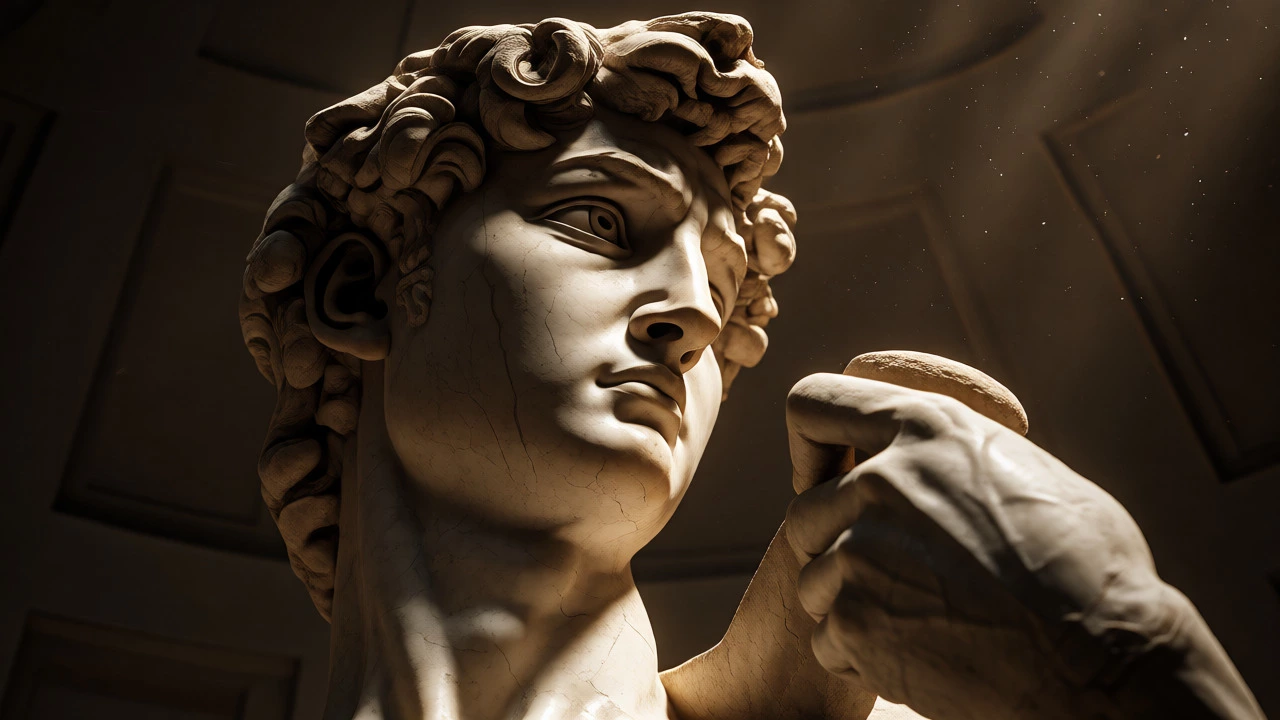
If there is one name that answers the question immediately, it is Michelangelo. He didn't just carve statues; he liberated figures from stone. Born in 1475 in Caprese, Italy, he considered himself primarily a sculptor, even though his paintings on the Sistine Chapel ceiling overshadowed his three-dimensional work for many people.
His technique was unique. He believed the figure already existed inside the marble, trapped by excess rock. His job was simply to chip away what wasn't part of the statue. This concept, known as non-finito, is visible in works like the Prisoners, where half-formed bodies struggle to emerge from the rough surface.
- David (1504): Standing 17 feet tall, this marble masterpiece represents biblical hero David before his fight with Goliath. Unlike previous depictions showing David after the victory, Michelangelo captured the tense moment before action. The veins in his hands and the furrowed brow show intense psychological focus.
- Pietà (1499): Carved when he was just 24, this shows Mary holding the dead body of Jesus. The smoothness of the marble makes the skin look soft and the fabric look heavy, a technical feat that still baffles modern carvers.
Why does he matter today? Because he set the standard for anatomical accuracy and emotional depth. Before him, statues were often stiff or symbolic. After him, they became alive.
The Father of Modern Sculpture: Auguste Rodin
Fast forward four centuries to France. Auguste Rodin broke the rules Michelangelo had written. While Michelangelo polished everything to a mirror shine, Rodin left rough patches. He wanted light to catch the uneven surfaces, creating shadows that changed as you moved. He died in 1917, but his influence on how we view physical art remains dominant.
Rodin rejected the idealized perfection of classical myths. Instead, he focused on real human emotion-pain, passion, despair. His most famous work, The Thinker, started as part of a larger commission called The Gates of Hell. Originally named "The Poet," it depicts Dante Alighieri contemplating his journey through the underworld. But without the context of the gates, the figure became a universal symbol of intellectual struggle.
Another key piece is The Kiss. At first glance, it looks romantic. Look closer, and you’ll notice the tension in their muscles. It’s not a gentle peck; it’s a desperate, consuming embrace. Rodin taught us that sculpture could be unfinished, fragmented, and deeply personal.
The British Pioneer: Henry Moore
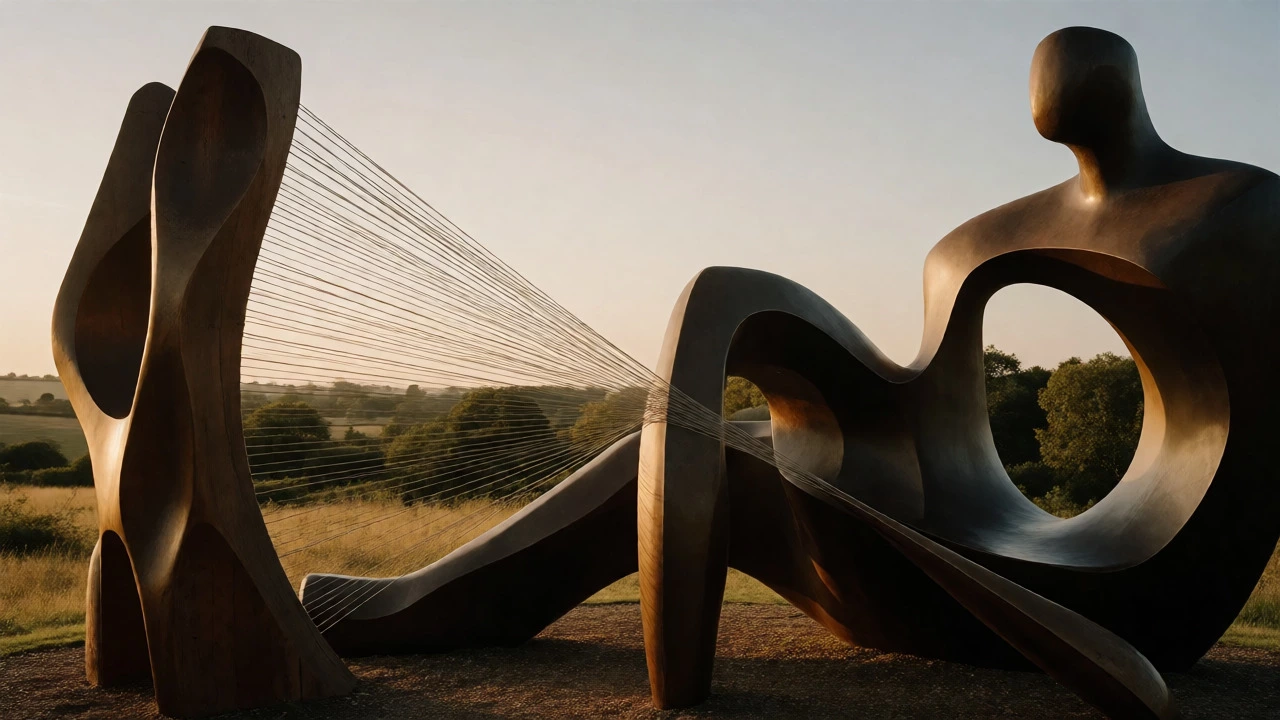
Moving into the 20th century, Henry Moore shifted the focus from the human body to abstract forms inspired by nature. A British artist active until 1986, he is best known for his large-scale bronze and stone sculptures featuring hollows and holes.
Moore argued that a hole in a sculpture is as important as the solid material. He collected shells, bones, and pebbles, studying their shapes. These natural objects influenced his Reclining Figures, which mimic the curves of hills and landscapes. When you stand next to one of his massive bronzes, you don’t just see a person lying down; you feel connected to the earth itself.
| Sculptor | Era | Primary Material | Key Characteristic |
|---|---|---|---|
| Michelangelo | High Renaissance (1500s) | Marble | Anatomical precision and "liberating" figures from stone. |
| Auguste Rodin | Modern (Late 1800s) | Bronze & Marble | Rough textures, emotional intensity, and fragmentation. |
| Henry Moore | Modern (Mid-1900s) | Bronze & Stone | Abstract organic forms and negative space (holes). |
| Barbara Hepworth | Modern (Mid-1900s) | Wood & Bronze | Use of string and taut lines within carved forms. |

The Abstract Innovator: Barbara Hepworth
You can’t talk about famous sculptors without mentioning Barbara Hepworth. She was a contemporary of Henry Moore and arguably more innovative in her use of materials. Working in St Ives, Cornwall, she pioneered the integration of colored strings and wires into carved wood and stone.
In works like Single Form or her smaller wooden pieces, the string isn't just decoration. It represents movement, sound, or connection between two points. It breaks the solidity of the sculpture, allowing air and light to pass through. Hepworth proved that sculpture doesn't have to be heavy and static. It can be delicate and dynamic.
Her work often reflects her interest in science and astronomy. The hollows in her sculptures resemble craters on the moon or cells under a microscope. By combining traditional carving with modern abstraction, she bridged the gap between ancient techniques and futuristic concepts.
The Pop Art Provocateur: Jeff Koons
If you want a name that sparks debate, consider Jeff Koons. An American artist born in 1955, he brings kitsch and consumer culture into the high-art world. His work is shiny, colorful, and undeniably expensive.
Koons creates oversized replicas of everyday objects. His Balloon Dog series features stainless steel sculptures painted in candy colors, mirroring the surface so perfectly that they reflect the viewer. Another famous piece, Rabbit, sold for $91 million in 2019, making it the most expensive work by a living artist at auction.
Critics argue his work lacks soul because it’s manufactured rather than hand-carved. Supporters say he challenges our definition of value and art. Whether you love him or hate him, Koons is impossible to ignore. He reminds us that sculpture can be playful, commercial, and deeply reflective all at once.
How to Identify a Famous Sculptor's Style
When you visit a gallery, you might not read the placard right away. Here are quick visual cues to help you guess who might be responsible:
- Look for muscle definition: If every vein and tendon is perfect, think Michelangelo.
- Check the surface texture: Smooth and polished suggests Classical or Neoclassical styles. Rough, patchy, or incomplete areas point toward Rodin.
- Spot the holes: If the sculpture has significant empty spaces or tunnels cut through it, Henry Moore or Barbara Hepworth are strong candidates.
- Notice the material finish: Mirror-like chrome or bright plastic indicates Jeff Koons or other Pop Art practitioners.
Understanding these traits helps you appreciate the intent behind the work. Sculpture isn't just about copying reality; it's about interpreting it through the lens of the artist's time and tools.
Frequently Asked Questions
Why is Michelangelo considered the greatest sculptor?
Michelangelo is revered for his unmatched ability to render human anatomy with extreme realism and emotional power. His belief that he was "freeing" the figure from the stone resulted in works that feel alive, such as David and the Pietà, setting a benchmark for artistic skill that few have ever matched.
What makes Auguste Rodin different from earlier sculptors?
Rodin departed from the smooth, idealized finishes of classical sculpture. He introduced rough, textured surfaces and fragmented forms to convey raw emotion and psychological depth. Works like The Thinker emphasize inner thought and struggle rather than external perfection.
Did Barbara Hepworth use unusual materials in her sculptures?
Yes, Hepworth was known for incorporating non-traditional elements like colored strings, wires, and paint into carved wood and stone. These additions introduced linearity and movement, challenging the static nature of traditional sculpture and reflecting influences from science and music.
Is Jeff Koons' work really considered fine art?
Despite controversy, Koons' work is firmly established in the fine art canon. Critics debate its aesthetic merit, but its market success and presence in major museums validate its status. He uses industrial fabrication techniques to explore themes of nostalgia, banality, and desire.
What is the difference between casting and carving in sculpture?
Carving is a subtractive process where material like marble or wood is removed to reveal the shape. Casting is an additive process where liquid material, such as molten bronze or plaster, is poured into a mold and hardened. Michelangelo primarily carved, while Rodin and Moore frequently used casting.