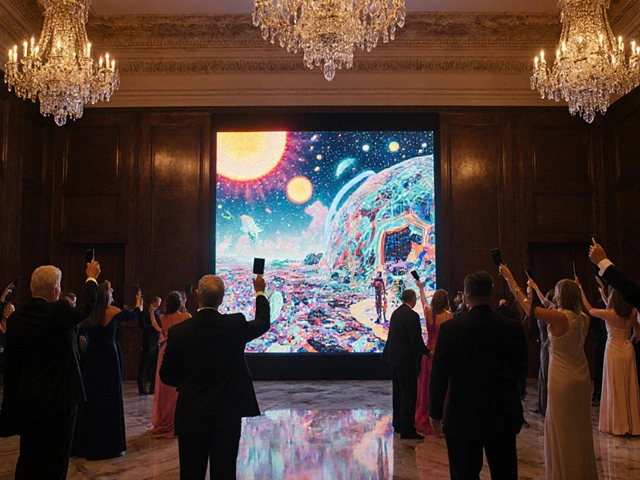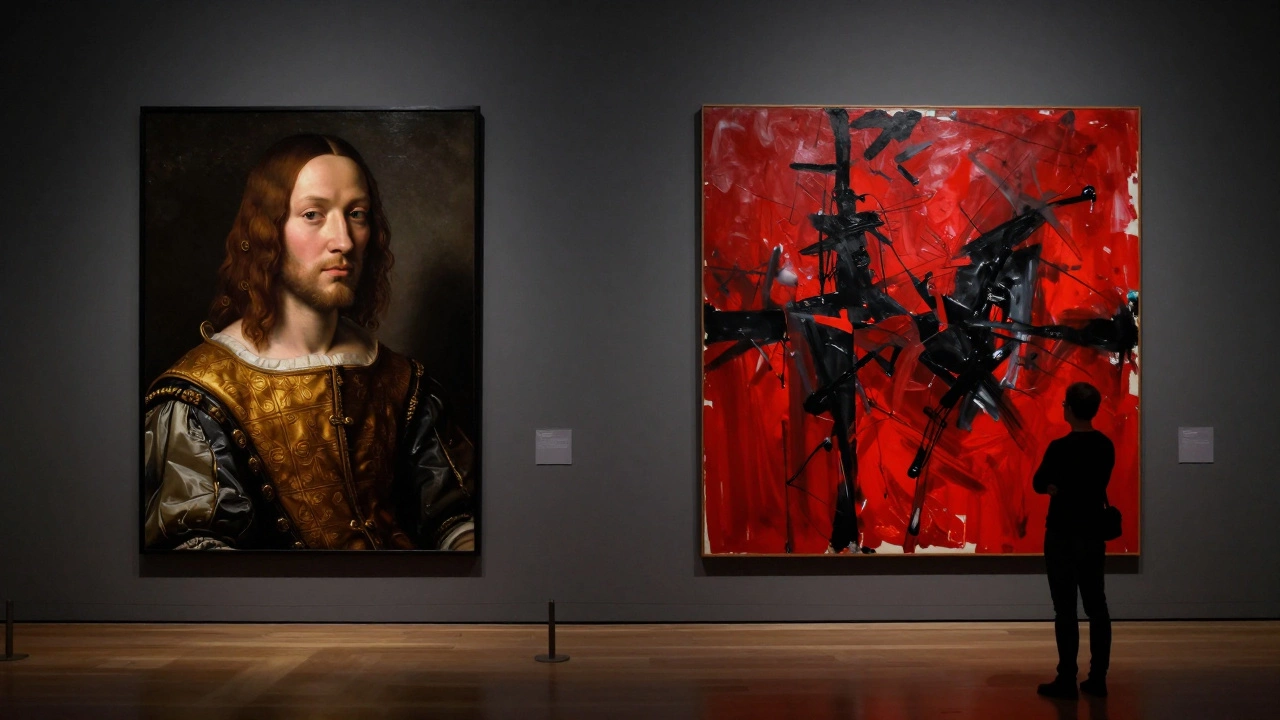
When you walk into a museum and see a painting of a serene landscape with soft brushstrokes next to a bright red canvas with a single black line, it’s easy to feel confused. Modern art and traditional art aren’t just different styles-they’re built on completely different ideas about what art should do. One celebrates skill and beauty. The other challenges everything you thought art was supposed to be.
What Is Traditional Art?
Traditional art covers centuries of work made before the late 1800s. Think of Renaissance paintings, Victorian portraits, or Japanese woodblock prints. These pieces were often commissioned by churches, royalty, or wealthy families. Their purpose? To show off skill, tell stories, or honor religious and social values.
Artists trained for years in academies, learning how to draw the human body perfectly, use perspective to create depth, and mix pigments to match nature. A painting by Rembrandt or a sculpture by Michelangelo wasn’t just pretty-it was a technical marvel. You could look at a face and see the shadow of a cheekbone, the texture of fabric, even the reflection in an eye. Accuracy mattered. Realism was the goal.
Traditional art followed rules. There were clear standards for composition, proportion, and subject matter. If you painted a scene from the Bible, you didn’t make Jesus look like a skateboarder. The rules weren’t just about technique-they were about meaning. Art was a mirror of society’s values.
What Is Modern Art?
Modern art began around the 1860s and lasted until the 1970s. It didn’t start with a manifesto-it started with a camera.
When photography became popular, artists didn’t need to paint lifelike portraits anymore. Why spend months painting a face when a camera could do it in seconds? So they asked: What else can art do?
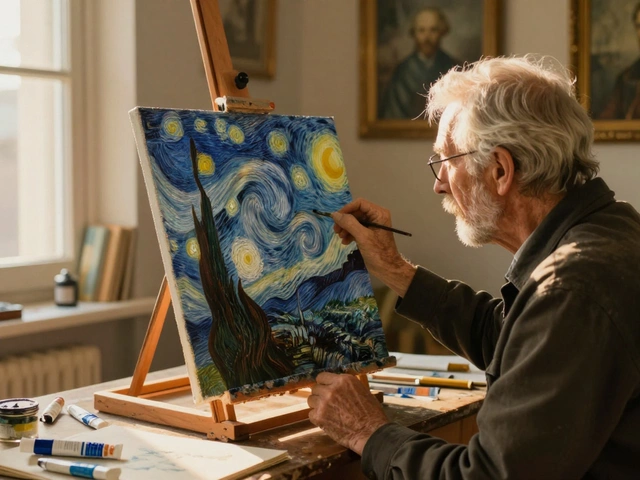
Artists like Monet started painting how light felt at sunset, not how it looked. Van Gogh twisted his brushstrokes to show emotion, not anatomy. Picasso broke faces into shapes. Duchamp put a urinal in a gallery and called it art. These weren’t mistakes. They were revolutions.
Modern art doesn’t care about perfect hands or realistic skies. It cares about ideas. A Rothko painting with three floating rectangles isn’t lazy-it’s trying to make you feel something deep, quiet, and almost spiritual. A Warhol soup can isn’t about the soup. It’s about mass production, consumerism, and how we stop seeing the ordinary as special.
Modern art broke every rule. No more perspective. No more idealized bodies. No more religious stories. Instead, you got abstraction, surrealism, expressionism, and minimalism. The artist’s inner world became the subject. The viewer’s reaction became part of the work.
Key Differences in Purpose
Traditional art wanted to show the world as it was-or as it should be. Modern art wanted to show the world as it felt.
Think of a traditional portrait. The subject is calm, posed, dressed in fine clothes. The background is soft, controlled. It says: This person matters. This is how they want to be remembered.
Now look at a modern portrait, like Egon Schiele’s twisted, raw self-portraits. The lines are jagged. The skin looks thin, almost sick. The eyes stare out, desperate. It doesn’t say look at me. It says look at what it feels like to be me.
Traditional art was often public. It was made for cathedrals, palaces, or town halls. Modern art was personal. It was made for galleries, private collections, and your own quiet moment alone with a canvas.
Technique and Materials
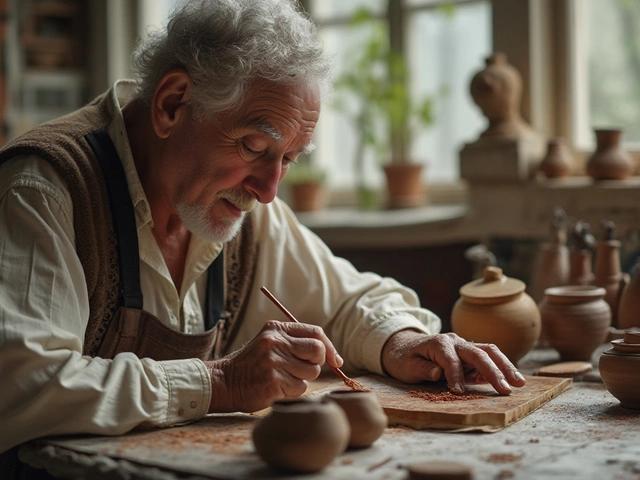
Traditional artists used oil paints on canvas, carved stone, or molded bronze. Their tools were centuries old. Their methods were passed down like recipes.
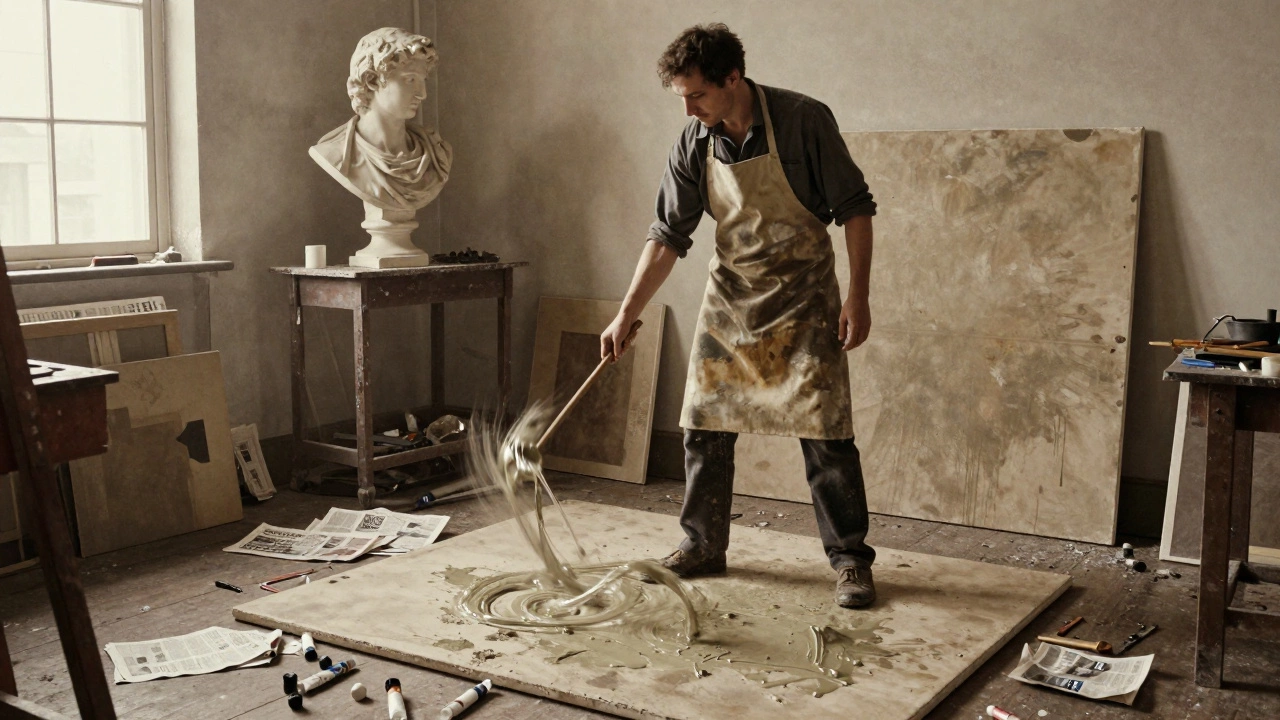
Modern artists grabbed whatever worked. They used house paint, sand, newspaper, metal scraps, even garbage. Jackson Pollock dripped paint from a stick onto a canvas laid on the floor. Louise Bourgeois used old furniture to build giant spider sculptures. Yves Klein painted with his naked body dipped in blue paint.
Technique wasn’t about mastering a skill anymore. It was about finding the right way to express the idea-even if it meant breaking the brush.
Who Was It For?
Traditional art was made for the powerful. Kings, popes, merchants-they paid for it. The average person rarely saw it unless they went to church.
Modern art was made for everyone-even if no one understood it. The rise of public museums in the 19th century meant art was no longer locked away in private homes. Suddenly, factory workers, students, and immigrants could stand in front of a Cézanne and wonder: What am I supposed to feel here?
That’s the biggest shift. Traditional art told you what to think. Modern art asked you what you felt.
Why Does This Matter Today?
You don’t need to love modern art to understand why it changed everything. It forced us to ask: Is art only beautiful if it looks real? Does skill mean more than honesty? Can a thing be art if no one knows how to make it?
Today’s art scene-whether it’s a digital NFT, a neon sign with a single word, or a sculpture made of recycled plastic-is built on the foundation modern artists laid. They didn’t just paint differently. They changed the whole conversation.
When you see a blank canvas with a single dot, don’t ask, “Is this art?” Ask: “What is this asking me to think about?” That’s the legacy of modern art.
Examples You Can See Today
- Traditional: Leonardo da Vinci’s Mona Lisa - perfect proportions, subtle smile, background landscape
- Modern: Edvard Munch’s The Scream - swirling sky, distorted face, raw emotion
- Traditional: Johannes Vermeer’s Girl with a Pearl Earring - soft light, quiet dignity
- Modern: Marcel Duchamp’s Fountain - a signed urinal, challenging the definition of art
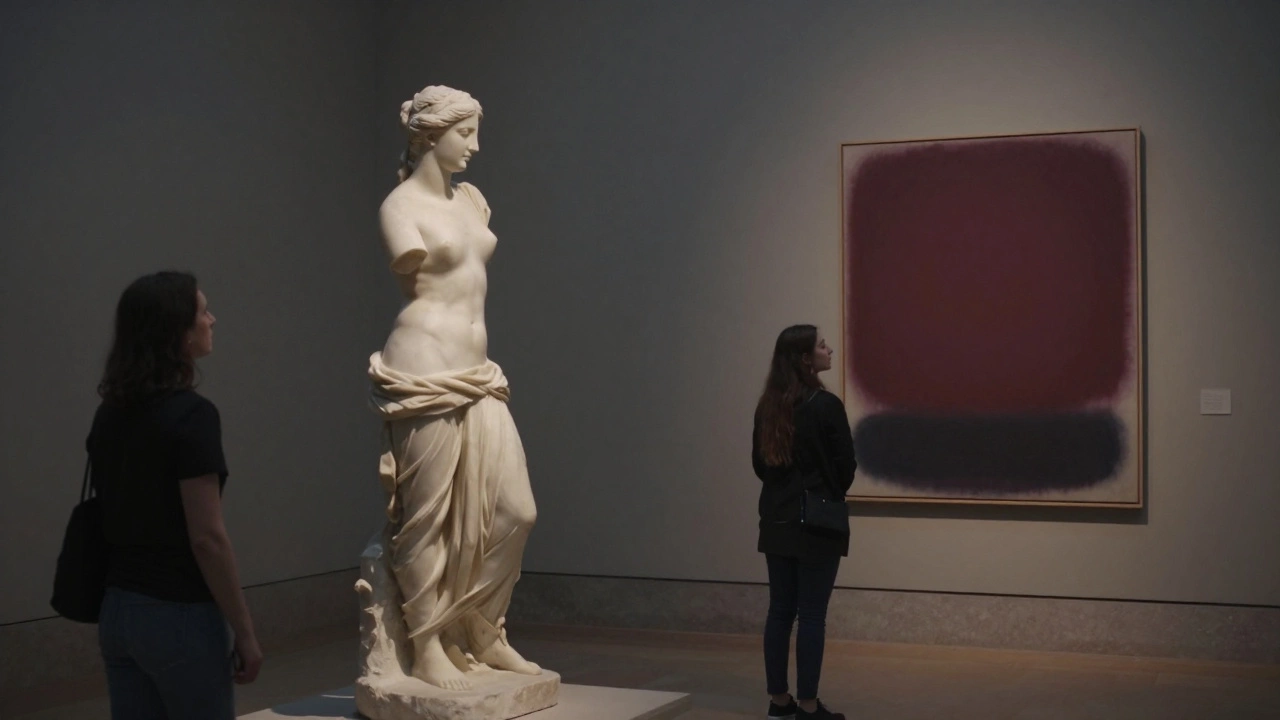
- Traditional: Botticelli’s The Birth of Venus - mythological beauty, idealized form
- Modern: Mark Rothko’s color fields - no objects, just emotion in color
Common Misconceptions
One myth is that modern art is just “anything the artist says is art.” That’s not true. It’s not random. It’s intentional. A Jackson Pollock drip painting took hundreds of hours of movement, rhythm, and control. It’s not messy-it’s calculated chaos.
Another myth is that traditional art is boring. But look at Caravaggio’s use of light and shadow. Or the way a Japanese ukiyo-e print can capture a moment of rain or a dancer’s leap with just a few lines. The skill is staggering. It’s just different.
Neither style is better. They’re just different answers to the same question: What is art for?
Is modern art really art if it doesn’t look realistic?
Yes. Modern art doesn’t aim to copy reality-it aims to express emotion, ideas, or social commentary. A Picasso portrait might distort faces, but it’s showing the tension, anxiety, or complexity of human identity. Art isn’t about how something looks-it’s about what it makes you think or feel.
Why did modern artists reject traditional techniques?
They didn’t reject technique-they redefined it. Photography took over realistic painting, so artists turned to color, form, and abstraction to explore what cameras couldn’t capture: emotion, movement, subconscious thought. They used brushstrokes, shapes, and materials in new ways to say what words and realism couldn’t.
Can traditional and modern art coexist in the same space?
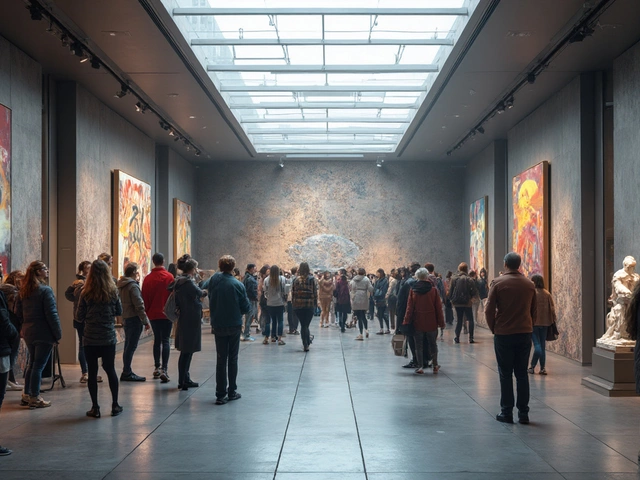
Absolutely. Museums like the Met, the Tate Modern, or the National Gallery of Victoria display both side by side. Seeing a Renaissance portrait next to a Kandinsky abstract helps you see how art evolved-not replaced. One doesn’t erase the other; they’re chapters in the same story.
Is modern art harder to understand than traditional art?
It’s not harder-it’s different. Traditional art often tells a clear story. Modern art often asks a question. You don’t need to "get" a Rothko to appreciate it. You just need to sit with it, feel its color, and notice how it changes in different light. Understanding comes from experience, not explanation.
Did modern art make traditional art obsolete?
No. Traditional techniques are still taught and practiced today. Many artists blend both. A contemporary painter might use Renaissance lighting to depict a modern subject. Art doesn’t move in straight lines-it circles back, layers, and recombines. Modern art didn’t kill tradition; it gave it new context.
Where to Go Next
If you want to see the difference for yourself, visit a local gallery with both historical and modern collections. Stand in front of a 17th-century Dutch still life. Then walk ten feet and look at a 1950s abstract expressionist piece. Notice how your eyes move differently. How your mind reacts. You don’t need to like both. But understanding why they exist-why they were made-changes how you see everything that comes after.