Ancient Music Discovery Tool
Click on a musical era to explore the evidence and its significance.
Paleolithic Era
40k+ Years AgoArchaeoacoustics
PrehistoricWritten Notation
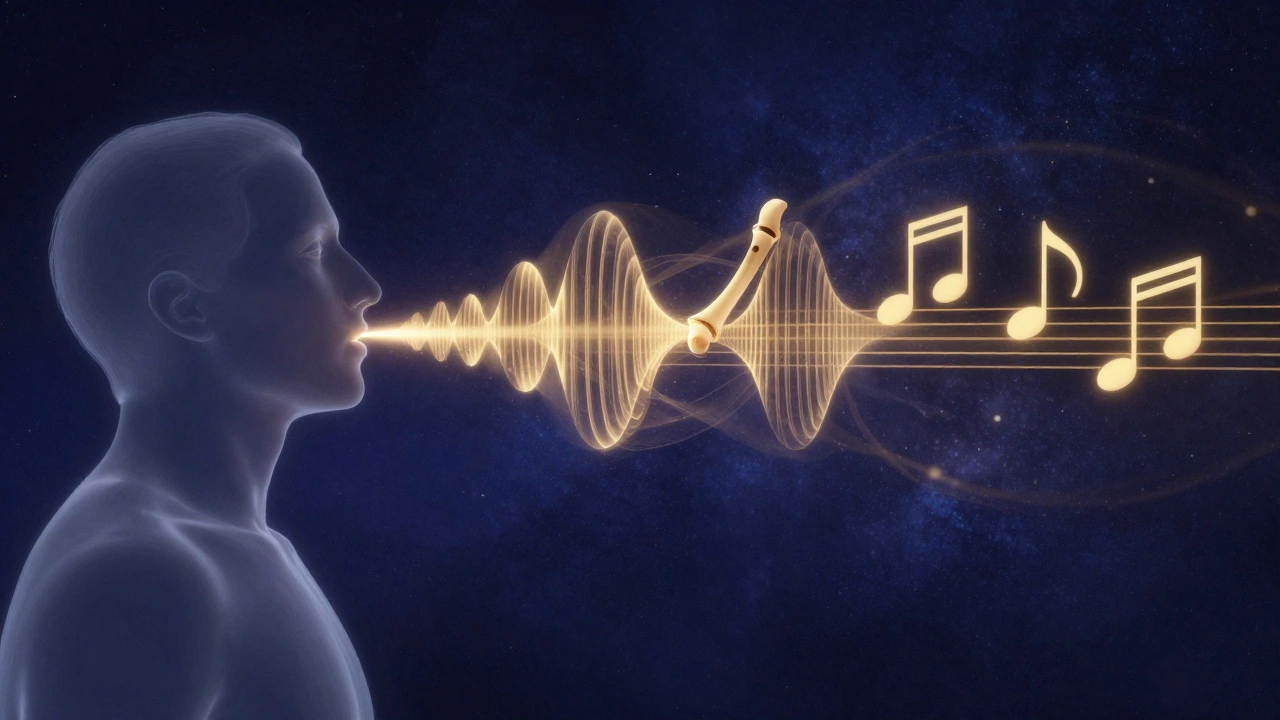
~1400 BCEBefore writing existed, humans used animal remains to create pitch and rhythm. The Divje Babe flute and others made from vulture wing bones prove early humans understood breath control.
Insight: Music was likely a tool for survival, bonding, and emotional release.
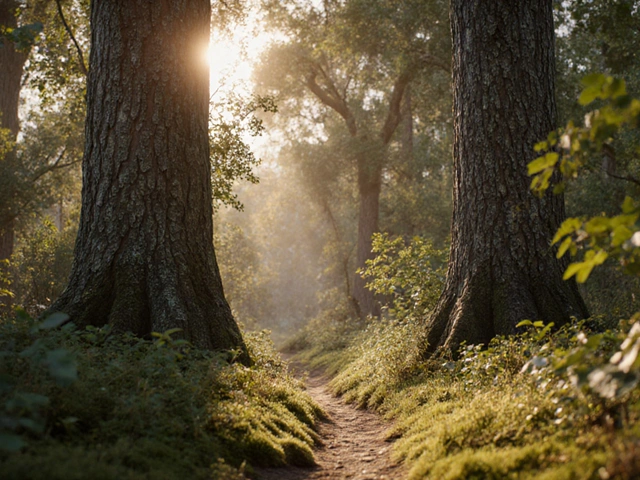
Archaeologists found that cave paintings are often located in spots with the best resonance. This suggests that the first songs were immersive ritual experiences.
Insight: The environment itself acted as an instrument to create "supernatural" sounds.
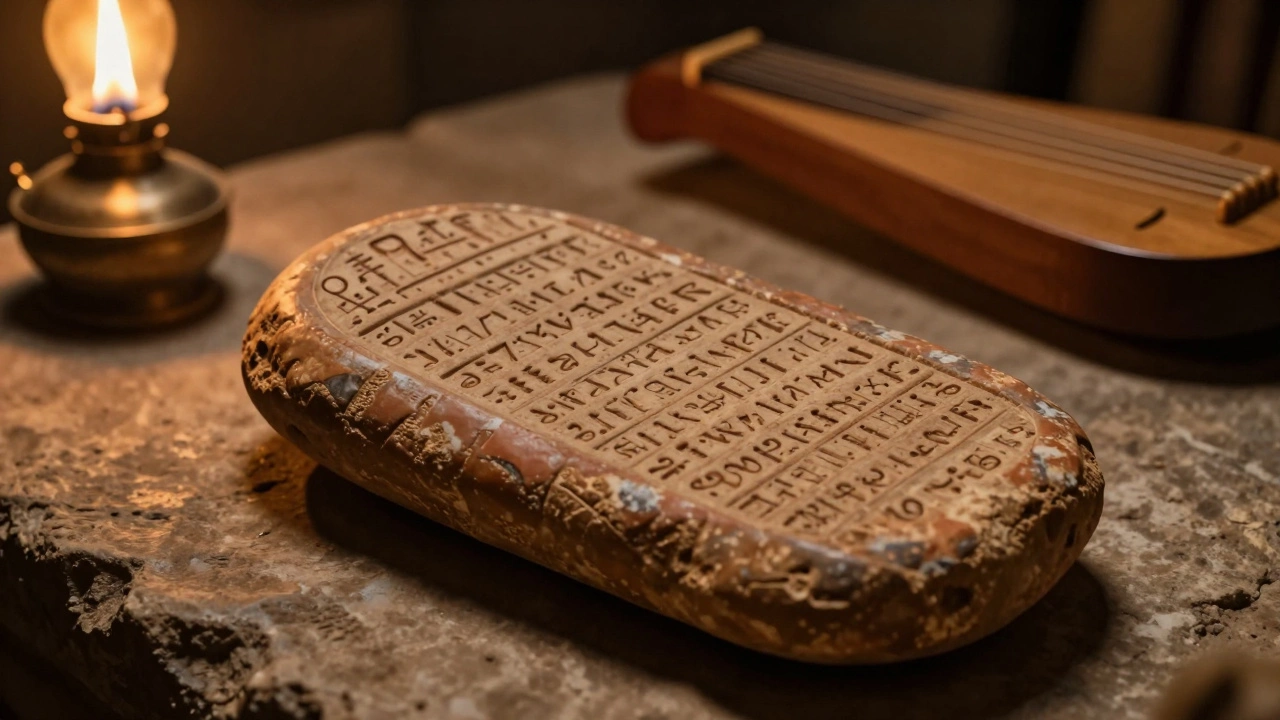
Found on clay tablets in Ugarit, this is the oldest known written melody. It contains specific instructions for a Lyre (harp-like instrument).
Insight: Music had evolved into structured compositions and religious hymns.
Here are the key takeaways on the origins of music:
- The oldest written song is the Hurrian Hymn No. 6, dating back to roughly 1400 BCE.
- Prehistoric instruments, like flutes made from bird bone, suggest music existed tens of thousands of years before writing.
- Early music likely served a social or spiritual purpose rather than just entertainment.
- We can't know exactly how the first songs sounded because audio doesn't fossilize.
The Hurrian Hymn: The Oldest Written Melody
If you're looking for the first song that we can actually read and play today, look no further than the Hurrian Hymn No. 6 is an ancient musical composition found on clay tablets in the city of Ugarit. This isn't a catchy pop tune; it's a hymn to the goddess Nikkal, likely used in a religious ceremony around 1400 BCE. Found in modern-day Syria, these tablets use a form of musical notation that looks more like a set of instructions for a musician than a modern staff. It tells the player which intervals to use on a Lyre, a small harp-like instrument. Because the notation is so cryptic, musicologists have debated for decades how to actually play it. Some believe it's a slow, mourning piece, while others think it was a celebratory chant. The fact that we can even hum a melody from 3,400 years ago is a miracle of archaeological preservation. While the Hurrian Hymn is the first *written* song, humans were definitely singing long before they figured out how to carve clay. To find the real beginning, we have to look at Paleolithic Music, which refers to the musical practices of the Old Stone Age. Archaeologists have found flutes made from the wing bones of vultures and the tusks of mammoths. One of the most famous examples is the Divje Babe flute, found in Slovenia. Some experts claim it's over 50,000 years old, though others argue it might have been made by a cave bear's teeth marks. Regardless, the presence of these tools proves that early humans understood pitch, breath control, and rhythm. If you have a flute, you have a song. You don't need a lyric sheet to create a melody that evokes fear, joy, or a call to the hunt. Why did the first song happen? It probably wasn't for a concert. Early music was likely a tool for survival and social bonding. Think about how a mother rocks a baby-that's a form of rhythmic singing. Or how a group of hunters might use a specific call to coordinate a move. There is a theory that music evolved from Protolanguage, a stage of communication before full grammar existed. Early humans might have used melodic contours to convey emotion-rising pitches for excitement or falling pitches for sadness-long before they had words for those feelings. This suggests the 'first song' wasn't a structured piece of art, but a primal emotional release that helped humans bond in small tribes. To understand the gap between prehistoric sound and recorded history, it helps to see how different types of evidence tell different stories. Interestingly, some of the first 'concert halls' were actually caves. Researchers studying Archaeoacoustics-the study of sound in archaeological sites-have noticed something strange. In caves with ancient paintings, the areas with the most art often have the best acoustics. This suggests that early humans didn't just paint on walls; they sang to them. They likely discovered that certain spots in a cave created an echo or a resonance that made their voices sound supernatural. This connection between visual art and sound suggests that the first 'songs' were part of immersive ritual experiences, where the environment itself acted as an instrument. If you stand in a cave in France or Spain today and hum a low note, you can still feel the vibration in your chest, just as someone did 30,000 years ago. You might wonder how we can say anything about a song when there's no recording. Musicologists use a process called Comparative Musicology. They look at the music of indigenous cultures that have remained relatively unchanged for thousands of years. By studying the scales and rhythms used in these traditional settings, they can make an educated guess about what prehistoric music sounded like. For instance, many early cultures used pentatonic scales (five-note scales), which are naturally pleasing to the human ear and common in folk music globally. When they apply these scales to the holes found in ancient bone flutes, the resulting melodies sound hauntingly familiar. It's not a perfect science, but it's the closest we can get to hearing the ghosts of our ancestors. The search for the first song reveals that music isn't just a hobby or a product; it's a fundamental part of being human. Whether it was a chant to a goddess in Ugarit or a flute played by a campfire 40,000 years ago, the drive to organize sound into meaning is baked into our DNA. Every time you turn on a track today, you're participating in a tradition that is older than agriculture, older than cities, and possibly as old as the human species itself. The first song wasn't a single event, but a slow awakening of the human spirit through sound. While we can't call it a 'song' in the musical sense, many animals communicate with complex vocalizations. Some dinosaurs likely used low-frequency booms or chirps to attract mates or mark territory. However, the 'first song' usually refers to human musicality, which involves intentional melody, rhythm, and structure. If you're fascinated by the roots of sound, try exploring a few different avenues. Start by listening to 'Paleolithic' reconstructions on YouTube to hear how bone flutes are thought to sound. You could also look into the music of the Sumerians or the Egyptians to see how melody evolved alongside the first great civilizations. If you're feeling adventurous, visit a local natural history museum and look for the 'Anthropology' section-you'd be surprised how often early musical tools are tucked away in the exhibits.Before Writing: The Era of Bone Flutes
The Psychology of the First Note

Comparing Ancient Musical Evidence
Evidence Type Example Approximate Age What it tells us Artifacts Bone Flutes 40,000+ years Capability for melody and pitch Notation Hurrian Hymn 3,400 years Structured composition and scales Oral Tradition Folk Chants Unknown Cultural memory and storytelling Acoustics Cave Resonance Prehistoric Selection of sites for sonic impact The Role of Caves as Amplifiers
How We Reconstruct the Past
What This Means for Us Today
Can we actually hear the Hurrian Hymn No. 6 today?
Did dinosaurs have songs?
What is the oldest instrument ever found?
Why is there no recording of the first song?
How does music relate to language evolution?
Next Steps for Music Lovers