Modern Art Movement Explorer
Select a movement below to understand its core philosophy, visual traits, and why it was revolutionary. This tool helps distinguish between different "modern" styles that are often confused.
Imagine standing in front of a canvas that looks like a child’s scribble. You might think the artist ran out of paint or gave up halfway through. But if you look closer, you see a deliberate break from tradition. This is where modern art is a broad movement that emerged in the late 19th and early 20th centuries, characterized by experimentation with form, color, and subject matter, often rejecting traditional techniques and narratives. It isn’t just about being new; it’s about breaking rules that had stood for centuries.
So, what actually separates a modern painting from a classical one? It’s not the date on the frame. A painting made in 1950 can still be traditional, while one from 1890 can be revolutionary. The core difference lies in intent. Modern painters stopped trying to copy reality perfectly. Instead, they started exploring how we *see* and *feel* things. They asked: Do we need a recognizable face to convey emotion? Does a landscape have to look like a photograph? These questions led to some of the most famous works in history.
The Shift from Realism to Abstraction
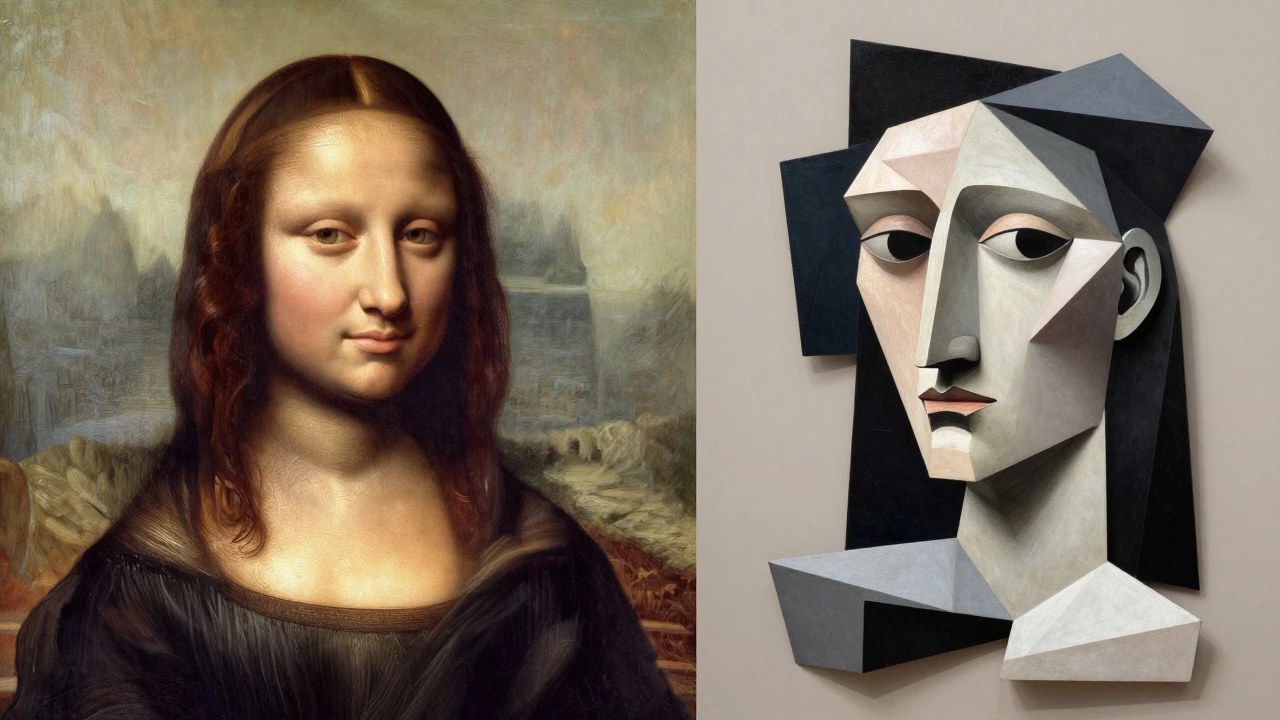
To understand modern painting, you have to understand what came before. For hundreds of years, the goal of Western art was realism. Artists used perspective, shading, and anatomy to create images that looked three-dimensional. If you couldn’t tell the difference between the painting and the actual object, the artist succeeded. Think of the detailed portraits of the Renaissance or the hyper-realistic landscapes of the 19th century.
Then, technology changed everything. In the 1830s, photography arrived. Suddenly, you didn’t need an artist to capture a precise likeness of your family or a view of the city. The camera did it faster and cheaper. This forced painters to ask: What else can I do that a camera cannot? The answer was interpretation. Painters began to distort shapes, exaggerate colors, and simplify forms to express inner truths rather than outer appearances.
This shift didn’t happen overnight. It evolved through several distinct movements. Each one pushed the boundaries further away from realistic depiction. By understanding these stages, you can see the logical progression of modern art.
Key Movements That Defined Modern Painting
Modern art isn’t a single style. It’s a collection of rebellions against the previous status quo. Here are the major movements that shaped the definition of a modern painting:
- Impressionism: Emerging in France in the 1860s, artists like Claude Monet and Pierre-Auguste Renoir focused on capturing the fleeting effects of light and atmosphere. They painted outdoors (en plein air) and used visible brushstrokes instead of smooth blends. The subject wasn’t as important as the momentary visual impression.
- Cubism: Pioneered by Pablo Picasso and Georges Braque around 1907, Cubism shattered the idea of a single viewpoint. Instead of showing an object from one angle, they showed it from multiple angles at once. A face might have both eyes on the same side. This geometric fragmentation challenged the viewer’s perception of space.
- Expressionism: While Impressionists cared about light, Expressionists cared about emotion. Artists like Edvard Munch and Egon Schiele used distorted forms and harsh, non-naturalistic colors to convey anxiety, joy, or fear. The truth was inside the artist, not outside in the world.
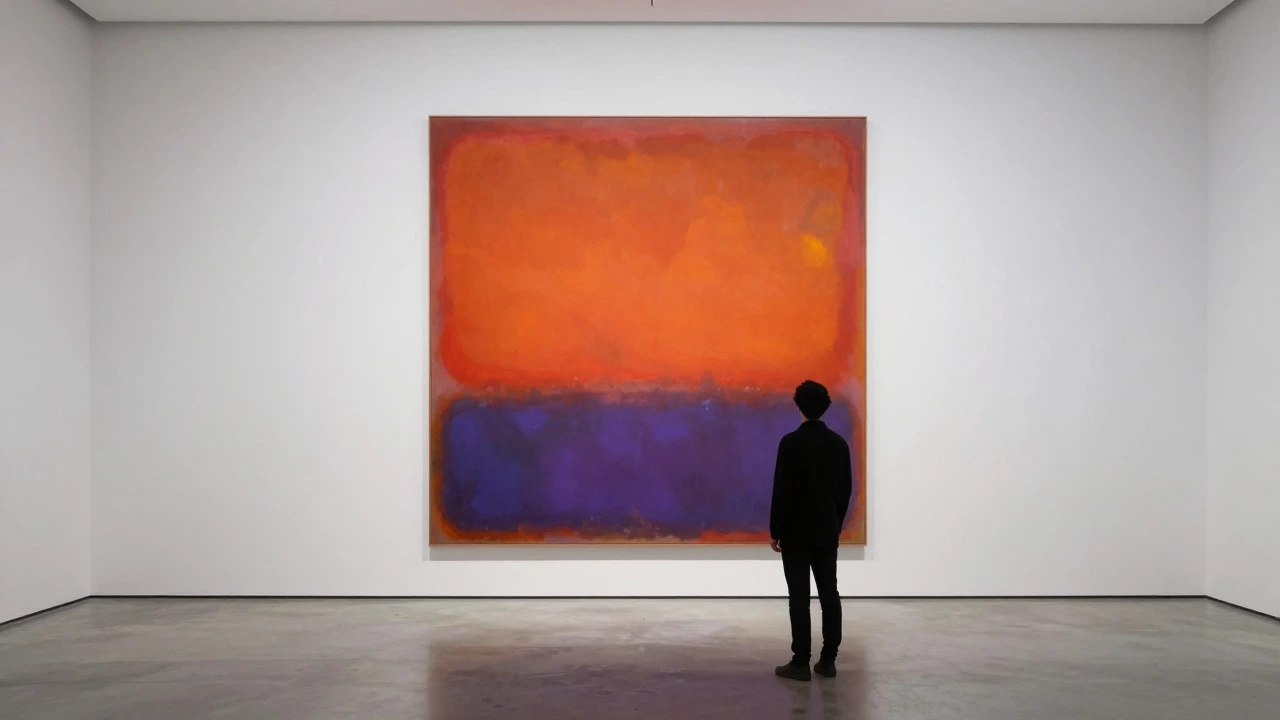
- Abstract Expressionism: Post-World War II, New York became the center of the art world. Artists like Jackson Pollock and Mark Rothko moved entirely away from representational subjects. Pollock’s drip paintings were about the act of painting itself-the physical energy of the gesture. Rothko’s large color fields were about spiritual contemplation.
Each of these movements rejected something from the past. Impressionism rejected academic rigidity. Cubism rejected single-point perspective. Abstract Expressionism rejected the need for any recognizable subject at all.
Characteristics That Identify a Modern Painting
If you walk into a gallery and want to identify if a piece is modern, look for these specific traits. They serve as a checklist for recognizing the hallmarks of the era.
- Experimentation with Form: Traditional art followed strict rules of proportion and symmetry. Modern art breaks these rules. Shapes are angular, curved, or fragmented. The composition might feel unbalanced or chaotic on purpose.
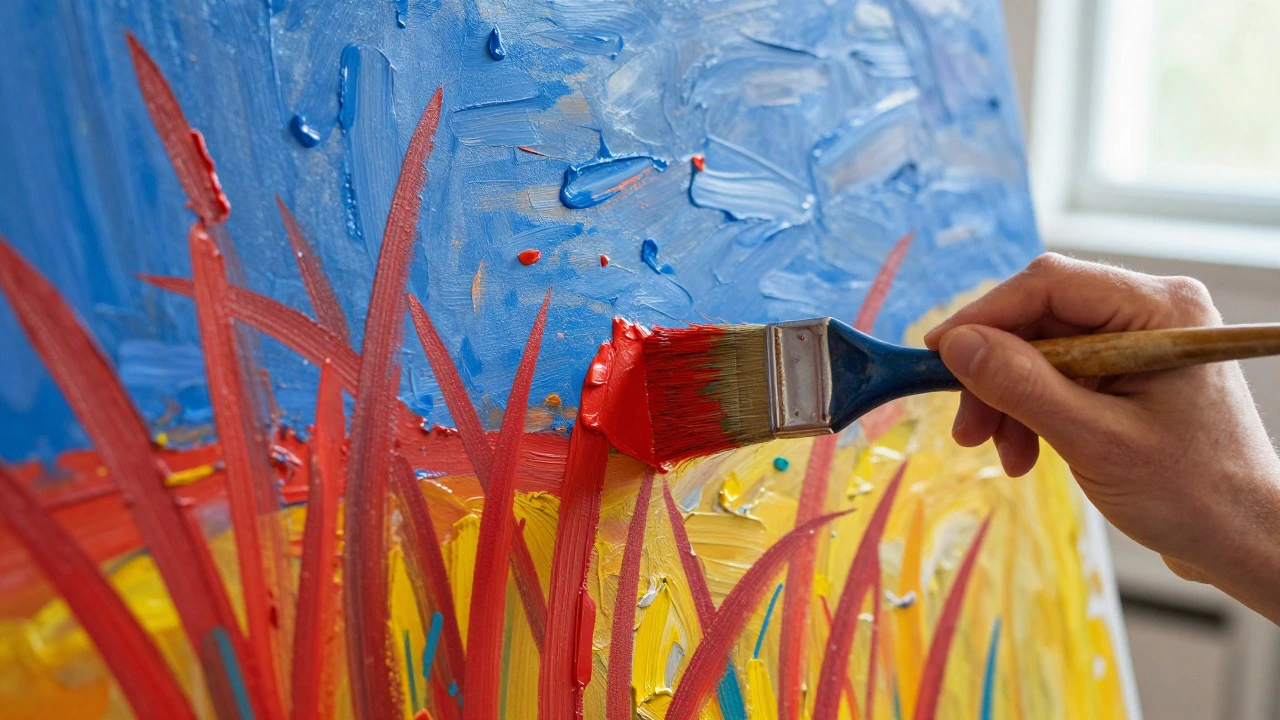
- Use of Non-Traditional Colors: Colors are no longer tied to reality. Grass doesn’t have to be green. Skin doesn’t have to be flesh-toned. Artists use color to create mood or rhythm. Blue faces or red trees are common in modern works.
- Visible Brushwork: In classical art, the brushstrokes were hidden under layers of glaze to create a smooth surface. In modern art, the texture of the paint is part of the message. Thick impasto or thin washes are left visible to show the artist’s hand.
- Lack of Narrative: Classical paintings often told a story from mythology, religion, or history. Modern paintings often don’t tell a story. They present a visual experience. You aren’t meant to decode a plot; you’re meant to react to the image.
- Incorporation of Everyday Life: Modern artists elevated mundane objects to high art. A chair, a pipe, or a pile of cans could become the central subject. This democratized art, making it about the contemporary human experience rather than elite subjects.
Why Did Artists Break the Rules?
It’s easy to mock modern art as "my kid could do that." But there was a serious philosophical reason behind the break. The late 19th and early 20th centuries were times of massive upheaval. Industrialization changed how people lived. World War I shattered faith in progress and rationality. Psychology, particularly Sigmund Freud’s theories, revealed the complex, irrational nature of the human mind.
Artists felt that realistic painting was too shallow to capture this new reality. If the world was becoming fragmented and psychological, art had to reflect that. Picasso’s *Guernica*, for example, uses distorted figures to convey the horror of war. It’s not a realistic depiction of a battle; it’s a realistic depiction of the *feeling* of terror.
Furthermore, artists wanted to free themselves from the constraints of patronage. For centuries, the Church and wealthy aristocrats commissioned art. They wanted flattering portraits and religious scenes. As the middle class grew and museums opened, artists could sell directly to collectors who valued innovation over imitation. This economic shift empowered them to take risks.
Modern vs. Contemporary: What’s the Difference?
A common point of confusion is the difference between modern and contemporary art. People often use these terms interchangeably, but they refer to different time periods and attitudes.
Think of it this way: Modern art broke the mold. Contemporary art plays with the broken pieces. If modern art asks "What is a painting?", contemporary art asks "Who decides what is art?"
How to Appreciate Modern Paintings
Standing in front of a blank white square or a splatter of paint can feel intimidating. You might feel like you’re missing a secret code. Here are some practical tips to help you engage with modern paintings without feeling lost.
Look at the Process, Not Just the Result. With Abstract Expressionism, the history of the brushstroke matters. Look closely at the canvas. Can you see where the paint was dragged, dripped, or sprayed? This reveals the artist’s physical movement and decision-making process.
Trust Your First Reaction. Don’t try to force a meaning. If a painting makes you feel anxious, happy, or bored, that’s a valid response. Modern art often bypasses logic and speaks directly to the subconscious. Your emotional reaction is data.
Read the Context. Knowing the historical context helps. If you know that Picasso created *Les Demoiselles d’Avignon* in 1907, you can appreciate how shocking it was at the time. Comparing it to earlier works shows the magnitude of the break.
Compare Styles. Look at a Impressionist work next to a Cubist work. Notice how the treatment of light changes. Then look at an Expressionist work. Notice how the distortion serves a different purpose. Seeing the differences highlights the unique contribution of each movement.
Frequently Asked Questions
Is all abstract art considered modern?
Not necessarily. Abstract art refers to the style (non-representational), while modern art refers to the period and philosophy. However, since abstraction was a key development of the modern era, most abstract paintings from the 20th century fall under the umbrella of modern art. Contemporary abstract art exists today, but it belongs to the contemporary category.
Who invented modern art?
There is no single inventor. It was a collective evolution involving many artists. Key pioneers include Édouard Manet, who bridged the gap between realism and modernism, and the Impressionists who challenged academic standards. Later, Picasso and Matisse pushed the boundaries further with Cubism and Fauvism.
Why do modern paintings use so many bright colors?
Bright colors allow artists to express emotion and rhythm independent of natural lighting. In movements like Fauvism and Expressionism, color was liberated from its descriptive role. A blue face might represent sadness or coldness, while a red sky might signify passion or danger, regardless of what the sun would actually produce.
What is the main difference between Impressionism and Modern Art?
Impressionism is actually the starting point of modern art. While Impressionists still depicted recognizable scenes (landscapes, people), they changed *how* they depicted them using loose brushwork and focus on light. Later modern movements moved further away from recognition entirely, leading to abstraction. So, Impressionism is a subset of the broader modern art timeline.
Can a digital painting be considered modern art?
Technically, the term "modern art" usually stops around the mid-20th century. Digital paintings created today are generally classified as contemporary art. However, if a digital artist uses the stylistic principles of modern movements (like Cubism or Expressionism), the work shares those aesthetic characteristics, even if it belongs to a later chronological period.