Sculpture Matchmaker: Find Your Perfect Masterpiece
What draws you most to a work of art?
Flawless human form and technical mastery
Intrigue, secrets, and unanswered questions
Deep feeling and psychological intensity
Monumental size and awe-inspiring presence
Playful engagement and social sharing
Walk into any major museum in the world, and you will likely find a crowd gathered around one specific statue. Whether it is the Mona Lisa (a painting, but you get the point) or the David, people are drawn to certain works with an almost magnetic force. But when we talk about three-dimensional art, which piece truly holds the crown for "most popular"?
The answer isn't as simple as pointing to a single name. Popularity in art can be measured by visitor numbers, social media mentions, merchandise sales, or sheer cultural recognition. However, if we combine all these metrics, a few names rise above the rest. This article breaks down the contenders for the title of the world's most popular sculpture, explaining why they captivate us centuries after their creation.
The Undisputed King: Michelangelo’s David
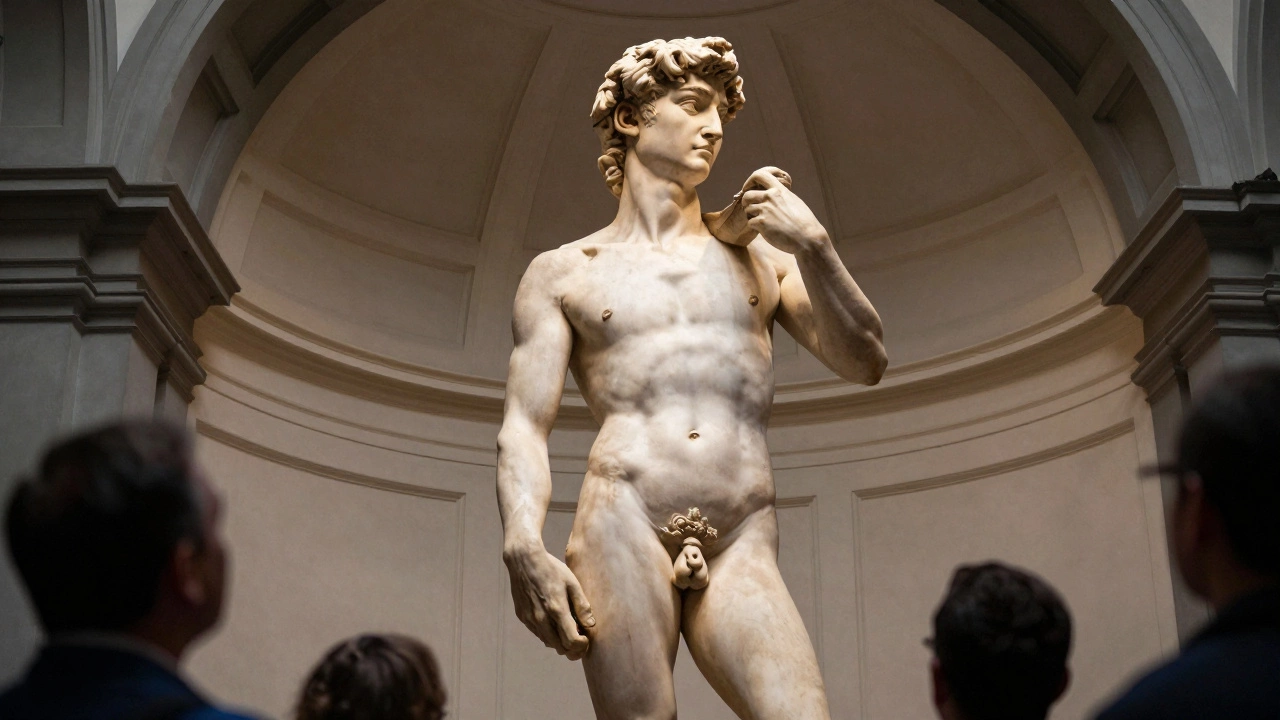
If there is one sculpture that defines the entire medium for the general public, it is David by Michelangelo. Created between 1501 and 1504, this marble masterpiece stands just over 17 feet tall in the Galleria dell'Accademia in Florence, Italy.
Why is it so popular? It is not just because it is big. It is because Michelangelo captured a moment of intense psychological tension. David is not shown after defeating Goliath; he is shown before, staring out at his enemy. You can see the veins popping in his hands, the furrowed brow, and the relaxed yet ready stance. It is human anatomy perfected.
In terms of raw numbers, the Accademia attracts hundreds of thousands of visitors annually specifically to see this one piece. It has become a symbol of the Renaissance, of Florence, and even of political freedom. When you search for "famous sculpture" on any image engine, David is almost always the first result. Its popularity is cemented by its perfect proportions and the story behind its creation from a block of marble that other sculptors had rejected.
The Icon of Mystery: Venus de Milo
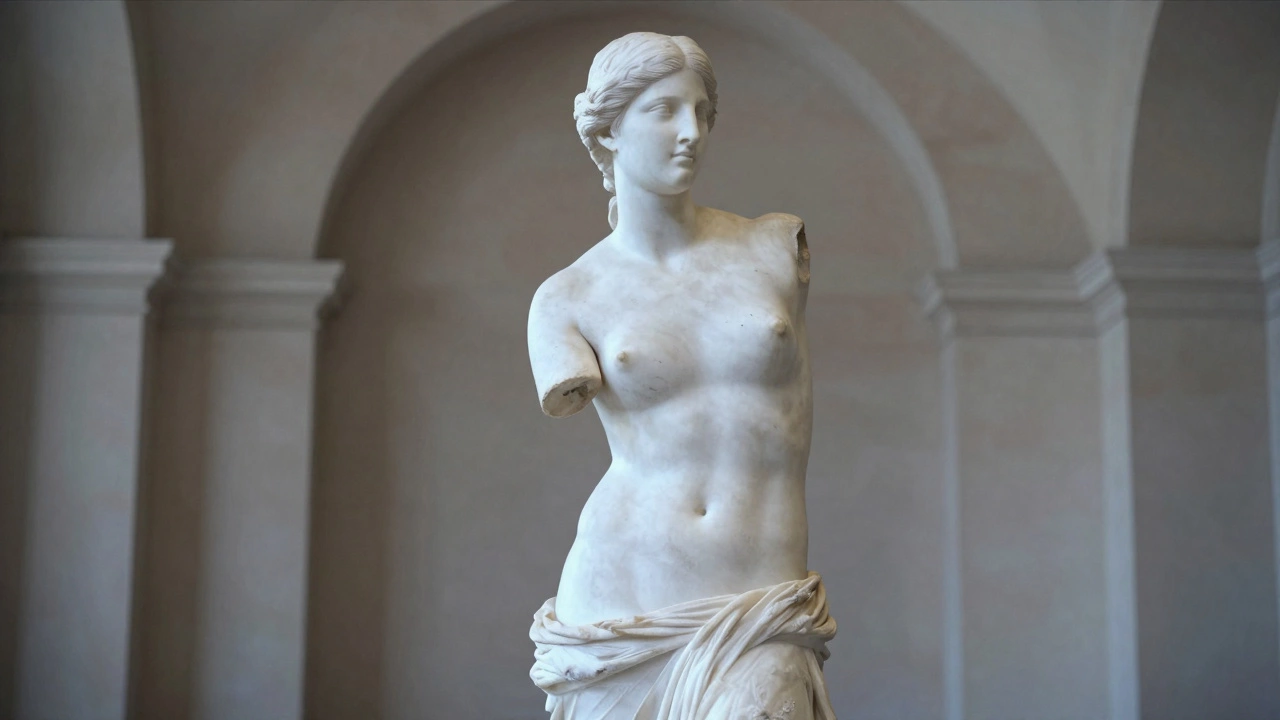
No list of popular sculptures is complete without the Venus de Milo. Housed in the Louvre Museum in Paris, this ancient Greek statue dates back to around 130 BC. It depicts Aphrodite (or Venus, to the Romans), the goddess of love and beauty.
Its popularity stems largely from its mystery and its iconic missing arms. Discovered in 1820 on the island of Milos, the statue arrived at the Louvre already armless. This absence has sparked endless debate among art historians: What was she holding? A mirror? An apple? The ambiguity invites viewers to project their own ideas onto the work.
The Louvre is the most visited museum in the world, and the Venus de Milo is one of its top three attractions, alongside the Mona Lisa and the Winged Victory of Samothrace. Its smooth marble surface and graceful contrapposto stance (weight shifted to one leg) have made it the standard reference for female beauty in Western art for two centuries.
The Modern Classic: Rodin’s The Thinker
While David represents classical perfection and Venus de Milo represents ancient mystery, Auguste Rodin’s The Thinker represents modern introspection. Originally titled "The Poet," this bronze sculpture was created in the early 1900s.
The figure sits hunched over, chin resting on his hand, lost in deep thought. It is a universal image. You do not need an art degree to understand what The Thinker is doing. This relatability has made it incredibly popular. It has been reproduced in countless copies worldwide-in university campuses, corporate lobbies, and public parks.
Rodin broke away from the idealized smoothness of earlier periods. The Thinker’s muscles are tense, his body twisted with intellectual effort. This raw expression of human consciousness resonates with people today more than ever. It is perhaps the most recognized silhouette in modern sculpture.
The Spiritual Giant: Moai of Easter Island
When we think of "popular," we often think of museums. But some of the most famous sculptures are outdoors, standing guard in remote locations. The Moai statues of Rapa Nui (Easter Island) are arguably the most recognizable group of sculptures on Earth.
Carved by the Rapa Nui people between 1250 and 1500 AD, these massive stone figures stand up to 33 feet tall and weigh as much as 82 tons. Their distinctive features-elongated heads, prominent noses, and deep-set eyes-have made them pop culture icons. They appear in movies, video games, and cartoons constantly.
Their popularity is driven by the mystery of their construction. How did a small island community move such heavy stones without wheels or draft animals? This engineering puzzle, combined with their haunting presence against the Pacific backdrop, draws tourists from all over the globe. Unlike museum pieces, the Moai are experienced in their original context, adding to their allure.
The Contemporary Phenomenon: Cloud Gate
Popularity changes with time. In the 21st century, one sculpture has dominated social media feeds: Cloud Gate, known affectionately as "The Bean," by artist Anish Kapoor. Located in Millennium Park, Chicago, this reflective stainless steel structure opened in 2006.
Cloud Gate is popular for a different reason: interaction. It is designed to reflect the city skyline and the faces of the people looking into it. It turns the viewer into part of the artwork. Millions of selfies taken with Cloud Gate have cemented its status as a global icon.
It challenges the traditional idea of sculpture as something distant and untouchable. Instead, it is playful, immersive, and instantly shareable. For a generation raised on Instagram, Cloud Gate might actually be the "most popular" sculpture in terms of daily engagement and digital visibility.
Comparison of Top Sculptures
| Sculpture | Artist | Period | Material | Key Appeal |
|---|---|---|---|---|
| David | Michelangelo | Renaissance (1504) | Marble | Anatomical perfection, historical significance |
| Venus de Milo | Alexandros of Antioch | Hellenistic (c. 130 BC) | Parian Marble | Mystery of missing arms, classical beauty |
| The Thinker | Auguste Rodin | Modern (1904) | Bronze | Universal expression of thought |
| Moai | Rapa Nui People | Pre-Columbian (1250-1500) | Volcanic Rock | Mystery of construction, scale |
| Cloud Gate | Anish Kapoor | Contemporary (2006) | Stainless Steel | Interactivity, reflection, social media |

Why Do We Obsess Over These Statues?
There is a psychological reason why these specific sculptures remain popular. Humans are wired to recognize faces and bodies. A sculpture like David or Venus de Milo triggers our empathy centers because they look like us. We connect with their humanity.
Additionally, scarcity plays a role. There is only one original David. You cannot buy a replica that feels the same. This exclusivity drives desire. Museums leverage this by creating ticket queues that make seeing the sculpture feel like an achievement.
Cultural reinforcement also matters. Schools teach students about Michelangelo and Rodin. Movies feature these statues. Once a sculpture enters the cultural lexicon, it stays there. New generations learn about them, visit them, and post about them, creating a feedback loop of popularity.
How to Experience These Masterpieces
If you want to see these works for yourself, planning is essential. Here is how to approach each:
- David: Book tickets to the Galleria dell'Accademia in Florence months in advance. Go early in the morning to avoid the worst crowds. Spend at least 15 minutes just looking at the face and hands.
- Venus de Milo: Visit the Louvre on a Wednesday or Friday evening when it is open late. The lighting is better, and the daytime tour groups have left.
- The Thinker: See the original at the Musée Rodin in Paris. Avoid the copy in front of the Louvre entrance if you want the full context of Rodin’s garden setting.
- Cloud Gate: Visit Millennium Park in Chicago during golden hour (shortly after sunrise or before sunset). The reflections are most beautiful then, and the light is soft for photos.
FAQ: Questions About Famous Sculptures
Is David really the most popular sculpture?
In terms of art historical significance and museum attendance, yes. Michelangelo’s David is widely considered the pinnacle of Renaissance sculpture and attracts the highest number of dedicated art tourists. However, in terms of social media mentions, contemporary works like Cloud Gate may compete.
Why does the Venus de Milo have no arms?
The arms were likely broken off before the statue was discovered in 1820. Some theories suggest they were damaged during transport or due to an earthquake. The exact reason remains unknown, which adds to the statue's mystique.
Where is the original Thinker located?
The original bronze cast of The Thinker is housed in the Musée Rodin in Paris, France. There are many authorized casts around the world, including at the Metropolitan Museum of Art in New York and the Art Institute of Chicago.
Can I touch Cloud Gate in Chicago?
Yes, touching Cloud Gate is encouraged. The polished stainless steel surface is designed to reflect visitors. However, climbing on top of the sculpture is prohibited and enforced by security guards.
Who carved the Moai statues?
The Moai were carved by the Rapa Nui people, the indigenous Polynesian inhabitants of Easter Island. They used tools made from volcanic rock to carve the statues from the Rano Raraku quarry.