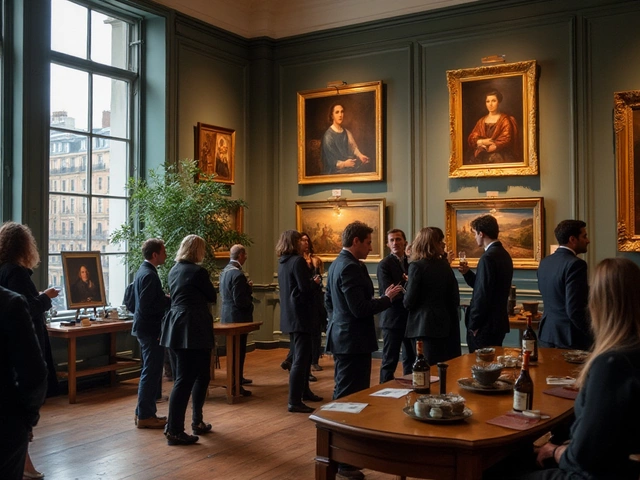
When someone asks, "What is an example of contemporary art?" they’re not looking for a textbook definition. They want to see it-something real, something that makes you stop and think, maybe even feel uncomfortable. Contemporary art isn’t about pretty landscapes or perfect portraits. It’s about the world we live in right now, and how artists respond to it.
Contemporary Art Isn’t What You Think
A lot of people confuse contemporary art with modern art. Modern art ended around the 1970s. It was about breaking rules-Picasso, Pollock, Matisse. Contemporary art started after that. It’s made by living artists, or artists who died recently, and it deals with issues we’re facing today: climate change, identity, technology, inequality.
There’s no single style. One piece might be a giant inflatable duck floating in a harbor. Another could be a video of someone silently staring at a wall for six hours. Neither is "bad"-they’re both answers to the same question: What does it mean to be alive right now?
Example 1: The Floating Piers by Christo and Jeanne-Claude
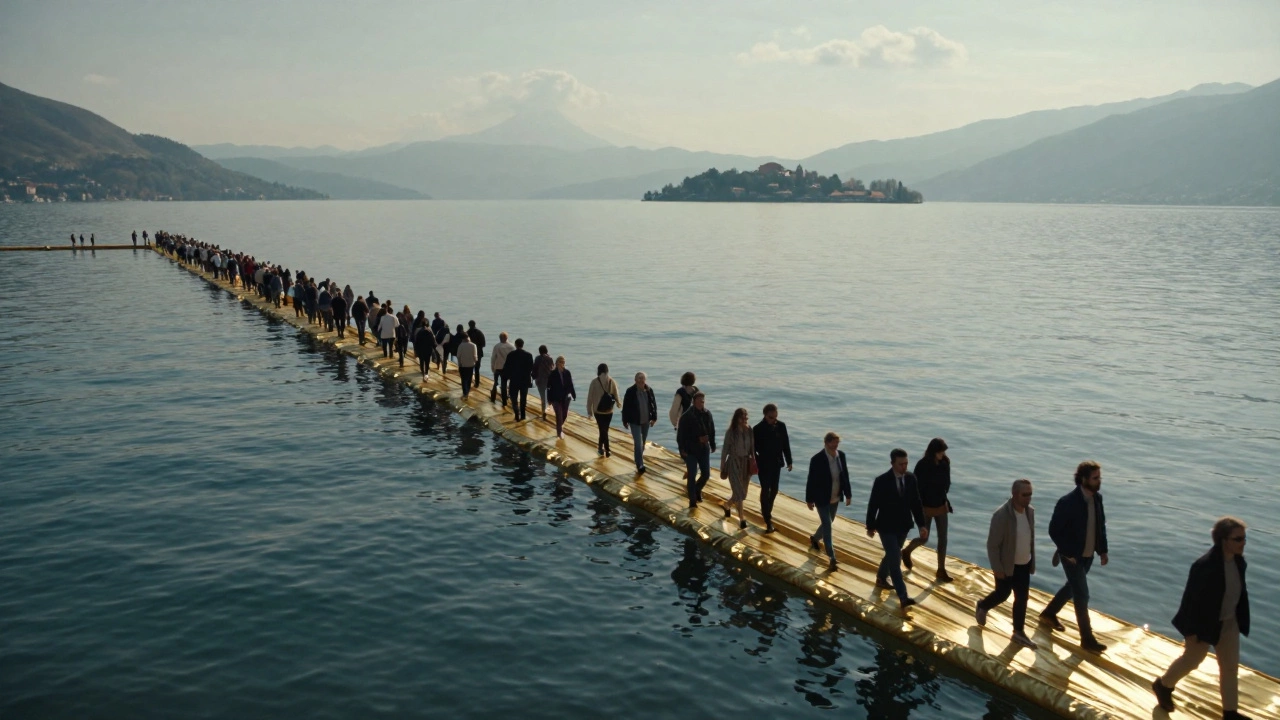
In 2016, artists Christo and Jeanne-Claude covered 3 kilometers of Lake Iseo in Italy with floating yellow fabric. People walked on water. No fences. No tickets. Just a path made of fabric, connecting islands. The project took 24 years to plan. It cost $26 million-and was fully funded by selling Christo’s preparatory drawings.
This wasn’t just a spectacle. It changed how people experienced space. You didn’t look at the lake-you walked on it. You felt the wind, the movement, the silence. It wasn’t about ownership. It wasn’t permanent. That’s the point. Contemporary art often asks you to experience something, not just observe it.
Example 2: Kara Walker’s Sugar Baby Sculpture
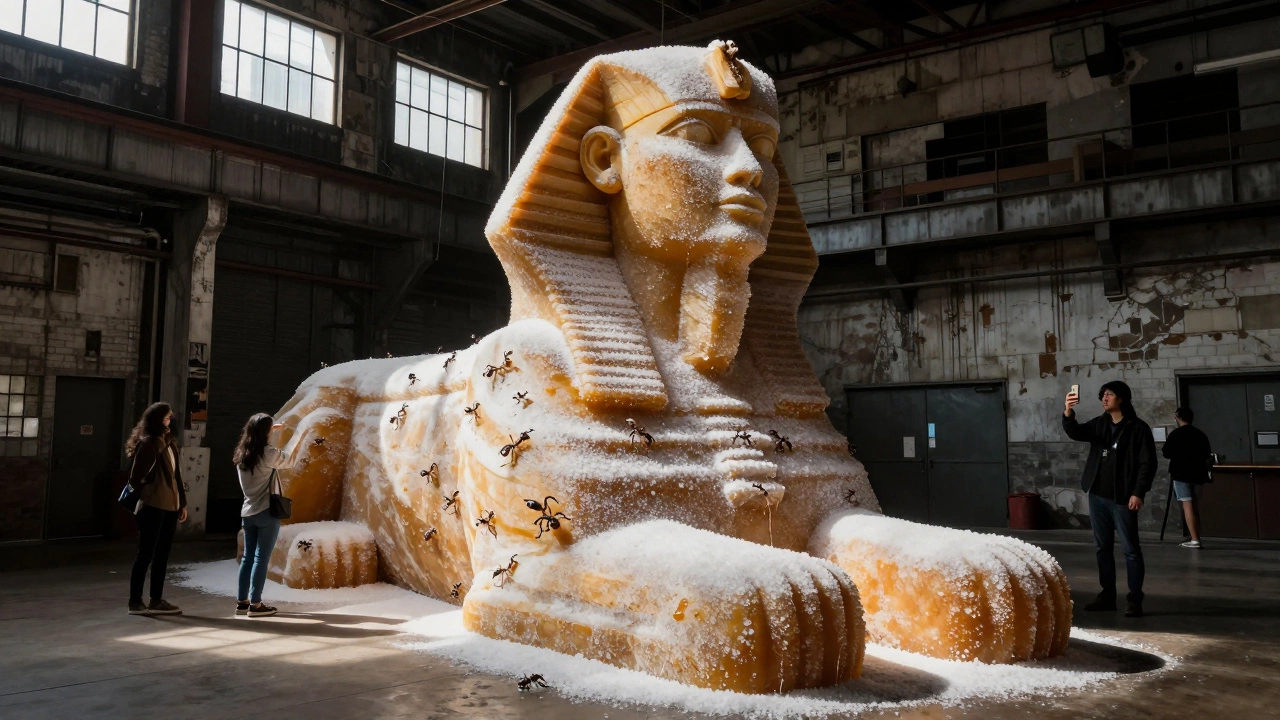
In 2014, Kara Walker installed a 40-foot-tall sugar-coated sculpture of a Black woman in the shape of a sphinx in the old Domino Sugar Factory in Brooklyn. The statue, called "A Subtlety," slowly melted over the summer. Visitors took selfies with it. Some cried. Others left notes in the sugar.
The sculpture was made from 160,000 pounds of sugar. It referenced the history of slavery in the sugar trade. But it didn’t lecture. It just sat there-beautiful, grotesque, sweet, and heavy. The sugar attracted ants. Children touched it. The air smelled like caramel. It forced people to confront history through their senses, not a museum label.
Example 3: Ai Weiwei’s "Straight"
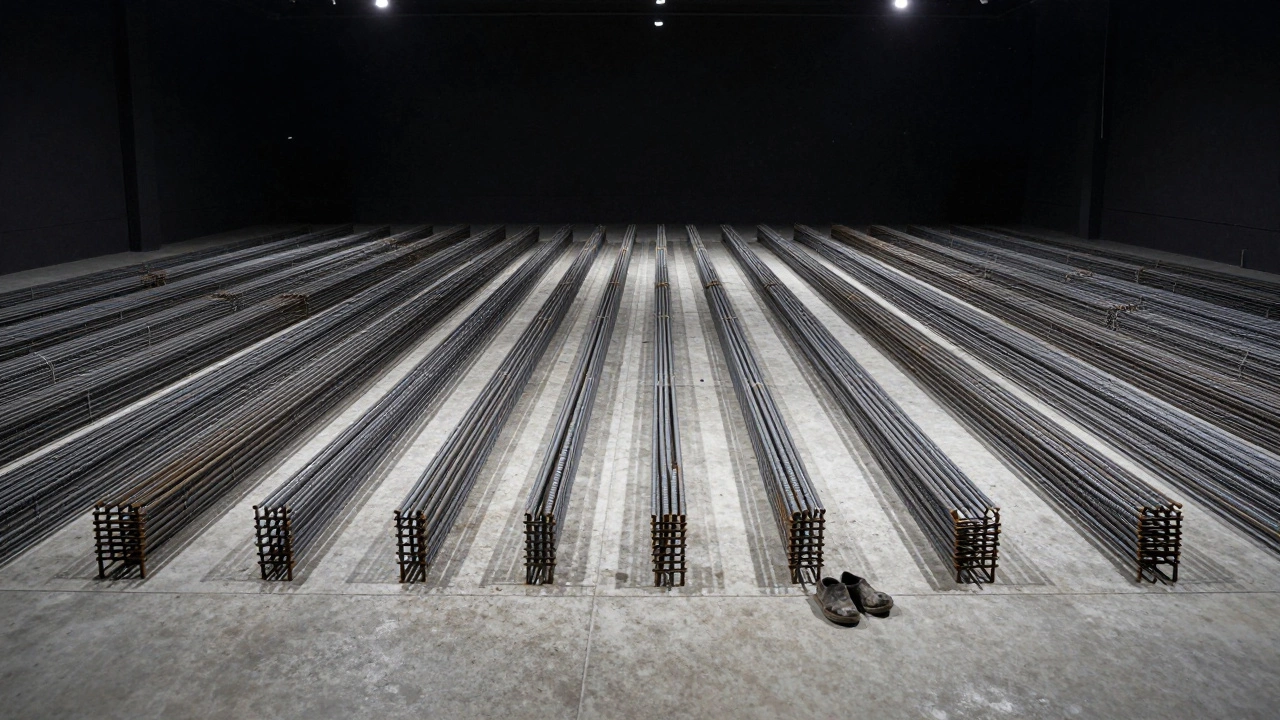
In 2008, an earthquake in Sichuan, China, killed nearly 90,000 people. Many of the dead were schoolchildren. The government refused to release names. So Ai Weiwei spent three years collecting the names of the dead, then used the twisted steel rebar from collapsed school buildings to create "Straight."
The installation? 150 tons of straightened rebar, laid out in a neat, silent row on the floor. No words. No captions. Just metal that once held up a school, now bent and then forced back into line. It’s not decorative. It’s a memorial. It’s a protest. It’s art because it refuses to look away.
Example 4: Olafur Eliasson’s "The Weather Project"
In 2003, Olafur Eliasson filled the Turbine Hall at Tate Modern in London with a giant artificial sun made of hundreds of mono-frequency lamps and mist. The ceiling was mirrored. Visitors lay on the floor, staring up at their own reflections under the fake sun. Some took naps. Others held hands. A few cried.
This wasn’t a painting. It wasn’t even an object. It was an environment. A mood. A shared experience. People didn’t just view it-they became part of it. That’s contemporary art: not something you hang on a wall, but something that changes how you move through the world.
Example 5: Trevor Paglen’s "Orbital Reflector"
In 2018, artist Trevor Paglen launched a satellite into space-a reflective balloon shaped like a mirror. It was meant to be visible from Earth at night, a silent, non-functional object orbiting the planet. He called it "Orbital Reflector."
It wasn’t a satellite for communication. It wasn’t for science. It was art. A piece of art that existed outside national borders, outside corporate control. It was visible to anyone with a clear night sky. It asked: Who owns the sky? Who decides what goes up there? And why do we only send machines that serve profit or power?
The balloon burned up in the atmosphere after a few months. But the questions it raised? They’re still up there.
Why These Examples Matter
These aren’t random weird things. They’re deeply connected to the world we live in. Each one responds to a real issue: environmental collapse, racial injustice, government secrecy, corporate control of space, the loss of public experience.
Contemporary art doesn’t wait for permission. It doesn’t need galleries to be valid. A protest sign with a poem written on it? That’s art. A TikTok video of a person dancing in front of a burning forest? That’s art. A mural painted over a demolished housing complex? That’s art.
You don’t need to "understand" it. You need to feel it. Or question it. Or be disturbed by it. That’s the point.
Where to See Contemporary Art Today
You don’t need to fly to New York or London. Look around you.
- Street art in Wellington’s laneways-murals that speak to Māori sovereignty or climate anxiety.
- Community art projects in rural towns where locals paint murals about water shortages.
- Online exhibitions by Indigenous artists using augmented reality to revive ancestral stories.
- Artists in Manila using recycled plastic to build sculptures that mimic ocean currents.
Contemporary art is everywhere. It’s not locked away in museums. It’s in the way people use their bodies, their voices, their trash, their memories to say: "This matters. Look at this. Don’t look away."
What Makes It Art?
Some people say, "My kid could do that." But that’s missing the point. It’s not about skill. It’s about intention. Context. And the question it forces you to ask.
When you see a pile of bricks arranged in a circle, you might think: "So what?" But if you learn the artist built it after losing someone to suicide, and each brick represents a day they didn’t speak-you start to see differently.
Contemporary art doesn’t explain itself. It invites you in. And sometimes, the hardest part isn’t understanding it. It’s letting it change you.
Is contemporary art just anything someone calls art?
No. While anyone can call something art, contemporary art gains recognition through context-where it’s shown, who made it, and how it connects to cultural, political, or social issues. A child’s drawing is art, but if it’s displayed in a major museum alongside works that respond to global crises, it enters a different conversation. Recognition comes from dialogue, not just declaration.
Can I buy contemporary art without spending millions?
Absolutely. Many emerging artists sell prints, small sculptures, or digital files for under $200. Local art fairs, university galleries, and online platforms like Artsy or Etsy feature affordable work. Some artists even offer payment plans. The value isn’t in the price tag-it’s in the connection you feel to the piece and the story behind it.
Why do some contemporary artworks look unfinished or messy?
They’re not messy-they’re intentional. Many artists use raw materials to reflect chaos, impermanence, or trauma. A torn canvas might represent broken systems. A pile of rusted metal could symbolize industrial decline. The "unfinished" look is often a deliberate rejection of perfection, especially in a world that demands constant polish and control.
Is digital art really contemporary art?
Yes. Digital art-NFTs, interactive installations, AI-generated visuals-is one of the fastest-growing areas. Artists like Refik Anadol use AI to turn data into immersive light sculptures. Others create virtual reality experiences that explore identity in online spaces. These aren’t gimmicks; they’re responses to how we now live, think, and relate through screens.
Do I need to know art history to appreciate contemporary art?
No. You don’t need to know who Picasso was to feel moved by a mural about climate grief. Contemporary art often speaks directly to emotion, memory, or lived experience. Background helps, but it’s not required. Your reaction-curiosity, discomfort, joy-is valid. Start with how it makes you feel, then explore why.
Next Steps: How to Engage With Contemporary Art
- Visit a local gallery-even a small one. Talk to the person behind the counter. Ask what they’re showing and why.
- Follow three contemporary artists on Instagram. Notice how they document their process, not just the final piece.
- Try making something yourself. Use materials you have. Don’t aim for beauty. Aim for honesty.
- Watch a documentary like "The Price of Everything" or "Ai Weiwei: Yours Truly." They show the real people behind the work.
Contemporary art isn’t about having the right answer. It’s about asking better questions. And sometimes, the most powerful art is the one that leaves you silent-not because you don’t understand it, but because you finally feel something you couldn’t name before.