Contemporary Art Literacy Quiz
Quiz Complete!
You scored 0 out of 0
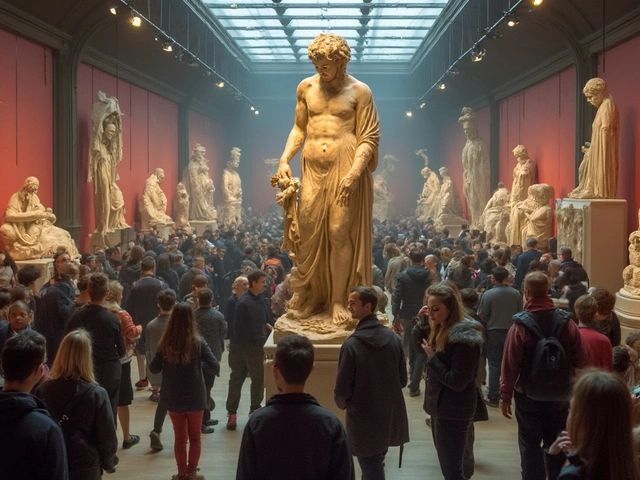
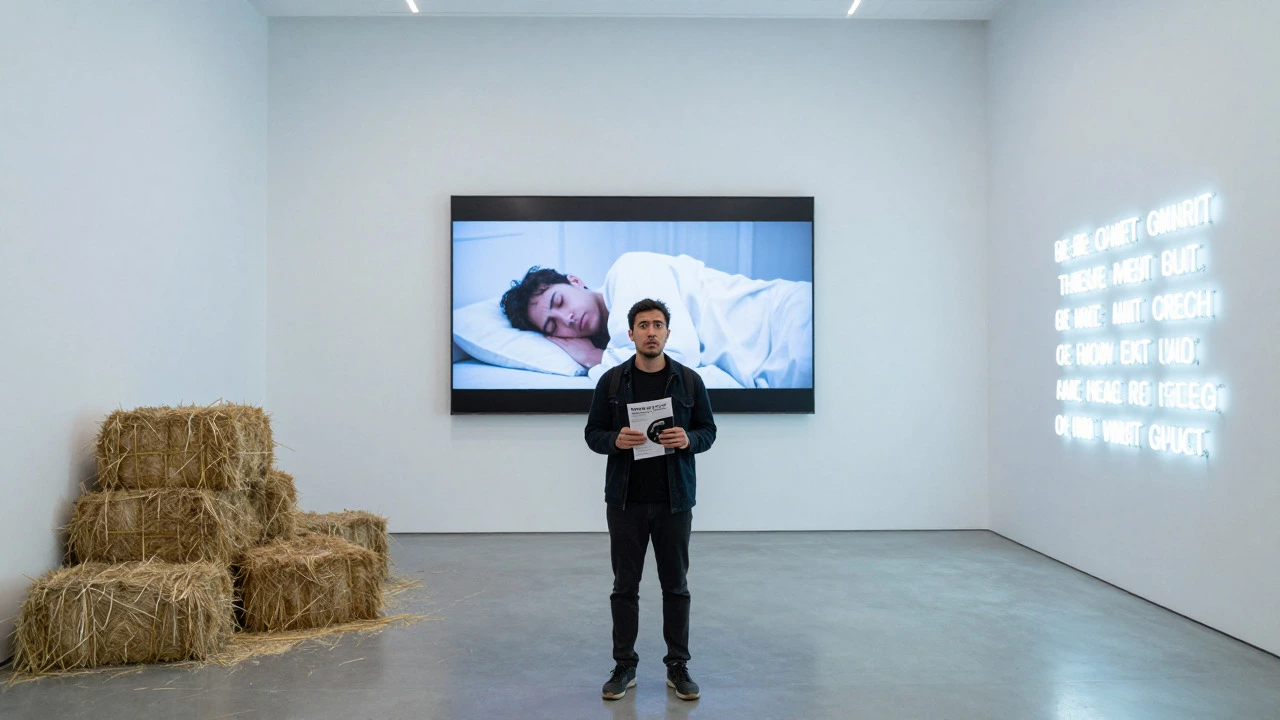
Walk into any major museum in New York, London, or Berlin today, and you might feel a sudden wave of confusion. You see a pile of hay bales in the middle of a gallery. You see a video loop of someone sleeping. You see a wall covered in neon text that reads "I Like You. You Make Me Happy." If you are looking for a realistic painting of a landscape or a bronze statue of a hero, you might wonder if you have walked into the wrong building.
You haven't. You are looking at contemporary art, which is art produced in the present period, characterized by its focus on ideas over technique and its use of diverse, often non-traditional materials. But what actually makes it "contemporary"? Is it just anything made recently? Why does it look so different from the art we learned about in history class? And why do some people love it while others call it a scam?
The short answer is that contemporary art is not defined by how it looks, but by what it does. It is an era of questioning, experimentation, and breaking rules. To understand it, you have to stop looking for beauty in the traditional sense and start looking for meaning, context, and conversation.
The Timeline: When Did "Contemporary" Start?
The biggest source of confusion for new viewers is the timeline. In casual conversation, we use "modern" and "contemporary" as synonyms. In the art world, they are distinct eras with very different goals.
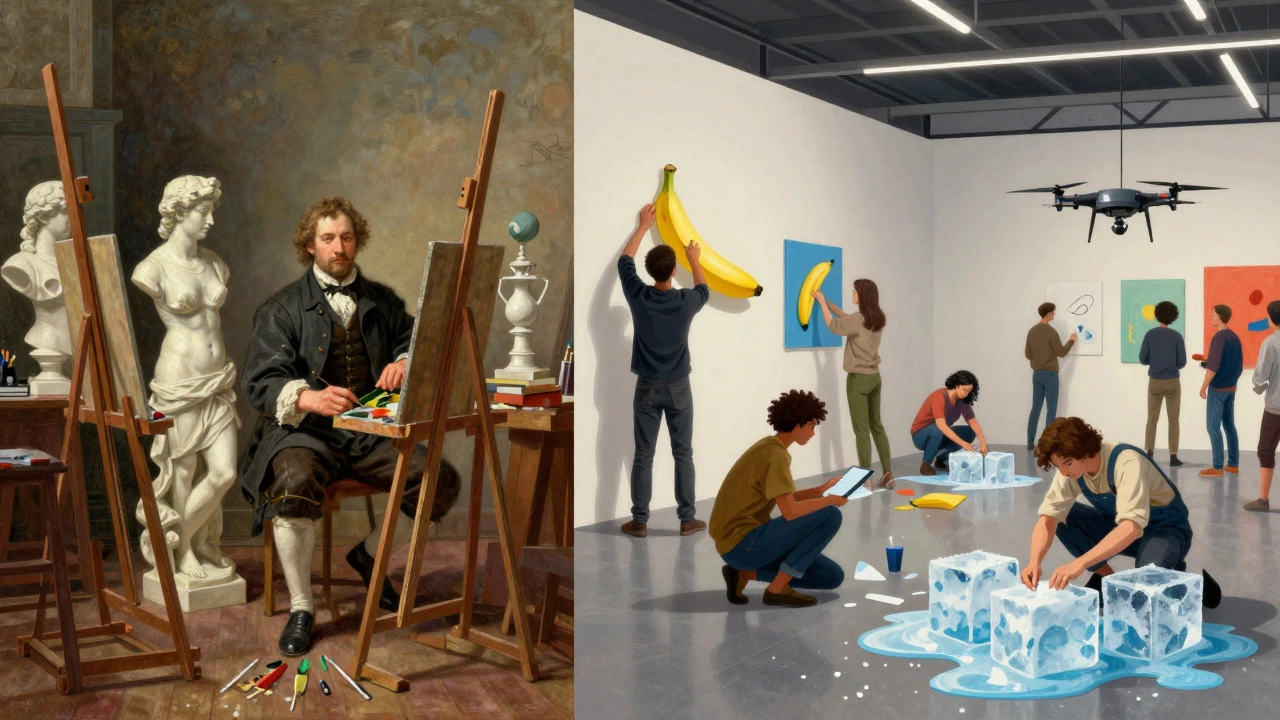
Modern art refers to the period roughly from the 1860s to the 1970s, marked by a break from academic traditions and an emphasis on abstraction and self-expression. Think of Picasso’s cubism, Van Gogh’s post-impressionism, or Pollock’s abstract expressionism. Modern artists were trying to find new ways to represent reality because photography had already taken over the job of realistic depiction. They asked, "How can paint exist on canvas without depicting a thing?"
Contemporary art begins around the late 1960s or early 1970s and continues to the present day. This shift happened during a time of massive social upheaval-civil rights movements, the Vietnam War, the fall of the Berlin Wall, and the rise of globalization. Artists stopped asking how to paint better. They started asking, "What is art? Who gets to decide? What is the role of the artist in society?"
| Feature | Modern Art (c. 1860-1970) | Contemporary Art (c. 1970-Present) |
|---|---|---|
| Primary Focus | Form, color, composition, and personal expression | Ideas, concepts, identity, and social commentary |
| Materials | Paint, sculpture, printmaking (traditional media) | Video, performance, installation, digital media, found objects |
| Goal | To create a beautiful or emotionally resonant object | To provoke thought, challenge norms, or engage the viewer |
| Artist's Role | The skilled craftsman or genius creator | The thinker, curator, or activist |
If you are standing in front of a painting made in 2025, it is technically contemporary. But if it looks exactly like a Renaissance portrait, it is using contemporary materials to make modern-style art. The true spirit of contemporary art lies in its willingness to change the definition of itself.
Concept Over Craft: The Idea is the Art
This is the hardest pill to swallow for many newcomers. In classical art, skill was everything. If you couldn’t draw a hand perfectly, you weren’t a good painter. In contemporary art, technical skill is optional. The concept is the underlying idea or message that drives the artwork, often prioritized over aesthetic beauty or technical execution.
Consider Marcel Duchamp’s Fountain (1917), a urinal he signed with a pseudonym and submitted to an exhibition. While this is technically Dadaist and pre-dates the strict contemporary era, it set the stage for everything that followed. He wasn’t showing off his ability to carve stone. He was asking, "If an artist chooses an object and calls it art, is it art?"
In 2026, this question still echoes. Take Maurizio Cattelan’s Comedian, a banana duct-taped to a wall. People mocked it for being "simple." But the concept was about value, labor, and the absurdity of the art market. The banana rots. It gets replaced. The value isn’t in the fruit; it’s in the statement about how we assign worth to things. When you look at contemporary art, ask yourself: What is the artist trying to say? Not "Can they draw?" but "Why did they choose this?"
The Explosion of Mediums: Beyond Paint and Clay
One of the most exciting aspects of contemporary art is its lack of boundaries. There is no single "correct" way to make art anymore. This freedom has led to a explosion of new mediums that didn’t even exist fifty years ago.
- Digital and AI Art: With the rise of generative AI and blockchain technology, artists are now creating works that exist only on screens or as code. Digital art includes works created using digital technology, ranging from simple graphics to complex interactive experiences and AI-generated images. The debate over who owns the copyright to an AI-generated image is one of the hottest topics in 2026.
- Installation Art: These are large-scale, three-dimensional works designed to transform how you perceive a space. You don’t just look at them; you walk through them. Olafur Eliasson’s Ice Watch, where he placed melting ice blocks from Greenland in public squares, was an installation about climate change. You could touch it, hear it crackle, and feel the cold. It was visceral.
- Performance Art: Here, the artist’s body is the medium. Marina Abramović is the queen of this genre. In her famous piece The Artist is Present, she sat silently across from visitors for hours. The art wasn’t a object; it was the shared human connection and endurance. Performance art is ephemeral-it happens once and then disappears, leaving only photos and memories.
- Site-Specific Work: Some art can only exist in one place. If you move it, it loses its meaning. This often involves architecture or urban environments. Banksy’s street art is a form of this, though often unauthorized. It comments on the specific location where it appears.
This diversity means that contemporary art is incredibly accessible. You don’t need to be a painter to make art. You need to be curious.
Identity, Politics, and Social Commentary
If modern art was about the self, contemporary art is about the world. It is deeply political. Artists today are using their platforms to address issues like race, gender, climate change, migration, and economic inequality.
Social practice art is a genre where the artistic process involves collaboration with communities to address social issues, often blurring the line between art and activism. For example, an artist might work with a local community to build a garden in a food desert. Is it art? Yes, because it was conceived as an artistic intervention to highlight systemic neglect. The outcome is a garden, but the process is the artwork.
Kara Walker’s silhouettes are another powerful example. She uses the old-fashioned craft of paper cutting to depict brutal scenes from the history of slavery in the American South. The contrast between the delicate, elegant medium and the horrific subject matter creates a jarring emotional impact. It forces the viewer to confront uncomfortable truths about history and current racial dynamics.
In 2026, with global tensions high and environmental crises accelerating, art has become a crucial tool for processing collective trauma. It provides a space to feel anger, grief, and hope without having to immediately solve the problem. It keeps the conversation alive.
The Role of the Viewer: You Are Part of the Art
In the past, the artist finished the work, put it on the wall, and you looked at it. The transaction was one-way. In contemporary art, the viewer completes the circuit. Without your interpretation, the art doesn’t fully exist.
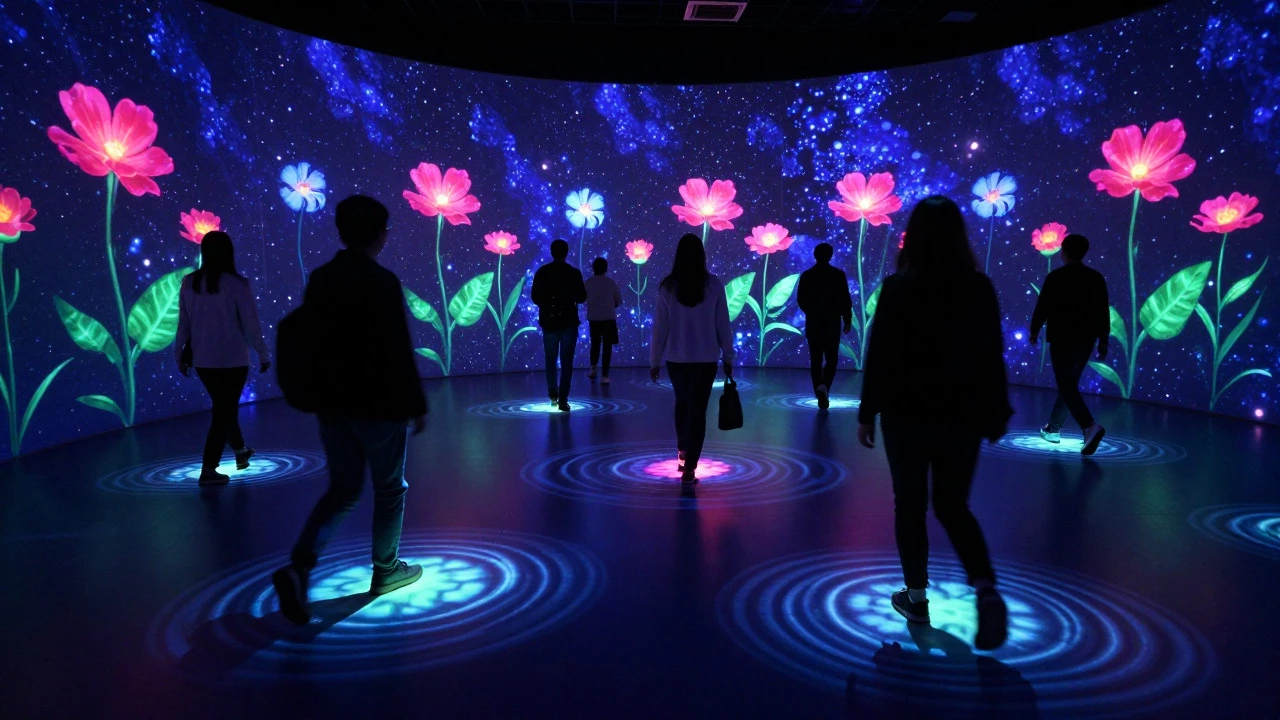
This is especially true in interactive and immersive installations. TeamLab, a Japanese art collective, creates digital environments that react to your movement. Flowers bloom when you touch them; water flows around your feet. You are not just observing the art; you are influencing it. Your presence changes the outcome.
Even in non-interactive works, your background matters. Two people can look at the same piece and have completely different reactions based on their culture, age, and experiences. Contemporary artists often embrace this ambiguity. They want you to bring your own story to the table. If you feel confused, frustrated, or bored, that reaction is valid. It is part of the dialogue.
How to Look at Contemporary Art (A Practical Guide)
So, how do you approach a contemporary art exhibition without feeling lost? Here is a simple framework to help you engage with the work.
- Read the Label: It sounds basic, but it’s essential. Contemporary art often relies on context. The title, date, and materials can provide clues to the concept. If the label mentions a historical event or a philosophical theory, try to connect it to the visual.
- Ask "Why?": Instead of asking "Is this pretty?" ask "Why did the artist choose these materials?" Why use trash? Why use video? Why use silence? The choice of medium is usually intentional and meaningful.
- Notice Your Reaction: Do you feel uneasy? Amused? Angry? Your emotional response is data. Contemporary art often aims to provoke. If you are indifferent, you might be missing the point-or the artist failed to engage you. Either way, note it.
- Don’t Take It Personally: If you don’t like a piece, that’s fine. You don’t have to love every work. But try to separate your taste from your judgment. You can dislike the aesthetics while respecting the idea.
- Look for Patterns: Notice if multiple artists in the show are addressing similar themes. Exhibitions are curated to create conversations between works. Seeing how different artists tackle the same issue can deepen your understanding.
The Market and the Myth of Elitism
Let’s address the elephant in the room: money. Contemporary art is often associated with sky-high auction prices and exclusive galleries. This can make it feel elitist and inaccessible. It’s true that the market is driven by speculation, celebrity status, and investment potential. A Basquiat can sell for tens of millions of dollars.
But the market is only one slice of the pie. Most contemporary artists are not millionaires. They are working-class creators exhibiting in small galleries, community centers, and online platforms. Social media has democratized visibility. An artist in Nairobi, Lagos, or Jakarta can reach a global audience via Instagram without ever stepping foot in a New York gallery.
Furthermore, many contemporary artists are actively critiquing the market. They create works that are uncollectible (like performances) or that comment on consumerism. Don’t let the headline-grabbing auction results blind you to the vast, vibrant, and diverse ecosystem of contemporary creation happening right now.
Is all art made today considered contemporary art?
Technically, yes. The term "contemporary" refers to the present time. However, in art history, it specifically refers to the style and mindset that emerged after the 1970s. A painter today who uses traditional oil techniques to create realistic portraits is making art in the present, but their approach may be more aligned with modern or classical traditions than with the conceptual focus of mainstream contemporary art.
Why is contemporary art so hard to understand?
It feels difficult because it often prioritizes ideas over immediate visual pleasure. Unlike a beautiful landscape that you can appreciate instantly, conceptual art requires you to engage with context, history, or philosophy. It invites you to think rather than just look. Reading the artist’s statement or learning about the cultural moment in which the work was made can bridge the gap.
What is the difference between modern and contemporary art?
Modern art generally covers the period from the 1860s to the 1970s and focuses on formal experimentation, abstraction, and personal expression. Contemporary art starts in the late 1960s/early 1970s and continues today. It is characterized by a focus on concepts, identity, politics, and the use of new technologies and mixed media. Modern art asks "How can I represent this?" Contemporary art asks "What does this mean?"
Does contemporary art require technical skill?
Not necessarily. While many contemporary artists are highly skilled technicians, the primary value lies in the concept. An artist might collaborate with engineers, programmers, or craftspeople to realize their vision. The "skill" is often in the curation of ideas, the management of complex projects, and the clarity of the message, rather than just manual dexterity.
How has digital technology changed contemporary art?
Digital technology has revolutionized contemporary art by introducing new mediums like video, VR, AR, and AI. It has also changed how art is distributed and consumed, allowing for global accessibility via social media. Furthermore, it has raised new questions about authenticity, ownership, and the nature of creativity, which artists frequently explore in their work.