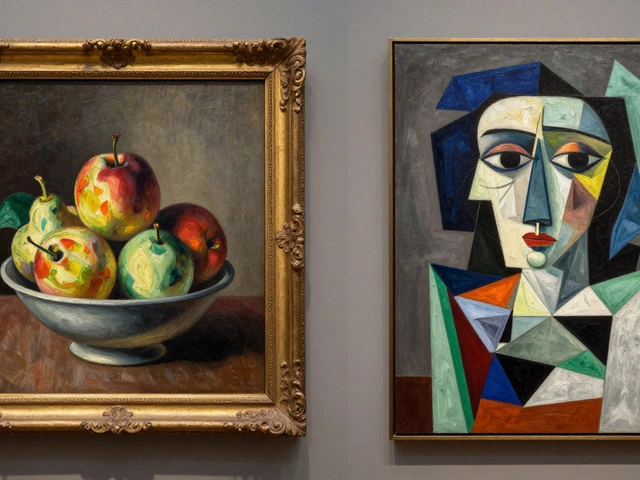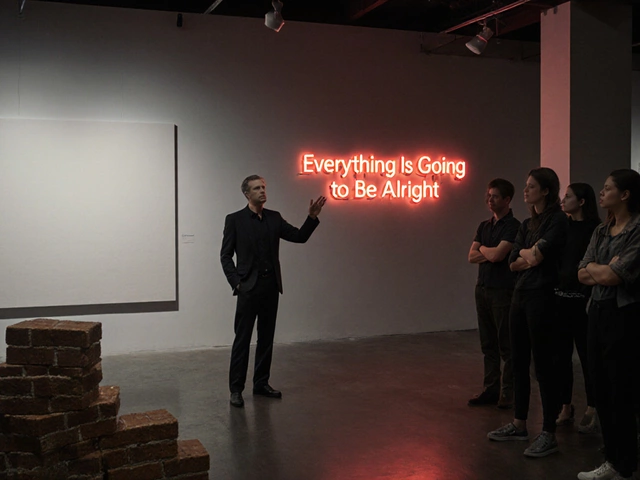
Modern art isn’t just paintings on walls. It’s a revolution in how humans see the world-and how they choose to represent it. If you’ve ever stood in front of a canvas that looked like a child’s scribble and wondered, "Is this really art?"-you’re not alone. But the truth is, modern art changed everything. It didn’t just break rules. It rewrote them.
Modern art started around the 1860s and lasted until the 1970s
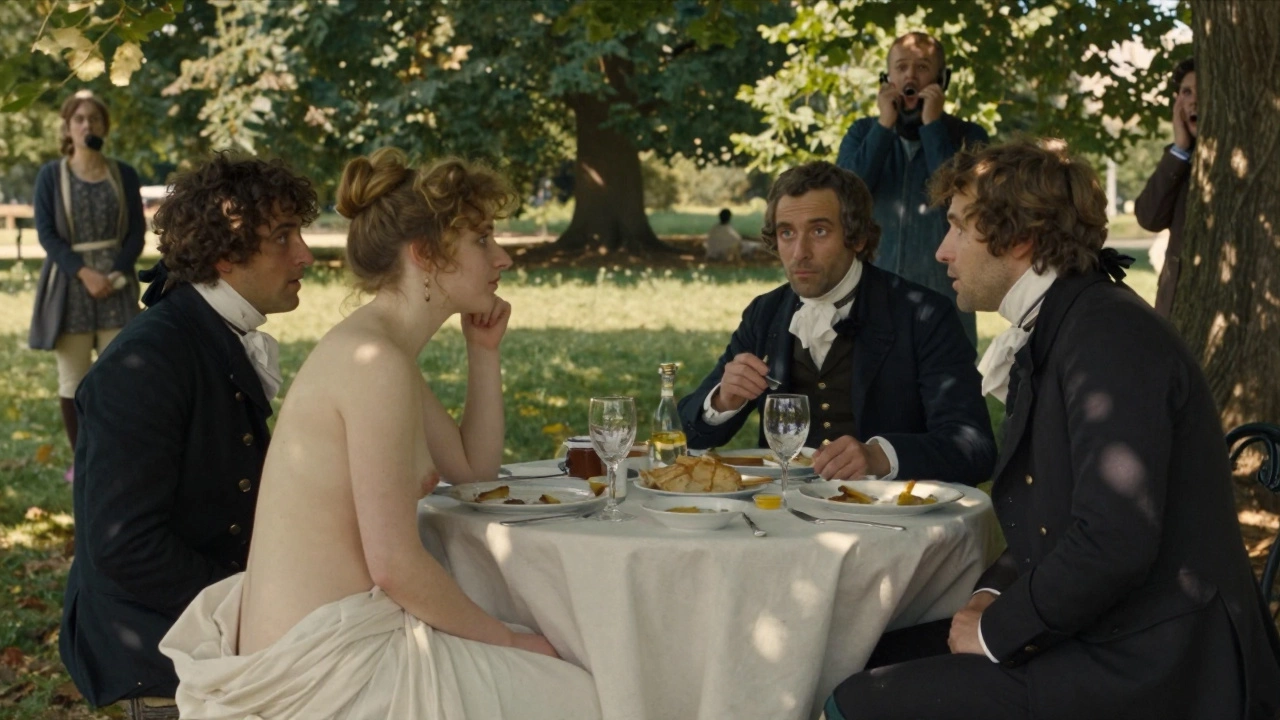
Most experts agree modern art began in the mid-19th century, with artists like Édouard Manet a French painter who challenged traditional academic painting by depicting everyday scenes with bold brushwork. His 1863 painting Le Déjeuner sur l’herbe shocked the Paris Salon because it showed a naked woman having lunch with fully dressed men. It wasn’t about shock value-it was about questioning who got to decide what art "should" look like.
By the 1970s, modern art had mostly given way to contemporary art. That’s not just a timeline shift. It’s a philosophical one. Modern art was about breaking from tradition. Contemporary art is about questioning what art even means.
It wasn’t about beauty-it was about truth
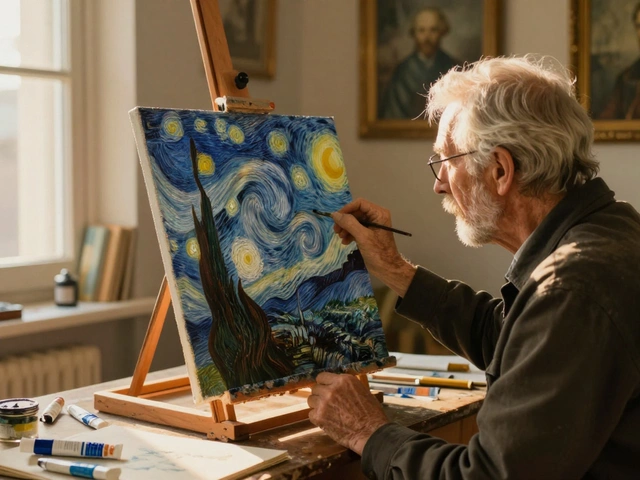
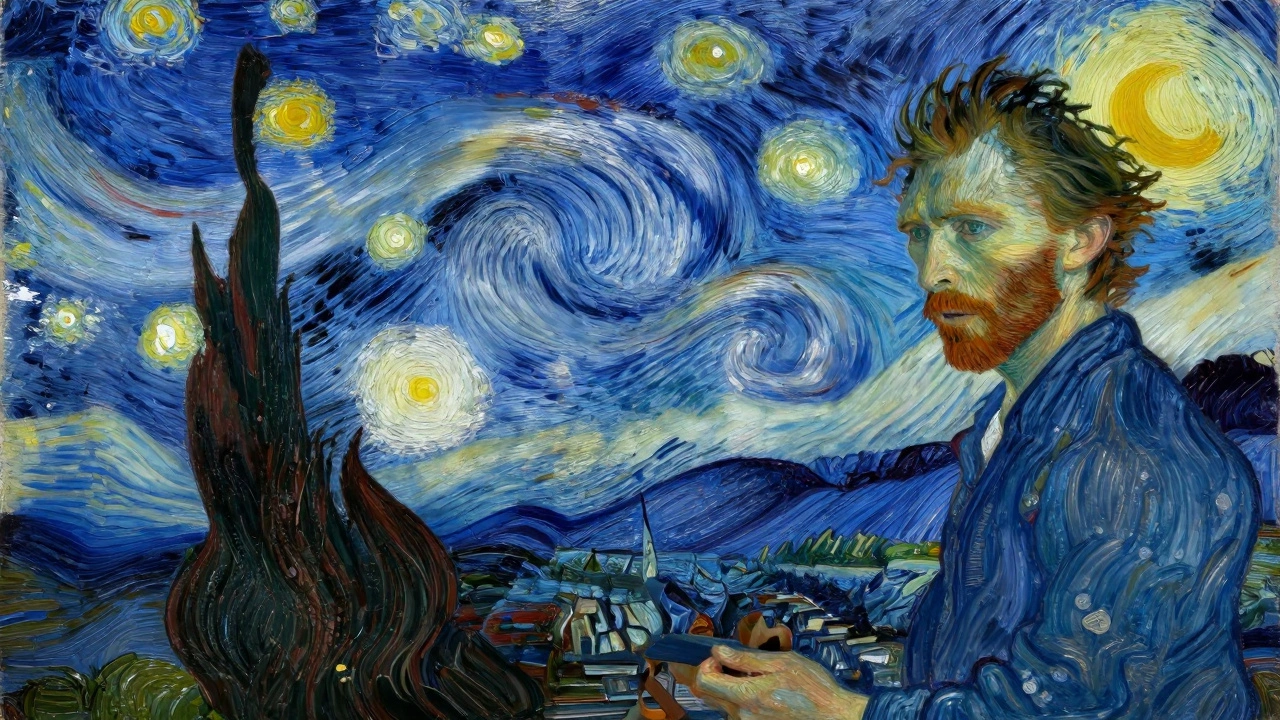
Before modern art, painters mostly made portraits of rich people, religious scenes, or landscapes that looked like photographs. Artists were trained to copy nature perfectly. Then came Vincent van Gogh a Dutch post-impressionist whose thick, emotional brushstrokes and vivid colors expressed inner turmoil rather than external reality. His 1889 painting The Starry Night doesn’t show the sky as it looks. It shows how he felt when he looked at it. That shift-from external realism to internal emotion-was the core of modern art.
Artists like Paul Cézanne a French painter who broke forms into geometric shapes, paving the way for Cubism didn’t care if their paintings looked "real." They wanted to show structure, weight, and perception. Cézanne once said, "I want to make of Impressionism something solid and durable, like the art of the museums." He meant art shouldn’t just capture a moment-it should reveal how we experience it.
It wasn’t one style-it was dozens of movements
Modern art didn’t have a single look. It exploded into movements, each with its own rules, rebels, and radical ideas.
- Impressionism (1870s-1890s): Captured light and fleeting moments. Think Monet’s water lilies, painted quickly outdoors.
- Expressionism (1905-1920s): Distorted forms to show raw emotion. Munch’s The Scream is the classic example.
- Cubism (1907-1920s): Broke objects into geometric shapes. Pablo Picasso a Spanish artist who co-founded Cubism and radically redefined form and perspective in art and Braque painted faces as if viewed from multiple angles at once.
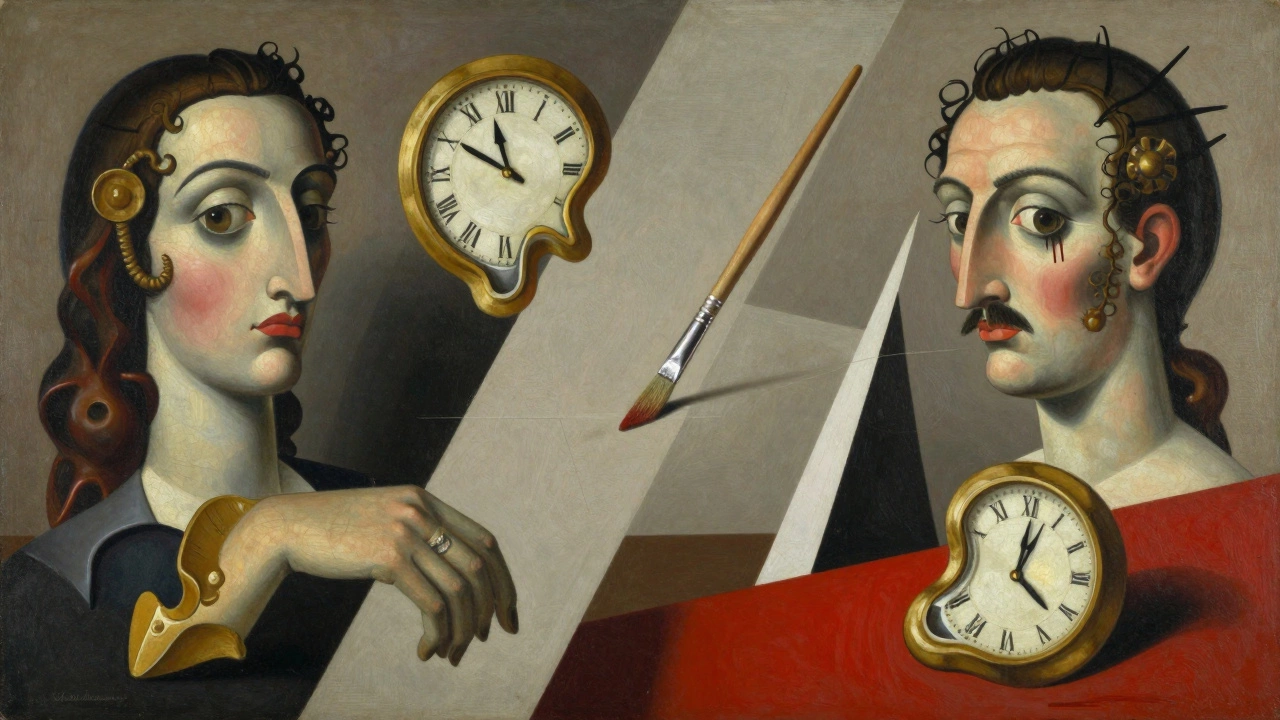
- Surrealism (1920s-1950s): Dug into dreams and the unconscious. Dalí’s melting clocks aren’t nonsense-they’re visual metaphors for time slipping away.
- Abstract Expressionism (1940s-1960s): No objects at all. Just color, motion, and gesture. Jackson Pollock dripped paint onto canvases laid on the floor. He called it "action painting."
Each movement was a rebellion. Not just against old styles-but against the idea that art had to be pretty, or clear, or understandable.
Technology changed how art was made-and who could make it
Before the 19th century, art was made with natural pigments, handmade brushes, and slow drying oils. Modern art rode the wave of industrialization. Tube paint? Invented in 1841. That meant artists could leave their studios and paint outside. Photography? Invented in 1839. That scared painters. Why paint a portrait if a camera could do it better? So they stopped trying. Instead, they painted how they felt about the world.
Mass production meant more people could afford art. Prints, posters, and reproductions turned art from a luxury into a cultural conversation. Women, working-class artists, and non-European creators began to break into the scene, even if slowly. Georgia O’Keeffe an American modernist known for large-scale paintings of flowers and desert landscapes that blended abstraction with natural forms painted giant flowers not because she liked petals-she wanted to force people to really look.
It rejected tradition-and that’s why it still matters
Modern art didn’t just change how art looked. It changed how we think about creativity itself. Before modern art, you needed formal training, approval from institutions, and a patron with money. After modern art? Anyone with a brush, a can of paint, and a thought could be an artist.
That’s why you see street artists, digital creators, and even AI-generated images today. They’re all standing on the shoulders of the modernists. Picasso didn’t paint like the old masters because he didn’t believe they had the whole truth. Pollock didn’t use a brush because he thought paint should move on its own. They weren’t trying to be weird. They were trying to be honest.
Modern art is still in museums-but it’s alive in everyday life
Walk into any modern design store, and you’ll see clean lines, bold colors, and asymmetrical shapes. That’s modern art’s legacy. The fonts on your phone? Probably inspired by Bauhaus typography. The layout of your favorite app? That’s influenced by abstract composition. Even your Instagram feed, with its emphasis on mood over detail, owes something to the emotional honesty of Van Gogh and Kandinsky.
Modern art didn’t end. It got everywhere.
It wasn’t always accepted-and it still confuses people
When Picasso’s Les Demoiselles d’Avignon was shown in 1916, critics called it "monstrous." When Pollock’s drip paintings debuted, some said they were "just paint splatters." Even today, people walk past a Rothko painting and say, "I could do that."
But here’s the thing: you can’t. Not really. Rothko didn’t just smear color. He spent years studying how light and color affect emotion. His paintings are designed to pull you in, to make you feel small, quiet, and deeply moved. It’s not about skill in the traditional sense. It’s about intention.
Modern art doesn’t need to be understood-it needs to be felt
There’s no cheat sheet for modern art. No formula. No right answer. You don’t need to know the history to feel something. Stand in front of a Kandinsky, a Matisse, or a Mondrian. Don’t ask what it means. Ask how it makes you feel. Does it make you restless? Calm? Confused? Excited? That’s the point.
Modern art asks you to trust your own eyes. Not the experts. Not the critics. Not the price tag. Just you.