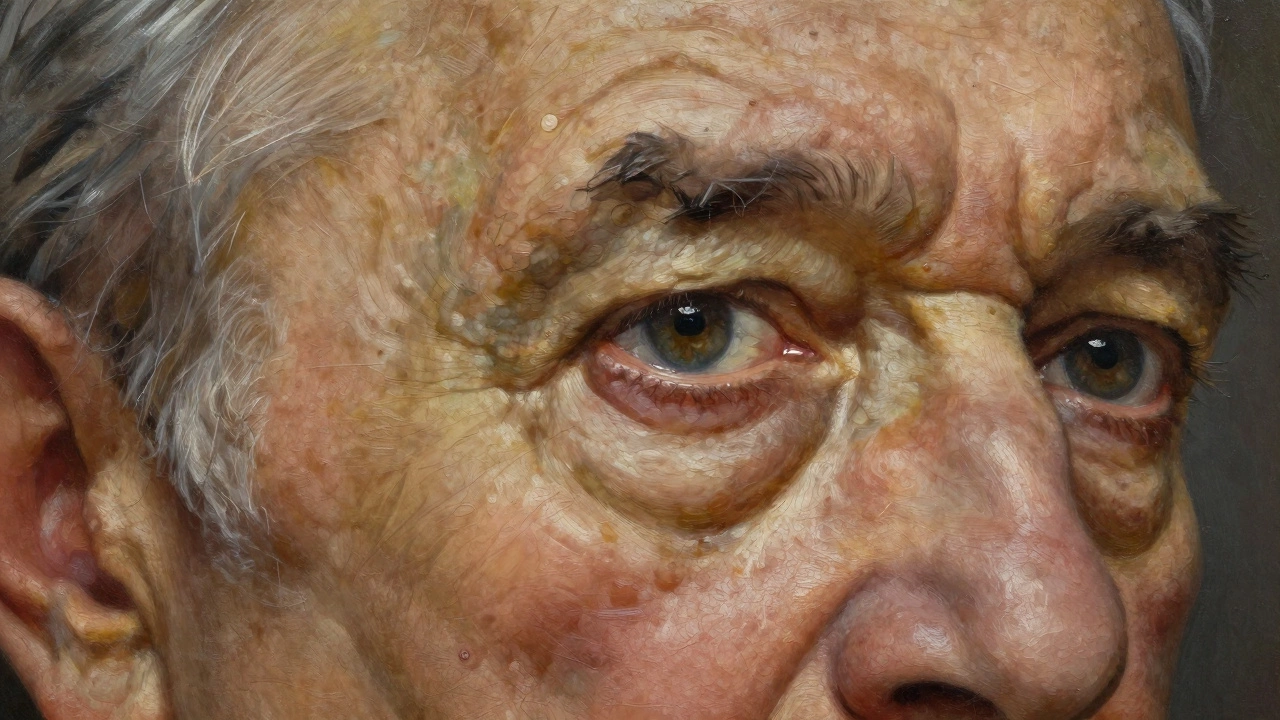
Portrait Style Identifier
Select the features that describe the portrait you are viewing.
Select features to begin
Choose the options that best match the artwork you are analyzing, then click "Identify Style" to see which category it falls into.
You’ve seen them. Maybe in a gallery, maybe on Instagram, or perhaps hanging in a high-end hotel lobby. The face is so detailed you can count the individual pores, see the reflection of a window in the eye, and feel the texture of the skin. It looks like a photograph, but it’s not. It’s paint, charcoal, or digital pixels applied by human hands. You might find yourself staring at it, trying to figure out how it was made, wondering if your eyes are playing tricks on you.
If you’ve ever asked, "what are realistic portraits called?" you’re stepping into a world where art mimics life with terrifying precision. There isn’t just one name for this style. Depending on the era, the medium, and the level of detail, these works fall into specific categories like Hyperrealism, an art movement that emerged in the late 1960s and early 1970s as an evolution of Photorealism, characterized by extreme detail and clarity that exceeds what the human eye typically perceives, Photorealism, a genre of painting that uses photographs as source material to create highly detailed, objective representations of subjects, or even Verism, an ancient Roman artistic style focused on unflattering, highly detailed realism, often depicting wrinkles and age spots to convey character and experience.
Understanding the difference between these terms helps you appreciate the skill involved. It also helps you describe exactly what you’re looking for when you want to commission a piece or discuss art history. Let’s break down the names, the techniques, and why artists choose to push realism to its absolute limit.
The Spectrum of Realism: From Verism to Hyperrealism
Realism in portraiture isn’t a single switch you flip; it’s a spectrum. On one end, you have idealized beauty-think Renaissance paintings where every subject looks perfect, smooth, and timeless. On the other end, you have styles that refuse to look away from the messy, textured reality of human existence. When people ask about realistic portraits, they are usually referring to three main buckets: Classical Realism, Photorealism, and Hyperrealism.
Classical Realism, a traditional approach to painting that emphasizes accurate observation, careful draftsmanship, and the illusion of three-dimensional form through light and shadow has been around for centuries. Artists like John Singer Sargent or Rembrandt created incredibly lifelike portraits, but they still used brushstrokes and artistic license to interpret the subject. They were capturing the *essence* of the person, not necessarily every single pore.
Then came the camera. In the mid-20th century, painters started using photographs as their primary reference. This gave birth to Photorealism. A movement where artists project photos onto canvas and meticulously replicate the image, often removing any visible brushwork to create a flat, mechanical appearance. Think of Chuck Close’s massive grid-based portraits. The goal here is objectivity. The artist acts almost like a machine, transferring data from photo to canvas without adding personal emotion or interpretation.
But then, artists got bored with just copying photos. They wanted to go further. They wanted to show things the camera misses. This led to Hyperrealism. An art style that creates images so detailed they appear more real than reality itself, often including elements not present in the original photograph, such as enhanced lighting or added textures. Hyperrealists don’t just copy a photo; they enhance it. They add depth, clarify reflections, and render details that the human eye might overlook in real life but sees clearly in the painting. It’s realism on steroids.
Key Differences: Photorealism vs. Hyperrealism
This is where most people get confused. If you scroll through social media, you’ll see both labeled as "hyperrealistic," but there is a distinct difference in intent and execution. Understanding this distinction is crucial for anyone interested in collecting or studying these works.
| Feature | Photorealism | Hyperrealism |
|---|---|---|
| Source Material | Strictly photographs | Photographs + direct observation/imagination |
| Level of Detail | Mirrors the resolution of the photo | Exceeds the resolution of the photo |
| Artist's Interpretation | Minimal; aims for objectivity | High; adds emotional or narrative layers |
| Visual Effect | Looks like a high-quality print | Looks more vivid and clear than a photo |
| Common Mediums | Acrylic, airbrush | Oil, graphite, colored pencil, digital |
Photorealism is about replication. If the photo is slightly blurry, the painting might retain that slight blur to stay true to the source. Hyperrealism is about enhancement. If the photo is blurry, the hyperrealist will sharpen the focus in the painting to draw your eye to the subject’s gaze. It’s the difference between a mirror and a microscope.
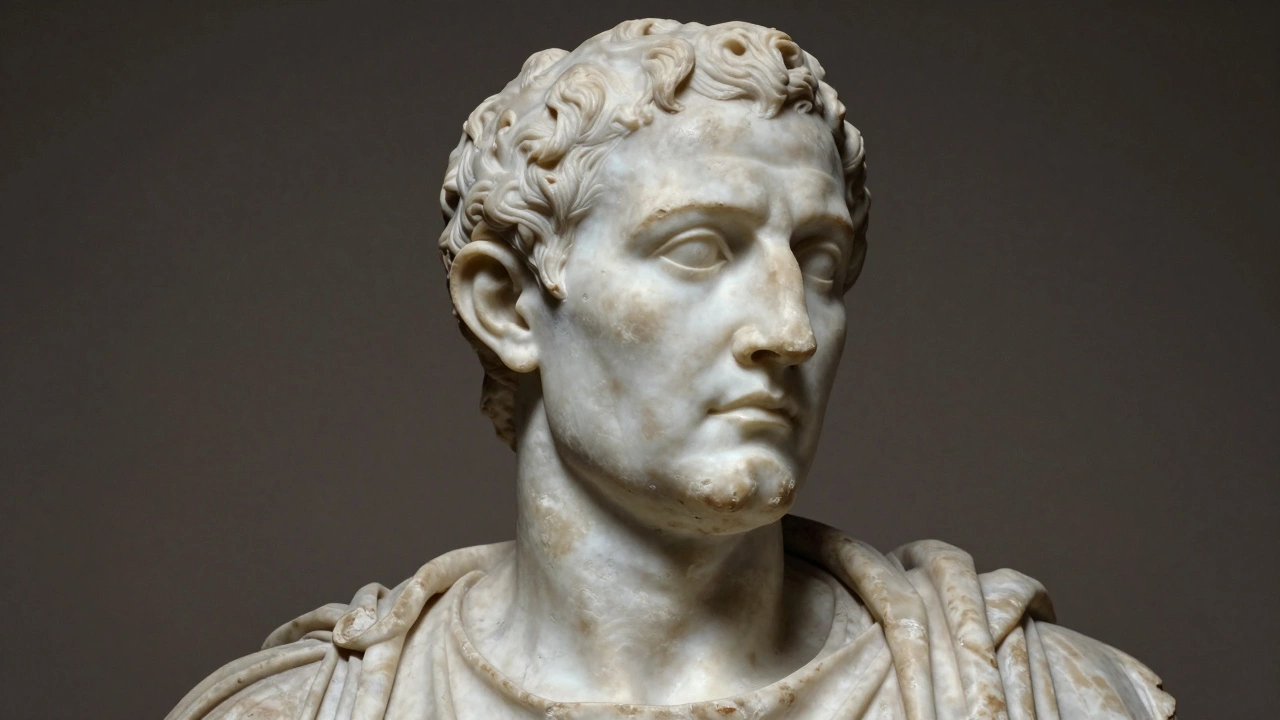
Ancient Roots: The Case of Verism
While modern audiences associate hyper-realism with spray paint and acrylics, the desire for unflinching realism dates back to Ancient Rome. This style is known as Verism. A Roman sculptural style from the Republican period that emphasized truthful, often grotesque, representation of aging features to signify wisdom and authority.
Roman busts from this era are striking because they are ugly by modern standards. They show deep wrinkles, sagging skin, receding hairlines, and weary expressions. Why would anyone want to be remembered this way? Because in Roman culture, these signs of aging represented experience, gravitas, and service to the state. A smooth, youthful face suggested vanity or inexperience. Verism was a political tool. It told viewers, "I have suffered for Rome, and I am wise because of it."
Today, when we talk about realistic portraits, we rarely mean "ugly." We mean "detailed." But Verism reminds us that realism has always carried a message. Whether it’s the wrinkled face of a Roman senator or the hyper-detailed oil painting of a modern CEO, the choice to depict someone realistically is a statement about who they are.
How Are These Portraits Made? Techniques and Tools
The magic behind these portraits lies in technique. Creating a work that fools the eye requires patience, precision, and specific tools. Here’s how artists typically approach the process:
- Reference Selection: Most contemporary realistic artists start with a high-resolution photograph. Some use multiple photos to capture different angles or lighting conditions. Hyperrealists might combine several images to create a composite subject that doesn’t exist in reality.
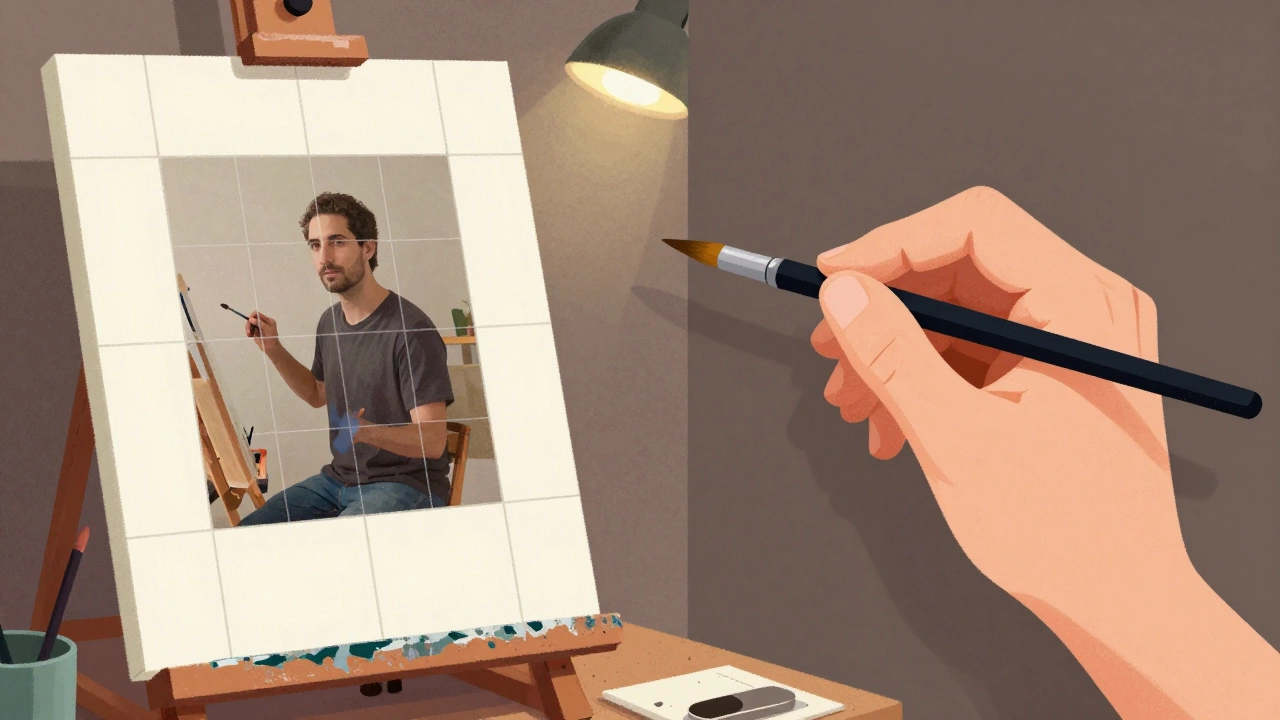
- Grid Method or Projection: To ensure accuracy, artists often divide the photo and the canvas into a grid. They draw each square individually. More advanced artists use slide projectors to project the image directly onto the canvas, ensuring perfect proportions before applying any color.
- Layering: Realism is built in layers. Artists start with a monochromatic underpainting (usually in brown or gray) to establish values-lights and darks. Once the values are correct, they glaze thin layers of transparent color over the top. This builds up the luminosity and depth that makes skin look alive rather than flat.
- Edge Control: One of the secrets of realism is edge control. Not everything is sharp. Artists soften edges in areas where light hits softly (like cheeks) and keep edges hard in areas of contrast (like eyelashes or jewelry). This guides the viewer’s eye and creates a sense of three-dimensionality.
- Detail Work: The final stage involves adding tiny details. For oil painters, this might mean using a single-hair brush to paint individual strands of hair. For graphite artists, it might involve blending stumps to create the softness of skin while keeping the iris crisp and reflective.
Digital artists use similar principles but with different tools. Software like Adobe Photoshop, industry-standard software used by digital artists for photo manipulation, layer management, and precise pixel-level editing allows for undo buttons and zoom levels that physical mediums cannot match. However, the underlying understanding of light, shadow, and anatomy remains the same.
Why Do Artists Choose Realism?
In an age where taking a photo takes seconds, why spend hundreds or thousands of hours painting a portrait that looks like a photo? The answer isn’t about utility; it’s about impact.
First, there is the element of surprise. When a viewer realizes that what they thought was a photograph is actually paint, it creates a moment of awe. It challenges our perception of reality. It forces us to slow down and look closer. In a world of scrolling and skimming, a hyperrealistic portrait demands attention.
Second, realism allows for subtle commentary. Because the style is so familiar, artists can insert unusual elements without the viewer immediately dismissing the work as "weird." A hyperrealist might paint a perfectly normal-looking person, but give them a slight, uncanny expression or place them in a strange context. The realism makes the strangeness more powerful.
Third, it demonstrates mastery. Painting realistically is technically difficult. It requires a deep understanding of optics, chemistry (how paints mix), and human anatomy. For many artists, pushing themselves to this level of precision is a way to prove their skill and discipline.
Finding and Collecting Realistic Portraits
If you’re interested in owning a realistic portrait, whether for your home or as an investment, knowing the terminology helps you search effectively. Here are some tips:
- Know Your Artists: Look up names associated with these movements. For Photorealism, explore works by Chuck Close, Richard Estes, or Audrey Flack. For Hyperrealism, check out Gottfried Helnwein, Roberto Bernardi, or Marisol Escobar. Contemporary digital hyperrealists include artists like Artgerm or Wlop, though their style leans towards illustration.
- Check the Medium: Decide if you prefer the tactile quality of oil on canvas, the sharpness of graphite on paper, or the vibrancy of digital prints. Oil paintings often hold value better over time, but high-quality giclée prints can be more affordable.
- Look for Provenance: As with all art, verify the artist’s reputation. Join online communities like Reddit’s r/hyperrealism or DeviantArt groups to see emerging talent. Many skilled realistic artists build followings on Instagram before gaining gallery representation.
- Consider Custom Commissions: Many realistic portrait artists accept commissions. Be prepared for a long wait time and a significant cost. A truly hyperrealistic oil portrait can take months to complete and may cost several thousand dollars.
When viewing these works in person, try to step close enough to see the brushstrokes or pencil marks. Seeing the hand of the artist breaks the illusion and reminds you of the immense labor involved. That connection between the viewer, the subject, and the creator is what makes realistic portraiture enduring.
Is hyperrealism considered "real" art?
Yes, absolutely. While some critics historically argued that photorealism lacked creativity because it copied photos, the art world widely accepts hyperrealism as a legitimate and skilled discipline. It requires immense technical ability, decision-making regarding composition and lighting, and often conveys deeper emotional or narrative content than the source photograph. Major museums like the Metropolitan Museum of Art and the Smithsonian feature hyperrealist works in their collections.
What is the difference between realism and naturalism in portraiture?
Naturalism focuses on depicting subjects as they appear in nature, without artificiality or stylization, but it doesn't necessarily aim for photographic precision. Realism, particularly in the 19th-century movement, sought to depict everyday life and ordinary people truthfully, often highlighting social issues. Hyperrealism and Photorealism are subsets of realism that specifically prioritize visual fidelity and detail above all else.
Can AI generate hyperrealistic portraits?
Yes, AI tools like Midjourney and DALL-E 3 can generate images that look hyperrealistic. However, there is a key distinction: AI generates pixels based on patterns, whereas human hyperrealists apply physical media (paint, charcoal) or manually manipulate digital pixels with intentional artistic choices. Human-made hyperrealism often contains subtle imperfections or enhancements that reflect human perception, while AI can sometimes produce "too perfect" or logically inconsistent details upon close inspection.
How long does it take to paint a hyperrealistic portrait?
It varies greatly depending on the size, medium, and level of detail. A small graphite sketch might take 50-100 hours. A large-scale oil painting can take anywhere from 200 to over 1,000 hours. Artists often work slowly, allowing layers of paint to dry completely before adding the next, which extends the timeline significantly.
Who are some famous hyperrealist portrait artists?
Notable figures include Gottfried Helnwein (known for disturbing, child-like subjects), Roberto Bernardi (famous for his self-portraits and intense detail), Marisol Escobar (who blended sculpture and realism), and contemporary artists like Denis Peterson and Alex Colville. In the realm of drawing, artists like Donato Giancola and Stan Woch are celebrated for their hyperrealistic illustrations.