Abstract Art Emotion Simulator
Click or drag on the canvas to create gestural marks
Palette & Mood
Visual Analysis:
As the article suggests, notice how the movement and color shift your internal state from cognitive labeling to emotional feeling.
The Big Question: Why Does This Even Count as Art?
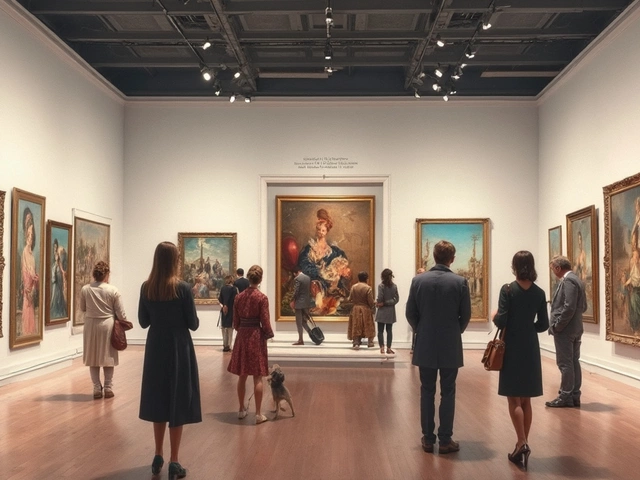
You've been there. You're standing in a gallery, staring at a canvas that looks like a giant blue smudge or a series of chaotic red lines, and you think, "My five-year-old could do that." It's the most common reaction to Abstract Art is an artistic style that uses shapes, colors, forms, and gestural marks to achieve its effect rather than attempting to represent accurate depictions of visual reality. But that reaction misses the actual point. The goal isn't to mimic a photograph or tell a linear story. If it were, we'd just use cameras.
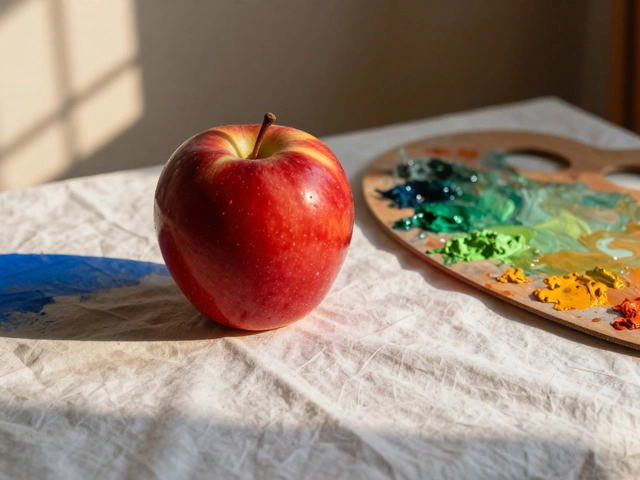
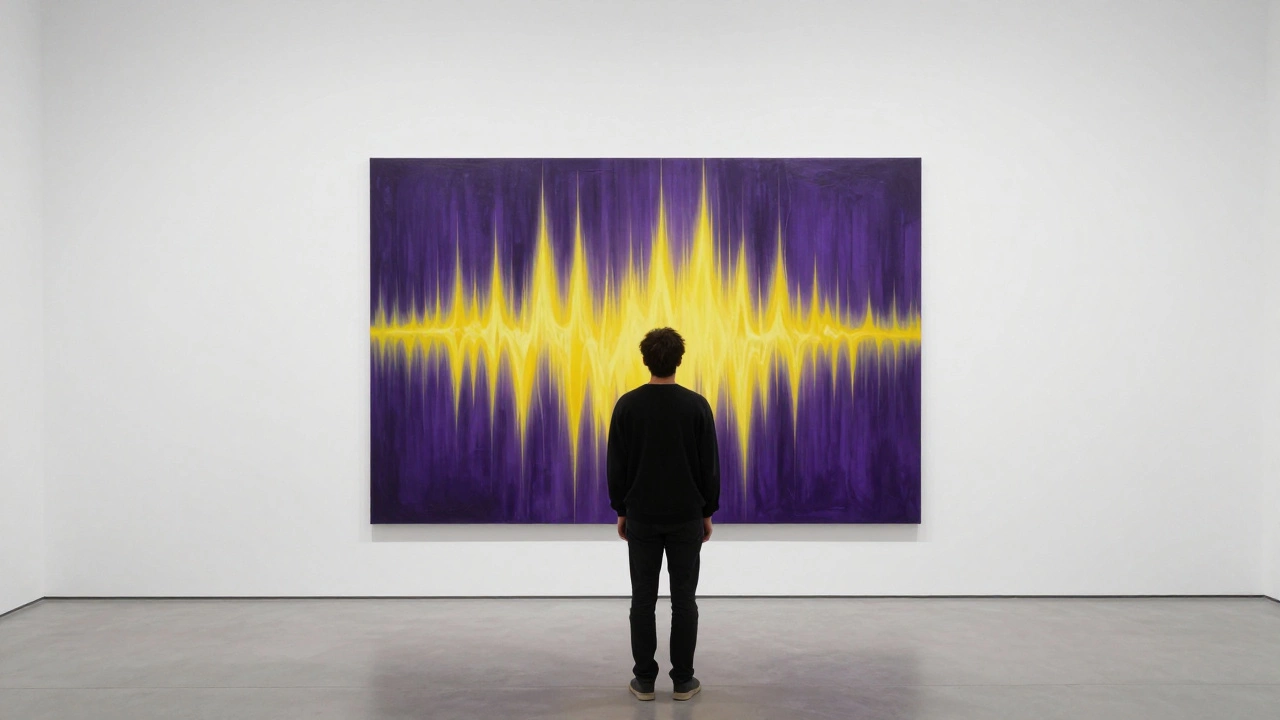
The real point of an abstract painting is to trigger a response in you without the "distraction" of a recognizable object. When you see a painting of a bowl of fruit, your brain immediately goes, "Okay, that's an apple." The conversation ends there. But when you see a massive, pulsing field of deep violet and jagged yellow, your brain can't categorize it instantly. This forces you to feel the work instead of labeling it. It shifts the experience from a cognitive exercise to an emotional one.
The Core Takeaways
- Abstract art isn't about "what it is," but "how it feels."
- It communicates through a visual language of color, texture, and composition.
- The viewer is an active participant, not just a passive observer.
- It often represents concepts too complex for literal imagery, like grief or euphoria.
Breaking the Code: How to Actually "Read" an Abstract Piece
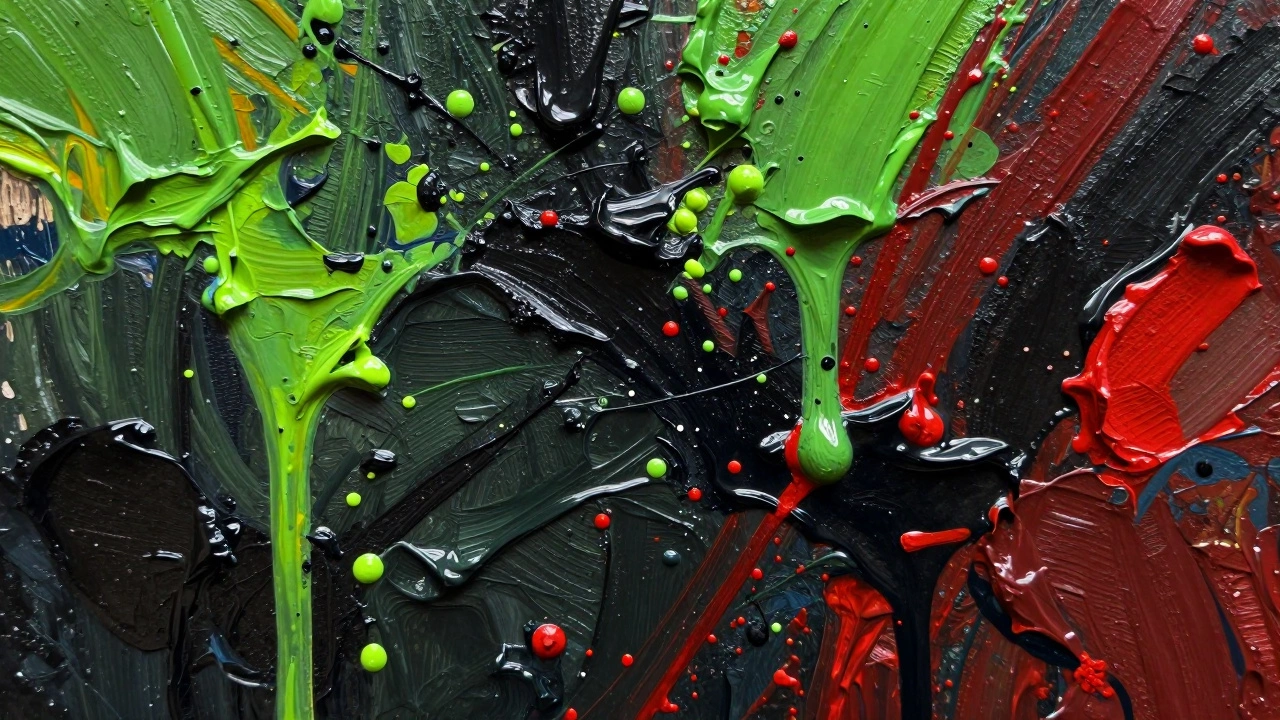
Since there is no plot, you have to look for clues in the execution. Start with the colors. Colors aren't just decorative; they carry psychological weight. A painting dominated by high-contrast neon greens and blacks might feel anxious or electric, whereas soft, bleeding washes of blue and white often evoke stillness or melancholy. This is where Color Theory comes in, using specific hues to trigger biological and emotional responses.
Next, look at the movement. Is the paint applied in thin, precise layers, or is it thrown onto the canvas in thick, aggressive clumps? This is what we call Impasto, a technique where paint is laid on an area of the surface in very thick layers, usually those which visibly stand out from the surface. When you see a drip or a splatter, you're seeing the physical record of the artist's movement. You aren't just looking at a picture; you're looking at the ghost of a gesture. You can almost feel the speed and force the artist used, which adds a layer of raw human energy to the work.
| Approach | Key Characteristics | Intended Effect | Example Style |
|---|---|---|---|
| Geometric | Clean lines, circles, squares | Order, logic, spirituality | Cubism / De Stijl |
| Gestural | Splashes, drips, rough brushwork | Chaos, emotion, energy | Abstract Expressionism |
| Color Field | Large areas of flat color | Meditation, immersion, awe | Color Field Painting |
The Evolution: From Landscapes to Pure Emotion
Abstract art didn't just appear out of nowhere. It was a slow rebellion. For centuries, art was a tool for documentation-recording kings, battles, or religious scenes. But as the world changed, artists realized that some things simply can't be painted. How do you paint the feeling of a panic attack? How do you paint the sound of a symphony or the concept of "infinity"?
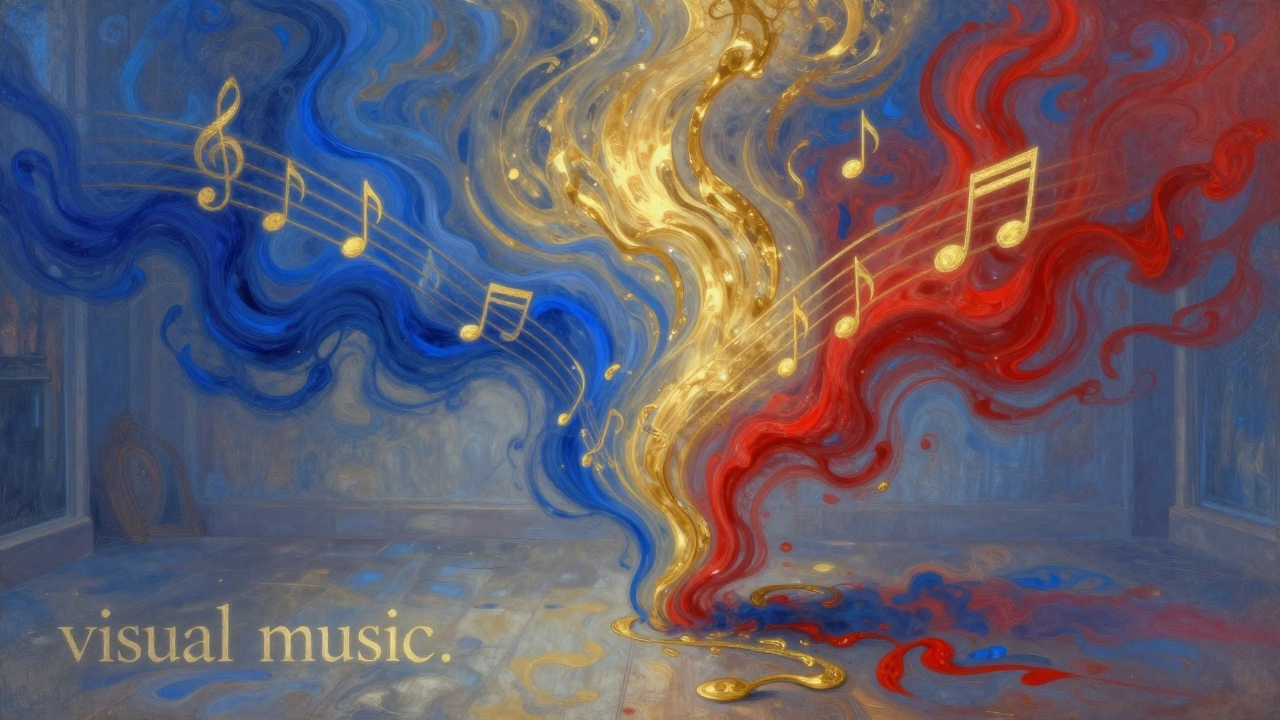
Pioneers like Wassily Kandinsky began to treat painting like music. He believed that colors were like musical notes-some were "high" and some were "low," and by arranging them, he could compose a visual song that hit the viewer's soul directly. This shifted the focus from the exterior world to the interior world. Instead of painting a forest, the artist started painting the *feeling* of being lost in a forest.
Then came the post-war era and the rise of Abstract Expressionism in New York. Artists like Jackson Pollock stopped using easels and put their canvases on the floor. This wasn't just a quirk; it was a way to inhabit the painting. By dripping paint from a can, Pollock turned the act of painting into a performance. The "point" wasn't the final image on the wall, but the act of creation itself. The canvas became an arena in which to act.
The Viewer's Job: Why Your Opinion is the Right One
One of the most liberating things about abstract art is that there is no "wrong" answer. In a realistic painting, if you think a portrait of a man looks like a dog, you're probably missing something. But in an abstract piece, your interpretation is the final piece of the puzzle. The artist provides the stimuli, but you provide the meaning based on your own life experiences.
If a giant red circle feels like an angry sun to you, but feels like a warm embrace to someone else, both of you are correct. The painting acts as a mirror. It reflects your current mood, your memories, and your subconscious. This is why some people find abstract art frustrating-it demands that you do the work. It asks you to stop looking for a "hidden picture" and start paying attention to your own internal reactions.
Think of it like an instrumental song. There are no lyrics to tell you exactly what the story is. You just feel the swell of the strings or the thumping of the bass and let your mind wander. Abstract paintings are simply instrumental music for your eyes.
Common Pitfalls When Looking at Abstract Art
The biggest mistake people make is trying to "solve" the painting. They treat it like a riddle or a puzzle where the goal is to figure out what the artist was thinking. This is a dead end. The artist's intent is interesting, but it isn't the destination. The destination is your own reaction.
Another trap is focusing only on the technical skill. While some abstract works require immense precision (look at the calculated grids of Piet Mondrian), others are intentionally raw. Judging an abstract piece by whether it looks "hard to do" is like judging a poem by how many syllables it has. The skill isn't in the labor; it's in the ability to translate a complex, non-visual emotion into a visual form that resonates with a stranger.
Where Abstract Art Fits in Your Life
You don't need a degree in art history to appreciate this stuff. In fact, the best way to experience abstract art is to stop thinking and just look. Next time you see a piece that confuses you, try this: stand in front of it for three full minutes without trying to name anything in it. Don't look for shapes. Just notice where your eye goes first, how the colors make you feel, and whether the scale of the work makes you feel small or powerful.
Abstract art exists to push the boundaries of human communication. It acknowledges that language is limited and that some truths can only be expressed through a smear of paint or a bold line. It's about the beauty of the unknown and the freedom of not having to name everything we see.
If I can paint it, why is the original worth millions?
Value in art isn't just about the manual labor; it's about the innovation and the historical context. The first person to decide that a canvas could be just a single color or a series of splatters changed the course of art history. You aren't paying for the paint and the canvas; you're paying for the idea that broke the rules for the first time.
Does abstract art have to have a meaning?
Not necessarily. Some artists create "non-objective" art, which means it isn't referring to anything outside of itself. The "meaning" is simply the interaction of color, line, and shape. In these cases, the point is the aesthetic experience, not a hidden message.
How do I start liking abstract art if I currently hate it?
Stop looking for a "picture." Approach the painting as if it were a piece of music or a sunset. Don't ask "What is this?" instead ask "How does this make me feel?" and "Why do I feel that way?" shifting your focus from the object to your own emotion usually opens the door.
What is the difference between abstract and non-objective art?
Abstract art usually starts with something real (like a person or a tree) and simplifies or distorts it until it's barely recognizable. Non-objective art never had a real-world starting point; it was created as a composition of shapes and colors from the very beginning.
Is all abstract art just a prank?
While there are definitely some "joke" pieces in the art world, the vast majority of abstract art is born from a deep desire to explore the human psyche. Many artists spend decades mastering traditional realism before moving into abstraction, meaning they know exactly how to paint a "real" picture-they just choose not to.