Sculpting Method Finder
Not sure which approach to take for your masterpiece? Answer these three questions to find your ideal sculpting method.
Your Recommended Method:
Pro Tip:
- Additive sculpting builds form by adding material (like clay).
- Subtractive sculpting removes material (like carving stone).
- Casting creates a duplicate using a mold and liquid material (like bronze).
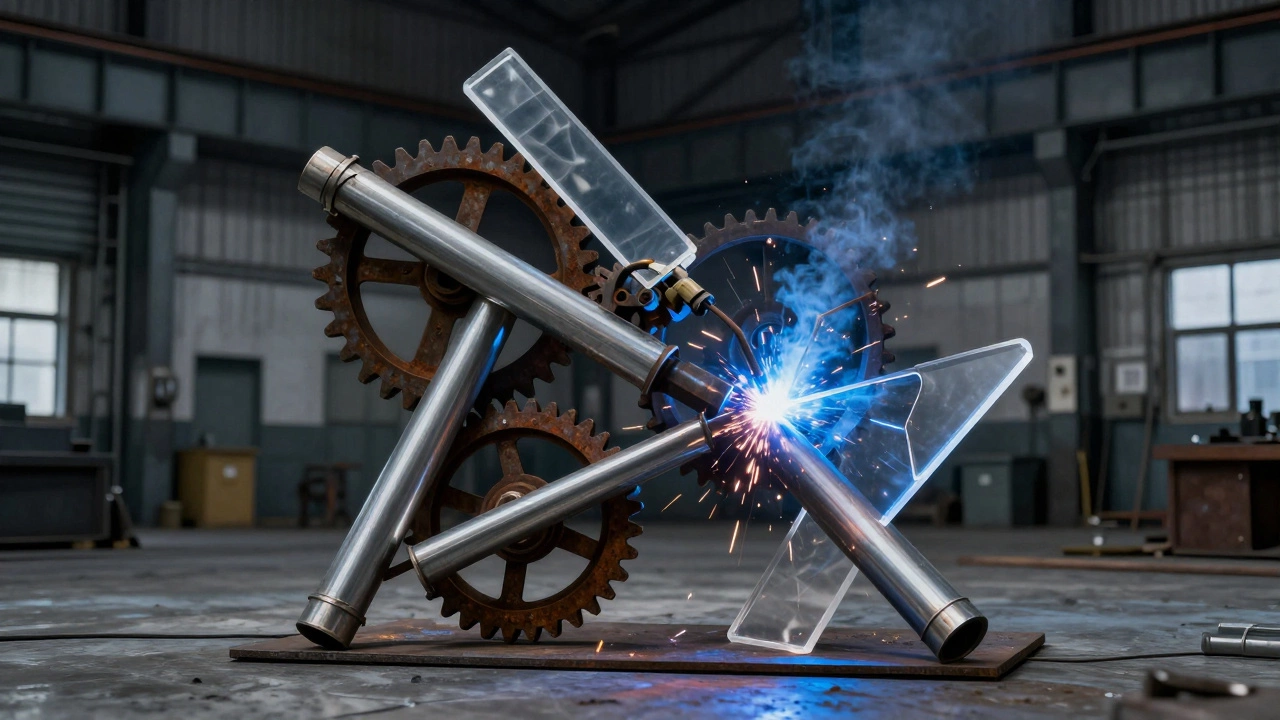
- Assembling joins different pieces into a whole (like welding steel).
Building Up: The Additive Process
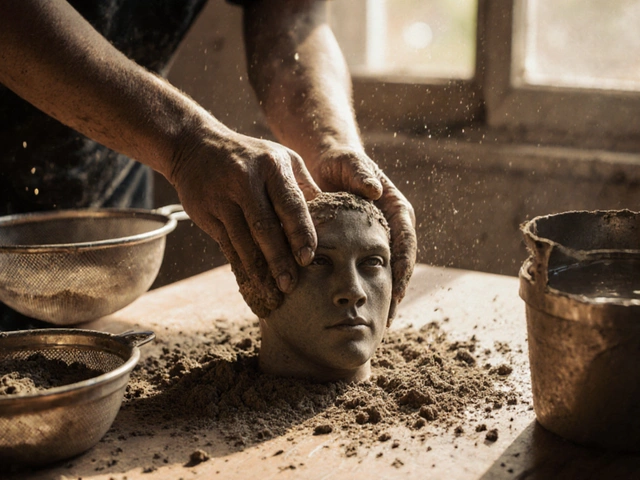
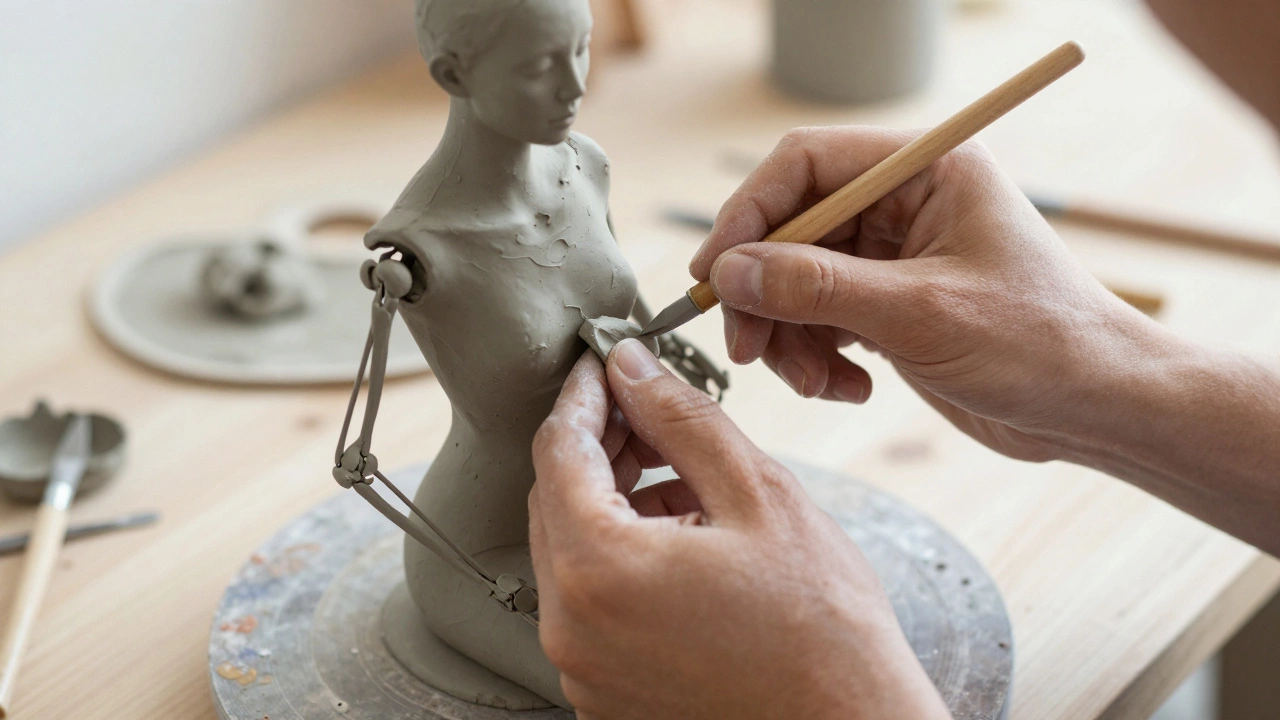
Additive sculpting is exactly what it sounds like: you start with nothing and keep adding material until the form emerges. Additive Sculpture is a method where the artist builds up the form by adding small pieces of material, such as clay or wax, to a central core or armature. Think of it like building a snowball. You don't have to commit to a final shape immediately because you can always stick more clay on or smudge a section away.
One of the biggest challenges here is gravity. If you're making a six-foot-tall human figure out of wet clay, the legs will collapse under the weight of the torso. To fix this, sculptors use an Armature, which is essentially a skeleton made of wire or wood that supports the weight. Once the clay is applied, you can refine the details using your fingers or small wooden tools. This is the primary way artists create original models before they move into more permanent materials like bronze.
Working with Polymer Clay or oil-based clays allows you to work for days without the material drying out, which is a huge advantage over traditional water-based ceramics. If you've ever played with Play-Doh, you've practiced the most basic version of additive sculpting.
Taking Away: The Subtractive Process
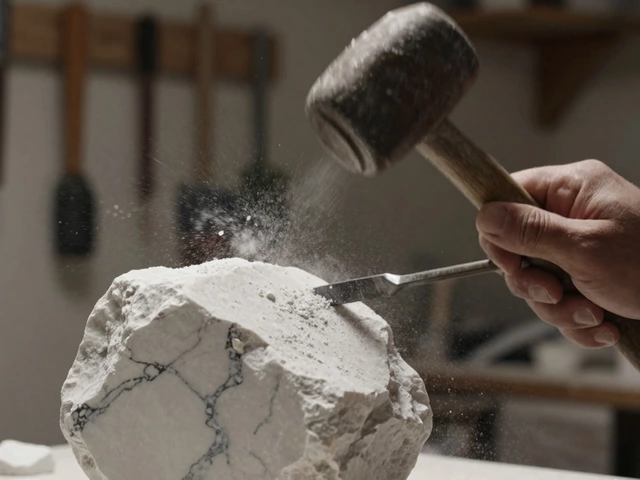
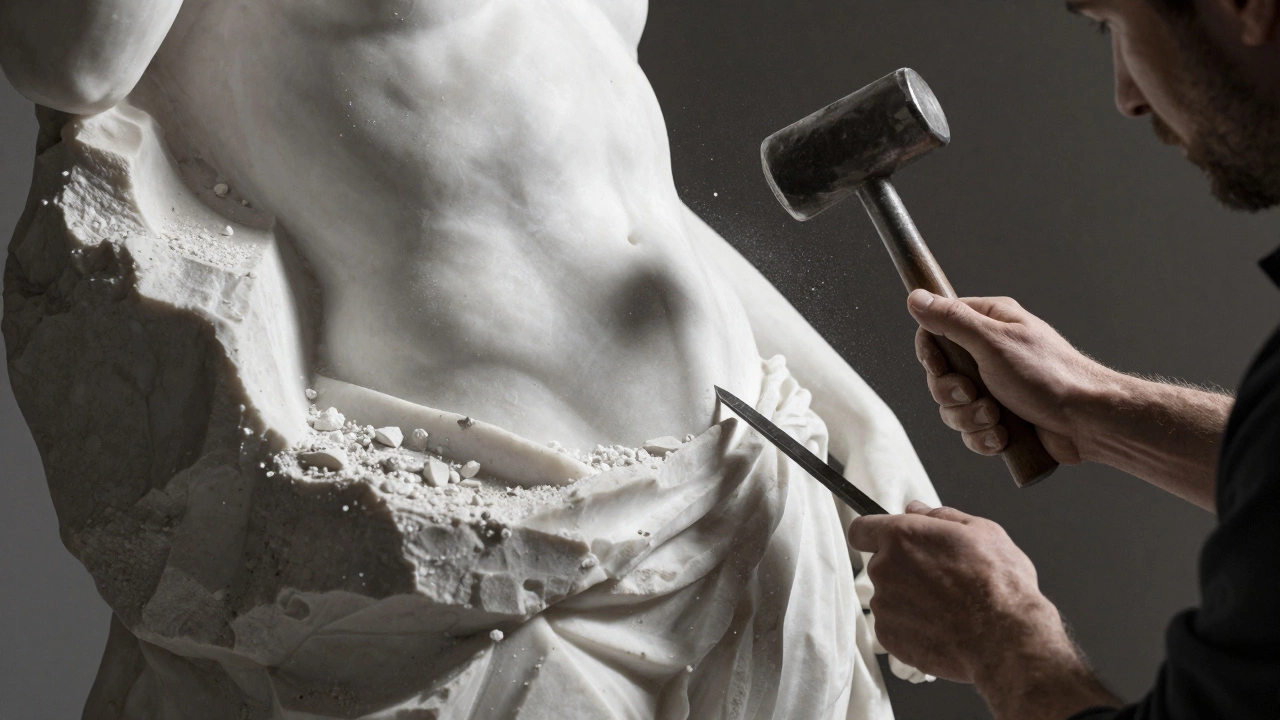
Subtractive sculpting is the opposite of additive. You start with a solid mass and remove everything that isn't part of your sculpture. Subtractive Sculpture is the process of carving away material from a solid block, such as stone, wood, or ivory, to reveal a form. It's a high-stakes game because once you chip a piece of marble off, you can't exactly glue it back on and pretend it never happened.
Carving requires a different mindset. You aren't building a shape; you're "finding" it inside the block. This is why Michelangelo famously said he was just releasing the figure from the stone. To do this, artists use a variety of tools, from heavy mallets and chisels for roughing out the shape to fine sandpaper for a polished finish.
| Material | Hardness | Common Tool | Best Use Case |
|---|---|---|---|
| Marble | High | Point Chisel | Classical, smooth figures |
| Soapstone | Low | Files/Rasps | Beginner carving, small art |
| Oak Wood | Medium | Gouge Chisel | Detailed, organic textures |
| Alabaster | Low | Sanding pads | Translucent, decorative pieces |
The risk of subtractive work means most artists start with a "maquette"-a small additive model made of clay. They use this small version as a map, measuring the distances carefully before making the first cut into the expensive stone. If you're starting out, try soapstone; it's soft enough to carve with a simple knife and doesn't require a full studio of heavy equipment.
The Art of Replication: Casting
Casting is the method used when you want a sculpture to be made of a material that can't be carved or molded by hand, like molten metal. Casting is a process where a liquid material is poured into a mold, which then hardens into a solid copy of the original model. It's the bridge between a soft additive sculpture and a permanent, hard object.
The most famous version of this is the Lost-Wax Casting process. Here's how it usually works: the artist makes a wax version of the sculpture, covers it in a ceramic shell, and then heats it in a kiln. The wax melts and "gets lost," leaving a perfect hollow cavity. Liquid bronze, heated to over 2,000 degrees Fahrenheit, is then poured into that gap. Once the metal cools, the ceramic shell is hammered away, revealing the metal sculpture.
Casting is incredibly useful for producing multiple copies of the same work. By creating a silicone mold of an original piece, an artist can cast it in resin, plaster, or concrete dozens of times. This changes the nature of the art from a unique, one-of-a-kind object to an edition of prints, similar to how photographers handle their work.
Putting it Together: Assembly
Assembly is the modern approach to sculpture. Instead of working with one uniform block or lump of material, you take different objects and join them together. Assembling is the technique of combining various materials, often found objects or industrial parts, using fasteners, adhesives, or welding to create a new form. This method broke the traditional rules of sculpture, allowing artists to use things like scrap metal, plastic, or even old electronics.
The core of assembly is often Welding, which uses extreme heat to fuse metal parts together. This allows for spindly, gravity-defying shapes that would be impossible to carve from stone. You can also use "cold connections" like bolts, screws, or high-strength epoxy resins. Many contemporary artists use "Found Objects" (objet trouvé), where they find a discarded item-like a rusty gear or a piece of driftwood-and incorporate it into the piece to add conceptual meaning.
Think of assembly as a 3D collage. You aren't limited by the properties of a single material. You can combine a heavy steel base with a light acrylic top and a piece of neon tubing. This flexibility is why assembly is the dominant method in contemporary art galleries and urban installations.
Choosing Your Method Based on Your Goals
Picking a method depends on what you want the final piece to feel like. If you want a piece that feels spontaneous and organic, go additive. If you want something that feels timeless, heavy, and permanent, go subtractive. If you need a durable, professional finish for a public park, casting is your best bet. And if you want to make a statement about modern life using industrial materials, assembly is the way to go.
Many artists actually combine these. For example, a sculptor might start with an additive clay model, use that to create a mold for casting in bronze, and then assemble several cast pieces together using steel welds. The transition from one method to another is where some of the most interesting art happens.
Which sculpting method is best for beginners?
Additive sculpting with air-dry or polymer clay is generally the easiest starting point because it's forgiving. If you make a mistake, you can simply add more material or squash it down and start over. Subtractive carving is more challenging because mistakes are permanent.
What is the difference between carving and casting?
Carving is a subtractive process where you remove material from a solid block to create a shape. Casting is a reproductive process where you create a mold of an existing shape and fill it with a liquid material (like bronze or resin) that hardens into a copy.
Do I always need an armature for additive sculpture?
Not always, but for anything larger than a small figurine, an armature is essential. Without a internal support structure made of wire or wood, heavy materials like clay will sag or collapse under their own weight before they can dry or be fired.
Is 3D printing considered a sculpting method?
Technically, 3D printing is a digital version of the additive process. It builds an object layer by layer, adding material (plastic or resin) until the form is complete, much like a sculptor adding clay to a base.
What materials are most common for assembled sculptures?
Common materials include scrap metal, found industrial parts, plastics, wood, and acrylics. These are typically joined using welding, soldering, epoxy adhesives, or mechanical fasteners like screws and bolts.
Next Steps for Your Art Journey
If you're just starting, grab some cheap modeling clay and try the additive method first. Focus on basic shapes-spheres, cubes, and organic curves. Once you feel comfortable with form, try a small subtractive project with a bar of soap or a piece of soft soapstone to understand how to "think in reverse." From there, you can explore more complex tools like welding machines or the logistics of creating silicone molds for casting. The beauty of sculpture is that there is no single "correct" way to do it; the material often tells you what it wants to become as you work.