Visual Psychology: How Our Eyes and Brain See Art
When you look at a painting, your eyes don’t just see shapes and colors—they follow paths, feel tension, and even react emotionally before you realize it. This is visual psychology, the study of how human perception influences the way we interpret visual information, especially in art. Also known as art perception, it’s not about what’s on the canvas—it’s about what happens inside your mind when you see it. Artists don’t just paint what they see; they paint what they know will trigger a reaction. A red brushstroke doesn’t just mean ‘red’—it means urgency. A blurred edge doesn’t just mean ‘soft’—it means movement. And a crowded composition? It doesn’t just feel busy—it feels overwhelming, exciting, or even claustrophobic. These aren’t accidents. They’re deliberate choices rooted in decades of research in cognitive science and visual perception.
Visual psychology connects directly to how we experience composition, the arrangement of visual elements in a work of art that guides the viewer’s eye, and why some landscapes feel alive while others feel flat. It explains why abstract art can stir deep emotion without showing a single face or tree. It’s why a simple line in a Picasso drawing can feel more powerful than a hyper-realistic portrait. The brain is wired to find patterns, even where none exist. It fills in gaps, assigns meaning to chaos, and remembers what feels emotionally true—even if it’s not visually accurate. This is why viewer response, the emotional and cognitive reaction a person has when engaging with visual art is just as important as the artist’s technique. A painting doesn’t live on the wall—it lives in the mind of the person looking at it.
What you’re really reacting to isn’t just the brushwork or the subject—it’s the hidden rules of visual attention: contrast, balance, rhythm, and focal points. These aren’t just art class terms—they’re survival instincts. Our ancestors needed to spot movement in the grass, read facial expressions in a crowd, and recognize danger in shadows. Today, those same instincts tell us where to look in a painting, what feels ‘right,’ and what feels ‘off.’ That’s why some modern art feels alienating—it breaks those deep-seated rules. And that’s why some traditional landscapes feel calming—they follow them perfectly.
Below, you’ll find real examples from artists and learners who’ve used visual psychology to make their work stronger—whether they knew it or not. From how to avoid muddy watercolors by understanding color contrast, to why certain landscape compositions stick in your memory, to why abstract art can feel more honest than realism. These aren’t theories. They’re tools. And they’re already at work in every piece you’ve ever stopped to look at—long before you said, ‘I like this.’
What Draws People to Abstract Art?
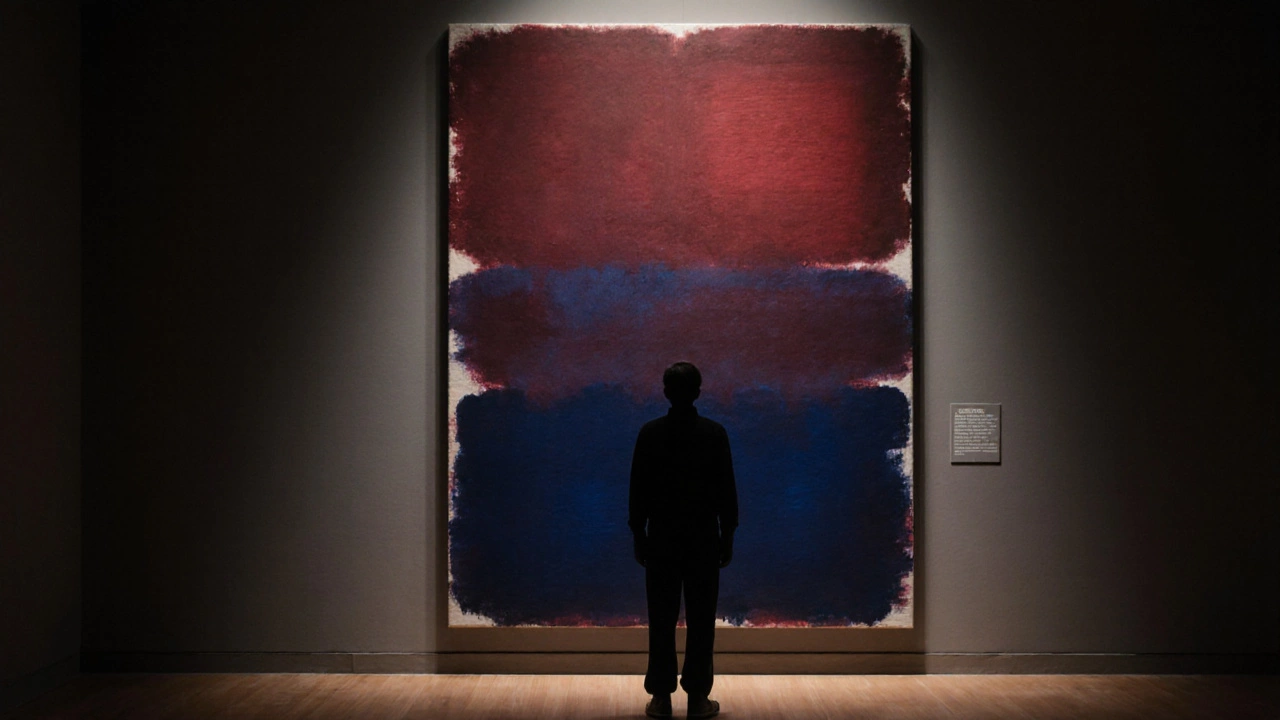
Abstract art doesn't show the world-it shows how we feel inside it. People connect with it not because they understand it, but because it lets them feel what words can't express.
Continue Reading