Sculpture Tools: What You Need and How to Use Them
When you think of sculpture tools, instruments used to shape, carve, or mold three-dimensional art. Also known as sculpting tools, they’re not just hardware—they’re extensions of your hands, letting you turn raw material into something alive. Whether you’re working with wet clay, hard stone, or recycled metal, the right tools make the difference between frustration and flow.
Most beginners think they need a full set of fancy tools, but that’s not true. A simple wire cutter, a wooden modeling tool, and a rib can do more than a drawer full of expensive gadgets. clay tools, specialized instruments designed for shaping and texturing soft materials like clay or plaster come in loops, ribs, and needles—each serves a different purpose. Loop tools carve out bulk, ribs smooth surfaces, and needle tools add fine detail. For harder materials like wood or stone, carving tools, chisels, gouges, and mallets used to remove material from solid blocks become essential. You don’t need to buy them all at once. Start with one or two, learn how they feel in your grip, and let your project guide what you add next.
What you choose depends on what you’re making. If you’re building a figure out of air-dry clay, you’ll want soft, flexible tools that won’t tear the surface. If you’re carving a bust from limestone, you’ll need heavy-duty chisels and safety gear. The best sculptors don’t just use tools—they listen to them. The resistance of the material, the sound of the blade, the way dust falls—it all tells you something. That’s why so many artists keep the same few tools for years. They learn their weight, their angle, their voice.
And it’s not just about the tools themselves. It’s about how you hold them, how you move your body, how you let the material guide you. Some of the most powerful sculptures come from artists who used found objects—a spoon, a wire hanger, a kitchen scraper—as tools. One artist turned a butter knife into a fine detailing tool. Another used a plastic comb to create hair texture in clay. The real secret? Your hands know more than any tool manual.
Below, you’ll find real advice from artists who’ve worked with everything from dirt and cardboard to bronze and marble. You’ll see what tools actually get used, what’s overhyped, and how to get started without spending a fortune. Whether you’re shaping your first lump of clay or refining your fifth stone portrait, there’s something here that’ll help you work smarter, not harder.
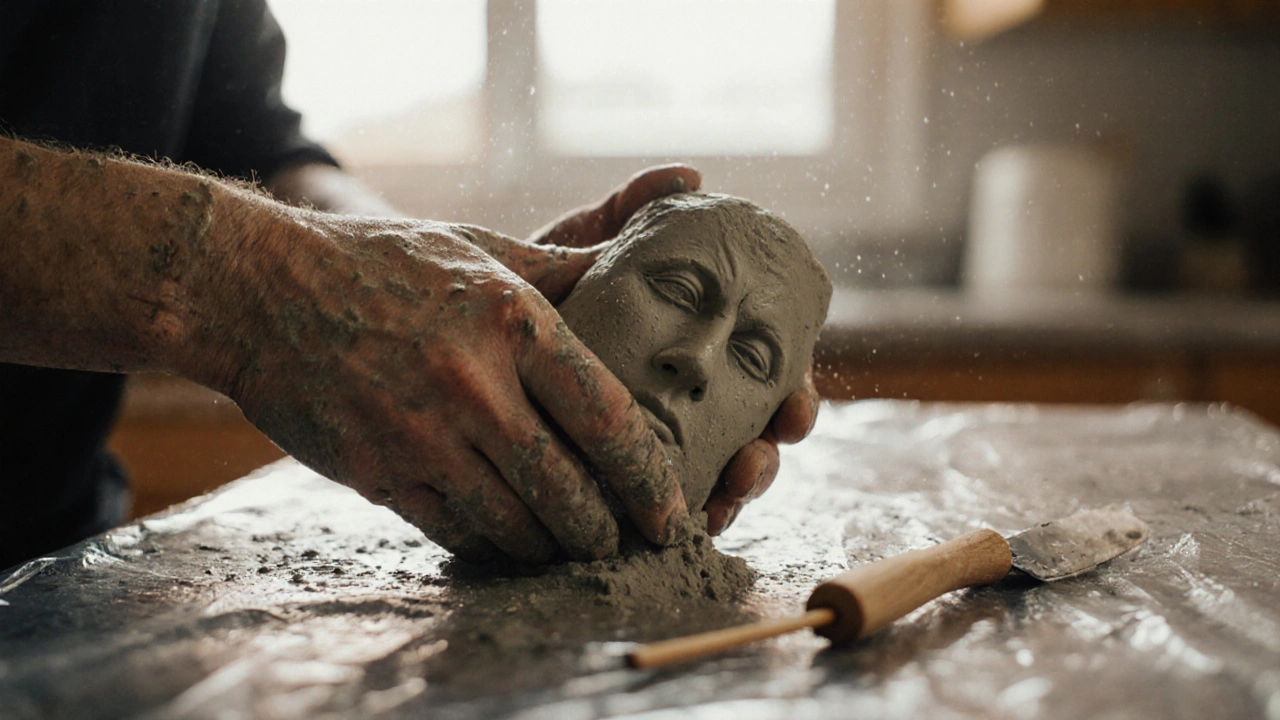
Is Sculpting Difficult? What Really Matters When You Start
Sculpting isn't about talent-it's about showing up. Learn how to start with clay, avoid common mistakes, and build real skill without formal training or expensive tools.
Continue ReadingCategories
Most popular
-

-
-
 How to Create Cool Digital Art Mar 23 2025
 -
-