Van Gogh's Yellow Period Simulator
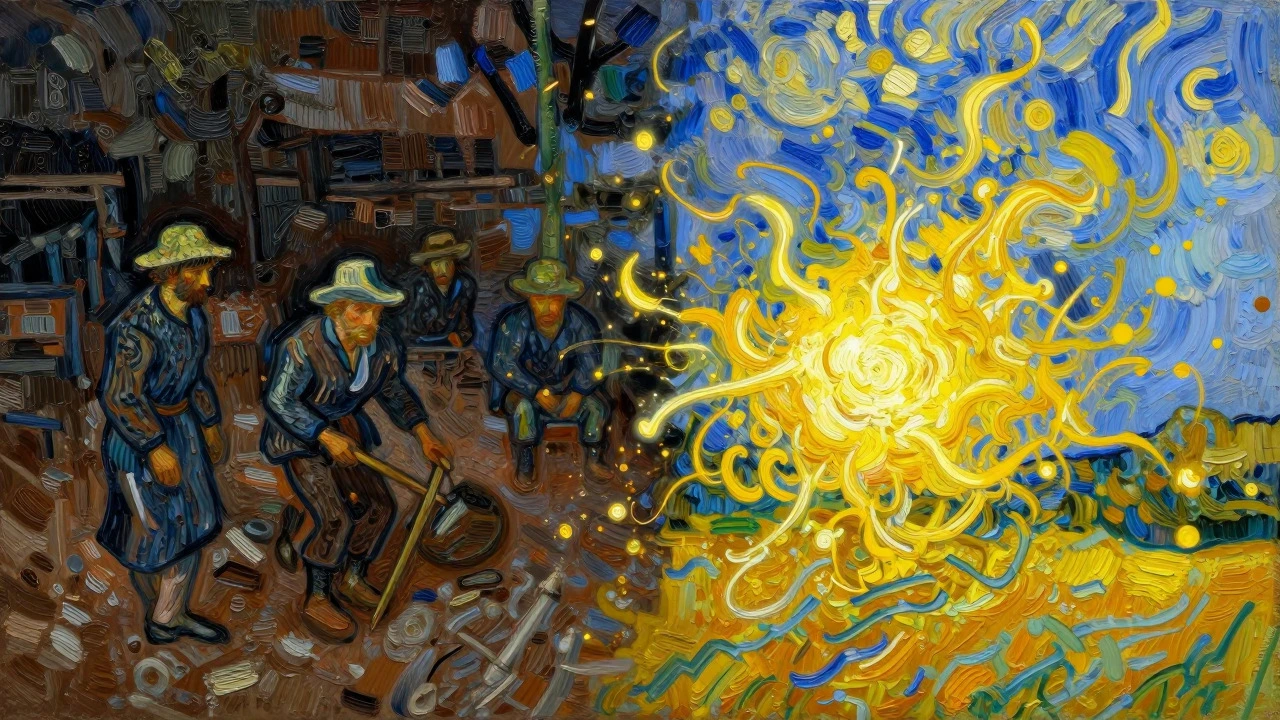
Adjust the sliders to simulate the environmental and theoretical factors that influenced Van Gogh.
Analysis: Arles
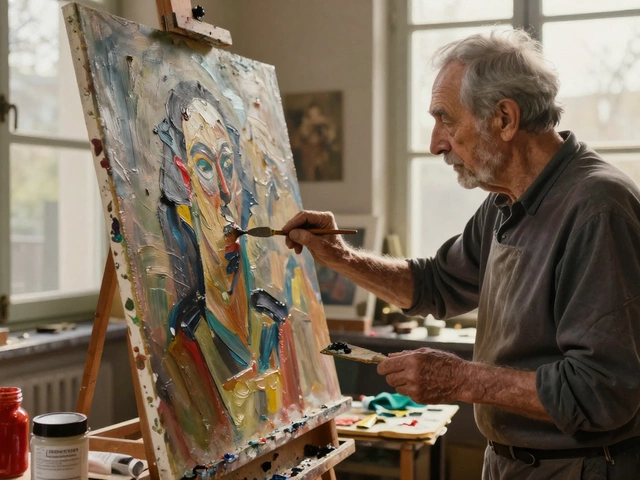
You are simulating the peak of Van Gogh's career. The high saturation mimics the intense Mediterranean sun, while the strong contrast reflects his use of complementary colors (Yellow/Blue) to create visual vibration. The thick brushwork (impasto) gives the light physical texture. This combination was intended to capture the feeling of heat and life itself.
Look at Sunflowers. It hits you right in the face. That intense, vibrating yellow seems to glow from within the canvas. Now look at his earlier works from Paris or Nuenen. They are dark, muddy, and heavy with browns and blacks. What happened? Why did Vincent van Gogh Dutch Post-Impressionist painter known for bold colors and expressive brushwork suddenly decide that yellow was the only color that mattered?
The shift wasn't random. It wasn't just a whim. It was a collision of science, geography, mental health, and artistic ambition. To understand the yellow period, we have to stop looking at it as just a color choice and start seeing it as a desperate attempt to capture light itself.
The Science of Color: Chevreul and the Impressionists
Before Van Gogh moved south, he was obsessed with theory. In Paris, between 1886 and 1888, he hung out with the Impressionists. He read everything he could get his hands on, particularly the work of Michel Eugène Chevreul French chemist and color theorist who developed laws of simultaneous contrast. Chevreul discovered that when you place two contrasting colors next to each other, they intensify one another. Blue looks bluer next to orange. Red looks redder next to green.
Van Gogh took this scientific principle and turned it into an emotional weapon. He realized that if he wanted to make his subjects feel alive, he couldn't just paint them realistically. He had to paint them with complementary contrasts. But why yellow? Because yellow is the most luminous color in the spectrum. It reflects the most light. When paired with its complement, violet or blue, it creates a visual vibration that mimics the shimmer of sunlight.
This wasn't just art; it was optics. Van Gogh was trying to solve a problem: how do you paint the feeling of heat? The answer, he decided, was saturation. He stopped mixing colors to create shades and started applying pure pigment straight from the tube. This technique, called impasto A painting technique where paint is laid on thickly so that brushstrokes or palette knife marks are visible, gave his yellows physical texture. They didn't just sit on the canvas; they stood up, catching the light in the room.
Arles: The Sun Capital of Europe
Theory alone doesn't explain the intensity. You need the environment. In February 1888, Van Gogh left Paris for Arles A city in southern France known for its Roman history and bright Mediterranean climate. He wrote to his brother Theo about wanting to find "Japan" in Provence. He wanted a landscape with clear skies, strong sunlight, and distinct shadows, similar to what he saw in Japanese woodblock prints.
He found it. The sun in Arles is different from the sun in Amsterdam. It's harsher, brighter, and more direct. The walls of the houses were painted yellow by the locals to reflect the heat. The wheat fields turned gold in the summer. Even the sky seemed to bleed into a pale lemon hue during the day.
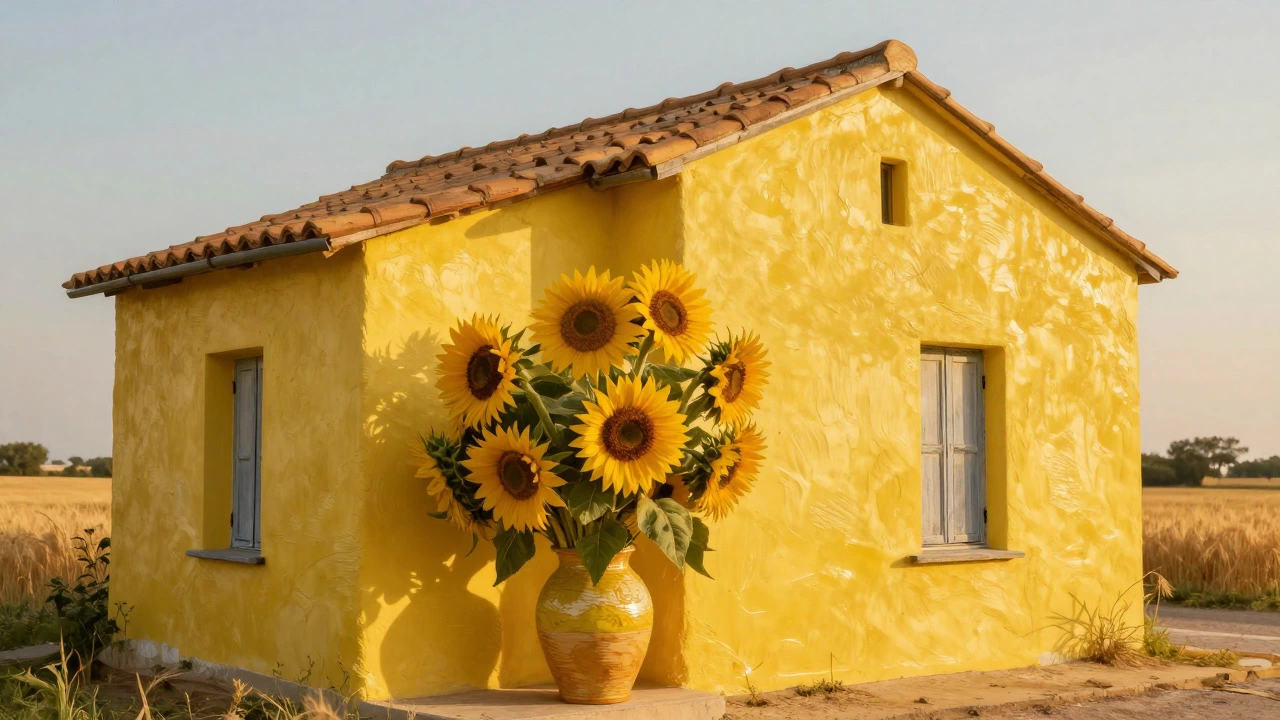
Van Gogh rented the famous Yellow House. He decorated it himself, painting murals of irises and sunflowers to welcome Paul Gauguin French Post-Impressionist artist who joined Van Gogh in Arles. His goal was to create an Artist's Colony, a place where painters could live and work together away from the commercial pressures of Paris. The yellow exterior of the house became a symbol of this hope. It was supposed to be a beacon of creativity.
| Location | Time Period | Dominant Colors | Artistic Goal |
|---|---|---|---|
| Nuenen | 1883-1885 | Browns, Blacks, Greens | Realism, depicting peasant life |
| Paris | 1886-1888 | Pastels, Mixed Complements | Experimentation, learning Impressionism |
| Arles | 1888-1889 | Yellows, Blues, Oranges | Emotional expression through light |
| Saint-Rémy | 1889-1890 | Swirling Yellows, Deep Blues | Capturing inner turmoil and nature's energy |
The Psychological Weight of Yellow
We often hear that Van Gogh went mad because of lead poisoning from his paints. While toxic pigments like chrome yellow might have contributed to his physical decline, the use of yellow was intentional, not accidental. For Van Gogh, yellow represented warmth, friendship, and happiness. He associated it with the sun, which he viewed as a divine source of life.
In his letters, he frequently described yellow as a color of joy. When he painted the Bedroom in Arles A series of three paintings showing Van Gogh's bedroom in the Yellow House, he used varying shades of yellow and orange to create a sense of restful calm. He wanted the viewer to feel the comfort of the space. However, this optimism was fragile. The pressure to succeed, the isolation, and the eventual departure of Gauguin shattered this dream.
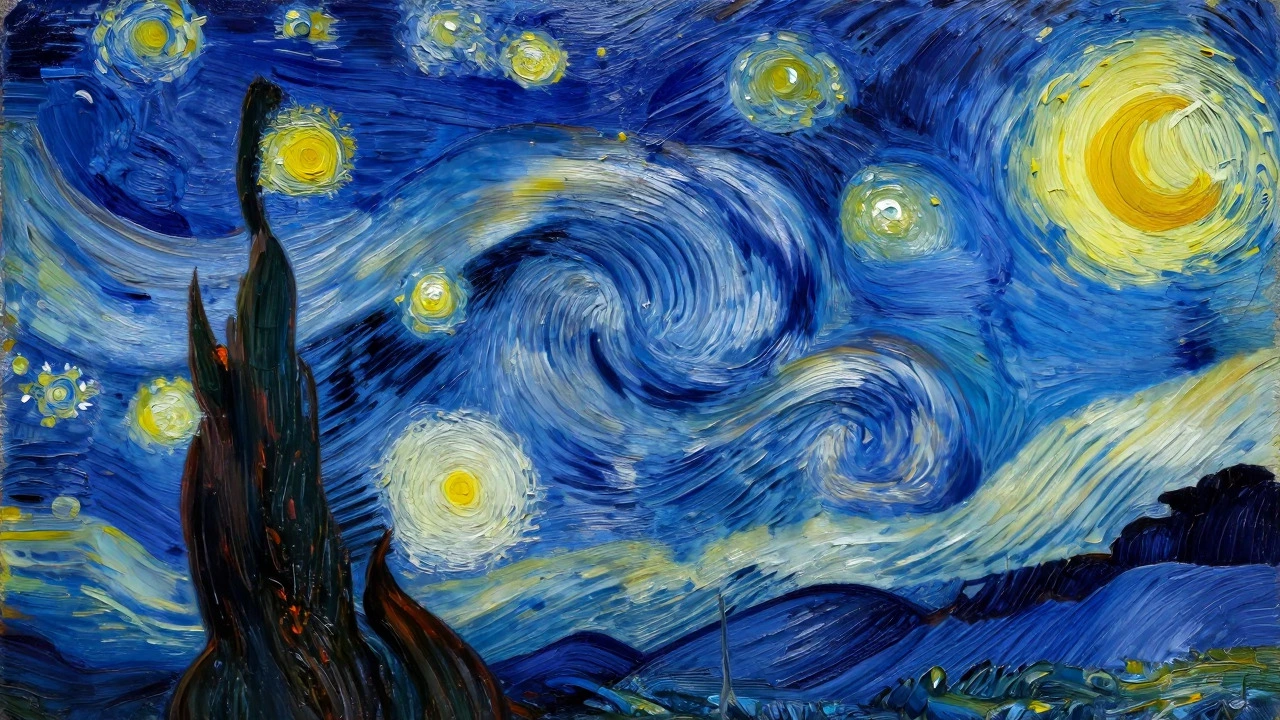
The yellow didn't disappear after the breakdown. If anything, it became more complex. In Saint-Rémy, where he stayed in an asylum, the sky in The Starry Night Famous painting featuring swirling blues and bright yellow stars is dominated by deep blues, but the stars and moon are explosive balls of yellow. Here, yellow isn't just sunlight; it's a cosmic force. It's the light breaking through the darkness of his mind. The contrast between the turbulent blue and the radiant yellow shows his struggle to find order and beauty amidst chaos.
Chromophobia and Cultural Context
It's also worth noting that yellow had a specific cultural meaning in the late 19th century. In many European traditions, yellow was associated with betrayal (Judas wore yellow) or sickness. But in Japan, which fascinated Van Gogh, yellow was imperial and sacred. By adopting yellow, Van Gogh was rejecting Western conventions and aligning himself with the aesthetic values of Japanese art, which he admired for its simplicity and bold outlines.
He wasn't alone in this fascination. Many artists of the time were looking East for inspiration. But Van Gogh took it further. He didn't just copy the style; he tried to replicate the spiritual intensity. He believed that by using pure, unmodulated colors, he could achieve a kind of truth that realism missed. The yellow period was his way of stripping away the noise of modern life to reveal the essential energy of nature.
Legacy of the Yellow Palette
Today, we see Van Gogh's yellow period as iconic. But at the time, it was controversial. Critics called his work crude and amateurish. They didn't understand that he was redefining what painting could do. He moved art from representation to expression. He showed that color could carry emotion independently of form.
This influence rippled through the 20th century. The Fauves, led by Henri Matisse, took Van Gogh's bold color choices and pushed them even further. Abstract Expressionists like Mark Rothko explored the emotional power of large fields of color, a concept rooted in Van Gogh's experiments in Arles. Even today, when you see a movie scene bathed in golden hour light, you're seeing the legacy of Van Gogh's belief that light has a soul.
So, why did he have a yellow period? Because he wanted to paint the sun. Not just its appearance, but its feeling. He wanted to capture the warmth of a friend's visit, the harshness of the Provençal heat, and the flickering hope of redemption. Yellow was the only color bright enough to hold all that weight.
Did Van Gogh's yellow period cause his madness?
No, the yellow period did not cause his madness, though there are links. Van Gogh used chrome yellow, which contains lead, and chronic lead poisoning can affect mental health. However, his mental health issues predated his move to Arles. The intense use of yellow was an artistic choice driven by his desire to express emotion and light, not a symptom of insanity. His breakdowns were likely due to a combination of bipolar disorder, epilepsy, malnutrition, and stress.
What is the significance of the Yellow House in Arles?
The Yellow House was Van Gogh's home and studio in Arles from 1888 to 1889. He chose it specifically for its bright yellow exterior, hoping it would serve as a welcoming beacon for his planned Artist's Colony. He invited Paul Gauguin to join him there, believing their collaboration would revolutionize art. Although the experiment ended in tragedy with Van Gogh's ear incident, the house remains a symbol of his creative peak and his dreams of community.
How did Japanese art influence Van Gogh's use of color?
Van Gogh was deeply influenced by Japanese ukiyo-e woodblock prints, which featured flat areas of bold, unmixed color and strong outlines. He admired how these prints captured the essence of a scene without realistic shading. This inspired him to abandon traditional modeling techniques and use pure, vibrant colors like yellow to convey mood and structure. He sought to bring the clarity and spiritual depth of Japanese aesthetics into Western painting.
Why did Van Gogh prefer yellow over other bright colors?
Yellow is the most luminous color in the visible spectrum, reflecting the most light to the human eye. Van Gogh associated yellow with the sun, warmth, and happiness. Scientifically, when placed next to its complementary color, blue, yellow creates a powerful visual vibration that enhances the sense of light and energy. For Van Gogh, yellow was the perfect tool to express the intense sunlight of Provence and his own emotional state.
Is 'Sunflowers' part of the yellow period?
Yes, 'Sunflowers' is one of the most famous works from Van Gogh's yellow period. He painted several versions of sunflowers in 1888 and 1889 while living in Arles. These paintings were intended to decorate the Yellow House and welcome Paul Gauguin. They showcase his mastery of yellow hues, using various shades to create depth and texture without relying on dark shadows.