Modern Art Resonance Calculator
Why do you feel drawn to specific types of art? This tool analyzes your reactions to visual stimuli to determine your primary connection to the modern art world.
Chaos & Energy
I feel a visceral reaction to movement and raw emotion.
Order & Structure
I appreciate clean lines, geometry, and intellectual puzzles.
ART?
Questioning Norms
I enjoy art that challenges authority and traditional definitions.
Texture & Depth
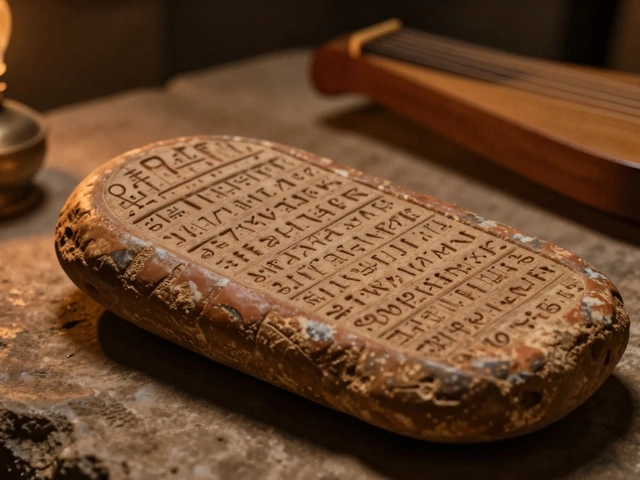
I am fascinated by the physical materials and history of the object.
Your Result
Description goes here.
Key Artists:
Why it works:
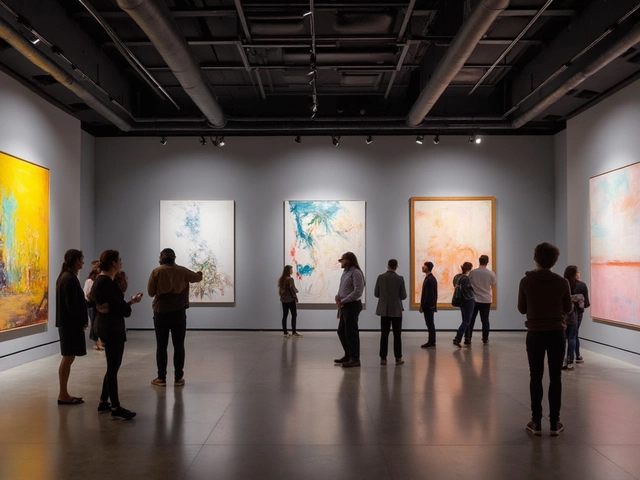
It happens in a gallery, often by accident. You walk past a canvas that looks like someone spilled paint on it, or you stare at a sculpture that resembles a twisted piece of industrial scrap. Your initial thought might be, "My kid could do that." But then, something shifts. A feeling rises. A question forms. Suddenly, that chaotic splash of color feels like a storm inside your chest. That is the moment you realize why you love modern art. It isn’t about recognizing a realistic face; it’s about recognizing a human experience.
For decades, modern art has been misunderstood as elitist or nonsensical. Critics call it a scam. Skeptics ask where the skill is. Yet, millions of people feel a deep, inexplicable pull toward these works. If you’ve ever stood before a Mark Rothko and felt tears prick your eyes, or looked at a Jackson Pollock and felt the energy of a dance, you are not alone. This article explores the psychological, historical, and aesthetic reasons why modern art resonates so deeply with us today.
The Shift from Mirror to Window
To understand why we love modern art, we first have to understand what it replaced. For centuries, Western art was primarily mimetic-its goal was to mimic reality. Artists like Leonardo da Vinci mastered perspective, anatomy, and light to create windows into the world. The value lay in technical perfection. If you could paint a hand that looked exactly like a hand, you were a master.
Then came the camera. Invented in the early 19th century and perfected by the late 1800s, photography made literal representation obsolete. Why spend months painting a portrait when a flash bulb can capture it in seconds? This technological shift forced artists to ask a new question: What can art do that a photograph cannot?
The answer was emotion, concept, and abstraction. Impressionism, pioneered by artists like Claude Monet, stopped trying to paint the object and started painting the light hitting the object. Later movements went further. They stopped painting the visible world entirely and started painting the invisible one: feelings, memories, dreams, and political rage. We love modern art because it speaks our internal language, not just our external vision.
Emotional Resonance Over Technical Skill
One of the biggest barriers to enjoying modern art is the expectation of "skill" defined by realism. When that metric is removed, a new one takes its place: emotional honesty. Consider Abstract Expressionism, a movement that dominated New York in the 1940s and 50s. Artists like Willem de Kooning and Joan Mitchell didn’t care about drawing perfect trees. They cared about capturing the act of living itself.
When you look at a de Kooning painting, you aren’t seeing a woman; you are seeing the artist’s struggle, passion, and aggression directed at the canvas. The brushstrokes are physical evidence of human movement. This creates a visceral connection. You don’t analyze the composition; you feel the energy. This is why many people love modern art-it bypasses the intellect and hits the nervous system directly. It validates the chaos of modern life without needing to tidy it up into a pretty picture.
The Power of Ambiguity and Personal Projection
Realistic art tells you what to see. A painting of a bowl of fruit shows you fruit. Abstract art asks you what you see. This ambiguity is a feature, not a bug. Psychologists suggest that ambiguous stimuli allow for greater personal projection. When you look at a Jackson Pollock drip painting, your brain tries to find patterns. You might see a forest, a city grid, or a neural network. Because there is no single correct interpretation, the artwork becomes a mirror for your own mind.
This interactive element makes the viewer a co-creator. You bring your memories, your mood, and your biases to the work. Two people can stand before the same Piet Mondrian grid-one sees calm order, the other sees sterile restriction-and both experiences are valid. We love modern art because it invites us in. It doesn’t lecture; it converses. It respects our intelligence enough to let us fill in the blanks.

Rebellion and the Challenge to Authority
There is also a thrill in the rebellion inherent in modern art. Since the Dada movement during World War I, which used nonsense and absurdity to protest the logic that led to war, modern art has often been a tool for questioning authority. Marcel Duchamp placing a urinal in a gallery ("Fountain") wasn’t just a prank; it was a philosophical bomb asking, "Who decides what art is?"
Loving modern art can feel like joining a secret society of thinkers who refuse to accept easy answers. It challenges the status quo, whether that’s traditional beauty standards, political norms, or social hierarchies. When you appreciate a provocative installation by Yayoi Kusama, you are engaging with ideas about infinity, obsession, and mental health. The art becomes a vehicle for critical thinking. It makes you feel smart and awake, rather than passive and entertained.
The Beauty of Materiality and Process
Modern art often celebrates the materials themselves. In traditional painting, the paint was meant to disappear into the illusion of form. In modern art, the paint is the subject. You can see the texture of the oil, the grit of the sand mixed into the medium, or the raw edge of the canvas. This materiality grounds the work in physical reality.
Artists like Anselm Kiefer use lead, ash, straw, and concrete to create heavy, textured surfaces that speak to history and decay. Loving modern art means appreciating the craftsmanship of the gesture, not just the final image. It’s the difference between loving a printed photograph of a forest and loving the smell of pine needles underfoot. The process becomes part of the product, adding layers of depth and authenticity that flat representations lack.

How to Deepen Your Connection with Modern Art
If you want to move beyond casual appreciation to a deeper love for modern art, try these approaches:
- Read the Artist’s Statement: Don’t guess. Many modern artists write extensively about their intent. Reading a few paragraphs from Cy Twombly or Agnes Martin can unlock the door to their visual language.
- Focus on Feeling First: Before looking for meaning, ask yourself: Does this make me feel calm, anxious, excited, or sad? Trust your gut reaction. It is more valuable than any critic’s analysis.
- Learn the Vocabulary: Understand terms like "negative space," "color field," and "gestural abstraction." Knowing the tools helps you appreciate the construction, much like knowing music theory helps you enjoy jazz.
- Visit Galleries Regularly: Exposure builds familiarity. What seems strange today may become comforting tomorrow. Your brain adapts to new visual languages over time.
Conclusion: It’s About You, Not the Canvas
Ultimately, the reason you love modern art is because it reflects the complexity of being human in the 21st century. Life isn’t always clear, logical, or beautiful. It’s messy, abstract, and emotionally charged. Modern art mirrors that reality. It gives form to the formless and voice to the voiceless. By embracing it, you embrace your own capacity for wonder, confusion, and profound connection. The next time you stand before a confusing canvas, don’t ask, "What is it?" Ask, "What does it make me feel?" The answer is where the art lives.
Is modern art just random splashes of paint?
No. While some works appear spontaneous, they are usually the result of careful planning, theoretical study, and deliberate execution. Movements like Abstract Expressionism emphasize controlled chance and gestural energy, not randomness. Artists like Jackson Pollock developed unique techniques to control the flow and layering of paint.
Why is modern art so expensive?
The price of modern art is driven by scarcity, historical significance, and market demand. Famous artists produce limited works, and their influence on art history adds cultural value. Additionally, the art market operates similarly to luxury goods, where brand recognition and provenance play significant roles in pricing.
Do I need an art degree to understand modern art?
Not at all. Modern art values personal interpretation and emotional response over academic knowledge. While learning art history can enhance your appreciation, your immediate feelings and observations are equally valid. The best way to understand it is to engage with it openly and curiously.
What is the difference between modern and contemporary art?
Modern art generally refers to works created from the late 19th century to the mid-20th century (approx. 1860s-1970s), focusing on breaking away from tradition. Contemporary art refers to art created from the late 20th century to the present day, often addressing current global issues and using diverse media like digital technology and performance.
How can I start collecting modern art on a budget?
Start by visiting local galleries, art fairs, and university student exhibitions. Look for emerging artists whose work resonates with you. Online platforms also offer affordable prints and original works from new creators. Focus on buying what you love rather than investing for profit, especially when starting out.