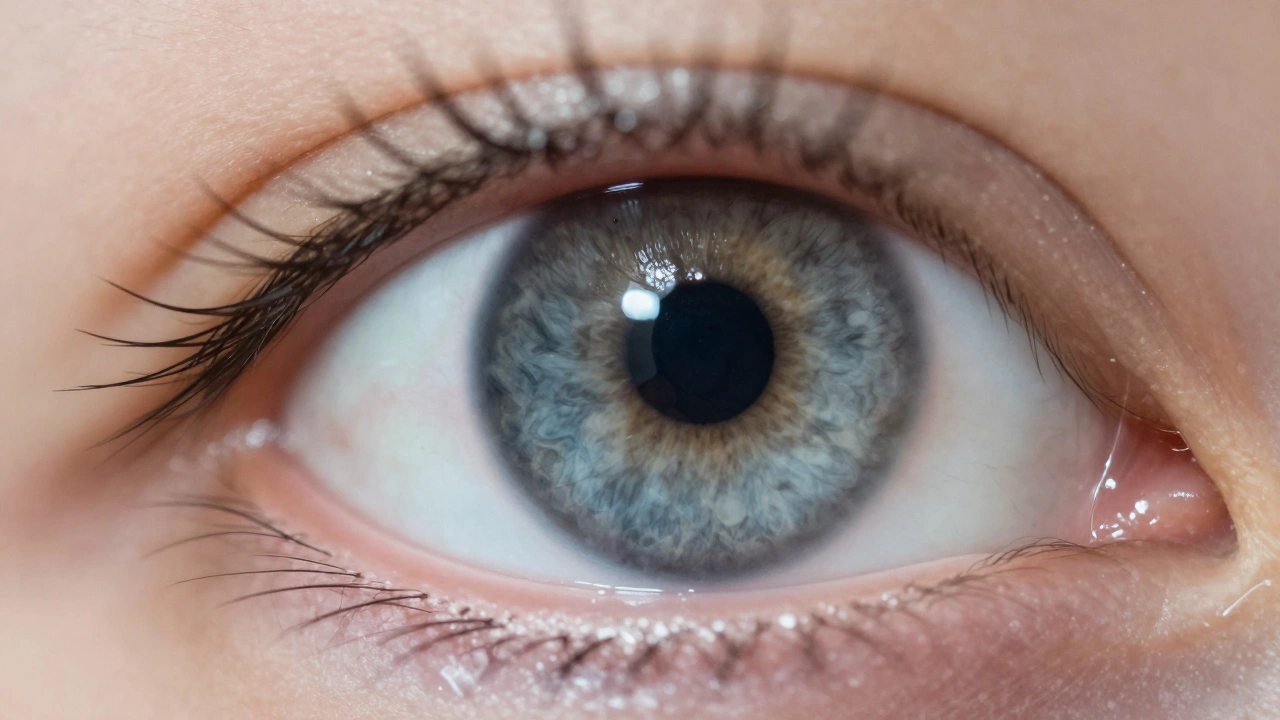
Portrait Eye Dynamics Simulator
Adjust the sliders to see how changing the light source and eyelid position alters the viewer's perception of the subject's emotion and intent.
Control Panel
Have you ever stared at a portrait and felt like the subject was staring back? It’s not magic. It’s biology meeting art. When you look at a face, your brain doesn’t scan it from top to bottom like a grocery list. It zooms straight for the eyes. In portrait painting, the artistic representation of a person that focuses on capturing their likeness, personality, and mood, this biological instinct is the artist’s most powerful tool. If the eyes are off, the whole painting fails. The nose might be slightly asymmetrical, the ears might be simplified, but if the gaze feels dead or disconnected, the viewer walks away feeling something is wrong.
This isn't just an opinion; it's hardwired into how we perceive human connection. We use eye contact to gauge trust, emotion, and intent. When an artist paints a portrait, they aren't just documenting features; they are trying to bridge the gap between the canvas and the viewer. The eyes are the bridge. Understanding why they matter so much changes how you approach mixing colors, placing highlights, and building depth. Let’s break down exactly what makes those two small ovals the center of gravity in any successful portrait.
The Science of Visual Attention
Your brain is lazy. Or rather, it’s efficient. Processing visual information takes energy, so your brain has evolved shortcuts. One of the biggest shortcuts is the "face schema." When you see a face, specific neurons fire to identify key landmarks: two eyes, a nose, a mouth. But among these, the eyes carry the highest informational density. They tell you where someone is looking, which tells you what they are thinking about.
In the context of a painting, this means the eyes act as the anchor point. If you paint a beautiful landscape background but place the eyes incorrectly, the viewer’s eye will bounce around the canvas, confused. The eyes should guide the viewer through the rest of the face. This is often referred to as the "visual hierarchy." The eyes must have the highest contrast and sharpest detail to grab attention first. Once the viewer is hooked by the gaze, their eyes naturally drift to the mouth, then the hair, and finally the clothing. If you invert this hierarchy-making the jewelry sharper than the pupils-the portrait feels unbalanced and amateurish.
Consider the difference between a photograph and a painting. A camera captures everything with equal sharpness (usually). A painter chooses what to sharpen. By keeping the iris and cornea crisp while softening the eyelids and brow, you mimic the way our own eyes focus. This selective focus creates a three-dimensional illusion on a flat surface. It tricks the brain into perceiving depth because it matches our real-world optical experience.
Capturing Life: The Wet Look
The most common mistake beginners make is painting eyes like dry marbles. Real eyes are wet, spherical organs sitting inside bony sockets. They reflect light intensely. To capture this "life," you need to understand the anatomy of the eye ball itself. The sclera (the white part) isn't pure white; it’s a mix of cool grays, blues, and even subtle pinks depending on the lighting and the person’s health. The iris is not a flat circle of color; it has radial fibers, texture, and varying opacity.
When painting in oils or acrylics, the secret lies in the layers. Start with a mid-tone base for the iris. Then, build up darker shadows toward the outer edge and lighter tones near the pupil. This mimics the natural gradient of the iris. But the real trick is the highlight. The specular highlight-that bright dot of light reflecting off the tear film-is what sells the illusion of wetness. Without it, the eye looks dull and dead. With it, the eye looks alive.
Placement matters too. The highlight usually sits directly opposite the main light source. If your light is coming from the left, the highlight goes on the right side of the pupil. Consistency here is crucial. If one eye has a highlight on the left and the other on the right, the viewer will subconsciously feel disoriented, as if the subject is looking at two different lights. This breaks the reality of the scene.
| Feature | Common Mistake | Pro Technique |
|---|---|---|
| Sclera Color | Pure White | Cool Gray/Blue/Pink Mix |
| Iris Texture | Flat Solid Color | Radial Strokes & Gradient |
| Highlight | Missing or Too Large | Sharp, Small, Light-Source Aligned |
| Pupil Shape | Perfect Circle | Slightly Elliptical due to Perspective |
Emotional Direction and Gaze
Where the subject looks dictates the narrative of the portrait. This is a deliberate choice every artist must make. Direct eye contact creates intimacy and confrontation. It pulls the viewer into the picture. Think of Rembrandt’s self-portraits or the Mona Lisa. You feel seen. This is powerful but can also be intense. Sometimes, you want the viewer to observe the subject quietly, without being challenged. In that case, you direct the gaze away.
If the subject looks to the side, you create a sense of contemplation or distraction. The viewer becomes a voyeur, peeking into a private moment. This requires careful handling of the catchlights (the reflections in the eyes). If the subject looks left, the catchlight should suggest a light source in that direction, reinforcing the geometry of the scene. Misaligned catchlights are a major reason why painted eyes feel "off" even when the colors are perfect.
Furthermore, the angle of the eyelids changes the emotional read. Heavy lids suggest tiredness, sadness, or seduction. Wide-open lids suggest surprise, fear, or alertness. The eyebrows play a supporting role here. Furrowed brows add tension; raised brows add openness. These elements work together as a system. You can’t just paint happy eyes with angry eyebrows and expect the message to land clearly. The entire upper facial structure needs to communicate a single, coherent emotion.
Anatomy and Proportions
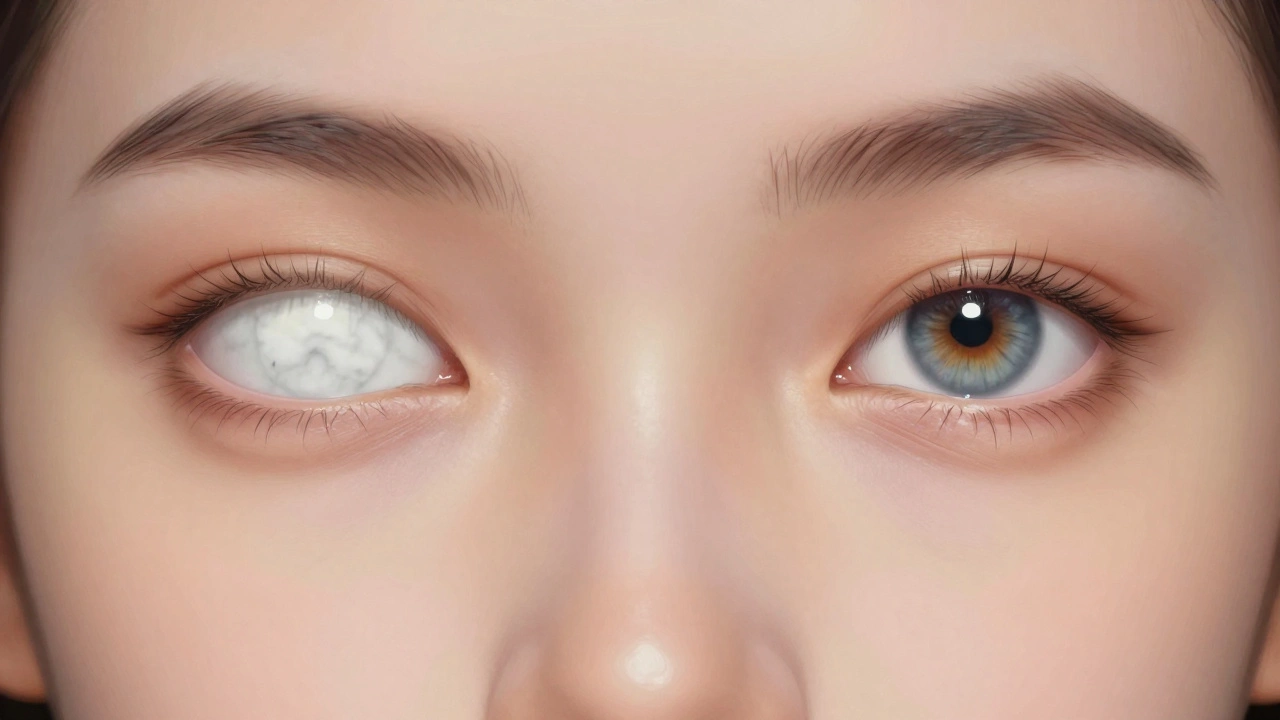
Before you worry about color, you must get the placement right. Many artists rush into detailing the iris before checking the spacing. The eyes are typically spaced one eye-width apart. This rule holds true for most adult faces. Children have eyes closer together, which contributes to their "cute" appearance. Adults who deviate significantly from this ratio may appear unusual or distorted unless it’s a specific character trait you’re emphasizing.
The shape of the eye socket also affects how the eye appears. Some people have deep-set eyes, casting shadows over the lid crease. Others have protruding eyes, where the lid bone is less visible. Painting the shadow under the brow ridge is essential for defining the depth of the socket. Without this shadow, the eye looks pasted onto the surface of the face rather than nestled inside it. This structural understanding separates illustrative drawings from volumetric paintings.
Don’t forget the lower lid. It’s often neglected, but it frames the bottom of the eye and helps define the puffiness or hollowness of the area below. In older subjects, the skin under the eye drapes differently than in young subjects. Capturing these subtle anatomical truths adds credibility to the portrait. Viewers may not consciously notice the correct anatomy, but they will feel the authenticity.
Color Theory in the Iris
Green eyes aren’t just green. Blue eyes aren’t just blue. They are complex mosaics of complementary colors. A brown eye might have hints of amber, red, and black. A blue eye often contains rings of gray, turquoise, and dark navy. Using a limited palette of just one hue results in a plastic, toy-like appearance. To achieve richness, layer transparent glazes over opaque underpaintings.
For example, start with a warm yellow-orange base for a brown eye. Glaze thin layers of burnt sienna and raw umber over it. Add tiny dots of black or dark blue for the pupil and deepest iris fibers. For blue eyes, start with a pale gray-blue. Add touches of violet or purple in the shadows to deepen the tone without muddying it. Purple is the complement of yellow-green, so it neutralizes brightness and adds depth. This chromatic complexity is what makes eyes sparkle under scrutiny.
Lighting also shifts the perceived color. Warm sunlight turns blue eyes almost silver or pale gray. Cool moonlight might make brown eyes look nearly black. Always mix your eye colors relative to the overall lighting scheme of the portrait. Don’t paint the eyes in isolation; paint them as part of the environment.
Practical Steps for Painting Eyes
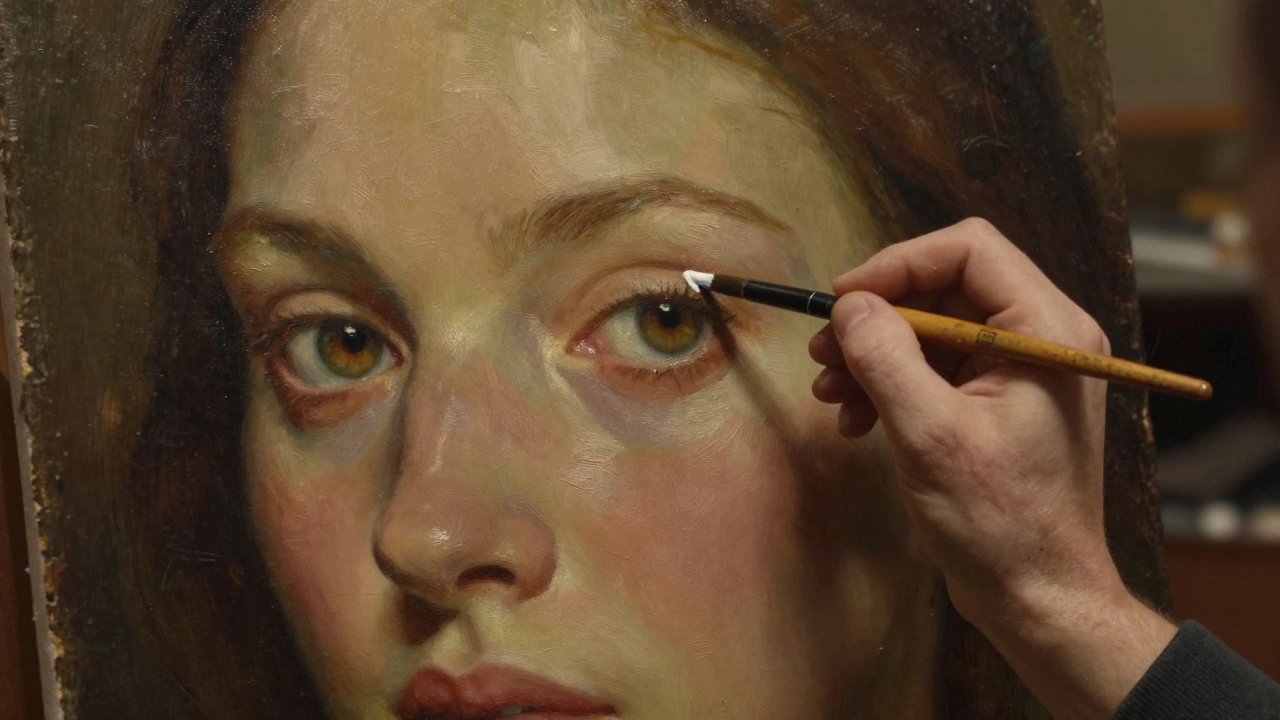
Here is a streamlined workflow to ensure your eyes pop:
- Block in Shapes: Paint the eye sockets and lids first. Establish the value structure (lights and darks) without worrying about color. Ensure the spacing and alignment are correct.
- Base Colors: Apply the mid-tone for the iris and the sclera. Remember, the sclera should match the ambient light temperature.
- Build Depth: Add darker values to the outer edges of the iris and lighter values near the pupil. Use fine brushes to suggest radial texture.
- Define the Pupil: Make the pupil the darkest point in the eye. It should be rich and opaque. Avoid letting light bleed into the center of the pupil unless there’s a strong reflection.
- Add Highlights: Place the specular highlight last. Keep it sharp and bright. This step brings the eye to life.
- Refine Edges: Soften the upper lid line slightly to show the thickness of the eyelid. Keep the lower lash line softer and more diffused.
Take your time with this stage. Rushing leads to muddy colors and misplaced highlights. Step back frequently to check the balance against the rest of the face. The eyes should command attention, but they shouldn’t overpower the entire composition.
Common Pitfalls to Avoid
One frequent error is over-detailing. Beginners often spend hours painting individual eyelashes while ignoring the overall shape of the eye. Lashes are important, but they are secondary to the form of the eyeball. Focus on the sphere first, the lashes later. Another pitfall is symmetry. No face is perfectly symmetrical. If you copy one eye exactly to the other, the portrait will look robotic. Observe the slight differences in size, tilt, and openness between the left and right eyes.
Also, avoid making the eyes too large. Unless you are doing a stylized cartoon, enlarging the eyes distorts the proportions and ages the face unnaturally. Stick to observed proportions. Trust your reference photos. If the eyes look weird, measure them against the width of the nose or the distance between the eyes. Objective measurement saves subjective guessing.
What is the most important element in painting realistic eyes?
The specular highlight is the most critical element. It creates the illusion of a wet, reflective surface, which signals "life" to the viewer's brain. Without a clear, sharp highlight aligned with the light source, eyes often appear dull or dead.
How far apart should eyes be in a portrait?
For most adults, the space between the eyes should be approximately equal to the width of one eye. This proportional rule helps maintain natural-looking facial harmony. Deviations can be used for stylistic effect but should be intentional.
Why do my painted eyes look flat?
Flat eyes usually result from lacking value contrast or missing the spherical nature of the eyeball. Ensure you have dark shadows in the creases and corners, and a bright highlight. Also, remember that the iris is a ring, not a flat disc, so it should have shading that suggests curvature.
Should I paint individual eyelashes?
You don't need to paint every single lash. Grouping lashes into clusters creates a more natural look and prevents a spiky, artificial appearance. Focus on the thicker, darker lashes at the outer corners and keep the inner corner lashes softer and fewer.
How does lighting affect eye color in portraits?
Lighting drastically shifts perceived eye color. Warm light enhances yellows and oranges in brown eyes, while cool light can make blue eyes appear grayer or silvery. Always mix your eye colors based on the dominant light temperature in your scene, not just the subject's actual eye color.