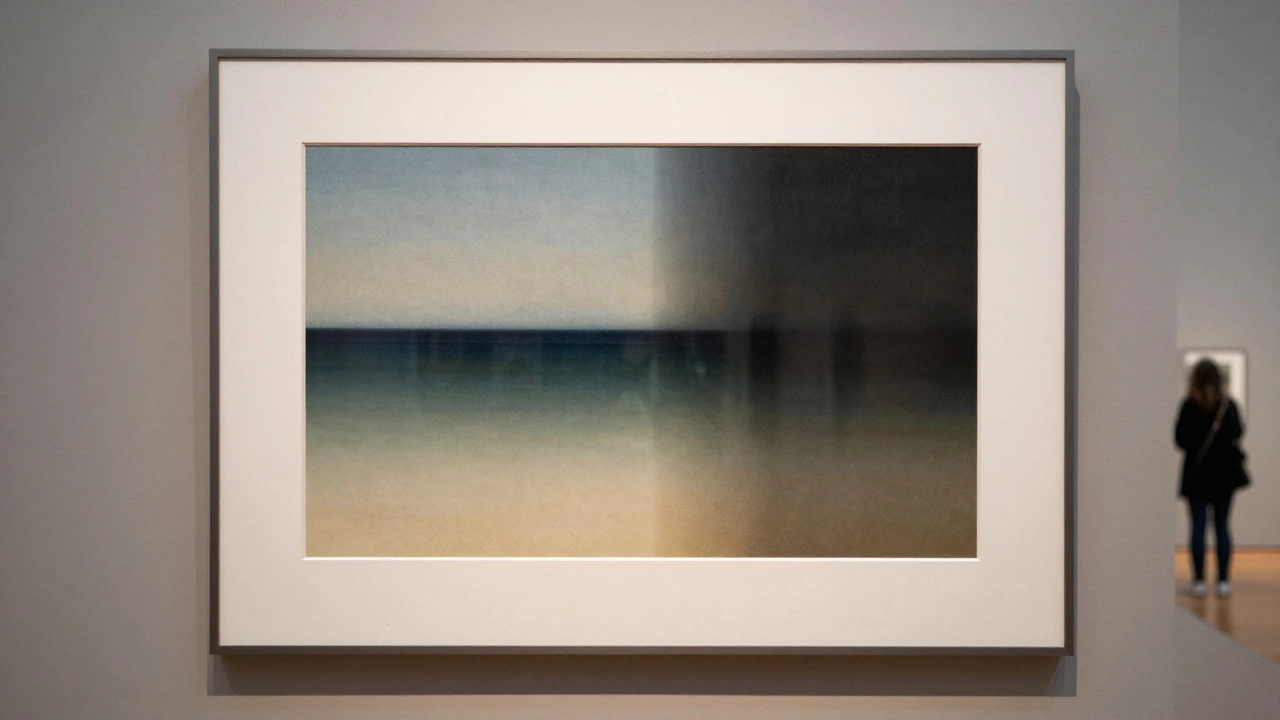
When you buy an art print, you’re not just buying paper and ink. You’re buying a version of a masterpiece-something meant to last, to look true to the original, and to hold value. But not all art prints are created equal. Some fade in a year. Others look flat, dull, or pixelated. So what actually makes one art print the highest quality?
It’s Not Just About the Artist
A common mistake is thinking that if the original painting is by a famous artist, the print must be high quality. That’s not true. A print made from a low-res scan, printed on cheap paper with basic ink, and pressed with a consumer-grade printer will never look like the real thing-even if it’s a Van Gogh. The quality of the print depends entirely on how it’s made, not who made the original.The highest quality art prints are produced using a process called giclée (a French term meaning "to spray"; refers to high-resolution inkjet printing on archival materials). This isn’t just a fancy word. It’s a standard used by museums, galleries, and serious collectors worldwide. Giclée prints use pigment-based inks, not dye-based ones. Pigment inks last longer-up to 100-200 years without fading-because they resist UV light and moisture better. Dye inks, the kind used in home printers, start to fade in as little as six months under normal lighting.
What Makes a Print Museum-Quality?
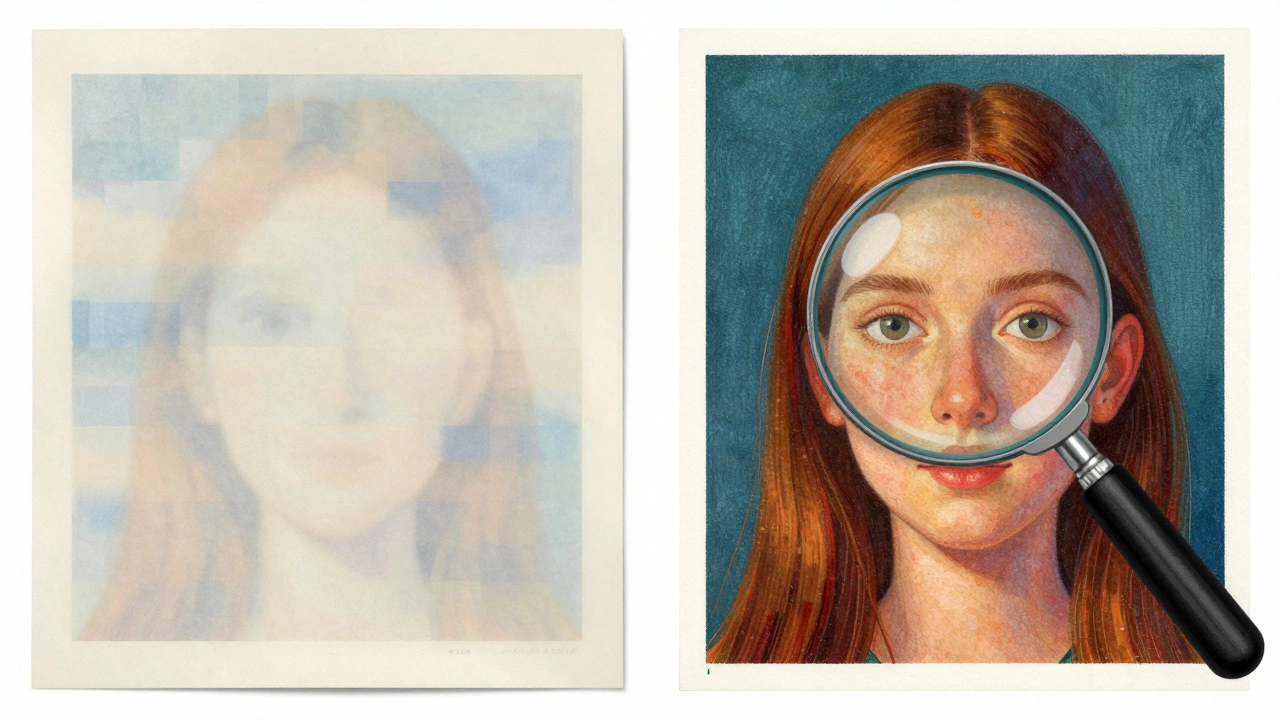
Three things separate a giclée print from a cheap poster: the ink, the paper, and the printer.Pigment-based inks are the first rule. They’re thicker, more stable, and have a wider color range. You can see the difference in subtle gradients-like the soft transition from sky to clouds in a Monet landscape. Cheap prints blur these areas into muddy tones. Giclée prints preserve every nuance.
Archival paper is the second. This isn’t regular copy paper or glossy photo paper. It’s made from 100% cotton rag or acid-free alpha-cellulose. These materials don’t yellow or become brittle over time. They also have a texture that mimics original canvas or watercolor paper. Some artists even use paper with a slight tooth-tiny surface ridges-that catch the ink the same way a brush does on canvas.
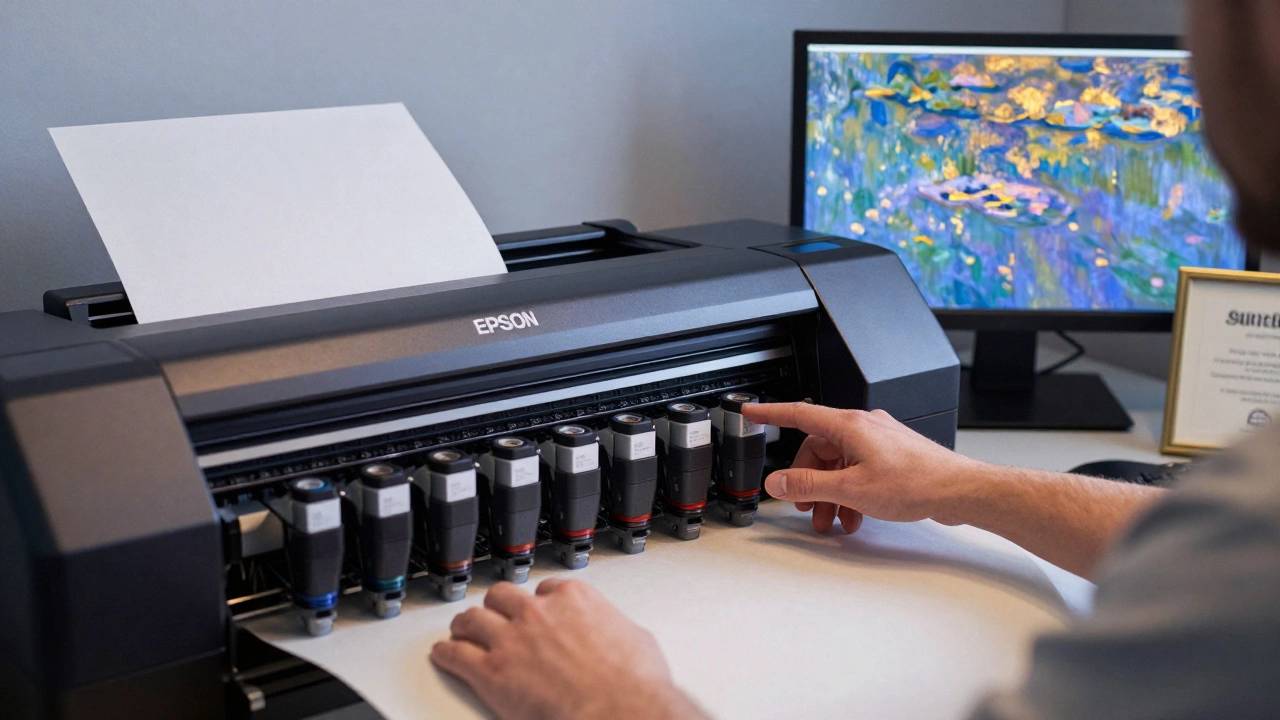
Professional-grade printers are the third. These aren’t Epson or Canon home models. They’re large-format printers like the Epson SureColor P-Series or Canon imagePROGRAF PRO-6000. These machines use 12 or more ink cartridges, including light cyan, light magenta, and gray. This lets them reproduce tones you can’t see on regular prints-subtle shadows, delicate highlights, and near-invisible transitions.
Color Accuracy Matters More Than You Think
A print can look stunning on your screen but fall apart when printed. Why? Because screens use RGB (red, green, blue) light. Printers use CMYK (cyan, magenta, yellow, black) ink. The color space doesn’t match.The best art printmakers calibrate every step. They start with a high-resolution scan of the original artwork-usually 600 dpi or higher. Then they use color profiles tailored to the exact paper and ink combination. This is called color management (a system for ensuring consistent color across devices, from scanner to monitor to printer). Without it, a red rose might print as orange. A blue sky might turn purple.
Reputable studios often print a test proof before the full run. They compare it side-by-side with the original under natural daylight. If the colors don’t match within 3% tolerance, they adjust. That level of precision is rare outside professional galleries.
Signature and Editions: Proof of Authenticity
A high-quality print isn’t just visually accurate-it’s documented. The best prints come with a certificate of authenticity. This includes:- The artist’s name (or estate)
- The title of the artwork
- The print size
- The edition number (e.g., 15/50 means it’s the 15th print out of a limited run of 50)
- The date of printing
- The printer’s name and studio
Some artists hand-sign each print with a pencil. That’s a sign of care. A stamped signature? That’s mass production. Limited editions matter because scarcity increases value. An open edition-where unlimited copies are made-has little collector’s worth. Even if it looks great, it’s not the same as a numbered, signed giclée.
What to Avoid
There are three red flags that tell you a print isn’t museum-quality:- It’s sold as "museum-quality" but priced under $50. If the original painting is worth $10,000, a $49 print is a cheap knockoff.
- The paper feels thin or glossy like a photo. Real archival paper has weight and texture-it should feel like fine stationery.
- No mention of ink type. If the seller doesn’t say "pigment-based inks" or "giclée," they’re probably using dye-based inks.
Also avoid prints labeled "HD" or "4K". Those are marketing terms for digital resolution, not print quality. A 4K scan doesn’t mean anything if it’s printed on 80gsm paper with a 4-color printer.
Where to Find the Best
The top sources for museum-quality art prints are:- Direct from the artist’s studio or estate
- Reputable fine art galleries (like Saatchi Art, Artsy, or local galleries with print programs)
- Museum shops (MoMA, Tate, National Gallery of Victoria)
These places don’t just sell prints-they control the entire process. They work with master printers who calibrate for each artwork. They use archival materials. They limit editions. And they provide full documentation.
Amazon, Etsy, or Walmart? You’ll find prints there-but rarely the highest quality. Most are mass-produced with dye inks on cheap paper. They look good on screen. Up close? They look flat. And they won’t last.
Price Isn’t Always the Answer
A giclée print from a major artist can cost $300-$1,500. That sounds expensive. But consider this: a $1,200 print on archival paper with pigment ink will look the same in 2040 as it does today. A $100 poster will be faded, warped, or yellowed by then.Think of it like buying wine. A $10 bottle is fine for a party. But if you want to age it, store it, or serve it at a special moment-you go for the $100 bottle. The same logic applies to art prints.
And here’s a secret: some artists release limited giclées at lower prices than originals. A $400 print of a $50,000 painting is still a real, high-quality version. It’s not the original-but it’s the closest you can get without paying a fortune.
How to Care for Your Print
Even the best print can be ruined by poor handling. Here’s how to preserve it:- Frame it with UV-protective glass or acrylic
- Avoid hanging it in direct sunlight
- Keep humidity below 50%-use a dehumidifier if needed
- Don’t use spray cleaners on the glass
- Store unframed prints flat in acid-free sleeves
These steps aren’t optional. They’re what keep your print looking new for decades.
Are giclée prints worth the money?
Yes-if you want a print that lasts, looks true to the original, and holds value. Giclée prints use archival materials and pigment inks that resist fading for over 100 years. They’re the standard for museums and collectors. A cheap poster might look fine today, but in five years, it’ll be dull and brittle. A giclée will still look sharp.
Can I make a high-quality art print at home?
It’s possible, but unlikely. Home printers don’t have enough ink colors or the precision needed. Even with pigment ink cartridges, you won’t match the color calibration of a professional studio. Plus, most home papers aren’t archival. You’ll get decent results for personal use, but not museum-quality. For serious collections, rely on professional printers.
What’s the difference between a giclée and a lithograph?
Lithographs are made using a chemical process on metal plates, traditionally done in the 19th and early 20th centuries. They’re often hand-pulled and signed, which gives them historical value. Giclées are digital prints made with inkjet technology. They’re more accurate in color and detail, especially for modern reproductions. Lithographs can be valuable as antiques, but giclées are better for faithful, high-resolution reproductions today.
Do all limited edition prints have value?
No. Value comes from three things: the artist’s reputation, the print’s quality, and whether it’s signed and numbered. A limited edition of 500 prints made with dye ink on thin paper has little value. A limited edition of 25 prints, signed by the artist, printed with pigment ink on cotton rag paper, and backed by a certificate? That’s collectible. Always check the details-not just the number.
How do I know if a print is authentic?
Look for a certificate of authenticity with the artist’s name, edition number, print date, and printer. Check if the print is hand-signed with pencil, not stamped. Verify the printer’s reputation-reputable studios like Arion Press, Gemini G.E.L., or museum-affiliated print shops are trusted. If the seller can’t provide documentation, walk away.