Gallery Submission Checklist
Complete this checklist before submitting
Follow gallery guidelines to avoid immediate rejection. Check items as you prepare your submission.
Getting your art into a gallery isn’t about luck or knowing the right person. It’s about showing up the right way-with work that speaks clearly, a submission that’s professional, and a strategy that respects how galleries actually operate. Most artists fail not because their art isn’t good enough, but because they send poorly prepared packets, ignore guidelines, or target the wrong places.
Start with the right galleries
Not every gallery is right for your work. A gallery that shows large-scale abstract paintings won’t care about tiny watercolor portraits, no matter how skilled they are. Look for galleries that already exhibit artists with a similar style, medium, or theme. Visit their websites. Scroll through their past exhibitions. If you don’t see anything remotely close to your work, move on.Check their submission policy. Many galleries list it clearly under ‘For Artists’ or ‘Submit Work.’ If they don’t, call them. Ask: "Do you accept unsolicited submissions? If so, what format do you prefer?" Some only review work by invitation. Others take applications twice a year. Ignore those that don’t say anything-it’s a red flag.
Small local galleries, artist-run spaces, and cooperative galleries are often the best entry points. They’re more open to new voices and less overwhelmed than big commercial galleries in major cities. In Wellington, places like Enjoy Public Art Gallery or City Gallery Te Whare Toi regularly feature emerging artists through open calls.
Prepare your portfolio properly
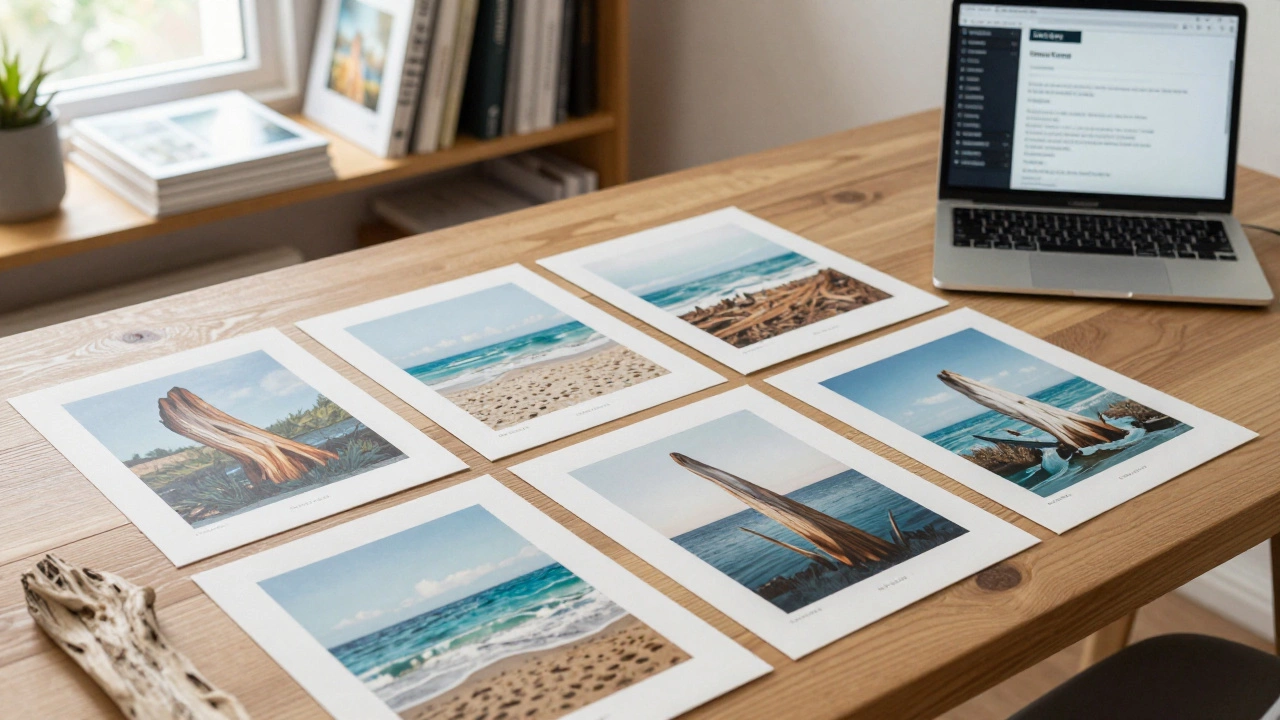
Your portfolio isn’t just a collection of your best pieces. It’s a curated story. Select 8-12 images that show consistency in style, technique, and quality. Don’t include everything you’ve ever made. If you work in mixed media, don’t mix it with pure oil paintings unless they’re part of the same series.Images must be high resolution-300 dpi, at least 1920 pixels on the longest side. Name files clearly: "Title_Medium_Year.jpg". Avoid watermarks unless absolutely necessary. Use a simple, clean layout. No flashy websites with autoplay videos or distracting animations. A PDF or a basic website hosted on Squarespace or Format is fine.
Include a short artist statement-no more than 150 words. What drives your work? What are you exploring? Avoid vague phrases like "I express my soul through color." Be specific: "My recent series examines coastal erosion in Aotearoa through layered resin and reclaimed driftwood, reflecting the fragility of indigenous landscapes."
Write a strong cover letter
This isn’t a resume. It’s a personal note to the gallery director. Address it by name if possible. Start with why you’re contacting them specifically. Mention a recent exhibition you admired. Show you’ve done your homework.Keep it under one page. Include:
- Your name and contact info
- Where you’re based
- A brief mention of your practice (medium, themes)
- Why you think your work fits their program
- That you’ve attached the requested materials
Don’t say: "I’ve been painting since I was five." Don’t say: "I think this is my best work." Say: "My recent body of work, ‘Tidal Shift,’ aligns with your focus on environmental narratives, as seen in your 2024 show with Lina Kim.”
Follow submission guidelines exactly
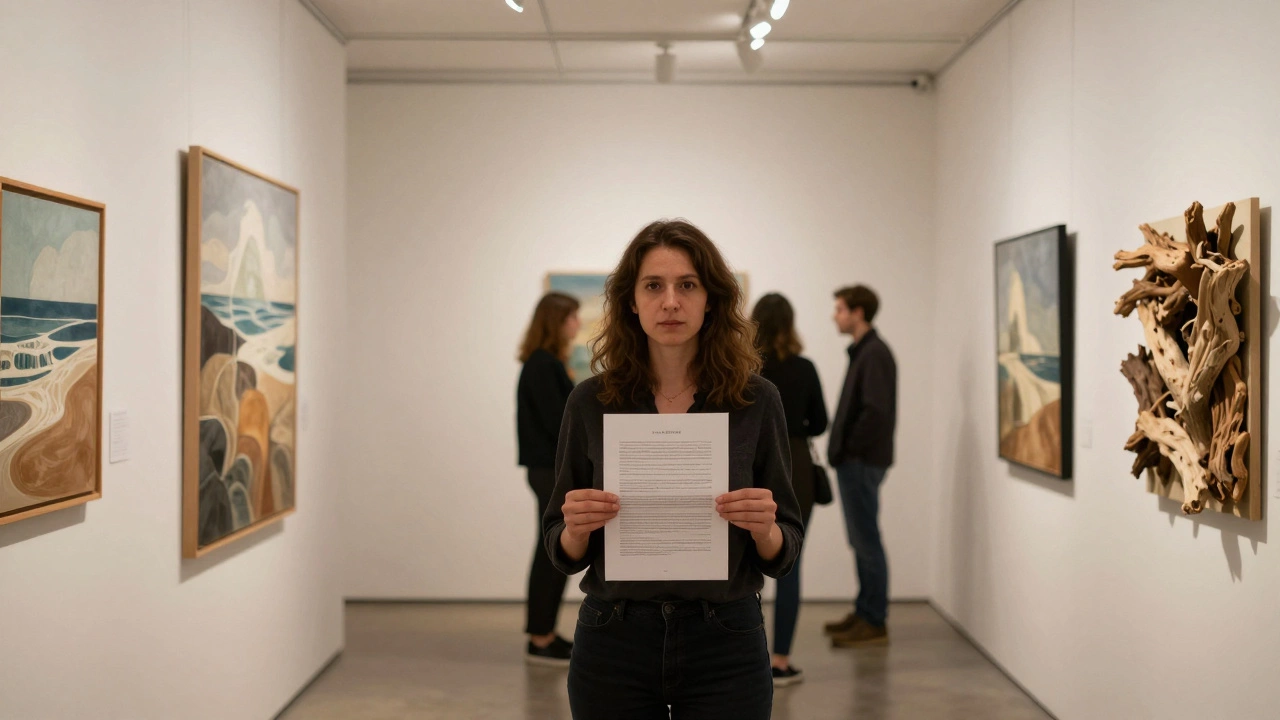
Galleries get hundreds of submissions. If you ignore their rules, your application gets tossed immediately. They want to know: Can this artist follow directions? If they ask for 5 images, send 5. If they want PDFs, don’t send ZIP files. If they say no links, don’t include your Instagram.Some galleries use online portals like CallForEntry.org or ArtCall. Others prefer email. Stick to their method. If they say "Submit via postal mail," send a printed artist statement, high-quality prints, and a self-addressed stamped envelope. Don’t assume email is fine.
Always include:
- Artist name
- Title of work
- Medium
- Dimensions
- Year created
- Price (if for sale)
Label everything. Even if you’re sending digital files, include this info in a separate text file or the PDF. Don’t make them guess.
Track your submissions
Don’t just send and forget. Keep a simple spreadsheet. Include:- Gallery name and location
- Date submitted
- Submission method (email, portal, mail)
- What was sent (images, statement, CV)
- Response received? (Yes/No/Waiting)
- Follow-up date
Wait at least 6-8 weeks before following up. Most galleries have a review cycle and can’t respond to everyone. If you haven’t heard back after two months, send one polite email: "Just checking in on my submission from [date]. I understand you receive many applications and appreciate your time." Then stop. Don’t call. Don’t show up. Don’t email again.
Apply to open calls and juried exhibitions
Many galleries host open calls for group shows. These are low-pressure ways to get your work seen. Search for terms like "open call for artists [your city]" or check platforms like ArtDeadline, CaFÉ, or GalleryCall. Apply to 2-3 per month.Juried shows don’t guarantee sales, but they do give you:
- Exhibition credit
- Press mentions
- Networking opportunities
- A chance to get feedback from curators
Even if you don’t get in, you’ll learn what works. Rejection isn’t personal-it’s about fit, timing, and volume.
Build relationships, not just portfolios
The most successful artists don’t just submit. They show up. Attend gallery openings. Talk to curators. Ask thoughtful questions. Follow them on social media. Comment on their posts. Don’t pitch your work-build familiarity.After you’ve been in a group show, send a thank-you note. If you’re invited to another show, mention your previous experience. "I appreciated being included in your 2024 group exhibition and would be honored to contribute again." That’s how relationships grow.
What not to do
Avoid these common mistakes:- Don’t send unsolicited original artwork. Galleries don’t keep physical submissions.
- Don’t include videos unless requested.
- Don’t list prices higher than the gallery’s typical range.
- Don’t claim your work is "sold out" everywhere-it looks desperate.
- Don’t email 10 galleries at once with the same message.
One personalized, well-prepared submission is worth ten generic ones.
What happens after you’re accepted?
If a gallery accepts your work, they’ll usually ask for:- High-res images for promotion
- A signed consignment agreement
- Delivery and installation instructions
- Artist bio and headshot
Read the contract. Know the commission rate (usually 40-50%). Understand how long the show runs. Ask about insurance. Confirm if they’ll handle shipping or if you’re responsible.
Be present at the opening. Bring friends. Talk to visitors. Collect emails. Follow up with people who show interest. A gallery show isn’t the end-it’s the beginning of your next opportunity.
Do I need a degree to submit my art to galleries?
No. Galleries care about the strength and coherence of your work, not your credentials. Many successful artists have no formal training. What matters is how clearly your art communicates, how consistently you produce, and how professionally you present yourself.
How many galleries should I submit to at once?
Aim for 3-5 per month. Too many at once spreads you thin. Too few slows progress. Focus on quality over quantity. Tailor each submission to the gallery’s style and past exhibitions.
Should I pay to exhibit my art?
Never pay a gallery to show your work unless it’s a verified nonprofit or artist cooperative with transparent fees. Legitimate galleries earn money by selling your art, not by charging you to hang it. Pay-to-play galleries are scams.
What if I get rejected?
Rejection is part of the process. Most artists get turned down 10-20 times before their first show. Use feedback if it’s given. If not, keep improving your portfolio and try again. Every rejection brings you closer to the right fit.
Can I submit digital art to traditional galleries?
Yes. Many galleries now show digital art, video installations, and NFTs-but they need to be presented professionally. Use high-quality monitors or projectors. Provide clear specs for installation. Some galleries still prefer physical prints of digital work. Ask their preference before submitting.