Art Exhibition Pricing Calculator
Enter your production details below to calculate a recommended retail price that covers your time, materials, and overheads.
Enter values and click Calculate
to see your pricing breakdown.
Recommended Retail Price
Cost Breakdown
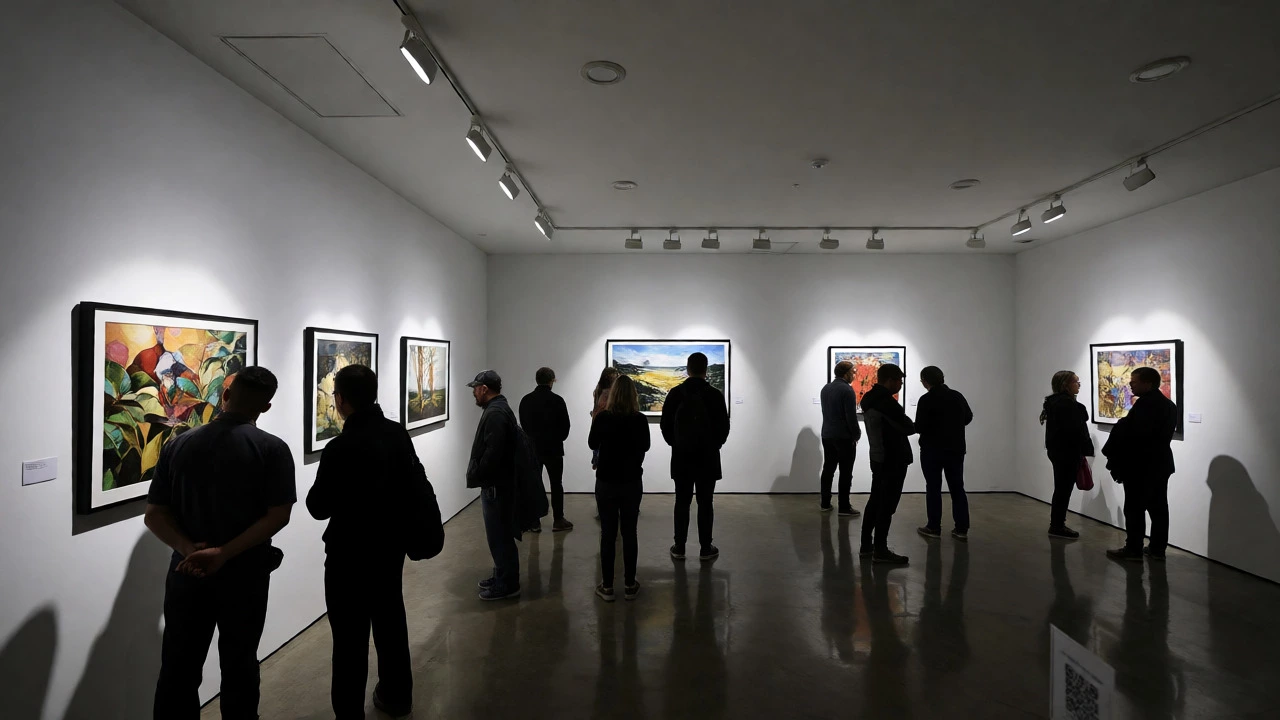
You’ve spent months creating a body of work. The frames are hung, the lighting is set, and people are actually stopping to look at your pieces. Now comes the part that makes most artists sweat more than the creative process itself: putting a number on it. Pricing art is not just about covering your rent; it’s about positioning yourself in the market without scaring off buyers or underselling your own talent.
Here’s the hard truth: there is no single formula that works for everyone. If you price too high, you become invisible. Too low, and collectors wonder if something is wrong with the quality. The goal is to find a sustainable model that respects your time, materials, and career stage while remaining attractive to the specific audience walking into your exhibition.
The Foundation: Calculating Your Base Cost
Before you think about what people want to pay, you need to know what you need to receive. Many emerging artists make the mistake of only counting canvas and paint. That’s a fast track to burnout. You need to account for every hour you spent staring at that blank surface.
Start by calculating your hourly rate. This isn’t minimum wage. In New Zealand, where I live, a professional freelancer might charge between $50 and $150 NZD per hour depending on experience. If you’re just starting out, aim for a realistic living wage divided by the hours you can realistically bill. Let’s say you target $40 NZD/hour. If a painting took you 20 hours to complete, your labor cost is $800.
Next, add your material costs. This includes brushes, paints, canvas, framing, varnish, and even the electricity used to keep your studio warm. Don’t forget overheads like studio rent, insurance, and marketing expenses. A good rule of thumb is to add 15-20% to your total direct costs to cover these indirect expenses.
| Component | Calculation Method | Example Value (NZD) |
|---|---|---|
| Labor | Hours Spent × Hourly Rate | 20 hrs × $40 = $800 |
| Materials | Direct Cost of Supplies | $150 |
| Overheads | (Labor + Materials) × 15% | $142.50 |
| Total Base Price | Sum of above | $1,092.50 |
This base price is your floor. It’s the lowest you should go without losing money on the transaction. But exhibitions aren’t just about breaking even; they’re about building a career. So, how do you move from "break-even" to "market value"?
Using the Square Inch Rule (With Caution)
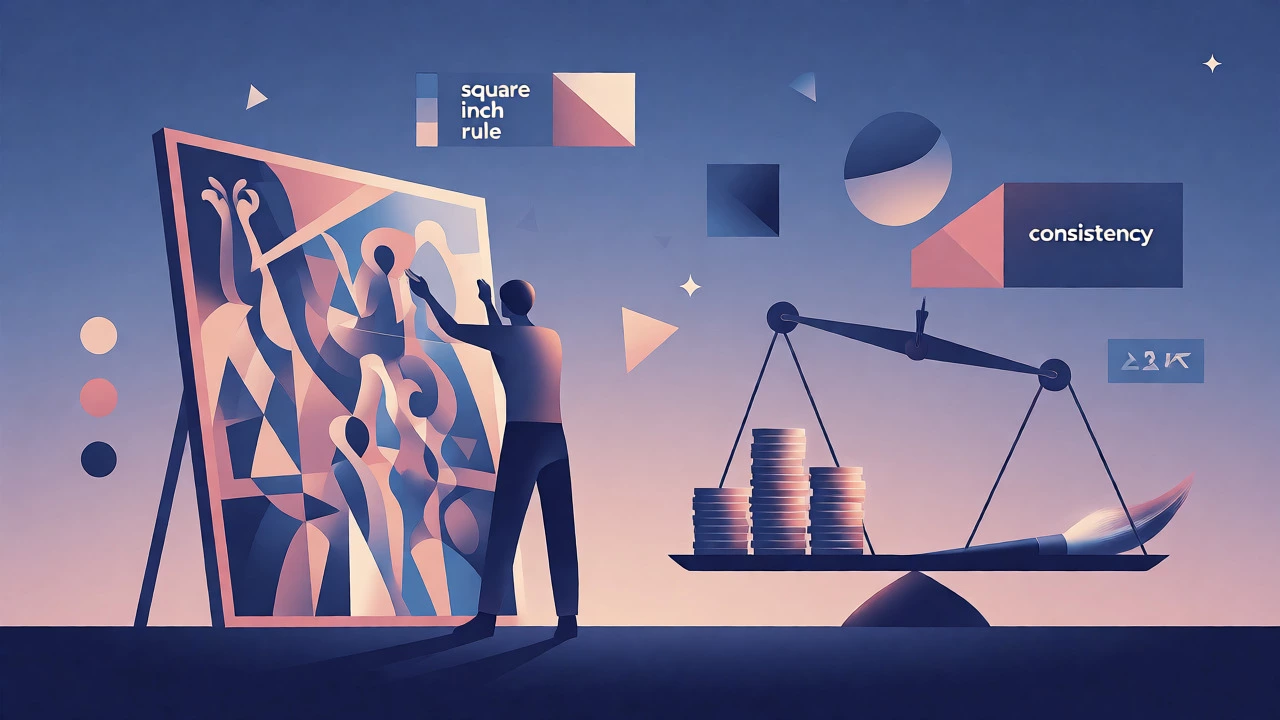
You’ve probably heard the old adage: "Price by size." The formula usually looks like this: Length (in inches) × Width (in inches) × Multiplier = Price. For emerging artists, the multiplier is often between $1 and $3. For established names, it can jump to $10 or more.
Does this work? Sometimes. It helps standardize pricing across a series so that a small study doesn’t cost less than a large canvas simply because you painted it faster. However, it ignores medium and complexity. A detailed oil painting takes longer than a quick acrylic wash, even if they’re the same size. Use the square inch rule as a sanity check, not the final word. If your calculated base price is significantly lower than the square-inch price, trust the square-inch price-it signals that your labor rate might be too low. If the square-inch price is way higher, ask yourself if your skill level justifies that premium yet.
Context Matters: Where Are You Selling?
Pricing changes dramatically based on the venue. An exhibition in a trendy pop-up space in Wellington’s Cuba Street has a different clientele than a prestigious gallery in Auckland’s Ponsonby. You must factor in who is buying and what they expect to pay.
Consider the gallery commission. Most commercial galleries take 40-50% of the sale price. If you want to net $1,000, you need to list the piece at $2,000 or $2,500. Direct sales at a studio open day or a craft fair allow you to keep 100%, but you have to handle all the logistics yourself. When setting prices for an exhibition, clarify upfront whether the listed price includes commission. Transparency builds trust.
Also, look at the competition. Walk around the exhibition space before you hang your work. What are other artists charging? If you’re hanging next to someone with ten years more experience selling similar work for twice your price, don’t panic. But if you’re priced identically to a mid-career artist with a strong collector base, you might be undervaluing yourself. Aim to be slightly below the established peers in the room, but never at a "clearance sale" level unless that’s your specific strategy.
Consistency Is Key for Career Growth
One of the biggest mistakes artists make is erratic pricing. They sell a small sketch for $500 one week and a large painting for $400 the next because they felt generous. Collectors hate surprises. If someone buys a piece from you today, they want to know that their investment will appreciate, or at least hold steady, over time.
Create a pricing matrix. List your typical sizes and mediums, assign a baseline price, and stick to it. If you raise prices, do it gradually-perhaps 10-15% annually-and only after you have sold through your current inventory. Sudden jumps can alienate early supporters who feel they missed out or got ripped off. Consistency tells the buyer that you are a serious professional running a business, not a hobbyist clearing out clutter.
Psychological Pricing Tactics for Exhibitions
Exhibitions are emotional experiences. People buy art because it moves them, but they justify the purchase with logic. Here are a few tricks to help close the deal:
- Anchor High: Display one very expensive, complex piece in the room. Even if no one buys it, it makes your other works seem reasonably priced by comparison.
- Round Numbers vs. Odd Numbers: There’s debate here. Some say $1,000 feels more "premium" than $985. Others argue $985 feels like a better deal. In fine art, round numbers ($1,500, $3,000) often signal confidence and professionalism. Avoid cents.
- Offer Payment Plans: Sticker shock is real. If you offer a simple payment plan (e.g., three monthly installments), you remove the barrier to entry for younger collectors or those hesitant to drop four figures instantly.
Remember, the price tag is part of the artwork’s presentation. Make sure it’s legible but unobtrusive. In many contemporary exhibitions, prices are provided on request via a catalog or QR code, which keeps the aesthetic clean. Just ensure the information is easily accessible so interested buyers don’t walk away out of awkwardness.
Common Pitfalls to Avoid
Don’t let emotion dictate your price tags. You might love a piece because it reminds you of a difficult breakup, but the buyer doesn’t care about your backstory-they care about how it looks in their living room. Similarly, don’t devalue your work by offering discounts immediately. If someone asks, "Is this negotiable?", try saying, "The price reflects my time and materials, but I can offer free shipping," rather than dropping the price by 20%. Protecting your margin protects your future ability to create.
Finally, review your sales data after every exhibition. Did everything sell? Maybe you were too cheap. Did nothing sell? Maybe you were too expensive, or perhaps the work wasn’t resonating. Adjust accordingly. Pricing is a dynamic tool, not a static decree.
Should I include framing in the price?
Yes, ideally. Buyers prefer turnkey solutions. If you frame the work, calculate the cost of the frame and include it in the retail price. If you leave it unframed, clearly state that framing is not included, as unexpected framing costs can kill a sale.
What if I sell out my entire exhibition?
This is a great problem to have, but it usually means you underpriced your work. Consider raising your prices by 10-15% for your next show. Also, capture the contact details of everyone who showed interest but didn’t buy, so you can notify them when new work becomes available.
Do I have to pay tax on art sales?
In New Zealand, if you are selling art regularly with the intent to profit, you may be liable for Income Tax and potentially GST if your turnover exceeds $60,000 NZD annually. Consult an accountant familiar with the arts sector to understand your specific obligations.
How do I price limited edition prints?
Prints should be priced lower than originals, typically 10-20% of the original's value. Factor in the print cost, signing, numbering, and packaging. Ensure the price covers your production costs plus a reasonable profit margin, keeping in mind that prints are often entry-level purchases for new collectors.
Can I negotiate prices at an exhibition?
It depends on the venue policy. Commercial galleries often prohibit negotiation to maintain consistency. At artist-run spaces or open studios, light negotiation is acceptable. Always be polite and transparent. If you discount, consider why-are you making space for new work, or rewarding a loyal patron?