Color Emotion Palette Generator
How to Use This Tool
Select an emotion or feeling from the list below, or type your own. This tool will suggest colors that align with your emotional state—just like how you might choose colors for your abstract painting based on how you feel.
You don’t need to know how to draw a perfect circle to start abstract painting. You don’t need years of training, expensive supplies, or even a clear idea of what you’re going to make. All you need is a surface, some paint, and the willingness to let go of what’s supposed to look right.
Forget the Rules-They’re Not Real
Most people who avoid abstract painting think they’re not "artistic enough." They believe abstract art is just random splatters, or that it requires some hidden genius. That’s not true. Abstract art isn’t about technical skill. It’s about expression. It’s about turning feelings, memories, or even the way the rain sounded last Tuesday into color and shape.Think of it like writing a poem without using words. You’re not trying to paint a tree or a face. You’re trying to paint the feeling of being alone in a quiet room, or the rush of traffic outside your window, or the weight of a conversation you didn’t finish.
There’s no right way to do this. No checklist. No formula. That’s the point.
Start with What You Have
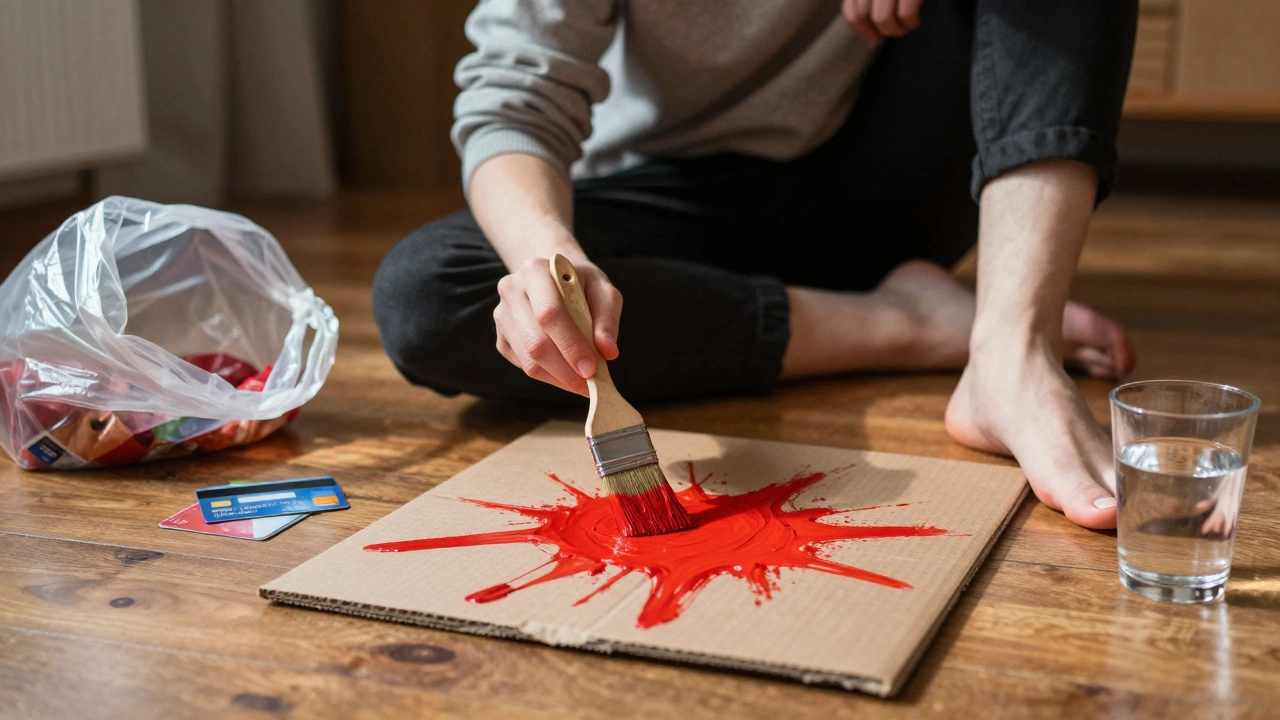
You don’t need a full studio. You don’t need professional-grade acrylics or canvases. Start with what’s already in your house:- A piece of cardboard, an old canvas, or even a thick piece of paper
- Water-based paint-acrylics from a dollar store work fine
- A few brushes, or even a sponge, a credit card, or a stick
- A cup of water and some paper towels
One of the most common mistakes beginners make is waiting for the "perfect" setup. It doesn’t exist. The best time to start is now, with what’s in front of you.
Try This: The First Exercise
Here’s a simple way to begin-no experience needed:- Put on music you feel strongly about. It could be loud, quiet, angry, or sad. Something that moves you.
- Close your eyes. Take three slow breaths.
- Open your eyes. Pick one color. Just one.
- Let your hand move without thinking. Don’t plan. Don’t try to make something beautiful. Just move the brush or tool across the surface as the music plays.
- Keep going for two minutes. No stopping.
When you’re done, look at it. Don’t judge it. Just notice: Did the strokes feel heavy? Light? Chaotic? Calm? Did you use the whole surface? Did you stop halfway and feel stuck? That’s all the information you need.
This isn’t about making art. It’s about noticing what happens when you stop controlling.
Use Color Like Emotion
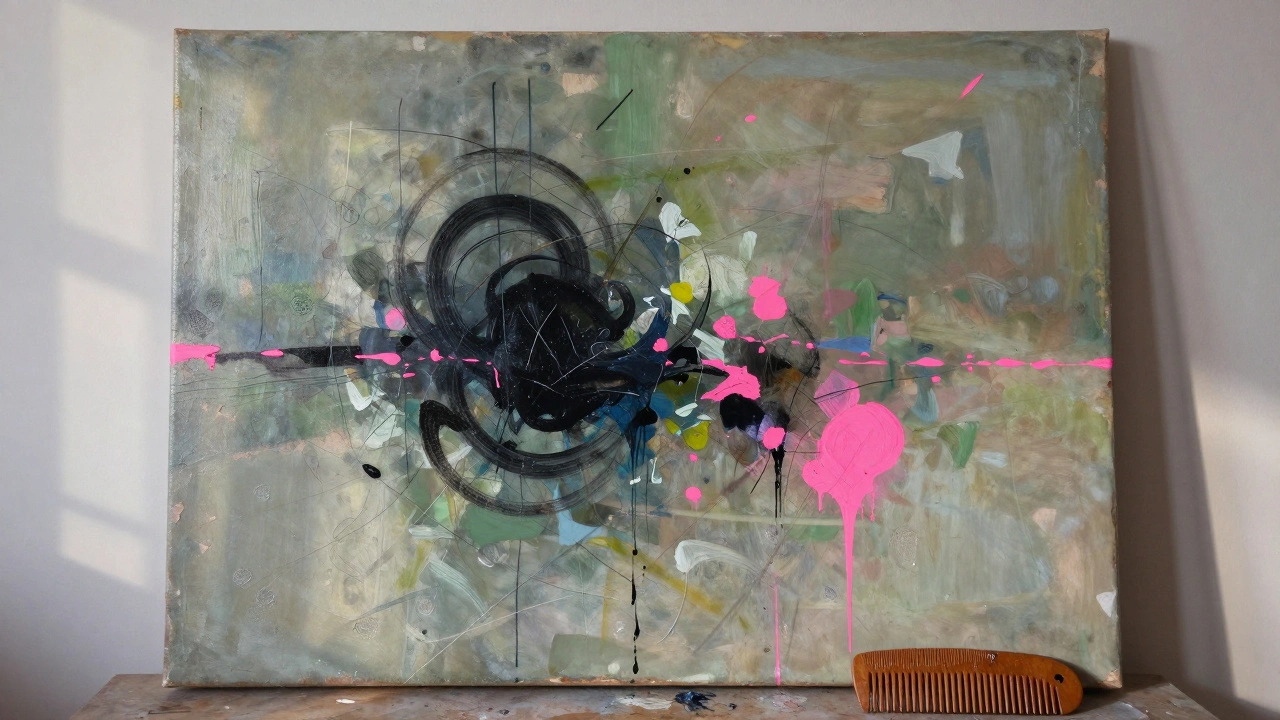
Color isn’t just decoration in abstract painting-it’s language. Red doesn’t always mean danger. Blue doesn’t always mean calm. What matters is how it feels to you.Try this: Pick three colors that match your mood today. Not what you think you "should" use. What actually feels right. Maybe it’s burnt orange, dusty green, and a streak of neon pink. That’s fine.
Some people find it helpful to assign meanings:
- Dark gray = the silence after an argument
- Yellow streaks = sudden hope
- Thick black lines = boundaries you’re tired of
There’s no dictionary for this. Write your own. Let your colors tell your story.
Tools Don’t Define You
You don’t need fancy brushes. In fact, limiting your tools can help you break free from habits.Try painting with:
- A comb
- A plastic bag crumpled into a ball
- Your fingers
- A spray bottle with diluted paint
- A piece of wood or a key
Each tool changes how the paint moves. A comb creates sharp lines. Fingers smear and blend. A spray bottle gives you misty, unpredictable textures. These aren’t "techniques"-they’re ways to surprise yourself.
When you use something unexpected, your brain stops trying to "make something good." It just reacts. That’s where the real painting begins.
Let Go of the Final Image
Most people stop painting because they get stuck on what the final piece "should" look like. They compare it to something they’ve seen online. They think it’s not "good enough."Abstract painting doesn’t have a finish line. It’s not a portrait. It’s not a landscape. It’s a record of movement, time, and feeling.
Here’s a rule I live by: If you’re still thinking about how it looks, you’re not painting-you’re editing. Stop. Walk away. Come back tomorrow. Look at it again. Maybe you’ll see something you didn’t notice before.
Some of my favorite pieces started as "mistakes." A drip that turned into a river. A smudge that became a face. I didn’t plan it. I just let it happen.
What to Do When You Feel Stuck
Feeling stuck isn’t failure. It’s part of the process.If you’re staring at a blank canvas and nothing feels right, try this:
- Paint over your last piece. Don’t erase it-cover it. Let the old marks show through.
- Use a single brushstroke across the whole surface. Just one. Then stop.
- Put on a podcast or audiobook and paint while listening. Don’t think about the art-just move.
- Paint with your non-dominant hand. It forces you to slow down and lose control.
There’s no wrong move here. Even silence on the canvas is a choice.
Keep a Small Journal
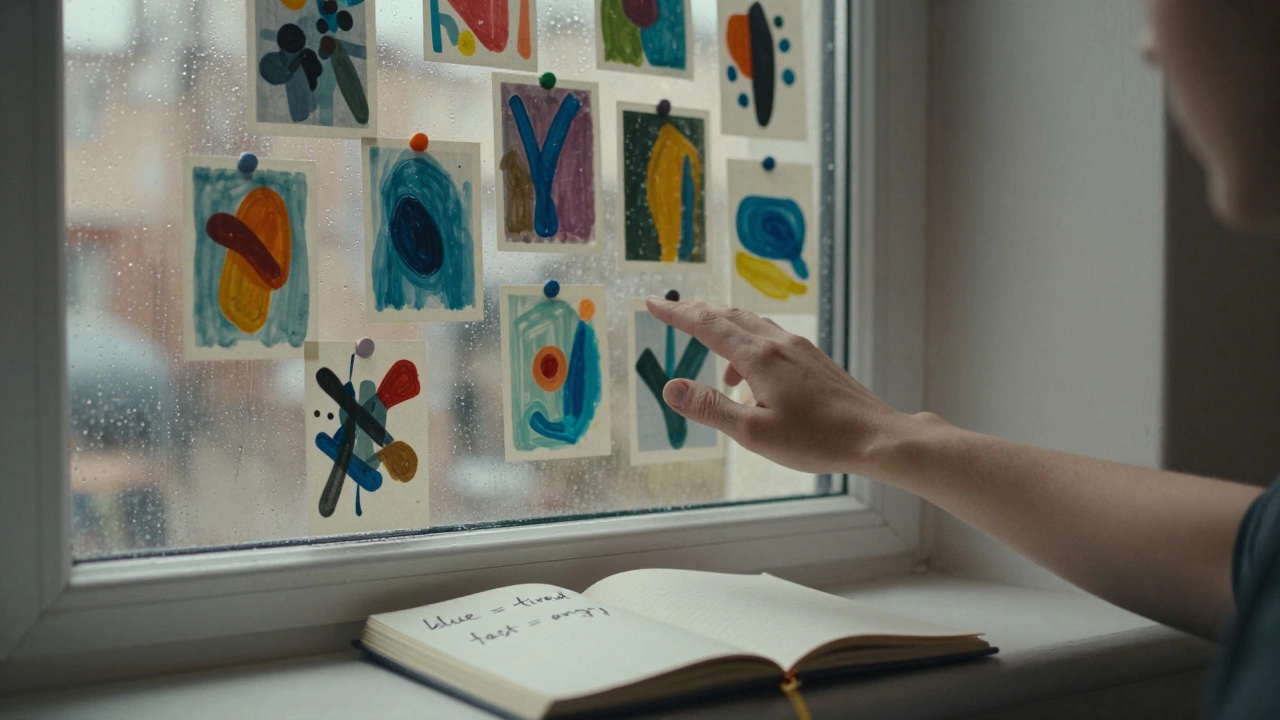
After each session, take two minutes to write down:- What music or sound you used
- What color you started with
- How your body felt while painting
- One word that describes the result
Don’t analyze it. Just record it. Over time, you’ll start to see patterns. Maybe you always use blue when you’re tired. Maybe you paint fast when you’re angry. That’s not a flaw-it’s insight.
You’re Not Making Art. You’re Making Yourself.
Abstract painting isn’t about creating something for others to admire. It’s about discovering what’s inside you.Every mark you make is a reflection of your mood, your energy, your rhythm. You’re not trying to be Picasso. You’re trying to be you.
There’s no goal. No prize. No gallery opening waiting at the end. Just you, the paint, and the quiet space between your thoughts.
That’s enough.
What Comes Next?
After a few weeks of this, you might notice things changing:- You start to recognize your own marks-the way you drag a brush, the colors you return to
- You feel less afraid of "messing up"
- You begin to see abstract shapes in everyday things: cracks in the sidewalk, stains on a coffee cup, shadows on a wall
That’s when you know you’re not just painting. You’re seeing differently.
There’s no next level. No advanced class. No certification. Just more time with the paint. More silence. More honesty.
That’s the whole journey.
Do I need to know how to draw to paint abstractly?
No. Abstract painting doesn’t require drawing skills. In fact, letting go of the need to draw accurately is often the first step. Abstract art is about feeling, not form. Your hand doesn’t need to know how to make a perfect circle-it just needs to move.
What kind of paint should I use as a beginner?
Acrylic paint is the easiest for beginners. It dries quickly, cleans up with water, and works on almost any surface. You don’t need expensive brands-store-bought student-grade acrylics are perfectly fine. Start with three colors: red, blue, and yellow. You can mix them to make everything else.
How long should I paint for each session?
Start with 10 to 15 minutes. That’s long enough to get into the flow, but short enough to avoid pressure. As you get more comfortable, you might naturally want to paint longer. There’s no rule. Even five minutes counts if you were fully present.
Is abstract art really art if anyone can do it?
Yes. The value isn’t in how hard it is to do-it’s in what it reveals. Abstract art isn’t about technical mastery. It’s about honesty. A child’s scribble can carry more truth than a perfectly rendered portrait. The question isn’t "Can anyone do it?" It’s "What does it say about the person who made it?"
What if I don’t like what I’ve painted?
Paint over it. That’s part of the process. Abstract art thrives on layering. What looks like a mistake today might become the foundation of something powerful tomorrow. Don’t throw anything away. Keep every piece-even the ones you hate. You’ll see how far you’ve come.