Contemporary Art Trend Matcher
The art world in 2026 is fragmented and diverse. There is no single dominant style. Take this quick quiz to find out which of the four major contemporary currents resonates most with your taste.
Key Characteristics:
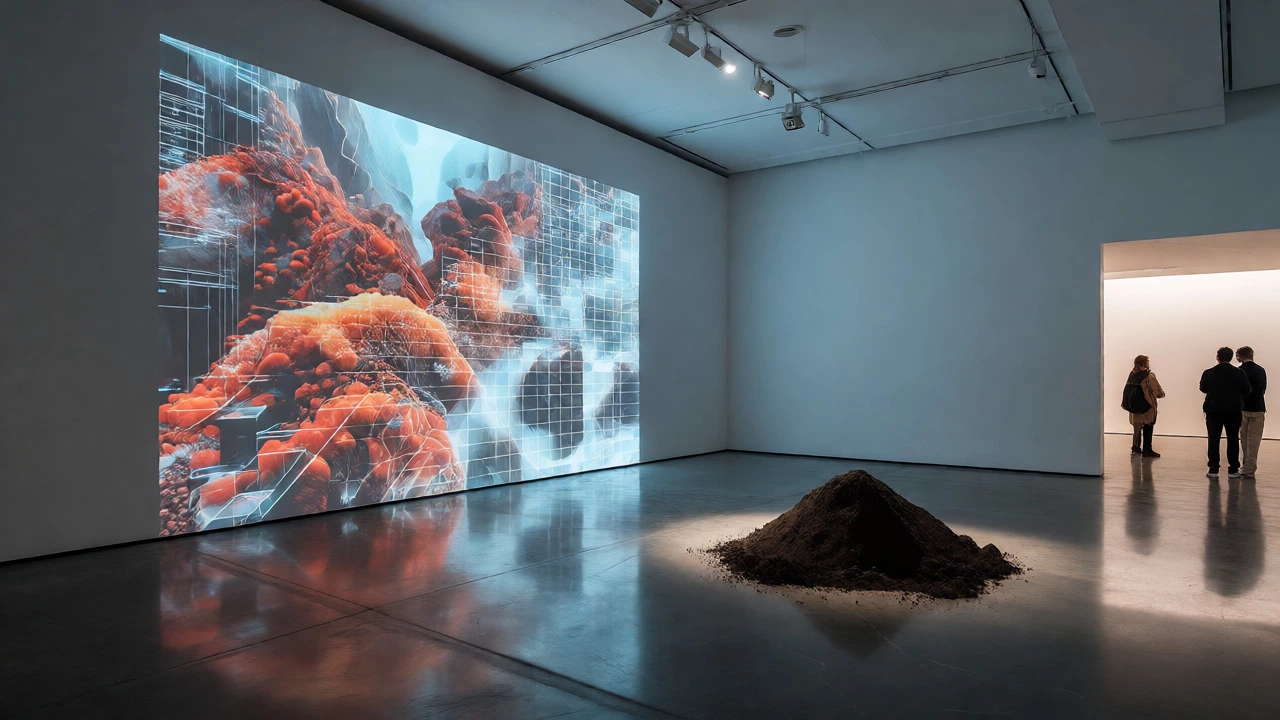
You walk into a gallery today and the walls might be empty. Or they might be filled with screens playing looping videos of people arguing about climate change. Or maybe there is just a pile of dirt in the corner that costs more than your car. If you are trying to pin down what art movement is popular today, you will quickly realize there is no single "ism" dominating the scene like Cubism or Impressionism did in the past. We live in a post-ideological era. There is no manifesto signed by everyone. Instead, we have a fragmented landscape where technology, politics, and identity collide.
The truth is, contemporary art in 2026 isn't defined by one style. It is defined by how artists respond to our current reality: a world saturated by algorithms, anxious about the planet, and obsessed with authenticity. If you want to understand what is hot right now, you need to look at three specific areas: the rise of digital-native aesthetics, the return of hand-made imperfection, and the shift from objects to experiences.
The Dominance of Digital and AI-Assisted Art
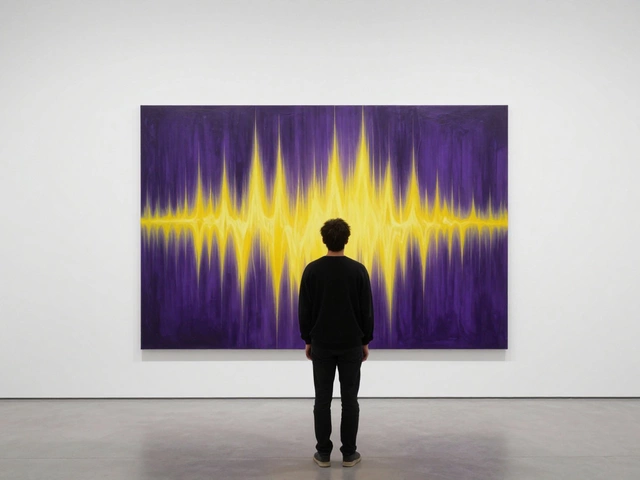
Let’s start with the elephant in the room: Digital Art and its evolution into AI-assisted creation. Ten years ago, digital art was often dismissed as "not real art." That argument is dead. In 2026, digital tools are standard. But it is not just about using Photoshop. The trend has shifted toward hybrid workflows where human intuition guides machine generation.
Artists like Refik Anadol paved the way for data-driven installations, but today’s emerging stars are using generative models to create surreal, dream-like visuals that challenge our perception of authorship. This isn't just about lazy prompting. Serious artists train their own small language models on their previous sketches or use diffusion models as a brainstorming partner. The result is a new aesthetic: hyper-detailed, slightly uncanny, and deeply personal. Galleries are no longer hiding the tech; they are showcasing the process. You will see monitors displaying code alongside the final image, emphasizing the collaboration between human and machine.
| Feature | Traditional Media (Oil/Canvas) | Digital/AI-Assisted |
|---|---|---|
| Primary Appeal | Tactility, history, permanence | Novelty, interactivity, scalability |
| Market Value Driver | Rarity, provenance, physical condition | Uniqueness of prompt/code, artist reputation |
| Audience Engagement | Passive observation | Active participation, VR/AR integration |
| Production Speed | Weeks to months | Hours to days (iterative) |
The Counter-Movement: Neo-Surrealism and Materiality
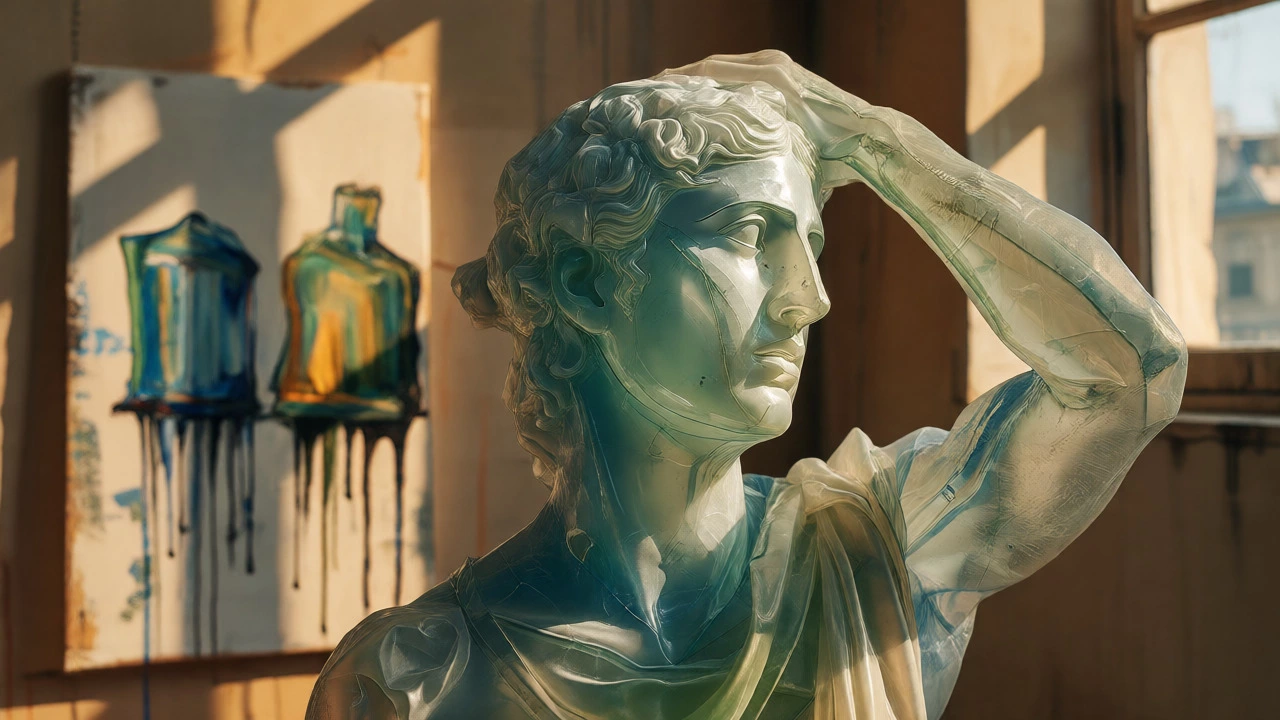
For every artist embracing pixels, there is another digging in the earth. As our lives become increasingly virtual, there is a powerful backlash seeking the tangible. This has given rise to Neo-Surrealism, which combines bizarre, dream-like imagery with traditional materials like clay, bronze, and oil paint.
Think of this as the antidote to screen fatigue. These works often feature distorted figures, melting objects, or strange juxtapositions that feel familiar yet unsettling. Why is this popular? Because it reflects our collective anxiety. We feel like things are falling apart socially and environmentally. Surreal imagery allows artists to visualize that chaos without being literal. You might see a sculpture of a human figure made entirely of recycled plastic waste, twisted into a pose reminiscent of classical Greek statues. It is beautiful, but it makes you uncomfortable. That tension is exactly what collectors and critics are looking for.
This movement also emphasizes the "hand-made" error. Perfect digital lines are cold. Brushstrokes that wobble, clay fingerprints left in the surface, and visible wood grain remind us that a human made this. In an age of AI perfection, imperfection becomes a luxury good.
Social Practice and Participatory Art
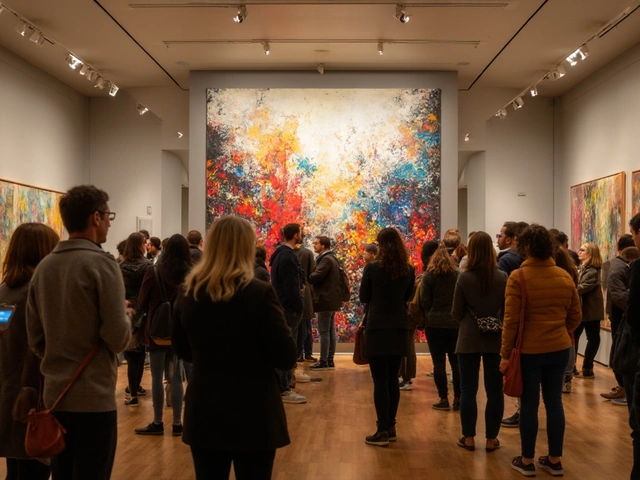
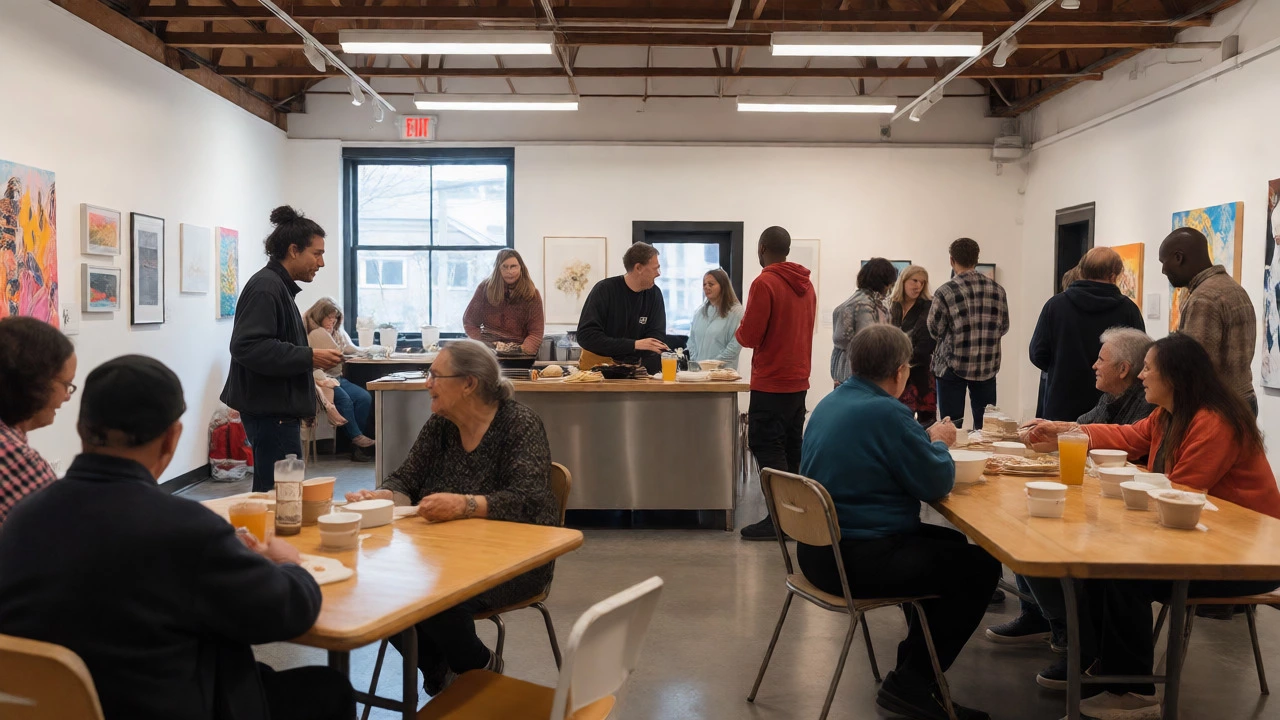
Maybe the most significant shift in recent years is the move away from art as an object to art as an action. Social Practice Art is a type of contemporary art where the artist engages directly with communities and social issues. The artwork isn't just something you look at; it is something you do or experience.
Imagine walking into a gallery and finding a community kitchen instead of paintings. The artist cooks meals for local residents, and the act of sharing food is the performance. Or consider projects where artists organize neighborhood clean-ups, documenting the process through photos and interviews. The value here lies in the relationships built, not just the final artifact.
This trend aligns perfectly with younger generations who prioritize experiences over possessions. Millennials and Gen Z buyers are less interested in owning a static painting for their wall and more interested in supporting causes and participating in cultural dialogues. Museums are adapting by creating spaces for these interactive projects, blurring the line between curator, artist, and audience.
Eco-Art and Sustainability as Aesthetic
You cannot talk about popular art in 2026 without mentioning the climate crisis. Eco-Art is no longer a niche subgenre; it is central to the mainstream conversation. Artists are not just painting pictures of nature; they are using sustainable materials and addressing environmental degradation directly.
This manifests in two ways. First, material choice matters. Using biodegradable pigments, reclaimed wood, or upcycled textiles is now a selling point. Collectors ask about the carbon footprint of a piece. Second, the subject matter is urgent. Works depicting rising sea levels, extinct species, or pollution are common. But the best eco-art avoids being preachy. It uses beauty to draw you in before hitting you with the hard truth. For example, an installation using thousands of discarded bottle caps to recreate a coral reef shows both the problem and the potential for transformation.
How to Identify What's Trending
If you want to stay ahead of the curve, do not just follow auction prices. They lag behind. Instead, watch these signals:
- Museum Biennials: Look at the Venice Biennale or Documenta lists. These events set the tone for the next 2-3 years.
- Emerging Artist Grants: Organizations like the Guggenheim or local arts councils highlight new voices before they hit commercial galleries.
- Social Media Virality: Instagram and TikTok still drive discovery. If a specific visual style goes viral among young creators, galleries will notice within six months.
- Cross-Disciplinary Collabs: When fashion brands team up with digital artists, or musicians collaborate with sculptors, it signals a merging of audiences and markets.
Remember, popularity does not always equal quality. Some trends fade quickly because they are gimmicks. Others stick around because they resonate with deeper human needs. The key is to distinguish between hype and substance.
Key Takeaways
- There is no single dominant art movement in 2026; the landscape is pluralistic.
- Digital and AI-assisted art are mainstream, focusing on hybrid human-machine workflows.
- Neo-Surrealism offers a counter-narrative through tactile, imperfect, and psychologically charged works.
- Social Practice Art prioritizes community engagement and experience over physical objects.
- Sustainability is a critical factor in both material choices and thematic content.
Is AI considered a separate art movement?
Not exactly. AI is viewed as a tool or medium rather than a standalone movement. It is integrated into various styles, including digital surrealism, abstract expressionism, and conceptual art. The focus is on how the artist uses AI to enhance their vision, not just on the technology itself.
Why is Neo-Surrealism so popular right now?
It resonates because it mirrors the surreal nature of modern life. With global uncertainties, political polarization, and technological disruption, reality often feels dreamlike or nightmarish. Neo-Surrealism provides a visual language to express these complex emotions through traditional, tactile media, offering a sense of grounding amidst chaos.
Do I need to understand the theory to enjoy contemporary art?
No. While knowing the context helps, contemporary art invites personal interpretation. Trust your instincts. If a piece makes you feel something-curiosity, discomfort, joy-it is working. Read the artist statement if you want more depth, but do not let academic jargon intimidate you.
What is Social Practice Art?
Social Practice Art is a form of contemporary art where the primary work is the interaction between the artist and a community. It can involve workshops, performances, or collaborative projects. The goal is often social change or dialogue, making the process as important as the final outcome.
Are NFTs still relevant in 2026?
The speculative bubble has burst, but NFTs remain relevant as a technical infrastructure for digital ownership. They are used for authentication, royalties, and access rights. The focus has shifted from expensive profile pictures to utility-based tokens that support ongoing artistic practices and community membership.