Sculpture Method Explorer
Select a sculpture method below to learn about its process, materials, and characteristics.
Click on any method above to see detailed information
Have you ever looked at a marble statue and wondered how someone took a solid block of stone and turned it into something that looks like it could breathe? Or maybe you’ve seen a massive steel structure in a park and tried to figure out how those heavy metal sheets were joined together without falling apart. The answer lies in the fundamental methods artists use to build or carve their work.
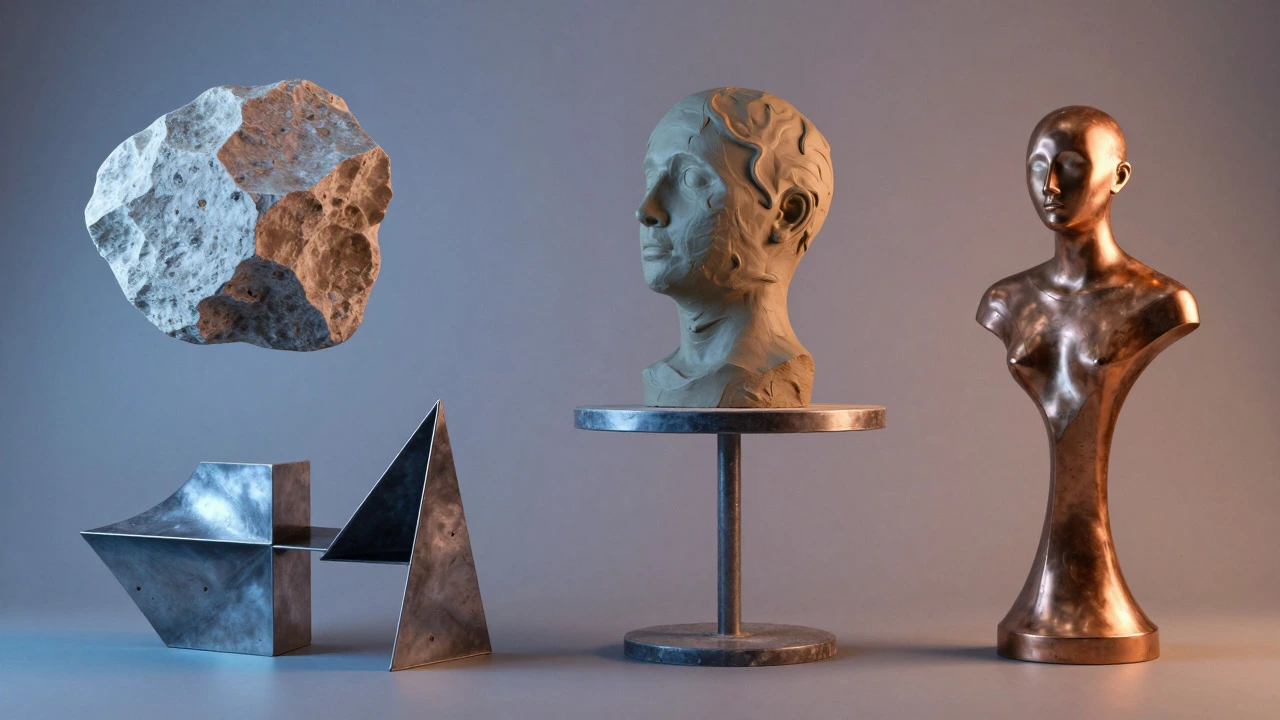
When we talk about the methods of sculpture, we aren’t just listing tools. We are talking about the core logic of creation: do you add material to create form, or do you remove material to reveal it? While there are many techniques within these categories, the art world generally groups them into four primary methods: carving (subtractive), modeling (additive), construction/assemblage (additive), and casting (indirect).
Understanding these four pillars helps you appreciate not just what a sculpture is, but how it was made. It changes the way you look at art. You start seeing the fingerprints of the artist, the weight of the materials, and the physical challenges they overcame. Let’s break down each method, starting with the oldest and most direct approach.
1. Carving: The Subtractive Method
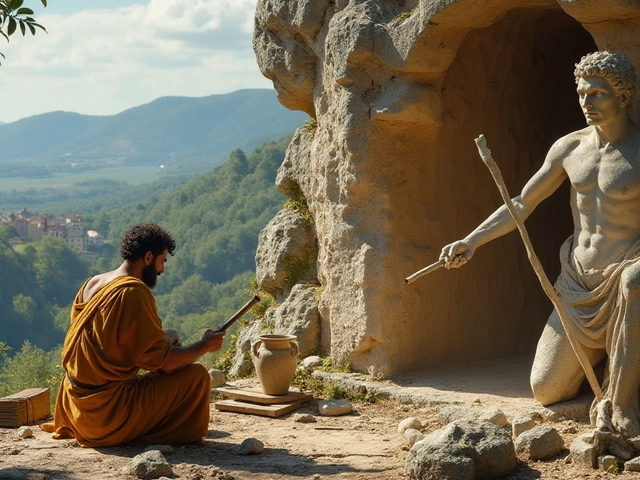
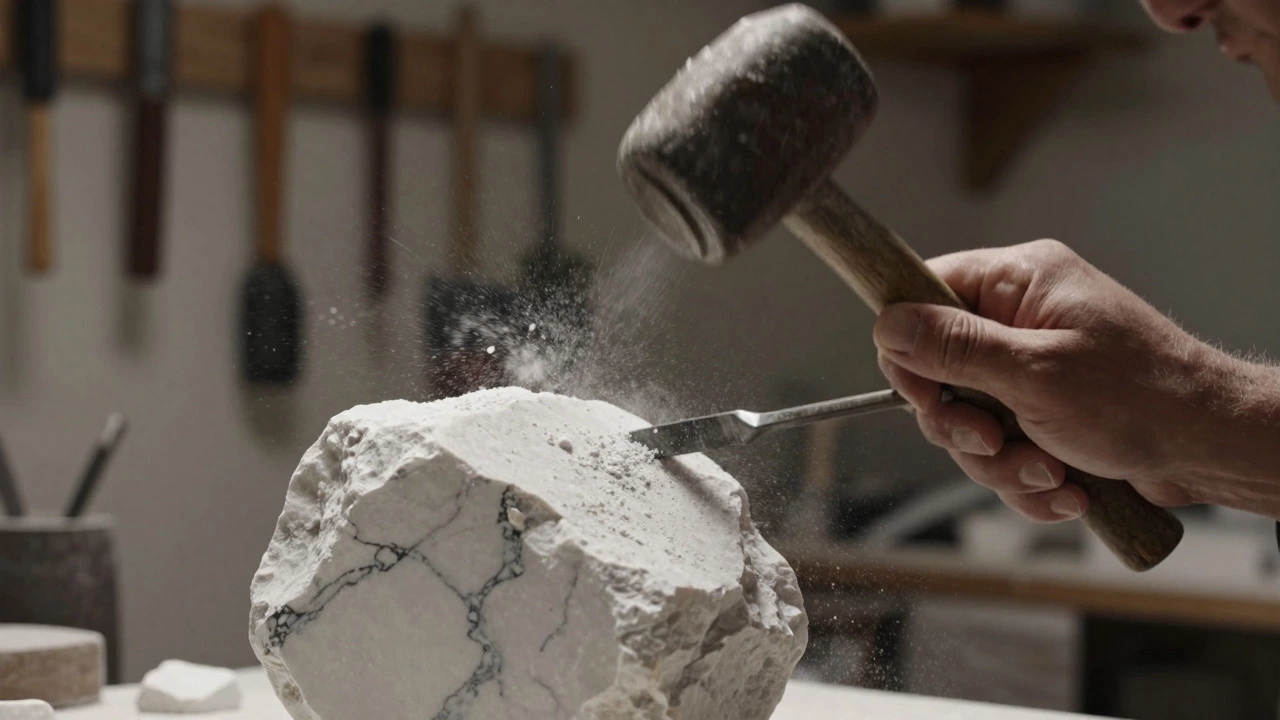
Carving is the act of removing material from a larger mass to reveal the shape hidden inside. This is known as a subtractive process because you can never put the material back once it is gone. It requires precision, planning, and a bit of bravery, because one wrong chisel strike can ruin weeks of work.
The most common materials for carving are wood, stone, and ivory. Each material behaves differently. Wood has grain, which means it splits along certain lines if you cut against it. Stone, like marble or granite, is brittle and hard, requiring sharp tools and significant force. Artists often start with a rough block and gradually chip away excess material until the final form emerges.
A classic example of this method is Michelangelo’s David. He didn’t build David up; he carved him out of a single block of Carrara marble. The challenge here is that the sculpture is limited by the size and shape of the original block. If the marble has a crack in it, the artist must work around it or accept it as part of the piece.
Why choose carving? Because it connects directly to the material. There is no intermediary step. The tool hits the stone, and the stone responds. It is immediate and permanent. However, it is also unforgiving. Unlike digital design where you can hit 'undo,' a carved error is forever.
2. Modeling: The Additive Method
If carving is about subtraction, modeling is about addition. In this method, the artist builds up the form by adding soft, pliable materials. The most common material used for modeling is clay, but wax and plasticine are also popular. This is an additive process because you keep adding more material until the shape is complete.
Modeling is often the first method students learn because it is forgiving. If you make a mistake, you can simply smooth it out and try again. You can push, pull, pinch, and roll the material to create organic shapes that would be nearly impossible to carve from stone. Think of a figurine of a person running-the flowing muscles and dynamic pose are much easier to model in clay than to chip out of marble.
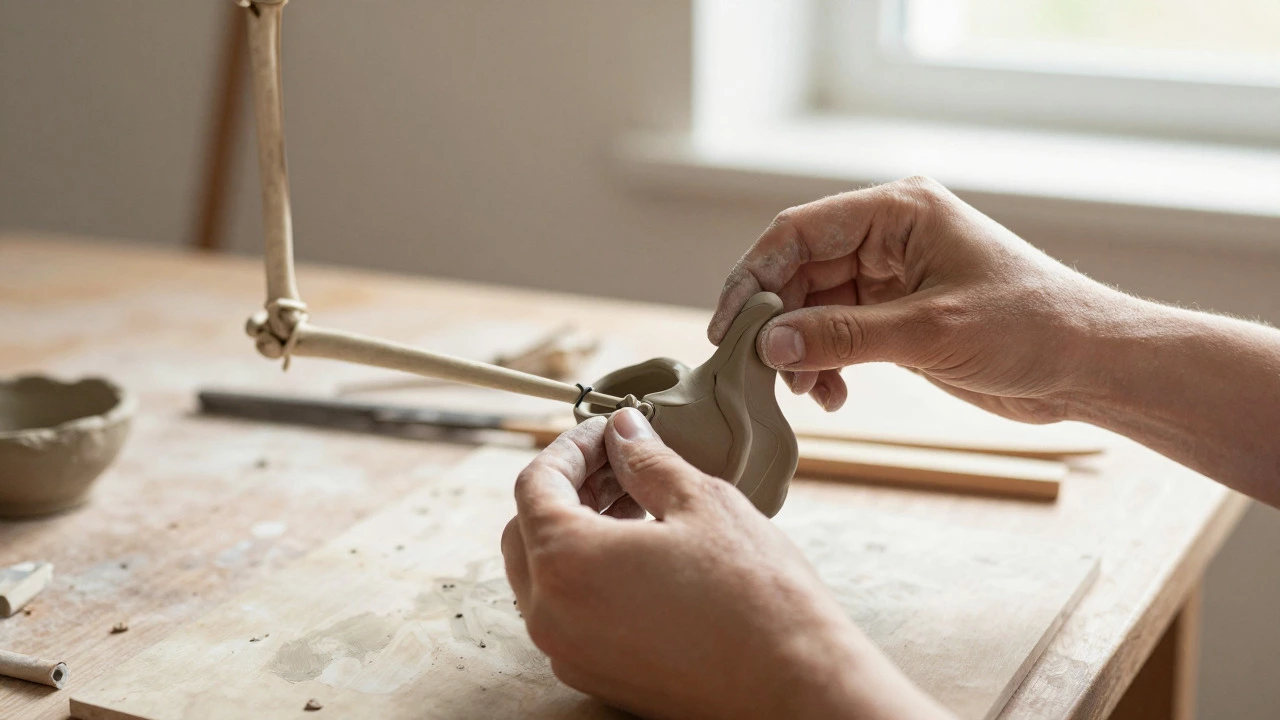
However, there is a catch. Clay on its own is too weak to support large structures. It will slump under its own weight. To solve this, artists use an armature. An armature is an internal framework, usually made of wire, wood, or metal rods, that holds the clay in place. Imagine the skeleton of a puppet; the clay is the flesh. Without the armature, your sculpture would collapse before you finished it.
Once the model is complete, it is rarely left as clay. Clay shrinks and cracks when dried or fired. Instead, the modeled clay serves as a prototype. It is used to create a mold, which then allows the artist to cast the final piece in bronze, plaster, or resin. So, while modeling is an additive technique, it often leads indirectly to other processes.
3. Construction and Assemblage: Building Up
The third method moves away from soft materials like clay and focuses on joining hard, pre-existing materials together. This is called construction or assemblage. Instead of shaping a single mass, the artist selects individual parts-wooden blocks, metal sheets, found objects-and joins them using nails, screws, glue, welding, or bolts.
This method became hugely popular in the 20th century with movements like Cubism and Constructivism. Artists wanted to break away from traditional representations of the human body and explore abstract forms. By assembling geometric shapes, they could create complex structures that played with space and perspective in new ways.
Welding is a key technique within construction. It involves melting metal edges together to fuse them permanently. This allows for strong, seamless joints that can support heavy loads. You see this in large-scale public sculptures made of steel. The artist doesn’t carve the steel; they cut pieces to size and weld them into a cohesive whole.
Assemblage takes this further by incorporating "found objects"-items that already have a history or meaning outside the artwork. For example, an artist might attach an old bicycle wheel to a stool. The juxtaposition of these everyday items creates new meanings. This method is highly flexible because it isn’t limited to one type of material. You can mix wood, glass, metal, and fabric in a single piece.
| Method | Process Type | Primary Materials | Reversibility |
|---|---|---|---|
| Carving | Subtractive | Stone, Wood, Ivory | Irreversible |
| Modeling | Additive | Clay, Wax | Highly Reversible |
| Construction | Additive | Metal, Wood, Found Objects | Partially Reversible |
4. Casting: The Indirect Process
The fourth major method is casting. Unlike carving, modeling, or construction, casting is an indirect process. The artist does not touch the final material directly. Instead, they create a negative impression of the form-a mold-and pour liquid material into it. When the material hardens, it takes the shape of the mold.
Casting allows for replication. One mold can produce multiple copies of the same sculpture. This is why you often see numbered editions of bronze statues (e.g., 1/10). The artist models the original in clay, creates a mold from that clay, and then casts the final version in bronze using the lost-wax process.
In the lost-wax method, the artist makes a wax model of the sculpture. They cover it in a heat-resistant material to create a shell. Then, they heat the shell, causing the wax to melt and drain out (hence "lost-wax"). Molten bronze is poured into the empty space. Once cooled, the outer shell is broken away to reveal the bronze sculpture inside.
Casting is essential for creating detailed, complex forms that would be difficult to carve or construct. It captures every fingerprint and texture from the original model. Common casting materials include bronze, aluminum, plaster, and concrete. While it requires technical expertise and expensive equipment, it offers unparalleled control over surface detail and finish.
Choosing the Right Method for Your Art
So, which method should you use? It depends on your goals, resources, and the message you want to convey. If you value permanence and connection to natural materials, carving might appeal to you. But be prepared for the learning curve and the cost of stone or hardwood.
If you prefer experimentation and flexibility, modeling is the best starting point. Clay is cheap, easy to find, and allows you to explore form without fear of failure. Just remember that you’ll need to plan for casting or firing if you want the piece to last.
For those interested in modern aesthetics and industrial materials, construction offers endless possibilities. You don’t need a studio full of clay; you can work with scrap metal, wood scraps, or recycled plastics. It’s sustainable and visually striking.
Finally, if you want to create multiples or achieve a high level of surface detail, casting is the way to go. It bridges the gap between hand-made uniqueness and reproducible art. Many professional sculptors combine all four methods: they model in clay, construct an armature, carve details, and finally cast in bronze.
Common Pitfalls to Avoid
Beginners often make mistakes that stem from misunderstanding the physical properties of their chosen medium. Here are three critical errors to watch out for:
- Ignoring Gravity: In modeling and construction, gravity is your enemy. If you extend a limb too far without internal support, it will sag or snap. Always reinforce weak points with wire or additional material.
- Rushing the Dry Time: Whether working with clay or plaster, patience is key. Removing a piece from the mold too early can cause cracking or deformation. Follow the manufacturer’s drying times strictly.
- Overcomplicating the Design: Complex designs require advanced skills. Start simple. A smooth sphere or cube teaches you more about balance and proportion than a intricate dragon. Master the basics before attempting elaborate narratives.
Tools You Will Need
Each method requires specific tools. For carving, you’ll need chisels, mallets, and rasps. For modeling, basic hand tools, wire cutters, and a pottery wheel (optional) suffice. Construction demands power tools like drills, saws, and welders. Casting requires molds, kilns, and furnaces.
Invest in quality tools early. Cheap chisels dull quickly and can slip, causing injury. Good clay tools are ergonomic and reduce hand fatigue. Safety gear-goggles, masks, gloves-is non-negotiable, especially when dealing with dust, fumes, or hot metals.
Conclusion: The Artist’s Choice
The four methods of sculpture-carving, modeling, construction, and casting-are not mutually exclusive. They are tools in a broader toolkit. Great artists often blend them. You might carve a wooden base, model a clay figure on top, and cast the figure in bronze. Understanding these methods gives you the freedom to choose the right path for your vision.
Start with one method. Practice it until you understand its limitations and strengths. Then, experiment with others. Sculpture is a physical dialogue between the artist, the material, and the space. It’s challenging, messy, and incredibly rewarding. Pick up a lump of clay, grab a chisel, or weld some scrap metal. Your next masterpiece is waiting to be made.
Is modeling considered additive or subtractive?
Modeling is an additive process. You build up the form by adding soft materials like clay or wax. This contrasts with carving, which is subtractive because you remove material from a solid block.
What is the difference between construction and assemblage?
Construction typically refers to building forms from raw materials like metal or wood using techniques like welding or nailing. Assemblage specifically involves combining found objects or unrelated items to create a new artistic whole, often with conceptual intent.
Can I cast a sculpture without an original model?
No, casting requires a positive form to create a negative mold. Usually, this starts with a modeled clay or wax original. The mold captures the details of this original, allowing the liquid material to take its shape.
Which sculpture method is best for beginners?
Modeling with clay is generally the best starting point. It is forgiving, inexpensive, and allows for easy corrections. Carving is irreversible and requires expensive tools, while casting involves complex technical steps.
What is an armature in sculpture?
An armature is an internal support structure, usually made of wire, metal, or wood, used to hold soft modeling materials like clay in place. It prevents the sculpture from collapsing under its own weight during the creation process.