Emotional Composition Architect
Use this tool to architect the "emotional climb" of your piece. Select the emotional target, your lead instrument, and the theoretical triggers to generate a composition blueprint.
Key Takeaways for Emotional Impact
- Use minor scales, but lean on the 4th and 6th degrees for deeper pain.
- Slow down the tempo to mimic a resting or grieving heartbeat.
- Use "appoggiaturas" to create musical tension that feels like a sob.
- Combine sparse arrangements with a high-frequency solo instrument.
- Leverage silence and breath to make the experience feel intimate.
The Secret Sauce of Sadness: Harmony and Melody
To make someone cry, you first have to create tension. If a song is just "sad" from start to finish, the listener becomes numb to it. You need a contrast between hope and despair. This is where Music Theory comes into play. While most beginners just switch to a minor key, the real emotional heavy lifting happens in the transitions. One of the most powerful tools is the emotional songwriting technique of using the "minor IV" chord in a major key. Imagine you're in a bright, happy C Major, and suddenly you hit an F minor chord. It feels like a sudden realization of loss. It's the sound of a smile fading. Then there are appoggiaturas. These are "leaning notes"-notes that don't belong to the chord and create a momentary clash before resolving downward. Think of them as musical sighs. When a melody hits a note that is slightly "off" and then drops into the right one, it mimics the cadence of a human voice breaking during a cry. If you want to force a tear, don't just write a melody that is sad; write a melody that sounds like it's struggling to stay composed.Choosing the Right Instruments for Grief
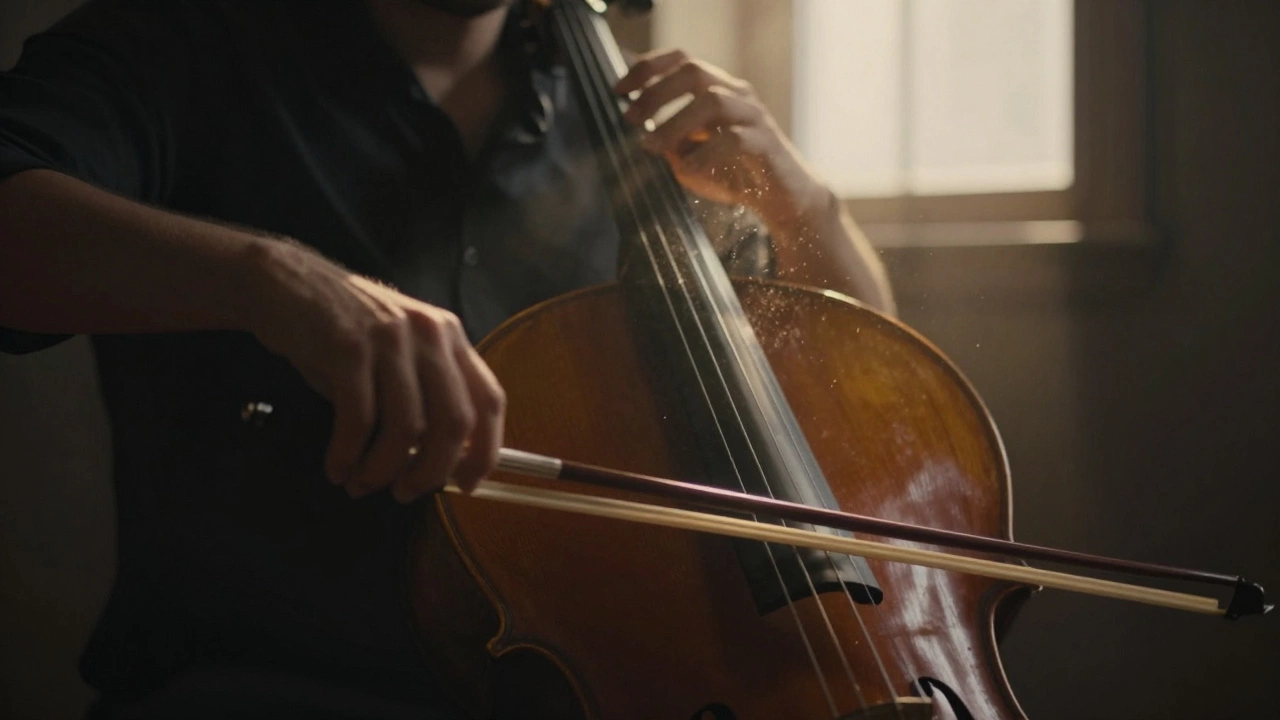
Not all instruments are created equal when it comes to sadness. You have to think about the "texture" of the sound. The Cello is often the gold standard here because its frequency range is the closest to the human male voice, making it feel deeply personal and relatable. However, the key isn't just the instrument, but how it's played. A perfectly polished, quantized MIDI track will never make anyone cry. You need the "human" imperfections. The sound of a bow scratching the string, the audible intake of breath from a flutist, or the slight mechanical click of a piano pedal. These sounds remind the listener that a fragile human being is making this music.| Instrument | Emotional Quality | Best Use Case |
|---|---|---|
| Cello | Deep, guttural, mourning | Internalized grief, loneliness |
| Piano (Felted) | Intimate, muted, nostalgic | Childhood memories, quiet loss |
| Violin (High Register) | Tense, piercing, desperate | Acute pain, climax of a tragedy |
| Harp | Ethereal, distant, fragile | Loss of innocence, afterlife themes |
Pacing the Emotional Breakdown
If you hit the listener with a wall of sound immediately, you'll overwhelm them, and they'll shut down. The most effective way to force a cry is through a gradual "emotional climb." Start with a Minimalist approach. A single piano note or a quiet hum. This forces the listener to lean in. As the piece progresses, add layers. Start with a low-end drone to create a feeling of dread or heaviness. Then, introduce the melody. When you finally reach the climax-the part where the music "breaks"-that's when you introduce the full dynamics. This is the "catharsis" moment. If you've built the tension correctly, the release of that tension is what triggers the physical act of crying. Consider the tempo. A heart rate during deep sadness usually slows down. If your BPM is too high, you're creating anxiety, not sadness. Aim for a tempo that feels like a slow walk or a heavy heartbeat. Use Rubato, which is the practice of slightly speeding up and slowing down the tempo for expressive effect. When the music lingers on a note just a second longer than expected, it feels like the performer is hesitating because they are too emotional to continue.The Psychology of the "Crying Trigger"
Music doesn't work in a vacuum. To maximize the effect, you need to tap into universal human experiences. This is where Cinematic Scoring excels. Composers often use "leitmotifs"-small, recurring musical phrases associated with a person or an idea. If you establish a happy melody at the beginning of a piece and then bring that same melody back later, but play it in a minor key and at half the speed, you are triggering a psychological response called "nostalgia for what was." The listener isn't just crying because the music is sad; they are crying because they remember when the music was happy. Another trick is the use of silence. The most emotional part of a song is often the gap between the notes. A sudden stop after a loud, emotional peak creates a vacuum that the listener fills with their own emotion. It's the musical equivalent of a gasp for air.
Common Pitfalls That Kill the Mood
One of the biggest mistakes is over-complicating the harmony. If you use too many complex jazz chords or erratic key changes, the listener's brain switches from "feeling mode" to "analyzing mode." They start wondering how the chord progression works instead of feeling the pain. Keep the harmony simple so the emotion can stay front and center. Avoid "melodrama." There is a fine line between evoking a genuine cry and sounding like a cheap soap opera. Avoid using overly loud strings that just scream for attention. The most heartbreaking music often feels like it's trying *not* to cry. The restraint is what makes it powerful. If the music is too "obvious," the listener will resist it. Give them a little bit of space, and they will find their own way to the tears.Why do minor chords generally sound sad?
Minor chords have a lowered third, which creates a different interval relationship than major chords. This specific frequency gap is often interpreted by the human brain as sounding "darker" or "unstable," which we culturally and biologically associate with sadness or tension.
Can a major key song make people cry?
Absolutely. This is often called "the happy-sad effect." When a song sounds joyful but the lyrics are devastating, or when a major key evokes an intense sense of nostalgia and longing for a time that is gone, it can be even more effective at triggering tears than a minor key song.
What is the best BPM for a sad song?
While there's no magic number, most emotionally heavy tracks fall between 60 and 80 BPM. This mimics a resting heart rate or a slow, labored breath, which puts the listener in a more receptive, vulnerable state.
How do I make my digital music sound more human?
Avoid perfect quantization. Shift your notes slightly off the grid so they aren't mathematically perfect. Use velocity variations so some notes are softer than others, and add subtle atmospheric noise-like vinyl crackle or room ambience-to give the sound a physical space.
Should I use a lot of instruments for a climax?
Yes, but introduce them strategically. Start with one, then two, then build to a full orchestral or synth swell. The contrast between the initial emptiness and the final fullness is what creates the emotional release that leads to crying.
Next Steps for Your Composition
If you're stuck, try this: find a photo that makes you feel a specific type of sadness. Is it a lonely house? A faded photograph? Try to translate the "color" of that image into a sound. If the image is "grey," use muted piano and soft strings. If it's "cold," use high-pitched, thin synth pads and lots of reverb. Once you have the atmosphere, apply the theory of appoggiaturas and the minor IV chord to build the narrative. The goal isn't to force the listener's hand, but to build a bridge that allows them to cross over into their own emotions.